
Cabbage is one of the most affordable and nutrient-dense vegetables available, thriving across nearly every climate and cuisine. Whether raw in coleslaws, fermented as sauerkraut, or cooked in soups and stir-fries, cabbage appears regularly on tables worldwide—particularly in European, Asian, and Eastern European diets. It’s become a staple for people managing weight, supporting digestive health, and seeking low-calorie whole foods packed with vitamins and minerals.
If you’re counting calories or tracking macros, understanding cabbage’s nutritional profile helps you build meals confidently. How many calories are in cabbage? How does cooking change its nutrient content? This guide covers everything you need to know about cabbage’s calories, serving sizes, and practical tips for incorporating it into your diet.
Calories in Cabbage (Quick Answer)
Raw green cabbage is exceptionally low in calories, making it an ideal base for any calorie-conscious meal.
- 1 cup raw chopped cabbage (89g): 22 calories
- 1 medium head raw cabbage (1,500g): 375 calories
- 1 cup cooked cabbage (150g): 33 calories
Calorie content varies slightly by variety (green, red, napa) and preparation method. Cooked cabbage is denser and thus higher in calories per cup, though still remarkably low.
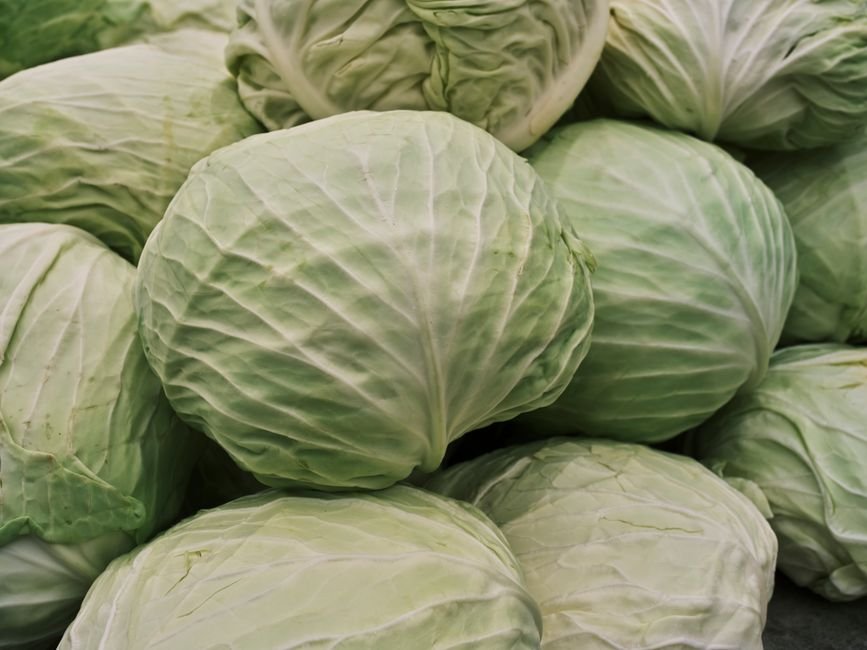
Full Nutrition Facts for 1 Cup Raw Cabbage (89g)
A single cup of raw green cabbage delivers nearly a quarter of your daily vitamin C while staying under 25 calories. Here’s the complete nutritional breakdown:
| Nutrient | Amount | % Daily Value |
|---|---|---|
| Calories | 22 | 1% |
| Total Fat | 0.1g | <1% |
| Saturated Fat | 0.0g | 0% |
| Cholesterol | 0mg | 0% |
| Sodium | 16mg | 1% |
| Total Carbohydrate | 5.2g | 2% |
| Dietary Fiber | 1.1g | 4% |
| Total Sugars | 2.9g | — |
| Protein | 1.1g | 2% |
| Vitamin C | 18.6mg | 31% |
| Vitamin K | 63.6mcg | 106% |
| Folate (B9) | 43mcg | 11% |
*Percent Daily Values are based on a 2,000-calorie diet. Source: USDA FoodData Central.
Key insight: One cup of raw cabbage covers over 100% of your daily vitamin K needs for bone health and blood clotting, plus nearly a third of your vitamin C for immune function—all in a serving that’s barely 22 calories. This makes cabbage one of the most nutrient-dense, calorie-sparse vegetables available, particularly valuable if you’re building volume into meals without adding significant energy.
Etekcity Food Scale
0.1g accuracy — the perfect companion for exact portions.
Raw Cabbage vs. Cooked Cabbage: Calories and Nutrition
Cooking cabbage affects both its calorie density and nutrient profile. Raw cabbage delivers maximum vitamin C and a lighter texture; cooked cabbage becomes softer, more digestible, and slightly higher in calories per volume due to water loss.
Raw Cabbage
- Maintains full vitamin C content for immune support
- Lower calorie density: 22 calories per cup
- Crunchy texture ideal for slaws and fresh salads
Cooked Cabbage
- Slightly higher calorie density: 33 calories per cup due to water loss concentrating nutrients
- Vitamin K remains stable; vitamin C content drops 30-40% with heat
- Softer, more easily digestible; easier on sensitive stomachs
Practical takeaway: Eat raw cabbage when you want maximum vitamin C and the lowest calorie option; cook it gently (steam or sauté briefly) when you prefer digestibility and don’t mind modest calorie increases. Both forms are extremely low-calorie and nutritious—your choice should depend on how it fits your meal plan and personal digestion needs.
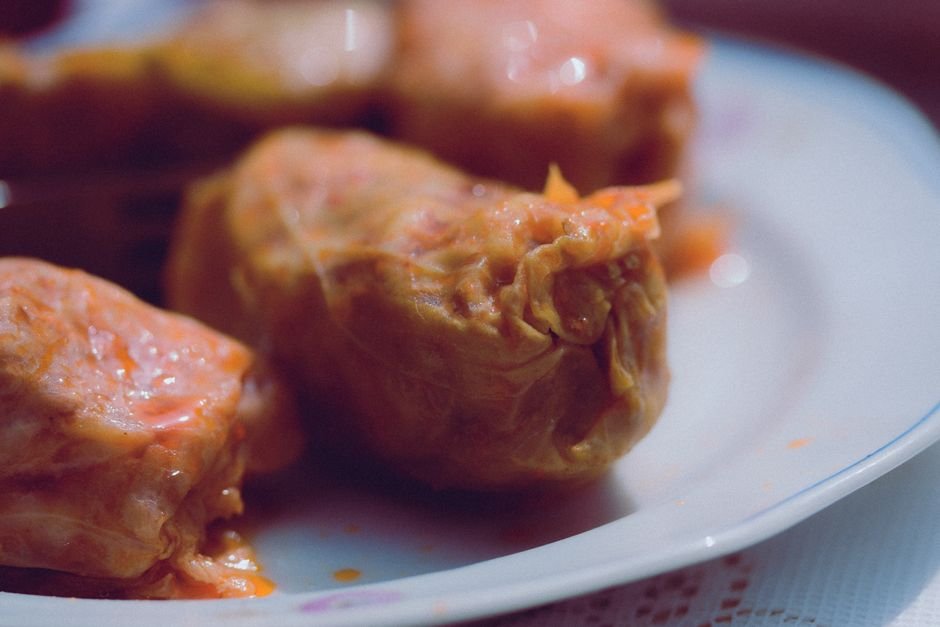
Is Cabbage Good for Weight Loss?
Yes. Cabbage is one of the best vegetables for weight loss because it’s calorie-sparse, fiber-rich, and deeply satiating. A full two-cup serving contains just 44 calories yet 2.2g of fiber, which promotes fullness and stable blood sugar. Its low energy density (calories per gram) means you can eat large, satisfying portions without accumulating calorie surplus. Additionally, cabbage’s volume makes it excellent for building filling meals—a large bowl of cabbage soup or stir-fry with lean protein keeps you satisfied longer than calorie-equivalent processed foods.
Tips to Eat Cabbage Without Gaining Weight:
- Watch your cooking method: Raw or steamed cabbage costs you almost nothing calorically; avoid frying in butter or oil, or limit added fats to 1 teaspoon per meal.
- Pair it with protein: Combine cabbage with chicken, fish, tofu, or beans to create balanced, satiety-boosting meals that keep hunger at bay for hours.
- Use it as volume: Fill half your plate with cabbage, then add smaller portions of calorie-dense foods (grains, proteins, fats)—this stretches meals and reduces total calorie intake naturally.
- Avoid creamy dressings: Coleslaw with mayo-based dressing can add 200+ calories to a small serving. Use vinegar, lemon juice, or oil-free dressings instead.
Cabbage’s combination of low calories, fiber, and water content makes it a weight-loss ally, not a burden. Use it strategically as your meal foundation, and you’ll create filling, nutritious meals that support your goals.
How Portion Size Affects Calories
Cabbage portions scale linearly with calories—there’s no hidden density issue. A small handful weighs much less than a large head, so understanding typical serving sizes helps you track accurately. Restaurant servings, homemade coleslaw portions, and grocery-store pre-cut cabbage all vary significantly, so weighing or measuring prevents underestimation.
Example:
- Small portion (2 cups raw, 178g): 44 calories—a satisfying starter or side for any meal
- Large portion (1 head raw, 1,500g): 375 calories—a whole-meal base like cabbage soup or a massive salad
For most people, portions under 3 cups raw cabbage are negligible calorically and incredibly filling, making accidental overeating nearly impossible.
Best Way to Measure Cabbage Accurately
Cabbage’s water content and loose leaf structure make volume measurement (cups) slightly imprecise compared to weight. A cup of loosely chopped raw cabbage differs from tightly packed cabbage by 10-15% calorically. For precise tracking, especially if you’re in a strict calorie deficit, weighing on a digital scale is ideal. Otherwise, measuring cups work well for consistent, approximate portions.
Options:
- Digital food scale (most accurate): Weigh raw cabbage in grams; 89g = 1 standard cup, 22 calories.
- Measuring cups: Use a dry-measuring cup and lightly pack the chopped cabbage; count 1 cup as roughly 22 calories for raw.
- Visual estimation: A clenched fist of cabbage ≈ ½ cup raw ≈ 11 calories. Two fists ≈ 1 cup ≈ 22 calories. Works well for ballpark tracking.
Calculate Your Exact Calorie Intake
If you’re combining cabbage with proteins, fats, and grains in complex meals, knowing your total calorie and macro intake is crucial for reaching your goals. A single vegetable’s numbers matter, but they’re only part of the picture—your entire meal composition determines whether you’re in a surplus, deficit, or balance.
Our free AI nutrients calculator helps you log meals, track macros, and understand your exact calorie intake across the day. Simply input your cabbage portion size and pair it with other foods; the calculator computes totals instantly, removing guesswork from your nutrition plan.
- See real-time macros: Know exactly how much protein, carbs, and fat you’re consuming in every meal.
- Track multiple foods at once: Add cabbage, chicken, rice, and oil to one meal entry and get a complete nutritional snapshot.
- Adjust portions confidently: Compare how different serving sizes affect your daily totals without manual calculation.
Try the free calculator now to transform meal planning from guesswork into data-driven decisions.
Common Mistakes When Eating Cabbage
Despite cabbage’s nutritional benefits, several common errors limit its effectiveness in your diet or create unnecessary calorie overages. Here are the most frequent pitfalls:
❌ Assuming coleslaw is “healthy”: Store-bought and restaurant coleslaws are often drowning in creamy dressings, adding 200-400 calories to a small serving. Make your own with vinegar-based dressings or oil-free options instead.
❌ Cooking cabbage in excessive oil or butter: A tablespoon of oil adds 120 calories to a light vegetable. Steam or boil cabbage first, then add a teaspoon of oil or sauce if desired.
❌ Ignoring portion reality: A single head of cabbage is massive—if you’re eating half a head in one sitting, you’re consuming ~190 calories. Track these larger portions accurately to avoid surprise calorie overages.
❌ Fermented cabbage overload: Sauerkraut and kimchi are nutrient-dense but saltier and sometimes higher-calorie than raw. A quarter-cup serving adds up; measure fermented cabbage portions like you would nuts.
Awareness of these missteps transforms cabbage from a “free food” mindset into intentional, tracked nutrition—where it truly shines.
FAQ
How many calories are in 100g of cabbage?
Raw green cabbage contains approximately 25 calories per 100g. This makes cabbage one of the lowest-calorie vegetables, allowing large portions in calorie-controlled diets.
Is cabbage fattening?
No. Cabbage is one of the least fattening vegetables available—it’s low in calories, high in fiber, and has virtually no fat. Problems arise only when you cook it in excessive oil or eat it in creamy dressings, which add external calories.
Does cooking cabbage change its calorie content?
Cooking removes water, making cooked cabbage denser. One cup of cooked cabbage (150g) contains 33 calories versus 22 for raw (89g). The calories per 100g ratio stays similar, but volume portions become slightly more calorie-dense.
Can I eat unlimited cabbage on a diet?
Practically yes—cabbage is so low in calories that realistic portions pose no weight-loss barrier. However, even large volumes (3+ cups daily) might cause digestive bloating in sensitive individuals, so listen to your body and consume what feels comfortable.
Conclusion
Cabbage is a nutritional powerhouse that belongs in any diet focused on health and weight management. At just 22 calories per cup raw and loaded with vitamin K, vitamin C, fiber, and folate, it delivers extraordinary nutrition in a negligible calorie package. Whether you eat it raw, cooked, or fermented, cabbage provides satiety, digestive support, and micronutrient density that few other foods match at such a low cost—financially and calorically.
The key to maximizing cabbage’s benefits is tracking it accurately when it’s part of larger meals, avoiding calorie-dense cooking methods, and pairing it with protein to create balanced, satisfying dishes. Use a reliable nutrients calculator to log your complete meals and ensure cabbage fits your daily targets—this takes the guesswork out of portion planning and helps you hit your goals consistently.
