
Chicken breast is one of the most popular protein sources worldwide, especially among fitness enthusiasts, bodybuilders, and anyone trying to build muscle while managing calories. It’s lean, versatile, and found in virtually every cuisine from Asian stir-fries to Mediterranean grilled dishes. Whether you’re meal-prepping, cutting weight, or simply eating healthier, chicken breast delivers serious nutritional bang for your buck.
But the question remains: how many calories are actually in a chicken breast, and how does preparation method affect the total? This guide breaks down the exact nutrition facts, explores common cooking methods, and shows you how to measure and track your intake accurately.
Calories in Chicken Breast (Quick Answer)
A standard 3.5-ounce (100g) boneless, skinless chicken breast contains around 165 calories, making it one of the leanest protein options available.
- Skinless breast (3.5 oz / 100g, cooked): 165 calories, 31g protein
- Skin-on breast (3.5 oz / 100g, cooked): 220 calories, 29g protein
- Full chicken breast half (6 oz / 170g, cooked, skinless): 280 calories, 53g protein
Calorie counts vary based on cooking method (boiling adds no oil; frying or roasting in butter increases them significantly), so these figures assume basic cooking with minimal added fat.
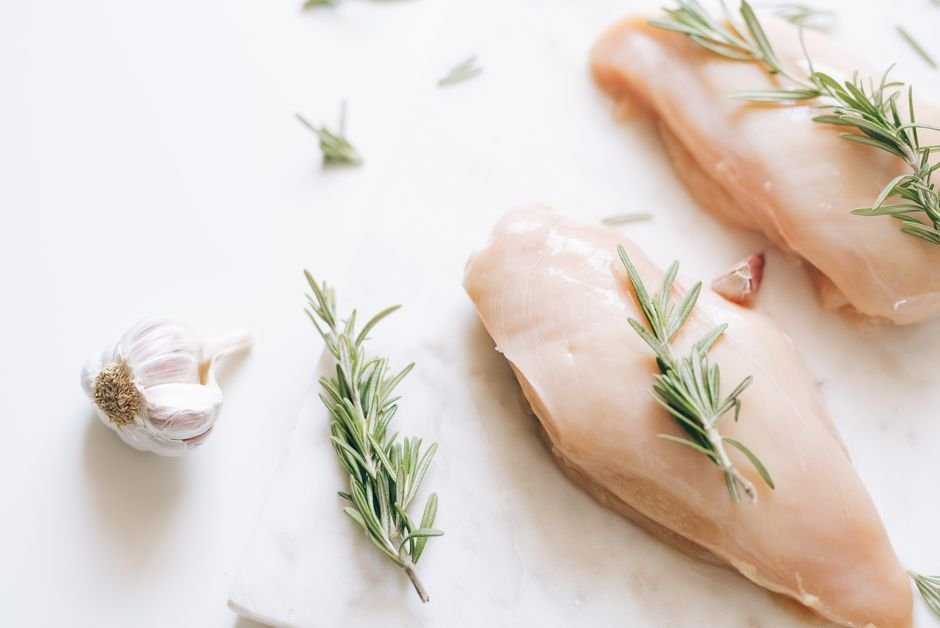
Full Nutrition Facts for 3.5 oz (100g) of Cooked Chicken Breast, Skinless
Below is the complete nutritional breakdown for a standard 100g serving of boneless, skinless chicken breast (cooked without added fat):
| Nutrient | Amount | % Daily Value |
|---|---|---|
| Calories | 165 | — |
| Total Fat | 3.6g | 5% |
| Saturated Fat | 1.0g | 5% |
| Cholesterol | 85mg | 28% |
| Sodium | 74mg | 3% |
| Total Carbohydrate | 0g | 0% |
| Dietary Fiber | 0g | 0% |
| Total Sugars | 0g | 0% |
| Protein | 31g | 62% |
| Selenium | 27mcg | 49% |
| Niacin (B3) | 10.3mg | 64% |
| Vitamin B6 | 0.9mg | 53% |
*Percent Daily Values are based on a 2,000-calorie diet. Source: USDA FoodData Central.
Key insight: Chicken breast is nearly pure protein with virtually zero carbs and minimal fat, making it exceptionally efficient for muscle building, weight loss, and metabolic health. It’s also rich in B vitamins (especially niacin and B6) essential for energy production and nervous system function. Unlike other protein sources, a 100g serving delivers over 60% of your daily protein quota with just 165 calories—hard to beat for body composition goals.
Etekcity Food Scale
0.1g accuracy — the perfect companion for exact portions.
Skinless vs. Skin-On Chicken Breast: Which Should You Choose?
Skinless Chicken Breast
- Lower in calories: 165 calories per 100g vs. 220 for skin-on
- Lean protein focus: 31g protein with only 3.6g fat, ideal for strict calorie deficits
- Faster cooking: Thinner and less insulated, cooks evenly and quickly without drying out if watched
Skin-On Chicken Breast
- Richer flavor: Fat under the skin renders during cooking, creating more taste and juiciness without extra seasoning
- More forgiving: Skin protects meat from drying out, especially when roasting or baking at higher heat
- Contains fat-soluble vitamins: Slightly higher in vitamin A and E, though the trade-off is 55 extra calories and 7g more fat per 100g
Takeaway: If you’re in a calorie deficit for weight loss, skinless is the mathematical winner. If flavor and ease of cooking matter more, skin-on is justified—just account for the extra 55 calories and fat in your daily totals. Many people eat both: skinless for meal prep, skin-on for weekend dinners where the extra calories fit the plan.
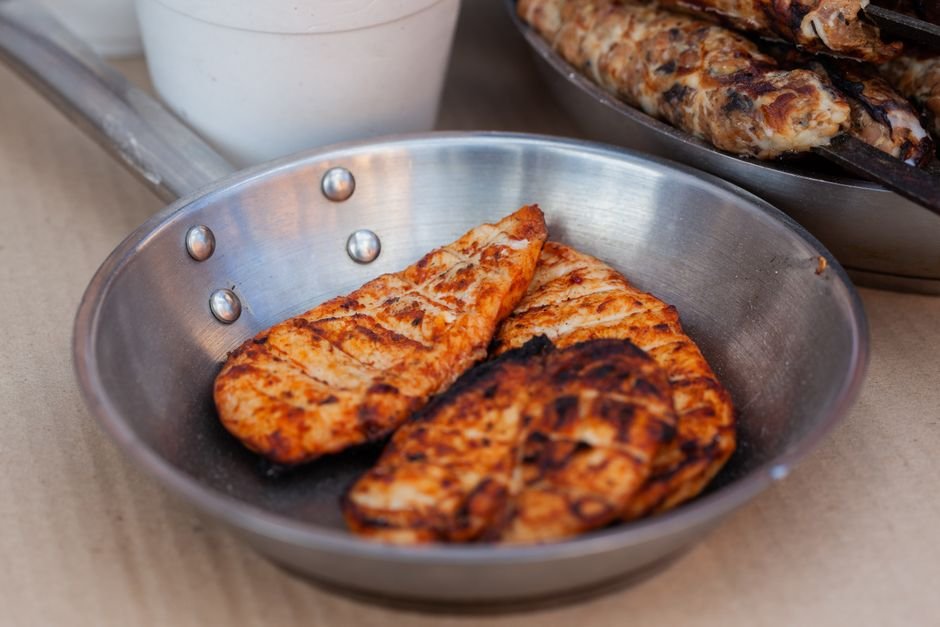
Is Chicken Breast Good for Weight Loss?
Yes, chicken breast is one of the best foods for weight loss. Its combination of high protein (31g per 100g), minimal calories (165), and zero carbs makes it filling, metabolically supportive, and easy to portion. Protein has the highest thermic effect of any macronutrient, meaning your body burns calories just digesting it. A 100g serving fills you up without excess energy, making it ideal for staying in a calorie deficit without constant hunger.
Tips to Eat Chicken Breast Without Gaining Weight:
- Choose skinless for calorie precision: Saves 55 calories and 7g fat per 100g, compounding across meals and weeks
- Cook without added oil: Boil, poach, bake, or air-fry instead of pan-frying in butter; seasonings and spices add zero calories and huge flavor
- Weigh your portions: It’s easy to overestimate; 170g can feel like 250g; use a scale during the first week of meal prep to calibrate your eye
- Pair with vegetables, not sauces: Double your plate volume with leafy greens or broccoli instead of creamy dressings; you’ll eat more food for the same calories
The key to sustainable weight loss with chicken breast is consistency, not perfection. Even if you occasionally cook with a small amount of oil or eat skin-on, the protein content and overall low-calorie profile keep it weight-loss-friendly compared to processed foods or fatty cuts.
How Portion Size Affects Calories
Chicken breast calories scale linearly with weight. A small breast half might be 140g (230 calories), while a large one can be 250g (410 calories)—a 180-calorie swing. Restaurant portions often fall on the larger end, which is why measuring at home is critical for accuracy. Even 20–30g differences compound significantly over time.
Example:
- Small portion (3 oz / 85g): 140 calories, 27g protein
- Large portion (6 oz / 170g): 280 calories, 53g protein
For a 2,000-calorie diet, that small portion is 7% of your daily intake; the large is 14%. Over a week, the difference is 980 calories—enough to cause a 0.28 lb weight gain or loss, depending on overall diet balance.
Best Way to Measure Chicken Breast Accurately
The most accurate method is weighing raw chicken breast on a digital kitchen scale before cooking. Raw weights are consistent and don’t vary with cooking method or water loss. One raw 100g breast becomes roughly 75g cooked (due to water evaporation), but the nutrition facts you find online typically assume the raw weight or a standard cooked amount, so always check the label or data source for clarity.
Options:
- Digital scale (most accurate): Weighs raw or cooked chicken to the nearest 1g; takes 10 seconds; eliminates guesswork and is essential for serious calorie tracking
- Hand portion guide: One palm-sized, thumb-thick piece roughly equals 100g; useful when traveling or eating out, but less precise (±20g margin)
- USDA serving reference: One medium breast (3–3.5 oz) is the standard serving; if your breasts are larger, scale up proportionally (e.g., a large breast = 1.5 servings)
Calculate Your Exact Calorie Intake
Knowing chicken breast contains 165 calories per 100g is useful, but tracking total daily intake across all meals is where real results happen. If you’re eating multiple protein sources, vegetables, carbs, and fats, the math gets complex fast—and small errors compound.
Our free AI nutrients calculator at https://nutrientscalculator.com/ instantly breaks down your total daily calories, macronutrients, and micronutrients based on everything you eat. Log your chicken breast portion once and let the tool handle the rest, showing you exactly where you stand against your goals.
- Automatic macros: See protein, carbs, and fat totals in real-time without mental math
- Micronutrient tracking: Catch deficiencies in B vitamins, selenium, or iron across your whole diet
- Saves time: No more spreadsheets; log once, adjust forever
Common Mistakes When Eating Chicken Breast
Even chicken breast—seemingly a straightforward food—is easy to get wrong. Here are the most common pitfalls:
❌ Overestimating portion size: A chicken breast looks smaller than it is; what feels like 150g is often 200g or more. Use a scale for one week to calibrate your eye, then re-check monthly.
❌ Ignoring cooking method: Boiled or baked chicken breast is 165 calories; pan-fried in 1 tablespoon of oil becomes 265 calories. The chicken hasn’t changed, but your calorie intake has jumped 60%.
❌ Buying pre-cooked/processed versions: Store-bought rotisserie, breaded, or marinated chicken often contains added oil, salt, or binders; check labels as they can be 250–300 calories per 100g instead of 165.
❌ Eating it without tracking: Chicken’s “healthy” reputation makes people eat it casually without logging, leading to accidental 500–700 calorie daily overages when multiple servings add up.
Avoid these by using a scale, cooking at home, buying plain fresh or frozen breasts, and logging every portion—no exceptions during the first month of a new diet.
FAQ
How many calories are in 100g of chicken breast?
A 100g serving of boneless, skinless chicken breast (cooked without added fat) contains 165 calories and 31g of protein. If skin is left on, it rises to approximately 220 calories for the same weight.
Is chicken breast fattening?
No. Chicken breast is one of the leanest proteins available and supports weight loss due to high protein content, low calories, and minimal carbs. It becomes “fattening” only if portion sizes are ignored, oil-heavy cooking methods are used, or it’s consumed in excess relative to your daily calorie goal.
Does cooking method change the calorie count of chicken breast?
The chicken itself doesn’t change, but added fats do. Boiling or baking plain chicken stays at 165 calories per 100g. Pan-frying in 1 tablespoon of oil adds ~100 calories to a standard 3.5 oz serving. Always account for cooking oils when tracking.
How much protein is in a whole chicken breast?
A typical whole chicken breast (both halves, about 340g raw or 255g cooked) contains roughly 53–60g of protein and 420–500 calories depending on whether skin is removed. One breast half is approximately half these values.
Conclusion
Chicken breast is a nutritional powerhouse for anyone building muscle, losing weight, or simply eating healthier. At 165 calories and 31g protein per 100g (skinless), it delivers an unmatched calorie-to-protein ratio. The absence of carbs and minimal saturated fat make it metabolically clean, while its B vitamin content supports energy and nervous system health. Whether you choose skinless for pure calorie control or skin-on for flavor, chicken breast remains one of the most efficient foods on the planet.
The biggest takeaway: measure portions accurately, cook without excess oil, and log consistently. Small differences in serving size and cooking method compound over weeks and months. Use a reliable nutrients calculator to track not just calories but complete macronutrients and micronutrients, ensuring your chicken breast strategy aligns with your actual body composition and performance goals.
