
Chickpeas are one of the world’s most important legumes, eaten across the Middle East, India, North Africa, and Mediterranean regions as a staple protein source. Whether roasted as a snack, blended into hummus, or cooked in curries and salads, they’re a go-to choice for vegetarians, vegans, and anyone looking to build muscle or stabilize blood sugar. Their affordability and versatility make them accessible to millions of home cooks and commercial food producers alike.
But if you’re tracking calories for weight loss, muscle gain, or disease management, you need to know exactly how many calories are in chickpeas and how preparation method affects their nutritional density. This guide breaks down the calorie content, full nutrition facts, and practical tips for eating chickpeas without overdoing it.
Calories in Chickpeas (Quick Answer)
Chickpea calories vary significantly based on how they’re prepared:
- 1 cup (164g) cooked chickpeas: 269 calories
- 1/2 cup (82g) cooked chickpeas: 134 calories
- 1 cup (240g) canned chickpeas (drained): 269 calories
Calorie counts vary by cooking method, brand, water content in canned varieties, and whether you include the liquid they’re stored in.
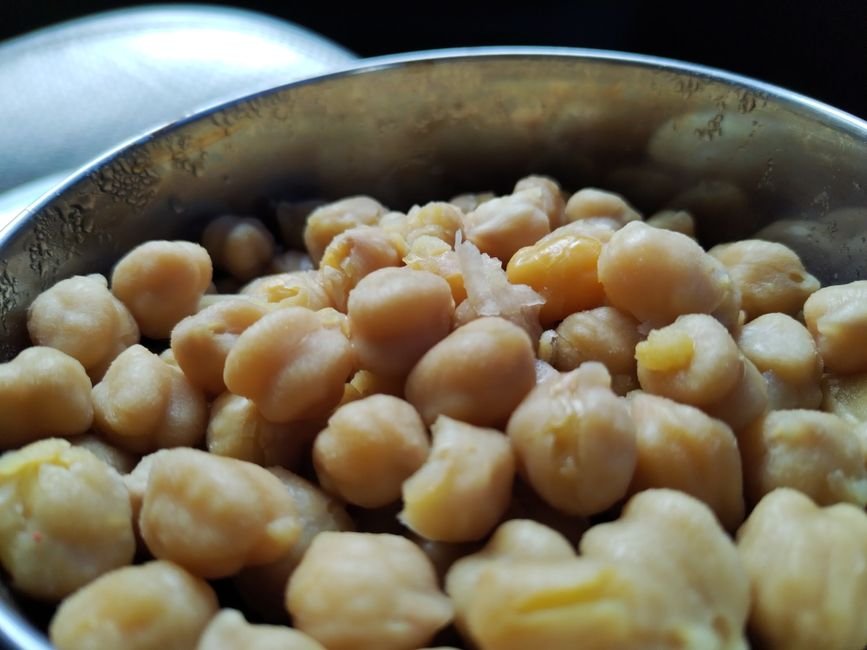
Full Nutrition Facts for 1 Cup (164g) of Cooked Chickpeas
Cooked chickpeas are nutrient-dense, providing complex carbohydrates, plant-based protein, and essential micronutrients in one serving:
| Nutrient | Amount | % Daily Value |
|---|---|---|
| Calories | 269 | 13% |
| Total Fat | 4.3g | 7% |
| Saturated Fat | 0.4g | 2% |
| Cholesterol | 0mg | 0% |
| Sodium | 7mg | <1% |
| Total Carbohydrate | 45g | 16% |
| Dietary Fiber | 12g | 43% |
| Total Sugars | 8g | |
| Protein | 15g | 29% |
| Iron | 4.7mg | 26% |
| Folate | 358mcg | 89% |
| Magnesium | 80mg | 19% |
*Percent Daily Values are based on a 2,000-calorie diet. Source: USDA FoodData Central.
Key insight: Chickpeas are exceptionally high in dietary fiber (43% DV per cup) and folate (89% DV), making them one of the best plant-based sources for digestive health and B-vitamin nutrition. The 12g of fiber helps regulate blood sugar and keeps you full longer, while 15g of protein per cup supports muscle repair and satiety—a rare combination in plant foods that makes chickpeas stand out for both weight management and athletic recovery.
Etekcity Food Scale
0.1g accuracy — the perfect companion for exact portions.
Cooked vs. Canned Chickpeas: Which Has Fewer Calories?
Cooked Chickpeas (From Dried)
- You control water content, resulting in fewer calories per cup if you don’t add oil or salt during cooking
- 1 cup (164g) contains 269 calories and 7mg sodium
- Takes 30–45 minutes to cook but costs less per serving than canned
Canned Chickpeas (Drained)
- Pre-cooked and ready to eat, often packed in sodium-rich brine that you should drain
- 1 cup (240g) drained contains 269 calories but 350–400mg sodium if not rinsed thoroughly
- Draining and rinsing reduces sodium by 40% and is worth the extra step
Practical takeaway: Both forms have nearly identical calories when measured by weight, but canned chickpeas require rinsing to avoid excess sodium—critical for blood pressure management. Cooked-from-dried is economical and gives you total control, while canned wins on convenience. Neither is inherently “better” for calorie counting; choose based on your sodium intake goals and prep time.
Is Chickpea Good for Weight Loss?
Yes, chickpeas are an excellent choice for weight loss. Their high fiber (12g per cup) and protein (15g per cup) create lasting satiety, meaning you feel full longer and eat fewer calories overall. Studies show that legume-eaters typically consume 20% fewer calories per day than non-legume-eaters, even without conscious restriction. At 269 calories per cup with 27g of filling macronutrients (protein + fiber), chickpeas deliver sustained energy without the calorie density of nuts or grains.
Tips to Eat Chickpeas Without Gaining Weight:
- Measure your portion: one cup cooked is a full main-course serving; stick to 1/2 cup as a side to avoid exceeding calorie goals
- Roast dried chickpeas as a snack instead of frying: 1 cup raw chickpeas roasted with just 1 tsp oil and salt = ~220 calories of crunchy, protein-rich snack
- Pair with non-starchy vegetables: chickpea curry with spinach and tomatoes keeps calories low while boosting volume and nutrition
- Avoid hummus overload: 2 tablespoons hummus (mostly chickpeas and tahini) contains 180 calories; measure it to stay in control
The key is portion awareness, not avoidance. Chickpeas are too nutritious to exclude; just count them like any other carb-and-protein source.
How Portion Size Affects Calories
Portion size is critical because chickpeas are calorie-dense for a legume. A small handful looks modest but quickly adds up. A 1/2-cup serving is a realistic side dish, while a full cup is a protein-rich main. Using a food scale eliminates guessing and ensures you log accurate calories.
Example:
- Small portion: 1/4 cup (41g) cooked chickpeas = 67 calories, ideal as a salad topper
- Full serving: 1 cup (164g) cooked chickpeas = 269 calories, works as a meal base or combined with grains
Doubling your portion quadruples the calorie impact—especially important if you’re eating hummus or roasted chickpeas, where oil is already added.
Best Way to Measure Chickpeas Accurately
Volume measurements (cups) are inconsistent because cooked chickpeas vary in moisture and how densely they pack. A food scale measuring grams is the gold standard for accuracy. If you only have cups, fill to the brim and level off; expect 10–15% margin of error.
Options:
- Digital kitchen scale: Measure 164g for one cup; most reliable method, takes 10 seconds
- Measuring cup: Fill level with 1 cup marks; faster but less precise, acceptable for meal planning if consistent
- Nutrition label (canned): One serving is usually 1/2 cup (120g); multiply calories by number of servings consumed
Calculate Your Exact Calorie Intake
If chickpeas are a regular part of your diet, knowing their exact contribution to your daily calorie budget is essential. Small measurement errors compound over time, turning a 269-calorie serving into 300+ with imprecise tracking.
Our site offers a free AI-powered nutrients calculator that logs every food you eat, calculates total calories, and breaks down macronutrients and micronutrients in seconds. Simply enter “chickpeas, cooked” and your portion size, and it auto-fills the complete nutrition profile and daily total.
- Tracks fiber, protein, and micronutrients, not just calories
- Compares your intake against your daily nutritional targets in real time
- Saves your meals and recipes for quick re-logging
Get started with our free AI nutrients calculator today.
Common Mistakes When Eating Chickpeas
Many people underestimate the calorie and sodium impact of chickpea dishes. Here are the four biggest errors:
❌ Not rinsing canned chickpeas: One cup of canned chickpeas drained but not rinsed contains 350–400mg sodium (17% DV)—roughly half your daily limit in one serving. Always drain and rinse thoroughly.
❌ Eyeballing portions of hummus: Hummus is 50% tahini and oil by weight. Two tablespoons look small but contain 180 calories and 8g fat. Use a food scale or pre-measured containers.
❌ Confusing cooked and dried weights: 1 cup raw chickpeas ≠ 1 cup cooked chickpeas. Raw chickpeas more than double in weight when cooked. Always measure after cooking unless the recipe specifies otherwise.
❌ Assuming oil-roasted chickpeas are “light snacks”: One cup of oil-roasted chickpeas from a bag can contain 400–500 calories (vs. 269 for boiled). Check the label; homemade roasted chickpeas with minimal oil cost half the calories.
These mistakes are easy to fix with measurement tools and label reading.
FAQ
How many calories are in 100g of chickpeas?
100g of cooked chickpeas contains approximately 164 calories. This is a useful reference point because nutrition labels often show values per 100g, making it easy to scale to any portion size.
Is chickpea fattening?
No, chickpeas are not inherently fattening. At 269 calories per cup with 15g protein and 12g fiber, they promote satiety and sustainable weight loss. The problem arises when they’re prepared with added oil (hummus, fried chickpeas) or eaten in oversized portions without measuring.
Can I eat chickpeas every day?
Yes, chickpeas are safe and nutritious to eat daily. One cup (269 calories) provides 43% of your daily fiber, making them an excellent staple. However, rapid increases in fiber intake can cause bloating; if you’re new to chickpeas, start with 1/2 cup daily and drink plenty of water.
Do dried chickpeas have fewer calories than cooked ones?
Dried and cooked chickpeas have the same calories per gram of dry matter, but dried chickpeas weigh much less. One cup of dried chickpeas (about 200g) contains roughly 730 calories, but they triple in weight when cooked, spreading those calories across 3 cups (about 269 calories per cooked cup). The nutritional density changes with water absorption, not calorie creation.
Conclusion
Chickpeas are a nutritional powerhouse: 269 calories per cup, 15g protein, 12g fiber, and exceptional micronutrients like folate and iron. They support weight loss by keeping you full, aid muscle recovery through plant-based protein, and regulate blood sugar thanks to their high fiber content. Whether you’re cooking from dried or opening a can, chickpeas belong in a balanced diet.
The key to maximizing their benefits is accurate measurement and smart preparation. Use a food scale, rinse canned varieties, measure hummus, and avoid oil-heavy preparations. For ongoing nutrition tracking that accounts for every macro and micronutrient, rely on a trusted nutrients calculator to keep you accountable and informed.
