
Chorizo is a beloved cured or fresh sausage originating from Spain and widely consumed across Latin America and the United States. It’s a staple in breakfast dishes, tacos, stews, and paella, prized for its bold, smoky, and spiced flavor. Whether you’re enjoying it for its taste, using it to add richness to meals, or trying to fit it into a specific nutritional goal like muscle building or weight management, understanding its calorie content is essential.
But how many calories are actually in chorizo? The answer depends on the type—Spanish chorizo, Mexican chorizo, and fresh chorizo all have different nutritional profiles. This article breaks down the exact calorie counts, complete nutrition facts, and practical guidance on eating chorizo as part of a balanced diet.
Calories in Chorizo (Quick Answer)
Chorizo calories vary significantly depending on the type and how it’s prepared.
- Spanish chorizo (cured): ~170 calories per 1 ounce (28g)
- Mexican chorizo (fresh): ~140 calories per 1 ounce (28g)
- Chorizo link (one 2-oz link): ~280–320 calories depending on type
Calorie and fat content can vary by brand, fat content of the meat used, and whether it’s fresh, cured, or cooked in oil.
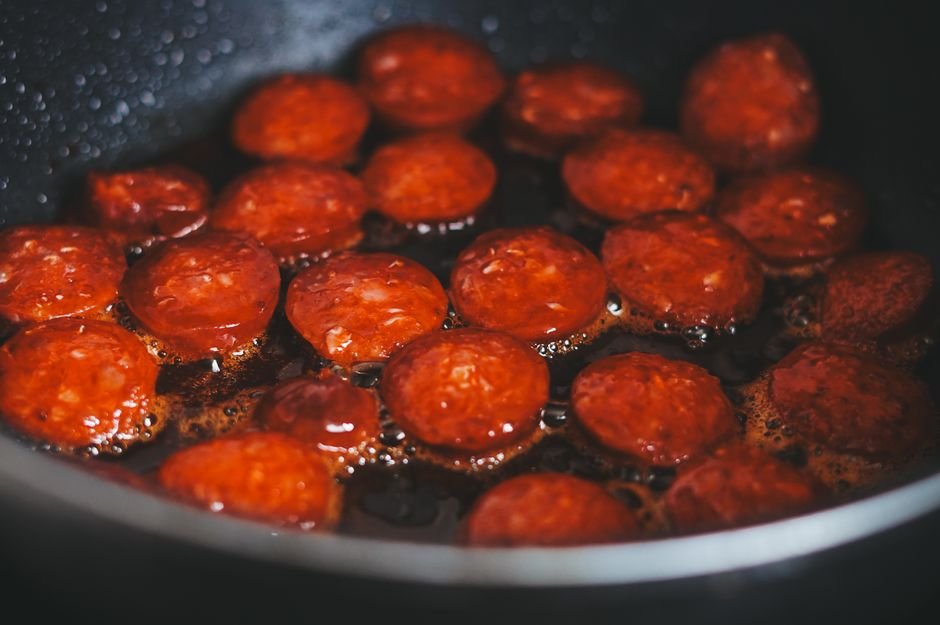
Full Nutrition Facts for 1 Ounce (28g) of Spanish Chorizo
Spanish cured chorizo is the most commonly found variety in grocery stores. Here’s its complete nutrition profile per 1-ounce serving:
| Nutrient | Amount | % Daily Value |
|---|---|---|
| Calories | 170 | 8.5% |
| Total Fat | 15g | 19% |
| Saturated Fat | 6g | 31% |
| Cholesterol | 28mg | 9% |
| Sodium | 570mg | 25% |
| Total Carbohydrate | 1g | 0% |
| Dietary Fiber | 0g | 0% |
| Total Sugars | 0g | — |
| Protein | 9g | 18% |
| Iron | 1.8mg | 10% |
| Vitamin B12 | 0.5mcg | 8% |
| Selenium | 12mcg | 22% |
*Percent Daily Values are based on a 2,000-calorie diet. Source: USDA FoodData Central.
Key insight: Chorizo is extremely protein-dense and calorie-dense due to its high fat content. A single ounce delivers 9g of protein but also 15g of fat, making it an efficient protein source if you have the calorie budget. The sodium content is notably high at 570mg per ounce—about 25% of your daily limit—so portion control is important if you monitor sodium intake.
Etekcity Food Scale
0.1g accuracy — the perfect companion for exact portions.
Spanish Chorizo vs. Mexican Chorizo: Key Differences
Spanish Chorizo (Cured)
- Made with pork and cured with paprika, giving it a deep red color and smokier flavor
- Sliceable and ready to eat straight from the package—no cooking required
- ~170 calories per ounce; higher in saturated fat due to curing process
Mexican Chorizo (Fresh)
- Fresh pork sausage with chiles, garlic, and vinegar; looser texture, removed from casing before cooking
- Must be cooked before eating; loses some fat during cooking
- ~140 calories per ounce raw (lower after cooking), with more pronounced chile heat
Practical takeaway: If calories are your main concern, fresh Mexican chorizo is slightly leaner before cooking, but the difference is modest. Spanish chorizo is convenient for portion control (sliced servings) while Mexican chorizo requires cooking and crumbling, which can lead to overpouring. Measure your portion before cooking Mexican chorizo to keep calories consistent.
Is Chorizo Good for Weight Loss?
Chorizo is calorie-dense and high in fat, making it challenging for aggressive weight loss. However, it’s not off-limits if you practice portion control. A small 1-ounce serving provides substantial protein and satiety, which can help you feel fuller longer. The key is using chorizo as a flavor accent rather than the main protein—a strategy that works well in scrambled eggs, soups, or grain bowls where a small amount goes a long way.
Tips to Eat Chorizo Without Gaining Weight:
- Limit to 1–2 ounces per serving: This provides rich flavor and 9–18g protein without excessive calories.
- Pair with high-volume, low-calorie foods: Combine chorizo with eggs, leafy greens, beans, or whole grains to add volume without doubling calories.
- Cook fresh chorizo on a skillet and drain fat: This removes 20–30% of the fat, reducing calories by ~30 per ounce.
- Use chorizo for flavoring, not as the main event: Dice it finely and scatter it over breakfast bowls or into lentil soups rather than eating it as a standalone sausage link.
If you’re in a calorie deficit and enjoy chorizo, these strategies allow you to keep it in your diet without derailing your goals.
How Portion Size Affects Calories
Chorizo calories add up quickly because of its density. A small slice feels substantial but is easy to underestimate. Knowing the difference between a “pinch” and an ounce helps you track accurately and avoid unintended overeating.
Example:
- One small slice (0.5 oz Spanish chorizo): ~85 calories, 7.5g fat, 4.5g protein
- One full ounce (larger slice or crumbled Mexican chorizo): ~140–170 calories, 14–15g fat, 9g protein
Doubling your portion roughly doubles your calories—a difference of 85 calories can impact weight loss if repeated daily.
Best Way to Measure Chorizo Accurately
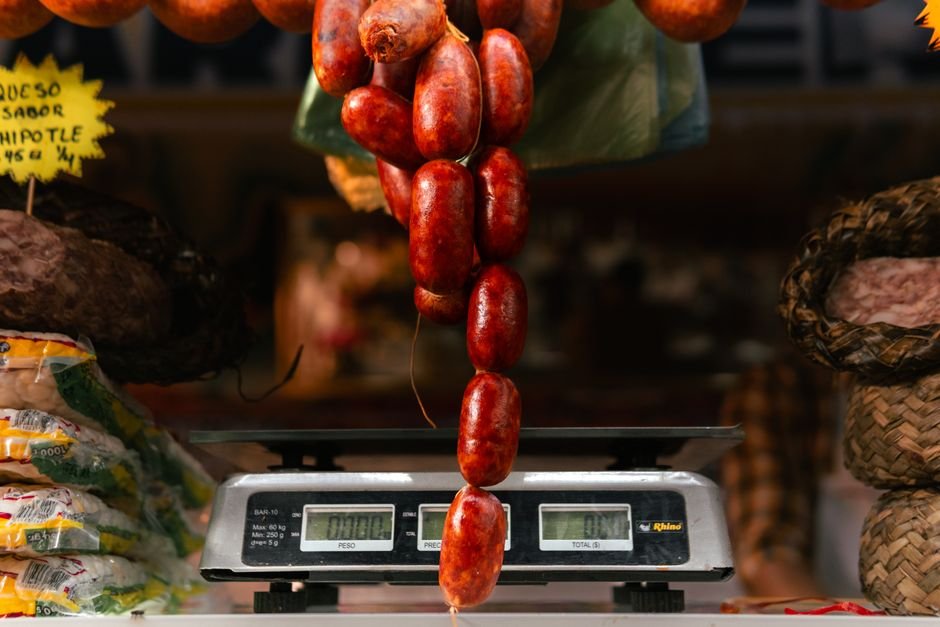
Because chorizo is a processed meat with variable density (cured vs. fresh, sliced vs. bulk), weight is the most reliable measurement. Using a kitchen scale removes guesswork and ensures consistent tracking. A food scale costs $15–30 and is one of the best investments for accurate nutrition monitoring.
Options:
- Digital kitchen scale: Weigh the chorizo on a plate and note the amount. Most reliable method.
- Visual reference: One small slice of Spanish chorizo ≈ 0.3–0.5 oz; one large slice ≈ 0.75–1 oz. Useful when scales aren’t available.
- Package label: Many branded chorizos list servings per package and calories per serving. Divide the weight by servings to find grams per portion.
Calculate Your Exact Calorie Intake
If you eat chorizo regularly—whether daily in breakfast burritos or weekly in tacos—tracking its calories becomes essential to understand your total intake. Small portions add up, especially if chorizo is paired with other calorie-dense ingredients like cheese or oil.
Our site offers a free AI-powered nutrients calculator that lets you log your exact serving size of chorizo and automatically calculates calories, protein, fat, sodium, and other nutrients. No signup required.
- Input your chorizo portion (by weight or serving count) and see instant calorie totals
- Track how chorizo fits into your daily calorie and macro targets
- Compare Spanish vs. Mexican chorizo side-by-side to make informed choices
Common Mistakes When Eating Chorizo
Chorizo’s bold flavor and small serving size make it easy to misjudge portions. Here are the most common calorie-counting errors:
❌ Eyeballing portions instead of weighing: A “handful” of crumbled Mexican chorizo can range from 0.75 to 1.5 ounces, a 100%+ difference in calories.
❌ Forgetting the cooking fat: When you cook Mexican chorizo in a skillet, it releases fat—and if you mix that fat back into the meat rather than draining it, you’re adding 40–60 extra calories per ounce.
❌ Assuming all chorizo is the same: Store-bought Spanish cured chorizo varies by brand; some are 150 cal/oz, others 190+. Always check the label.
❌ Eating straight from the package: Cured chorizo slices are easy to nibble on while cooking or snacking, leading to unconscious overeating of 3–4 ounces before you realize it.
Weighing your portion and checking the label once takes 30 seconds and prevents these mistakes.
FAQ
How many calories are in 100g of chorizo?
Spanish cured chorizo contains roughly 600 calories per 100g (3.5 ounces), while fresh Mexican chorizo is around 500 calories per 100g raw. The difference reflects the curing and fat content of each type.
Is chorizo fattening?
Chorizo is high in calories and fat (15g per ounce), so it can contribute to weight gain if eaten in large portions regularly. However, in moderation (1–2 ounces) as a flavoring ingredient, it’s compatible with most diets, including weight loss plans.
Does cooking chorizo reduce its calories?
Fresh Mexican chorizo loses about 20–30% of its fat when cooked and drained, reducing calories by roughly 30 calories per ounce. Cured Spanish chorizo is already fully cooked and doesn’t lose significant calories if reheated.
What’s the difference between chorizo and other sausages?
Chorizo is distinctive for its paprika and chile seasoning (Spanish and Mexican varieties, respectively), which gives it a red color and bold flavor. Italian sausage and bratwurst contain different spices and often more calories. Chorizo calories are comparable to other pork sausages, but its flavor intensity means you often need less.
Conclusion
Chorizo is a nutrient-dense, protein-rich meat that delivers bold flavor in small portions. At 170 calories and 9g protein per ounce, it’s an efficient protein source if you have the calorie budget. The trade-off is high saturated fat and sodium—so chorizo works best as a strategic accent in a meal rather than a staple protein. Whether you choose Spanish cured or Mexican fresh chorizo, the calorie profile is similar, though preparation methods slightly alter the final count.
The most practical approach to eating chorizo guilt-free is measuring your portion with a kitchen scale, pairing it with nutrient-dense whole foods, and tracking it as part of your daily intake. If you eat chorizo regularly, using a free nutrients calculator to log your exact serving size removes the guesswork and keeps you accountable to your health goals.
