
Coconut is a staple ingredient across tropical and subtropical regions, enjoyed fresh, dried, shredded, or processed into milk, oil, and flour. Whether you’re making curries in Southeast Asia, smoothie bowls in California, or baking in the Caribbean, coconut appears in both sweet and savory dishes. For people tracking calories, managing weight, or following specialized diets like keto or paleo, understanding coconut’s nutritional breakdown is essential.
The question many people ask is: How many calories are in coconut? The answer varies significantly depending on whether you’re eating fresh meat, dried coconut, or coconut oil. This guide breaks down the calories, macronutrients, and micronutrients in coconut across different forms, plus practical tips for measuring and including it in your diet.
Calories in Coconut (Quick Answer)
Here are the calorie counts for common coconut forms:
- Fresh coconut meat (1 cup, 80g): 283 calories
- Dried shredded coconut, unsweetened (1 cup, 93g): 468 calories
- Coconut oil (1 tablespoon, 14g): 120 calories
Calorie content varies based on moisture content, whether it’s sweetened or unsweetened, and the source (young coconut vs. mature coconut).
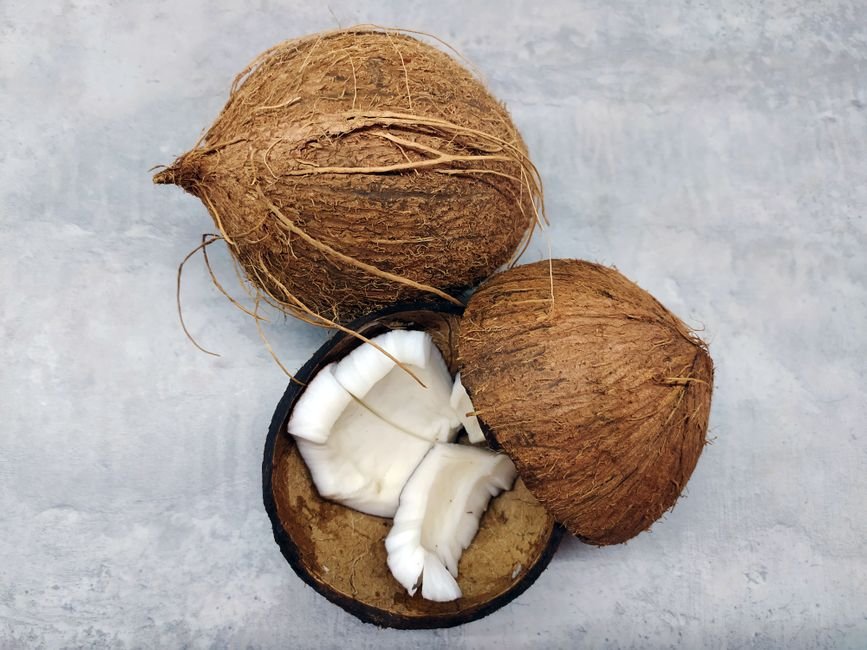
Full Nutrition Facts for 1 Cup (80g) of Fresh Coconut Meat
Fresh coconut meat is high in fat and fiber, making it energy-dense but also satisfying. Here’s the complete nutritional profile per 80g serving:
| Nutrient | Amount | % Daily Value |
|---|---|---|
| Calories | 283 | — |
| Total Fat | 27g | 35% |
| Saturated Fat | 24g | 120% |
| Cholesterol | 0mg | 0% |
| Sodium | 16mg | 1% |
| Total Carbohydrate | 10g | 4% |
| Dietary Fiber | 7g | 26% |
| Total Sugars | 3g | — |
| Protein | 3g | 5% |
| Manganese | 1.3mg | 57% |
| Copper | 0.4mg | 44% |
| Iron | 2.6mg | 14% |
*Percent Daily Values are based on a 2,000-calorie diet. Source: USDA FoodData Central.
Key insight: Fresh coconut meat is uniquely high in saturated fat—primarily medium-chain triglycerides (MCTs)—which some evidence suggests may be metabolized differently than long-chain saturated fats. However, it’s still saturated fat and should be consumed in moderation. The 7g of dietary fiber per serving is substantial, supporting digestive health and satiety.
Etekcity Food Scale
0.1g accuracy — the perfect companion for exact portions.
Raw Coconut Meat vs. Dried Shredded Coconut
Raw Coconut Meat
- 283 calories per 80g serving with higher water content
- 27g total fat but easier to control portions due to natural satiety signals
- Mild, slightly sweet flavor with firm, chewy texture
Dried Shredded Coconut (Unsweetened)
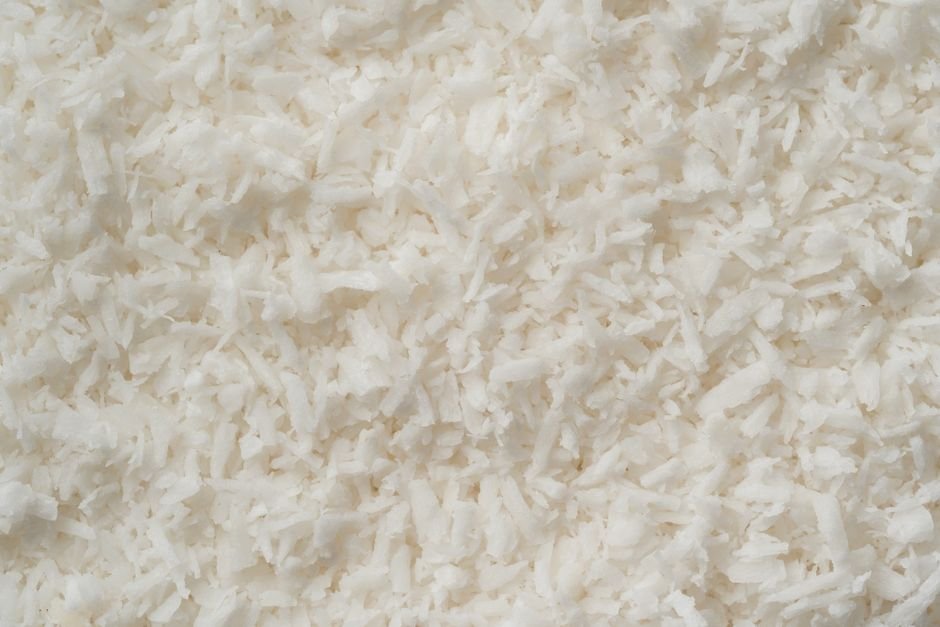
- 468 calories per 93g serving (water removed concentrates nutrients)
- 50g total fat per cup—much more calorie-dense than fresh
- Intensely sweet and concentrated coconut flavor, easily over-consumed in recipes
Practical takeaway: If you’re watching calories, fresh coconut meat is the better choice because its water content makes it less calorie-dense and harder to overeat. Dried shredded coconut is convenient for baking and cooking but requires careful measuring because 2 tablespoons equals only about 28 calories, while it’s easy to add a full cup (468 calories) to a smoothie or bowl without noticing.
Is Coconut Good for Weight Loss?
Coconut can fit into a weight-loss diet if portion sizes are controlled. The high fat and fiber content promotes satiety, meaning smaller amounts can satisfy hunger longer. However, coconut is calorie-dense: a single cup of fresh meat exceeds 280 calories, and dried shredded coconut is nearly 470 calories per cup. The key is using coconut as a flavorful garnish or ingredient rather than a primary food, especially if you’re in a calorie deficit.
Tips to Eat Coconut Without Gaining Weight:
- Measure with precision: Use a kitchen scale or measuring cup. 2-3 tablespoons of shredded coconut (about 18-27 calories) adds flavor without excess calories.
- Pair with protein: Add fresh coconut to a smoothie with Greek yogurt or protein powder to balance macros and extend satiety.
- Choose unsweetened: Sweetened shredded coconut can contain 5-7g added sugar per serving, while unsweetened has only the natural 3g from the fruit itself.
- Use coconut water, not milk, for hydration: Fresh coconut water (9 calories per 100ml) is far lower in calories than full-fat coconut milk (230 calories per 200ml).
For weight loss, think of coconut as a seasoning or nutrient booster rather than a main ingredient. Its rich satiety properties mean a small amount goes a long way.
How Portion Size Affects Calories
Portion size dramatically changes coconut’s calorie impact, especially with dried forms. A 1-tablespoon serving of shredded coconut is roughly 9 calories, while a full cup exceeds 450 calories. The same principle applies to coconut oil: 1 teaspoon is 40 calories, 1 tablespoon is 120 calories. Understanding these breakpoints helps you add coconut flavor without accidentally consuming an extra 300+ calories.
Example:
- Small portion (1 tablespoon shredded coconut): ~14 calories, minimal impact on daily intake
- Large portion (1 cup shredded coconut): ~468 calories, equivalent to a full meal for some people
Always measure coconut in grams if possible; visual estimates are often off by 50-100% because the ingredient is light and easy to overpack.
Best Way to Measure Coconut Accurately
Because dried coconut is so light and easily compressed, weight measurement via a digital scale is the gold standard for accuracy. Volume measurements (cups and tablespoons) are next best if you lightly spoon coconut into the measuring cup without compacting it. For fresh coconut meat, weight is still preferable, though “pieces” or “chunks” are acceptable if a scale isn’t available.
Options:
- Digital kitchen scale: Place a small bowl on the scale, tare to zero, then add coconut. Most accurate method. Measure to the nearest gram.
- Measuring cups/spoons: Use the “spoon and level” technique—spoon shredded coconut into a dry measuring cup and level it flush with the rim. Avoid packing or shaking the cup.
- USDA database serving size: Refer to pre-portioned servings listed on product labels or the USDA FoodData Central database, which lists common portions (1 tablespoon, 1 cup) with verified calorie counts.
Calculate Your Exact Calorie Intake
If you’re tracking macronutrients or managing a specific calorie target, knowing the exact calories in your coconut servings matters. Every gram adds up, and mismeasuring by even 10g of dried coconut can mean 50+ hidden calories daily.
Our free AI nutrients calculator lets you input any coconut quantity—by weight or common measure—and instantly see calories, macros, and micronutrients. This removes guesswork from meal planning.
- Instantly calculate calories: Input “30g coconut meat” or “2 tablespoons shredded” and get exact macros in seconds
- Track macronutrient ratios: See how coconut fits into your daily fat, carb, and protein targets
- Compare forms side-by-side: Calculate fresh vs. dried vs. oil to find the best fit for your goals
Try the free calculator now to take the guesswork out of coconut portions.
Common Mistakes When Eating Coconut
People often unknowingly consume excessive coconut calories due to these avoidable mistakes:
❌ Using full-fat coconut milk (220 calories per 200ml) in place of light coconut milk (80 calories per 200ml) without accounting for the calorie difference. This can add 300+ hidden calories to a curry or soup.
❌ Pouring coconut oil directly from the bottle without measuring. One extra tablespoon is 120 calories—equivalent to a whole apple or a slice of whole-grain bread.
❌ Buying sweetened shredded coconut thinking “a little sugar” is harmless. A single cup can contain 30-40g added sugar, equaling a small dessert in sugar content alone.
❌ Eating fresh coconut meat by the handful without weighing it. A single cup (80g) is 283 calories; many people consume 150-200g without realizing they’ve eaten nearly a full meal’s calories.
Weighing your coconut intake weekly or using the calculator above prevents these calorie overages from derailing your goals.
FAQ
How many calories are in 100g of coconut?
Fresh coconut meat contains approximately 354 calories per 100g. Dried shredded coconut is significantly higher at about 503 calories per 100g due to water removal.
Is coconut fattening?
Coconut itself is not inherently “fattening,” but it is calorie-dense and high in fat. In portion-controlled amounts (1-3 tablespoons), it fits into most diets. However, consuming large quantities of coconut oil, milk, or dried coconut without reducing other calorie sources will lead to weight gain.
Does coconut oil have different calories than fresh coconut meat?
Yes. Coconut oil is pure fat (120 calories per tablespoon), while fresh coconut meat includes water, fiber, and carbs, making it lower in calories per tablespoon (~35 calories for 1 tablespoon of fresh meat). Oil is more calorie-dense.
Can I eat fresh coconut meat daily?
Yes, in moderation. One serving (80g, or 1 cup) daily is reasonable for most people and provides valuable manganese, copper, and fiber. However, for weight loss, limit to 2-3 servings per week or use it as a garnish rather than a main component.
Conclusion
Coconut is a nutrient-rich, high-fat food that provides valuable fiber, manganese, and trace minerals. At 283-354 calories per 100g (depending on form and freshness), it’s considerably calorie-dense, meaning small portions deliver significant satiety and flavor. Fresh coconut meat is the lighter, more manageable option compared to dried shredded or coconut oil, making it the better choice for those watching calories.
Whether you’re using coconut in curries, smoothies, or baking, precise measurement is essential to prevent calorie creep. Track your portions using a reliable digital scale or calculator to ensure coconut enhances your nutrition without derailing your goals. Pair it with protein and whole grains for balanced meals, and enjoy coconut’s tropical richness in moderation.
