
Teriyaki sauce is a staple condiment in Japanese cuisine and has become a global favorite for glazing, dipping, and marinating meats, vegetables, and rice bowls. Whether you’re ordering takeout or cooking at home, teriyaki adds a sweet, savory umami depth to countless dishes. It’s particularly popular with health-conscious eaters who view it as a lighter alternative to creamy sauces, though its calorie and sugar content deserves closer inspection.
But how many calories are actually in teriyaki sauce? The answer depends on serving size, brand, and whether it’s homemade or store-bought. This guide breaks down the complete nutrition profile, helps you measure accurately, and shows you how to enjoy teriyaki without derailing your diet.
Calories in Teriyaki Sauce (Quick Answer)
Most teriyaki sauces are calorie-dense condiments because of added sugar and soy base.
- 1 tablespoon (15ml) of standard teriyaki sauce: 15–17 calories
- 2 tablespoons (30ml): 30–34 calories
- ¼ cup (60ml): 60–68 calories
Calorie content varies by brand, ingredients, and whether the sauce is reduced-sodium, organic, or homemade.
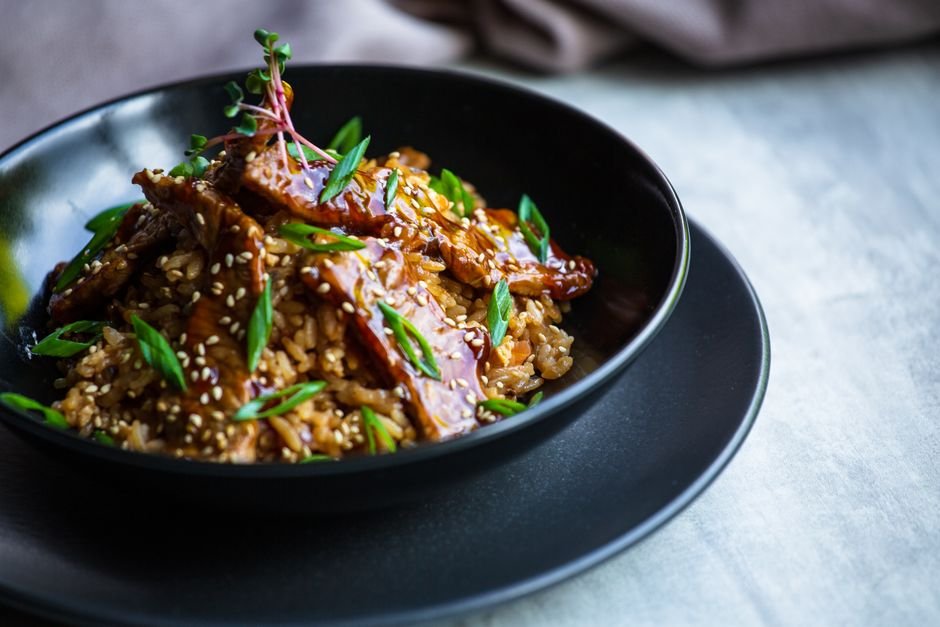
Full Nutrition Facts for 1 Tablespoon (15ml) of Teriyaki Sauce
Below is the complete nutrition profile for a standard serving of store-bought teriyaki sauce, based on USDA and common branded versions.
| Nutrient | Amount | % Daily Value |
|---|---|---|
| Calories | 15 | 1% |
| Total Fat | 0g | 0% |
| Saturated Fat | 0g | 0% |
| Cholesterol | 0mg | 0% |
| Sodium | 720mg | 31% |
| Total Carbohydrate | 3g | 1% |
| Dietary Fiber | 0g | 0% |
| Total Sugars | 2g | 4% |
| Protein | 0g | 0% |
| Iron | 0.2mg | 1% |
| Sodium (from soy) | 710mg | 30% |
*Percent Daily Values are based on a 2,000-calorie diet. Source: USDA FoodData Central.
Key insight: Teriyaki sauce is almost pure carbohydrate and sodium with virtually no fat or protein. A single tablespoon delivers nearly a third of the daily sodium limit (2,300mg), making it a condiment to use sparingly for those monitoring salt intake. The 2g of sugar per tablespoon comes almost entirely from added sweeteners (often mirin, brown sugar, or high-fructose corn syrup), not fermentation byproducts.
Etekcity Food Scale
0.1g accuracy — the perfect companion for exact portions.
Homemade vs. Store-Bought Teriyaki Sauce
Homemade Teriyaki Sauce
- Typically lower in sodium (300–500mg per tablespoon) when made fresh with soy sauce, mirin, sake, and ginger
- Sugar content is more controlled; you decide the sweetness level
- May contain whole garlic, ginger, or sesame seeds for added flavor and micronutrients
Store-Bought Bottled Teriyaki Sauce
- Higher sodium (700–900mg per tablespoon) due to preservation and flavor concentration
- Often contains added sweeteners (corn syrup, sucrose) beyond traditional mirin for shelf stability
- More consistent texture and flavor but less customization; some brands include thickeners or additives
Practical takeaway: Homemade teriyaki gives you control over sugar and sodium, making it ideal if you’re managing hypertension or blood sugar. If using store-bought, look for “reduced-sodium” versions (aim for under 500mg per tablespoon) and check the ingredient list for added sugars. Either way, measure with a tablespoon or kitchen scale rather than pouring freely from the bottle.
Is Teriyaki Sauce Good for Weight Loss?
Teriyaki sauce itself is low in calories—a tablespoon adds only 15 calories—but it’s not a free food. The real challenge is portion creep: people tend to use more sauce than one tablespoon, especially when glazing or dipping. Two or three tablespoons can quickly add 30–50 calories plus 1,500–2,000mg of sodium. More problematically, teriyaki’s sweet-savory profile can trigger hunger cycles, making you eat more of the accompanying food (chicken, rice, noodles) than you planned.
Tips to Eat Teriyaki Sauce Without Gaining Weight
- Measure one tablespoon into a small dish before eating, rather than applying sauce directly from the bottle or pouring onto your plate; this prevents unconscious oversizing.
- Pair teriyaki with high-protein and high-fiber foods (grilled chicken breast, tofu, leafy greens, brown rice) to increase satiety and offset the sauce’s carb-sugar spike.
- Make homemade teriyaki with less sugar by using a 3:1 ratio of low-sodium soy sauce to mirin, plus garlic and ginger; you’ll reduce sugar by 50% and sodium by 30–40%.
- Use teriyaki as a glaze, not a drench; brush it lightly onto food during the last 1–2 minutes of cooking so it clings rather than pooling on the plate.
With these strategies, teriyaki can be part of a balanced weight-loss diet without triggering cravings or sodium bloat.
How Portion Size Affects Calories
Teriyaki sauce’s calorie density changes noticeably with portion size, and it’s one area where eyeballing fails most people. A “splash” of sauce can easily be 2–3 tablespoons, tripling the calorie count. Understanding realistic portions helps you stay on track without sacrificing flavor.
Example:
- Small portion (1 tablespoon): 15 calories, 720mg sodium, 2g sugar
- Large portion (3 tablespoons / 1 oz): 45 calories, 2,160mg sodium, 6g sugar (nearly 3 days’ worth of added sugar in one serving)
Use a measuring spoon or kitchen scale to stay consistent.
Best Way to Measure Teriyaki Sauce Accurately
Because teriyaki is liquid and dense with dissolved sugars and salt, visual estimation almost always overshoots. A tablespoon looks small compared to how much you intuitively want to use, so invest in a proper measuring tool to avoid calorie and sodium creep.
Options:
- Measuring spoon (1 Tbsp = 15ml): The simplest method; keep one dedicated to sauces to avoid mixing flavors, and level it off with a knife rather than heaping.
- Kitchen scale (0.5 oz = 15g): Most accurate, especially for glazing; measure the sauce in a small bowl, then use a brush to apply.
- Condiment dispenser bottle or squeeze bottle (marked with ml lines): Ideal if you use teriyaki regularly; pour into the bottle and dial your portion before applying to food.
Calculate Your Exact Calorie Intake
If you’re using teriyaki as part of a larger meal—glazed chicken with vegetables and rice, for instance—knowing the exact calorie and macro breakdown of your whole plate matters more than teriyaki alone. Small condiment changes add up over days and weeks.
Our free AI nutrients calculator lets you input your meal ingredients (sauce included) and get instant totals for calories, protein, carbs, fat, sodium, and fiber. It accounts for portion sizes and brand variations, so you can adjust on the fly and hit your targets precisely.
- Calculate calories and macros for your complete meal in seconds
- See the impact of different teriyaki brands or homemade versions side by side
- Track sodium intake across the day to stay under 2,300mg
Try the free AI calculator here to get a full breakdown of your teriyaki-glazed meals.
Common Mistakes When Eating Teriyaki Sauce
Even health-conscious eaters often misstep with teriyaki because it feels like a “light” condiment. Here are the most common pitfalls:
❌ Pouring straight from the bottle without measuring, turning one tablespoon into three or four without noticing.
❌ Assuming homemade teriyaki is automatically healthier, then loading it with brown sugar or honey and ending up with higher calories and sugar than store-bought.
❌ Using teriyaki as an excuse to eat larger portions of carbs (rice, noodles) because “the sauce is low-calorie”; the food underneath is where calories accumulate.
❌ Buying “teriyaki-glazed” prepared chicken or takeout without asking how much sauce is applied; restaurant portions often use 2–3 tablespoons per serving.
Awareness and measurement are your best defenses.
FAQ
How many calories are in 100g of teriyaki sauce?
100g of standard teriyaki sauce contains approximately 100–110 calories. Since 1 tablespoon (15ml) is roughly 15–17 calories, a 100g serving (about 6.5 tablespoons) adds up quickly, making it easy to overconsume if you’re using a large spoon or free-pouring.
Is teriyaki sauce fattening?
Teriyaki sauce itself is fat-free but high in sugar and sodium. It’s not inherently fattening at small portions (1–2 tablespoons), but its sweet taste often leads to portion creep and increased appetite, which can indirectly drive weight gain. Used mindfully and measured, it’s compatible with weight loss.
Can I use teriyaki sauce on a low-sodium diet?
Standard teriyaki is unsuitable for strict low-sodium diets because one tablespoon delivers 31% of the daily sodium limit. Look for “low-sodium” or “reduced-sodium” teriyaki (under 300mg per tablespoon), or make your own using low-sodium soy sauce and controlling the salt.
Does teriyaki sauce contain gluten?
Most store-bought teriyaki sauces contain soy sauce, which is made from wheat and thus contains gluten. If you’re celiac or gluten-sensitive, check the label for “tamari” or “wheat-free” versions, or make teriyaki at home using tamari (soy sauce made from soybeans only, no wheat).
Conclusion
Teriyaki sauce is a low-calorie condiment by volume—just 15 calories per tablespoon—but its high sodium (720mg) and sugar content (2g) mean it should be used with intention. Whether homemade or store-bought, the real risk isn’t the sauce itself but portion creep and the unconscious eating it can trigger. Measure carefully, pair it with whole foods, and you’ll enjoy its flavor without derailing your diet.
For complete transparency on your meals, track your teriyaki intake alongside your whole plate using a reliable nutrients calculator. This approach removes guesswork and keeps you accountable to your health goals without sacrificing the foods you enjoy.
