
Cream cheese is a staple in kitchens worldwide—spread on bagels, baked into cheesecakes, mixed into frosting, and blended into countless sauces. Whether you’re watching your calorie intake, managing weight, or simply curious about what you’re eating, understanding the nutritional profile of cream cheese matters. It’s a popular choice for those who enjoy rich, creamy textures without the strong aged-cheese flavor, making it versatile for both sweet and savory applications.
But how many calories are actually in cream cheese, and what does a typical serving provide nutritionally? This guide breaks down the complete nutrition facts, compares full-fat and light varieties, and offers practical tips for including cream cheese in a balanced diet.
Calories in Cream Cheese (Quick Answer)
A standard 2-tablespoon (32g) serving of regular cream cheese contains approximately 100 calories.
- Full-fat cream cheese (2 tbsp / 32g): 100 calories
- Light cream cheese (2 tbsp / 32g): 60 calories
- Whipped cream cheese (2 tbsp / 32g): 70 calories
Calorie counts vary slightly by brand and whether the cream cheese is whipped, spread, or traditional block form.
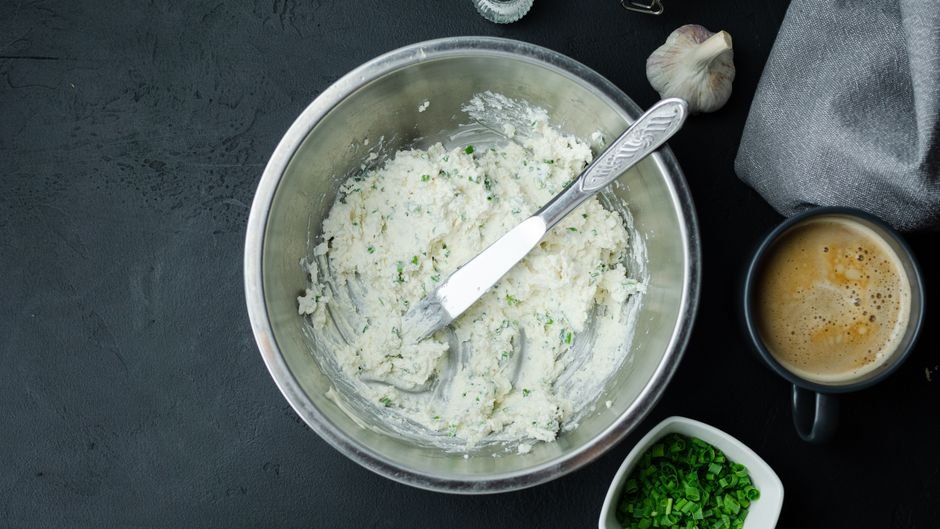
Full Nutrition Facts for 2 Tablespoons (32g) of Cream Cheese
Here’s the complete nutritional breakdown for regular, full-fat cream cheese at a standard 2-tablespoon serving size, based on USDA FoodData Central data.
| Nutrient | Amount | % Daily Value |
|---|---|---|
| Calories | 100 | — |
| Total Fat | 10g | 13% |
| Saturated Fat | 6g | 30% |
| Cholesterol | 31mg | 10% |
| Sodium | 150mg | 7% |
| Total Carbohydrate | 1g | <1% |
| Dietary Fiber | 0g | 0% |
| Total Sugars | 1g | — |
| Protein | 2g | 4% |
| Calcium | 98mg | 8% |
| Iron | 0.1mg | 1% |
| Phosphorus | 66mg | 5% |
*Percent Daily Values are based on a 2,000-calorie diet. Source: USDA FoodData Central.
Key insight: Cream cheese is extremely low in carbs and fiber, making it keto-friendly, but delivers a significant dose of saturated fat per serving—about 30% of the daily limit in just 2 tablespoons. The protein content is modest (2g), so it’s not a reliable protein source. The cholesterol and sodium are moderate, making it suitable for most people in controlled portions, though those managing heart health or hypertension should watch intake carefully.
Etekcity Food Scale
0.1g accuracy — the perfect companion for exact portions.
Full-Fat vs. Light Cream Cheese: What’s the Real Difference?
Full-Fat Cream Cheese (Per 2 tbsp / 32g)
- 100 calories, 10g fat, 6g saturated fat
- Richer, creamier texture; authentic Philadelphia-style taste
- Contains 31mg cholesterol; slightly higher sodium at 150mg
Light Cream Cheese (Per 2 tbsp / 32g)
- 60 calories, 5g fat, 3.5g saturated fat—40% fewer calories overall
- Thinner consistency; less indulgent flavor; often contains gums for texture
- Contains 16mg cholesterol; sodium similar or slightly lower
Takeaway: Light cream cheese cuts calories roughly in half, making it ideal if you’re portioning cream cheese on a bagel or into baked goods. However, the texture sacrifice and added additives matter to many people. For cheesecake and rich applications where a small amount is used, full-fat is often worth the extra calories. For bagel spreads and everyday use, light can deliver meaningful savings with minimal noticeable quality loss in many applications.
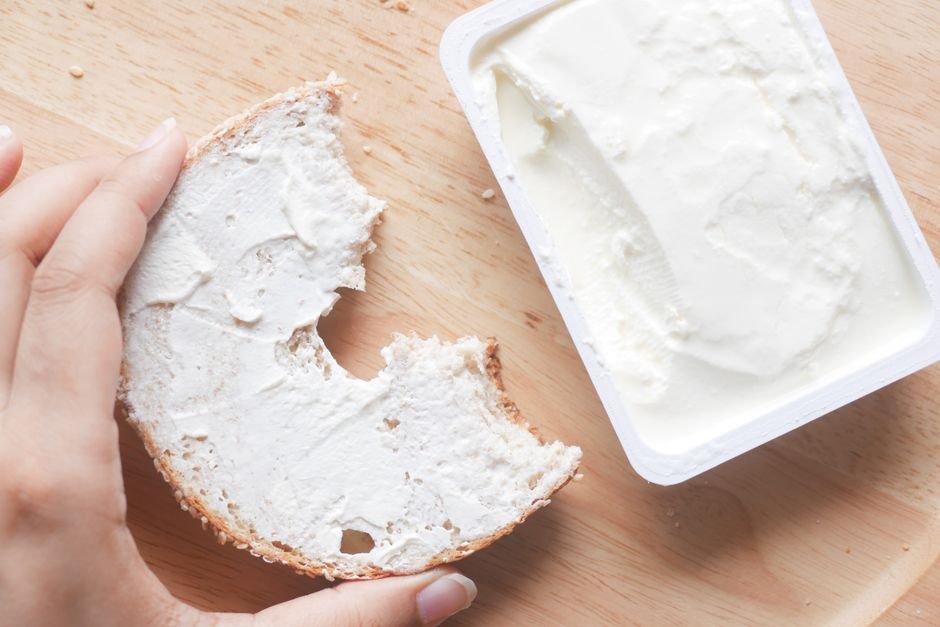
Is Cream Cheese Good for Weight Loss?
Cream cheese can fit into a weight-loss diet, but portions are critical. A 2-tablespoon serving (100 calories) is reasonable, but it’s easy to overshoot when spreading generously on bagels or baking. Cream cheese offers minimal protein and carbs, so it won’t keep you full long—pair it with protein-rich foods like smoked salmon, eggs, or Greek yogurt to build satiety. Its high saturated fat and low fiber mean it’s best viewed as a condiment or baking ingredient rather than a diet staple.
Tips to Eat Cream Cheese Without Gaining Weight:
- Measure with a tablespoon or scale—don’t estimate by spreading visually. Two tablespoons is the standard serving; many people unknowingly use 3–4.
- Pair cream cheese with vegetables, whole grains, or protein: dill-topped lox on a whole-grain bagel, or mixed into egg-based dishes rather than eaten alone.
- Swap light or whipped varieties for everyday use. Light cream cheese can save 40 calories per serving with minimal texture difference in most recipes.
- Use it as a binder or frosting base rather than the main component. A 1-tablespoon amount in a smoothie bowl, casserole, or sauce adds richness without derailing calories.
Weight loss isn’t about elimination—it’s about intelligent portions and nutrient balance. Cream cheese fits, as long as you count and pair it thoughtfully.
How Portion Size Affects Calories
Cream cheese calories scale almost directly with weight. Most of the calorie density comes from fat (9 calories per gram), so small differences in portion size create noticeable caloric jumps. A quarter-inch spread on a bagel versus a half-inch spread can mean the difference between 50 and 150 calories—a threefold difference.
Example:
- Small portion (1 tablespoon / 16g): 50 calories, 5g fat
- Large portion (4 tablespoons / 64g): 200 calories, 20g fat
Using a scale or measuring spoon removes guesswork and helps you stay accountable to your calorie goals.
Best Way to Measure Cream Cheese Accurately
Cream cheese’s soft, dense texture makes eyeball estimates unreliable. You need either a kitchen scale or volume measurement—both work, but scales are more precise. A kitchen scale that reads to the nearest gram is the gold standard and takes seconds to use. Volume measurements (tablespoons) work well if you pack the cream cheese evenly, though density varies slightly by brand and temperature.
Options:
- Digital kitchen scale (most accurate): Place a small dish on the scale, tare to zero, and add cream cheese until you hit your target weight (32g for 2 tbsp). Takes 10 seconds and removes all ambiguity.
- Standard measuring spoons: Level a tablespoon or half-tablespoon, packing gently to match typical spreadability. Consistent technique is key—always pack the same way.
- Pre-portioned packets: Many brands sell 1-ounce (28g) single-serve packets. Convenient for travel or strict portion control, though typically more expensive per ounce than bulk.
Calculate Your Exact Calorie Intake
If you’re eating cream cheese regularly—on bagels, in recipes, or as a snack component—small miscalculations compound quickly over weeks. Most people underestimate spreads by 50%, meaning you might think you’re eating 100 calories when you’re actually consuming 150. Knowing your true intake is the foundation of any successful diet.
Our free AI nutrients calculator can analyze your full meal composition, including cream cheese portions, and show you exactly how many calories, macros, and micronutrients you’re consuming. Instead of guessing or relying on incomplete database entries, you get personalized, accurate numbers for your exact food and portions.
- Input your cream cheese serving size and automatically see calories, fat, protein, and 50+ micronutrient values
- Compare full-fat, light, and whipped varieties side-by-side to make informed choices
- Track meals across the day to ensure you stay within your calorie and macro targets
Use the calculator now and stop guessing about your nutrition.
Common Mistakes When Eating Cream Cheese
Even well-intentioned eaters make predictable mistakes with cream cheese. Here are the most common ones:
❌ Underestimating spread thickness. A generous spread on a bagel often contains 3–4 tablespoons (150–200 calories) when the intention was 2 tablespoons (100 calories). Use a knife to spread thinly and evenly, or switch to measuring spoons.
❌ Forgetting cream cheese in recipes. Cream cheese hides in frosting, cheesecake, creamed soups, and casseroles. A single slice of cheesecake can contain 300+ calories from cream cheese alone, yet people often log only the slice weight without accounting for the ingredient breakdown.
❌ Assuming “light” is diet-friendly. Light cream cheese still contains 60 calories per 2 tablespoons—not negligible. Some people double-spread light cream cheese thinking it’s “safe,” negating the calorie advantage entirely.
❌ Pairing with other high-calorie toppings without accounting for total load. Cream cheese on a bagel with butter, plus smoked salmon, plus jam, plus lox creates a 500+ calorie breakfast. Each component matters; account for the full picture.
Awareness and measurement eliminate 90% of these pitfalls.
FAQ
How many calories are in 100g of cream cheese?
One hundred grams of regular cream cheese contains approximately 342 calories. A 100g serving is quite large (about 3.2 ounces or 6 tablespoons) and exceeds typical single servings; most people eat 1–2 tablespoons at a time.
Is cream cheese fattening?
Cream cheese itself is not inherently fattening, but it’s calorie-dense (100 calories per 2 tablespoons) and low in protein and fiber, so it doesn’t promote satiety. Overeating cream cheese—especially in creamy dips, frosting, or on bagels without portion control—can easily lead to weight gain. Measured portions (1–2 tablespoons) fit into balanced diets without issue.
Does cream cheese have carbs?
Regular cream cheese contains about 1 gram of carbs per 2-tablespoon serving, making it very low-carb and keto-friendly. Some flavored varieties (like pumpkin or berry cream cheese) contain more added sugars; always check the label.
Can you eat cream cheese on a keto diet?
Yes. Cream cheese is one of the most keto-friendly dairy options: only 1g carb, 10g fat, and 2g protein per 2-tablespoon serving. It’s often used in keto baking and as a creamy sauce base. Stick to unflavored varieties and measure portions to stay within macro targets.
Conclusion
Cream cheese is a calorie-dense, high-fat spread that works well in moderation. A 2-tablespoon serving delivers 100 calories, 10g fat (6g saturated), minimal carbs, and light protein. It’s keto-friendly and pairs well with proteins and vegetables, making it a legitimate option for most diets—as long as portions are measured and not eyeballed. Light cream cheese cuts calories by 40% if you’re looking for an everyday reduction without much sacrifice in applications like bagels or dips.
The key to eating cream cheese without derailing your goals is honest measurement and intentional pairing. Spread from a measured spoon, pair with whole grains and protein, and track total meal composition rather than cream cheese in isolation. For a complete picture of your daily nutrition, use a reliable nutrients calculator to log your exact portions and see how cream cheese fits into your total calorie and macro targets.
