
Feta is a staple in Mediterranean cuisine, beloved for its tangy flavor and creamy texture. Whether sprinkled on salads, crumbled into grain bowls, or served as part of a cheese board, feta appears in kitchens across the Middle East, Greece, and increasingly worldwide. People choose feta for its distinctive taste and convenience, though calorie awareness matters for those managing weight, tracking macronutrients, or following specific diets like keto or Mediterranean eating patterns.
The question “How many calories are in feta?” doesn’t have a one-size-fits-all answer because portion size, form (crumbled vs. block), and brand vary. This guide breaks down the exact calorie content, full nutrition facts, and practical strategies for eating feta without overeating.
Calories in Feta (Quick Answer)
A typical serving of feta is 1 ounce (28 grams), which is the standard reference used on nutrition labels.
- 1 ounce (28 g) crumbled feta: 75 calories
- ¼ cup (about 38 g) crumbled feta: 100 calories
- 1 cup (about 150 g) crumbled feta: 400 calories
Exact calorie counts vary slightly by brand, salt content, moisture level, and whether the feta is packed in brine or oil.
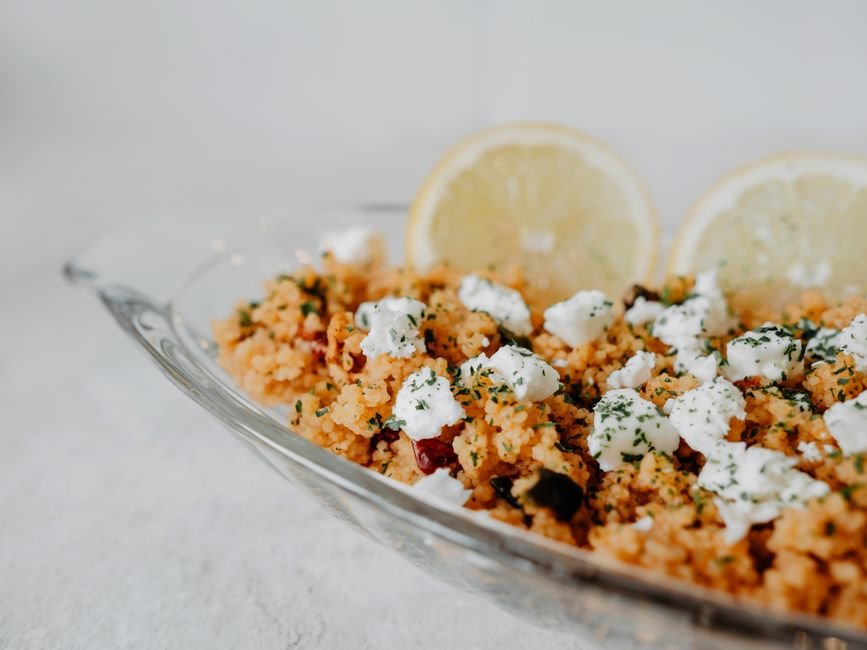
Full Nutrition Facts for 1 Ounce (28 g) of Feta
Feta is a nutrient-dense cheese with notable protein content, but also significant fat and sodium. Here’s the complete breakdown per 1-ounce serving:
| Nutrient | Amount | % Daily Value |
|---|---|---|
| Calories | 75 | — |
| Total Fat | 6 g | 9% |
| Saturated Fat | 4.2 g | 21% |
| Cholesterol | 20 mg | 7% |
| Sodium | 316 mg | 13% |
| Total Carbohydrate | 1.2 g | 0% |
| Dietary Fiber | 0 g | 0% |
| Total Sugars | 1.2 g | — |
| Protein | 5.3 g | 11% |
| Calcium | 140 mg | 11% |
| Iron | 0.2 mg | 1% |
| Phosphorus | 96 mg | 8% |
*Percent Daily Values are based on a 2,000-calorie diet. Source: USDA FoodData Central.
Key insight: Feta packs substantial protein (over 5 g per ounce) and calcium, making it useful for bone health and muscle maintenance. However, it’s also high in saturated fat and sodium—one ounce provides 13% of the daily sodium limit. Those watching sodium intake for blood pressure management should monitor portion size carefully.
Etekcity Food Scale
0.1g accuracy — the perfect companion for exact portions.
Crumbled Feta vs. Feta Block: What’s the Difference?
Crumbled Feta
- Pre-crumbled feta is convenient and distributes evenly across salads and grains
- Often contains added anti-caking agents or cellulose, which may slightly affect nutritional value
- Easier to portion by sight; roughly ¼ cup (1 tablespoon) is a standard serving
Feta Block
- Whole blocks allow you to cut custom portions and control exactly what you’re eating
- Often fresher and less processed; no additives needed for crumbled form
- Slightly denser and may retain more moisture, affecting calorie density per volume
Practical takeaway: Both forms have nearly identical nutrition per ounce. Choose crumbled feta for ease of portioning, or buy a block if you value freshness and want to portion exactly. Store blocks in brine or olive oil to maintain texture and flavor.
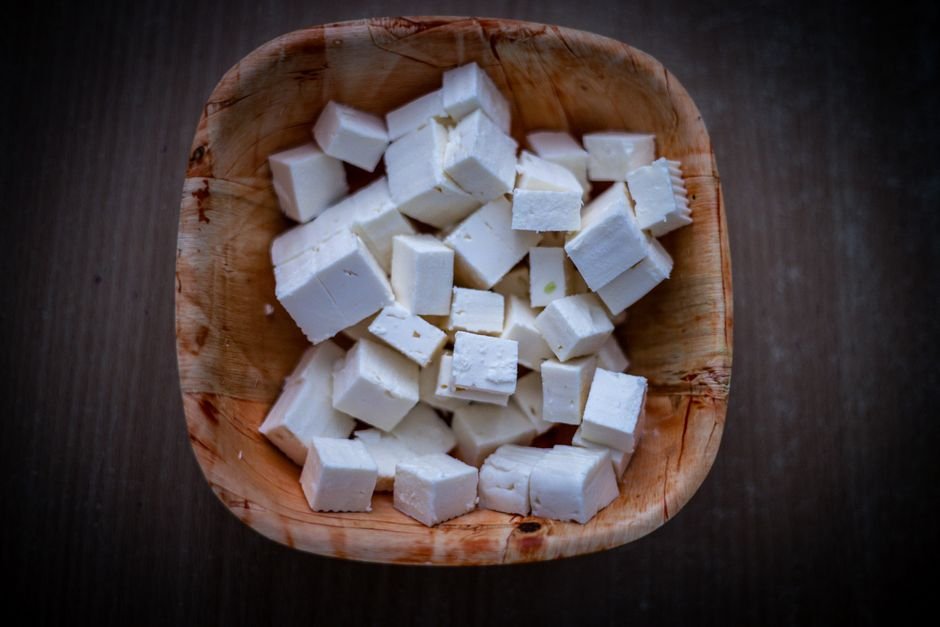
Is Feta Good for Weight Loss?
Feta can fit into a weight loss plan, but only in controlled amounts. At 75 calories per ounce and 6 g of fat, feta is calorie-dense. Two ounces (a typical salad topping) delivers 150 calories and 12 g of fat. The protein and calcium content do support satiety and bone health, but the calorie-to-volume ratio is high. If you enjoy feta, use it as a flavor accent rather than the main event, pair it with vegetables, and weigh your portions to stay accountable.
Tips to Eat Feta Without Gaining Weight:
- Measure before eating: Use a scale or measuring cup; a small bowl of crumbled feta looks small but can contain 2+ ounces easily.
- Bulk with vegetables: Add feta to large mixed salads where the cheese is just one component, forcing you to eat vegetables first.
- Choose lower-sodium alternatives: Some brands offer reduced-sodium feta, cutting sodium intake without changing calories significantly.
- Save it for intentional meals: Avoid mindlessly snacking on feta straight from the container; incorporate it into planned dishes where portion size is set.
When used strategically, feta’s flavor means a little goes a long way. A half-ounce sprinkle provides taste satisfaction with minimal calorie impact.
How Portion Size Affects Calories
Feta’s calorie density means portion size dramatically changes total intake. Because feta is a crumbly cheese that compacts unevenly, measuring by volume (cups or tablespoons) is unreliable unless you’re careful. A standard ounce is about the size of a large grape or a dice, but most people’s intuitive “pinch” of feta is much larger. Using a food scale removes guesswork and prevents accidental overeating.
Example:
- Small portion (½ ounce on a salad): 37 calories, 3 g fat
- Large portion (2 ounces in a grain bowl): 150 calories, 12 g fat
Over a week, that difference is 798 calories—enough to affect weight loss goals.
Best Way to Measure Feta Accurately
Because feta is crumbly and varies in density, volume measurements (cups, tablespoons) are prone to error. A 1-ounce serving might fill different containers depending on how tightly you pack it. The most reliable methods are a digital food scale (measuring net weight in grams) or keeping pre-portioned servings on hand. If you don’t have a scale, understand that ¼ cup (roughly 4 tablespoons) of loosely crumbled feta is approximately 1 ounce—but weigh it once to verify your volume estimate.
Options:
- Digital food scale (most accurate): Place a small bowl on the scale, tare to zero, add feta until the display reads 28 g (1 ounce). Takes 10 seconds.
- Pre-portion into containers: Divide a block or package into ounce-sized portions in small cups or bags at home; grab one serving when needed.
- Visual reference: Dice a 1-ounce serving once, take a photo, and use it as a mental benchmark for future servings (less reliable but better than guessing).
Calculate Your Exact Calorie Intake
If feta is a regular part of your diet, tracking its contribution to daily calorie and fat intake matters. Knowing you eat 2 ounces daily (150 calories, 12 g fat) is very different from assuming “just a little cheese” has no impact. Over weeks, those calories add up or help you stay in a deficit, depending on your overall intake.
Use a free AI nutrients calculator to input your actual daily feta serving and see exactly how it fits into your macronutrient targets. A good calculator accounts for brand variations, serving size, and lets you plan meals with precision.
- Identify exactly how much feta fits your daily calorie and fat allowance
- Adjust portions based on what else you’re eating that day
- Spot patterns (e.g., “I eat feta 4 days a week”) and make intentional choices
Common Mistakes When Eating Feta
Even health-conscious people make errors with feta because it’s easy to underestimate portion size and overeat. Here are the most common pitfalls:
❌ Assuming crumbled feta is “free” because it’s a salad topping—many people eat 2–3 ounces without realizing they’ve consumed 150–225 calories.
❌ Buying pre-crumbled feta and pouring from the bag instead of measuring, leading to inconsistent, usually larger, portions.
❌ Pairing feta with other high-calorie toppings (oils, dressings, nuts) without accounting for the total fat and calorie load.
❌ Eating feta straight from the container while cooking or snacking, which makes intake invisible and prevents portion control.
Awareness of these mistakes is the first step toward using feta intentionally rather than accidentally overeating it.
FAQ
How many calories are in 100g of feta?
One hundred grams of feta contains approximately 265 calories. This is about 3.6 ounces, a serving size useful for meal prep calculations.
Is feta fattening?
Feta is calorie-dense at 75 calories per ounce, and high in saturated fat. It won’t cause weight gain on its own, but large portions or frequent consumption can add up quickly if not tracked. When portioned carefully and paired with vegetables, feta fits into most eating plans.
Does feta contain carbohydrates?
Feta is very low in carbs—just 1.2 g per ounce. This makes it suitable for keto and low-carb diets, provided you account for the fat and calories.
Why is feta so high in sodium?
Feta is brined (preserved in salt water) or salted heavily during production to develop flavor and prevent spoilage. One ounce provides 316 mg of sodium (13% of the daily limit). Those managing blood pressure should limit feta or choose lower-sodium varieties, though true low-sodium feta is rare.
Conclusion
Feta is a nutrient-dense cheese that delivers quality protein, calcium, and distinctive flavor in small amounts. At 75 calories and 5.3 g protein per ounce, it supports satiety and bone health. However, its high saturated fat and sodium content require mindful portioning, especially for those managing cholesterol, blood pressure, or weight. Crumbled or block form are nutritionally equivalent per ounce; the choice depends on convenience and shelf life preferences.
The key to eating feta without overconsuming is measuring before eating, treating it as a flavor accent rather than a main component, and using a reliable method (a food scale, pre-portioning, or a nutrients calculator) to track intake. When portioned with intention, feta enhances Mediterranean and modern meals without derailing nutritional goals.
