
Halibut is one of the leanest, most protein-dense white fish available, making it a staple protein choice for athletes, fitness enthusiasts, and anyone managing their weight. Whether grilled, baked, or pan-seared, halibut delivers substantial protein while remaining low in saturated fat and calories. It’s popular in Scandinavian, Japanese, and North American cuisines, and increasingly favored in meal-prep diets and low-carb eating plans.
If you’re tracking your nutrition or planning meals around this versatile fish, understanding exactly how many calories are in halibut—and what the full nutrient profile looks like—is essential for making informed dietary choices. This guide covers calorie counts across serving sizes, complete macronutrient and micronutrient breakdowns, preparation effects, and practical strategies for incorporating halibut into a balanced diet.
Calories in Halibut (Quick Answer)
A standard 3.5-ounce (100g) fillet of cooked halibut contains approximately 111 calories, nearly all from protein.
- 3.5 oz (100g) cooked halibut — 111 calories
- 6 oz (170g) cooked halibut — 189 calories
- 3.5 oz (100g) raw halibut — 91 calories
Calorie values vary slightly based on cooking method (poaching adds no fat; pan-frying with butter or oil increases calories) and whether skin is retained.
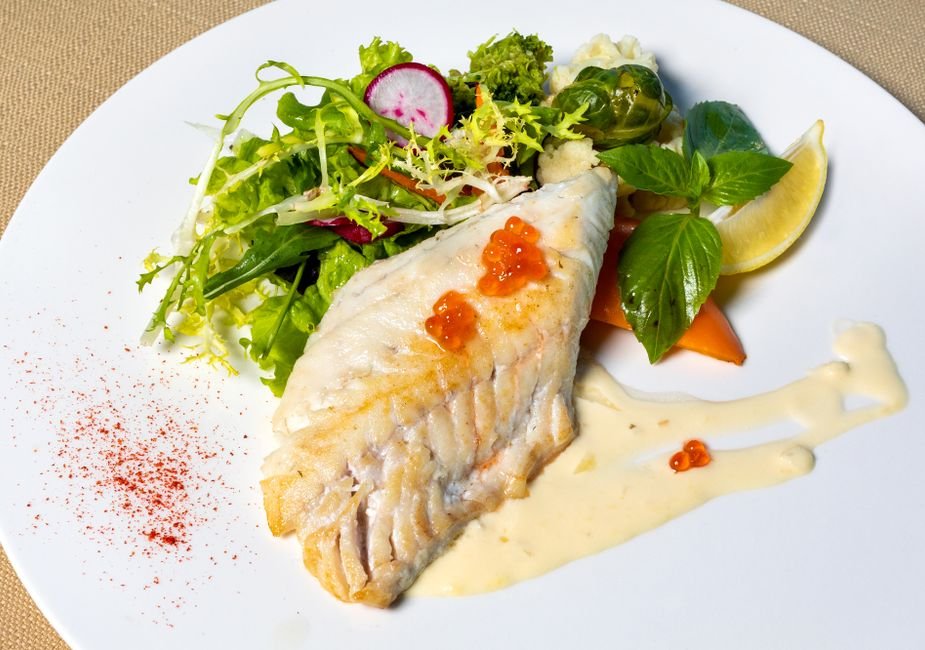
Full Nutrition Facts for 3.5 oz (100g) of Cooked Halibut
Below are the complete USDA-based nutrition facts for a standard serving of cooked halibut (prepared without added fat):
| Nutrient | Amount | % Daily Value |
|---|---|---|
| Calories | 111 | — |
| Total Fat | 2.3g | 3% |
| Saturated Fat | 0.3g | 2% |
| Cholesterol | 41mg | 14% |
| Sodium | 59mg | 3% |
| Total Carbohydrate | 0g | 0% |
| Dietary Fiber | 0g | 0% |
| Total Sugars | 0g | 0% |
| Protein | 21.3g | 43% |
| Selenium | 46.8 mcg | 85% |
| Vitamin D (from cooking) | 570 IU | 14% |
| Magnesium | 24mg | 6% |
*Percent Daily Values are based on a 2,000-calorie diet. Source: USDA FoodData Central.
Key insight: Halibut is exceptionally protein-dense while remaining extremely low in both total fat and saturated fat. At 111 calories per 3.5-ounce serving with over 21 grams of protein, it delivers one of the highest protein-to-calorie ratios of any fish. The 85% daily value of selenium—a powerful antioxidant mineral—makes halibut particularly valuable for immune function and thyroid health, often overlooked in discussions of fish nutrition.
Etekcity Food Scale
0.1g accuracy — the perfect companion for exact portions.
Raw Halibut vs. Cooked Halibut: Nutritional Differences
Raw Halibut Fillet
- Lower calorie density due to water content (91 calories per 100g)
- Selenium and B vitamins present but slightly less bioavailable without cooking
- Higher risk of foodborne pathogens; only suitable from sushi-grade, certified sources
Cooked Halibut Fillet
- Calories increase slightly (111 calories per 100g) as water is lost during heating
- Protein becomes more concentrated and more readily absorbed by the body
- Heat activates and stabilizes micronutrients like selenium; improves overall bioavailability
Practical takeaway: Cooking halibut through grilling, baking, or poaching slightly raises calorie density but dramatically improves nutrient absorption and eliminates food safety concerns. For daily consumption, cooked halibut is the preferable choice. If preparing raw halibut (for sashimi or ceviche), source it exclusively from certified sushi-grade suppliers and account for the slightly lower calorie count in your tracking.
Is Halibut Good for Weight Loss?
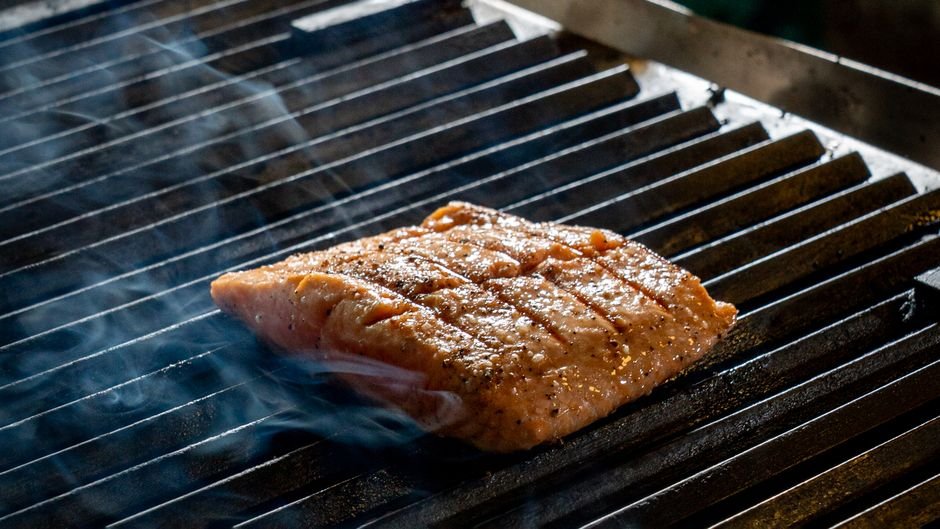
Yes. Halibut is one of the best fish choices for weight loss because it delivers exceptional satiety through high protein content (21+ grams per serving) while remaining very low in calories and saturated fat. The combination of lean protein, zero carbohydrates, and virtually no added fat when cooked simply makes halibut a calorie-efficient meal that supports appetite control. Most weight-loss diets benefit from including halibut 2–3 times weekly.
Tips to Eat Halibut Without Gaining Weight:
- Choose cooking methods carefully: Bake, grill, steam, or poach halibut instead of pan-frying in butter. If using oil, measure it precisely (1 teaspoon of olive oil adds ~40 calories).
- Pair with low-calorie sides: Serve halibut with steamed or roasted non-starchy vegetables, leafy greens, or brown rice rather than creamy sauces or fried accompaniments.
- Avoid breading and heavy coatings: A breaded halibut fillet can nearly triple calorie content. Keep the fish naked or lightly seasoned with herbs and lemon.
- Watch portion size at restaurants: Restaurant halibut portions often exceed 6 oz; split a fillet or request a smaller serving to stay within your target calorie intake.
When prepared simply, halibut becomes one of your most reliable low-calorie protein sources for sustainable weight loss.
How Portion Size Affects Calories
Halibut’s calorie count scales directly with portion size. A small palm-sized fillet (3 oz) delivers roughly 80 calories, while a typical restaurant serving (8 oz) approaches 250 calories. Understanding your portion is crucial for accurate meal tracking—a difference of 2–3 ounces can represent 50–70 calories, meaningful over time if your goal is weight loss.
Example:
- Small portion (3 oz / 85g cooked): 94 calories, 18g protein
- Large portion (8 oz / 227g cooked): 252 calories, 48g protein
A kitchen scale or online nutrition tracker is invaluable for hitting your exact portion targets.
Best Way to Measure Halibut Accurately
Halibut’s flaky texture and varying thickness across a single fillet make eyeball estimates unreliable. Weighing is the only accurate method. Cook your halibut first (as mentioned, cooked weight reflects what you actually consume), then measure it on a digital kitchen scale.
Options:
- Digital kitchen scale: Most accurate method. Place cooked halibut directly on the scale’s plate, zero it, and read the weight in grams or ounces. Cost: $10–20.
- Volume estimate (rough backup): If a scale is unavailable, estimate 3 oz as roughly the size of your palm (fingers excluded); 6 oz is approximately a deck of cards doubled. These estimates carry ±15% error.
- Nutrition-tracking app: Apps like MyFitnessPal let you search “halibut cooked 3.5 oz” and log exact servings. Pair with a scale for maximum accuracy.
Calculate Your Exact Calorie Intake
Knowing that a 3.5-ounce serving of halibut contains 111 calories is useful, but your actual daily intake depends on total portions, cooking methods, and what you pair it with. If halibut is a dietary staple for you, calculating your complete macro and micronutrient intake—not just calories—ensures you’re meeting your specific health or fitness goals.
Our site offers a free AI-powered nutrients calculator that analyzes your entire meal to break down calories, protein, fat, carbs, and micronutrients in seconds. Instead of manually adding up portions, you input what you ate and get instant clarity on your nutritional profile.
- Track multiple servings of halibut alongside side dishes in one scan
- Identify your actual macro balance for the day (not estimated)
- Receive personalized suggestions based on your remaining calorie or protein targets
Common Mistakes When Eating Halibut
Even a nutritious fish like halibut can derail your goals if prepared or consumed thoughtlessly. Here are the most common pitfalls:
❌ Adding excessive butter or oil: A 3.5-ounce halibut fillet cooked in 2 tablespoons of butter absorbs roughly 200 extra calories, nearly doubling the total. Measure cooking fat or use cooking spray instead.
❌ Forgetting to account for breading: Panko-breaded halibut can contain 4–5 grams of carbs and 100+ extra calories from the coating alone, plus additional oil used in cooking. Always choose plain fillets.
❌ Underestimating restaurant portions: A “halibut entrée” at a restaurant typically weighs 7–10 ounces, not the standard 3.5 ounces used in nutrition databases. Log restaurant fish as 7–8 ounces to stay honest.
❌ Pairing with high-calorie sauces: Hollandaise, beurre blanc, or cream-based sauces add 150–250 calories per serving. Request lemon, herbs, or olive oil vinaigrette instead.
Simple preparation—grilling, baking, or steaming with minimal added fat—preserves halibut’s nutritional advantage.
FAQ
How many calories are in 100g of halibut?
100 grams of cooked halibut (without added fat) contains approximately 111 calories. Raw halibut contains about 91 calories per 100g due to water loss during cooking.
Is halibut fattening?
No. Halibut is one of the leanest fish available, with only 2.3g total fat per 100g serving and negligible saturated fat. It’s an excellent choice for weight loss when prepared simply (baked, grilled, or poached without added oil). Problems arise only when it’s fried, breaded, or drowned in butter or cream sauce.
How much protein does halibut have?
A 3.5-ounce (100g) serving of cooked halibut contains 21.3 grams of protein, making it one of the most protein-dense fish. This high protein content supports muscle repair, satiety during weight loss, and metabolic function.
Is halibut a good source of omega-3 fatty acids?
Halibut contains moderate omega-3 levels (around 0.4g per 100g cooked), which is lower than fattier fish like salmon (2.3g per 100g) but still meaningful for cardiovascular and cognitive health. If maximizing omega-3 intake is your priority, pair halibut with salmon or mackerel 1–2 times weekly.
Conclusion
Halibut is a nutritional standout: remarkably low in calories (111 per 3.5-ounce serving), exceptionally high in protein (21+ grams), and virtually free of saturated fat. Its selenium content supports thyroid and immune function, while the zero-carbohydrate profile makes it ideal for low-carb and keto-aligned eating. Whether your goal is weight loss, muscle building, or general health, halibut is one of the most efficient protein sources available.
To maximize halibut’s benefits, cook it simply (grilled, baked, or poached), pair it with vegetables, and measure your portion on a scale for accuracy. For comprehensive tracking beyond just calories—capturing your complete daily protein, fiber, micronutrient, and macro balance—leverage a reliable nutrients calculator that gives you precise insight into your actual intake rather than estimates.
