
Protein bars have become a staple for people juggling fitness goals, busy schedules, and on-the-go nutrition. Whether you’re trying to build muscle, support weight loss, or simply maintain steady energy between meals, protein bars offer convenience as a portable snack. They’re eaten by athletes, office workers, gym enthusiasts, and anyone seeking a quick meal replacement.
But how many calories are actually in a protein bar, and what’s inside that wrapper? In this guide, we’ll break down the exact calorie counts, full nutrition facts, and help you understand how different brands and types compare so you can make informed choices aligned with your goals.
Calories in Protein Bar (Quick Answer)
A standard protein bar typically ranges from 170 to 300 calories depending on size, ingredients, and whether it’s designed as a meal replacement or light snack.
- Standard whey-based protein bar (1 bar, ~50g): 200–250 calories
- Lighter, low-sugar protein bar (1 bar, ~35g): 140–180 calories
- High-protein meal-replacement bar (1 bar, ~65g): 280–320 calories
Values vary significantly by brand, protein source (whey, plant-based, casein), added sugars, and whether nuts, chocolate, or other toppings are included. Always check the label.
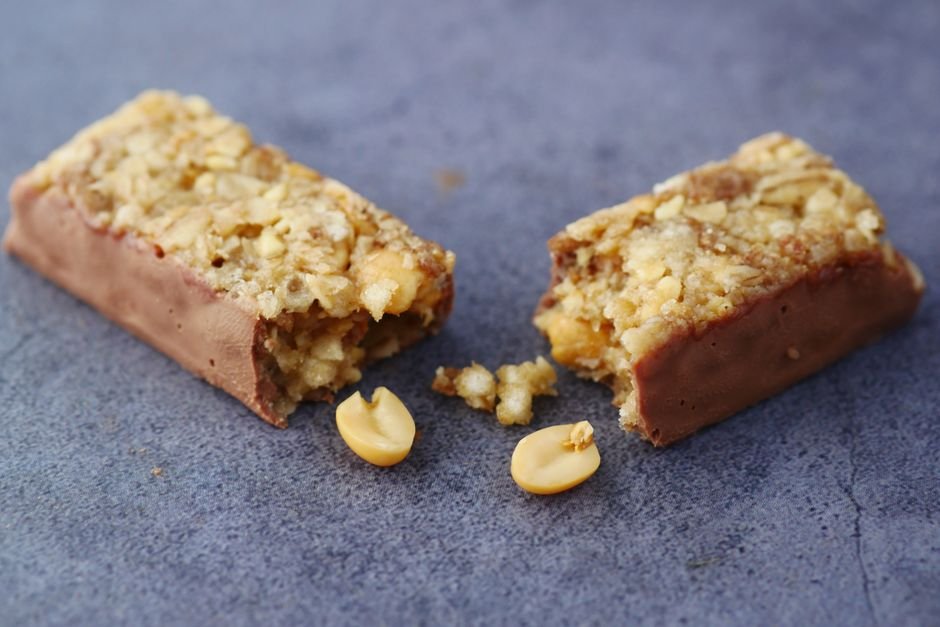
Full Nutrition Facts for One Standard Protein Bar (~50g)
Here’s a complete breakdown for a typical whey-based protein bar with chocolate coating, representing a common mid-range product:
| Nutrient | Amount | % Daily Value |
|---|---|---|
| Calories | 220 | 11% |
| Total Fat | 7g | 11% |
| Saturated Fat | 3.5g | 18% |
| Cholesterol | 15mg | 5% |
| Sodium | 180mg | 8% |
| Total Carbohydrate | 23g | 8% |
| Dietary Fiber | 1g | 4% |
| Total Sugars | 9g | — |
| Protein | 20g | 40% |
| Calcium | 200mg | 15% |
| Iron | 1.8mg | 10% |
| Potassium | 95mg | 3% |
*Percent Daily Values are based on a 2,000-calorie diet. Source: USDA FoodData Central.
Key insight: A standard protein bar delivers roughly 20g of protein—about 40% of a 2,000-calorie daily limit—with a modest carbohydrate-to-protein ratio of 1.15:1. This makes it effective for post-workout recovery or muscle maintenance, but the 9g of added sugar means it functions more like a fortified snack bar than a whole-food meal. Choose bars with fiber content above 1g and sugars below 8g if you’re monitoring blood sugar or managing weight.


Etekcity Food Scale
0.1g accuracy — the perfect companion for exact portions.
Low-Carb Protein Bar vs. High-Protein Chocolate Bar
Not all protein bars are created equal. Understanding how formulation changes the nutritional profile helps you pick the right bar for your specific goal.
Low-Carb Protein Bar (e.g., keto-friendly, ~35g)
- Calories: 150–170, with roughly 3–5g net carbs and minimal sugar
- Protein: 15–18g, often from whey or plant sources supplemented with amino acids
- Fat: 7–9g total, usually from nuts or MCT oil, supporting satiety without carb bloat
High-Protein Chocolate Bar (indulgent or meal-replacement, ~65g)
- Calories: 300–350, designed as a near-meal-sized snack with chocolate flavor appeal
- Protein: 25–30g, often blended whey and casein for sustained release
- Carbs & Sugar: 30–40g carbs with 12–18g sugar, more like a dessert-inspired bar
Practical takeaway: If you’re focused on weight loss or following a low-carb diet, opt for bars with under 5g net carbs and sugar under 3g—they’re more satiating and won’t trigger blood sugar spikes. For muscle building or meal replacement, higher-protein bars (25g+) with balanced carbs are acceptable post-workout, but watch total daily sugar intake across all bars you consume.
Is Protein Bar Good for Weight Loss?
Protein bars can support weight loss if chosen and used strategically. The high protein content (15–25g per bar) helps preserve muscle during calorie restriction and triggers greater satiety than simple carbs or fats alone. However, many conventional bars contain 8–15g of added sugar and function more like candy than nutritional tools. A 220-calorie bar works well as a planned snack between meals, but shouldn’t replace whole foods or be eaten mindlessly as extra calories.
Tips to Eat Protein Bar Without Gaining Weight
- Choose bars with at least 3g fiber and under 5g sugar: These blunt blood sugar spikes and reduce cravings for additional snacks.
- Pair with hydration: Drink 8–12 oz water with your bar to maximize fullness and improve digestion of the protein and carbs.
- Treat as a planned snack, not “extra”: Account for the bar’s calories in your daily total; don’t consume it on top of normal meals and expect weight loss.
- Check serving size: Some bars marketed as single servings contain 60–70g and 300+ calories—verify you’re not accidentally doubling your intake.
For sustainable weight loss, bars work best when you’ve identified a specific occasion where they fit (post-gym, mid-morning bridge between meals) rather than as a default grab whenever hungry.
How Portion Size Affects Calories
Protein bars are pre-packaged, which removes guesswork—but size varies wildly across brands. A “standard” bar weighs 35–50g and delivers 140–220 calories. Meal-replacement bars run 60–80g and hit 300–400 calories. Some brands offer “bite-sized” versions at 20–25g with 80–120 calories, while premium bars can exceed 100g and 450 calories. Always read the label’s “Serving Size” line, as some packages contain two servings.
Example
- Small portable bar (30g): ~130 calories, 12g protein—ideal for a minor snack or blood-sugar stabilizer
- Standard bar (50g): ~220 calories, 20g protein—substantial enough for post-workout or midday hunger
If you’re eating a bar daily, the difference between a 130-calorie bite and a 350-calorie meal-replacement bar can add up to 2,000+ extra calories per week—shifting the dial between weight loss and maintenance.
Best Way to Measure Protein Bar Accurately
Unlike loose foods (granola, nuts), protein bars are already portioned. The most accurate way to track calories is to rely on the label serving size and never assume two bars are identical across brands. Some bars are softer and compress easily, which can make a bar feel smaller than stated, while premium or chocolate-coated bars may feel denser. Always check the grams listed on the label and, if comparing brands, use that gram weight as your reference, not your eyes.
Options
- Weigh the unopened bar on a kitchen scale: Confirm it matches the label gram weight (should be within 2–3% tolerance).
- Log by label serving size in a nutrition app: Enter the exact bar name and brand; don’t generalize as “protein bar.”
- Divide multi-serving bars: If a bar lists two servings, use a knife to cut it in half and weigh each piece to verify accuracy.
Calculate Your Exact Calorie Intake
If you eat protein bars regularly—whether daily or several times a week—knowing your exact intake matters. A 220-calorie bar three times weekly adds up to 2,640 calories per month. For weight loss, that can mean the difference between a pound lost or plateau.
Use our free AI nutrients calculator to log not just your protein bar, but your entire day’s food and see exactly how bars fit into your calorie and macronutrient targets. This removes the guesswork and helps you identify whether bars support or undermine your goals.
- Track macros (protein, carbs, fat) across all foods to ensure your bar choice aligns with your goal ratio
- Compare multiple bar brands side-by-side to find the best nutritional fit for your budget and taste
- Monitor how bars affect your hunger, energy, and weight trends—some people do better with whole-food snacks
Visit the free nutrients calculator to input your bar and see exactly how it fits your daily nutrition needs.
Common Mistakes When Eating Protein Bar
Even with good intentions, small errors can turn a helpful snack into an obstacle. Here are the most common pitfalls:
❌ Assuming all protein bars are equal nutritionally—brands vary wildly in sugar, fiber, and ingredient quality. A 200-calorie bar might have 3g or 12g of sugar depending on the formulation.
❌ Eating a bar as a meal replacement without checking total calories—a 300-calorie bar is not the same as a balanced 400–500 calorie meal with vegetables, healthy fats, and whole grains.
❌ Ignoring portion size and eating multiple bars in one day without accounting for the calories—it’s easy to consume 400–600 extra calories if you eat two bars casually.
❌ Choosing bars based solely on taste or marketing (“natural,” “high-protein”) without reading the nutrition label—some “natural” bars contain as much sugar as a candy bar.
Read every label, treat bars as one tool among many snack options, and confirm they support rather than sabotage your goals.
FAQ
How many calories are in 100g of protein bar?
A standard protein bar averages 440–450 calories per 100g. If a 50g bar has 220 calories, multiply by two. However, this varies by type—low-carb bars might be 410–430 cal/100g, while dense meal-replacement bars can reach 480+ cal/100g.
Is protein bar fattening?
Not inherently. A protein bar contains no more “fattening” potential than any snack with equivalent calories. A 220-calorie bar won’t cause weight gain if it fits within your daily calorie target. However, bars high in added sugar (10g+) can trigger cravings and overeating, and their convenience makes it easy to consume extra calories without notice.
Can I eat protein bars every day?
Yes, if they fit your calorie and micronutrient targets. Daily bars (~200–250 cal each) add up to 50,000+ calories per year—significant enough to shift body weight. Consider whether daily bars are displacing whole foods or adding surplus calories. Some people thrive on daily bars; others do better with occasional use.
What’s the best protein bar brand for weight loss?
Look for bars with: under 150 calories, 3g+ fiber, under 3g added sugar, and at least 10g protein. Brands like Quest, RXBAR, and Perfect Bar meet these criteria consistently, but read each product’s label—formulations vary within the same brand line.
Conclusion
Protein bars are a legitimate nutritional tool, delivering 15–25g of protein in a portable, shelf-stable package. A typical 220-calorie bar fits easily into a balanced diet and can prevent energy crashes between meals. The key is choosing bars with minimal added sugar, adequate fiber, and ingredients you recognize—and treating them as one component of your diet, not a replacement for whole foods.
Whether you’re building muscle, losing weight, or simply managing a busy schedule, your protein bar is only as effective as your overall food choices. Use a **reliable nutrients calculator** to track your bars alongside everything else you eat, confirm they support your specific goals, and adjust your selection if they’re leading to unwanted hunger spikes, cravings, or weight stalls.
