
Rye bread is a staple grain across Northern and Eastern Europe, prized for its dense texture, earthy flavor, and reputation as a healthier bread alternative. It’s consumed regularly in Scandinavia, Germany, Poland, and Russia, where it pairs naturally with cured meats, cheeses, and pickled vegetables. For people managing weight, controlling blood sugar, or seeking higher fiber intake, rye bread often appears as a smarter choice than refined white or standard wheat bread.
But how many calories does rye bread actually contain, and what nutritional benefits does it deliver? This guide breaks down the full nutrition profile of rye bread, compares it to wheat alternatives, and shows you how to fit it into your diet without overdoing calorie intake.
Calories in Rye Bread (Quick Answer)
A standard slice of rye bread contains between 80–100 calories, depending on thickness, moisture content, and whether it’s made with 100% rye flour or a rye-wheat blend.
- One slice (28g) of light rye bread: 82 calories
- One slice (32g) of dark/whole grain rye bread: 96 calories
- One slice (35g) of pumpernickel (darkest, densest): 110 calories
Exact values vary by brand, moisture level, and whether seeds or added sugars are included in the formulation.
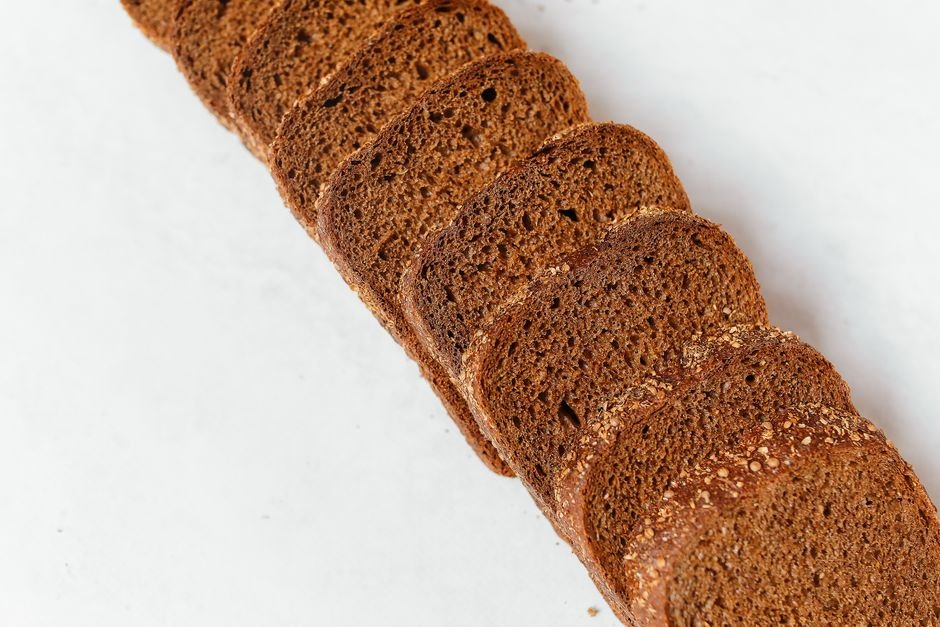
Full Nutrition Facts for One Slice (28g) of Light Rye Bread
Light rye bread is the most common retail variety in North America and contains mostly rye flour with some wheat flour blended in. Here’s the complete nutritional breakdown per standard slice:
| Nutrient | Amount | % Daily Value |
|---|---|---|
| Calories | 82 | — |
| Total Fat | 0.6g | 1% |
| Saturated Fat | 0.1g | <1% |
| Cholesterol | 0mg | 0% |
| Sodium | 210mg | 9% |
| Total Carbohydrate | 15.5g | 5% |
| Dietary Fiber | 1.7g | 6% |
| Total Sugars | 0.9g | — |
| Protein | 2.7g | 5% |
| Iron | 0.9mg | 5% |
| Magnesium | 22mg | 5% |
| Manganese | 0.3mg | 13% |
*Percent Daily Values are based on a 2,000-calorie diet. Source: USDA FoodData Central.
Key insight: Rye bread delivers nearly twice the dietary fiber of white bread in a similar slice, making it more satiating and beneficial for digestive health and blood sugar control. The fiber-to-carb ratio is notably favorable, which explains why rye is traditionally recommended for people managing diabetes or pursuing steady weight loss.

Etekcity Food Scale
0.1g accuracy — the perfect companion for exact portions.
Dark Rye vs. Light Rye Bread — What’s the Difference?
Dark/Whole Grain Rye Bread
- Made with 100% or mostly rye flour (no wheat flour blend)
- Denser texture, deeper earthy flavor, higher fiber content (2.0–2.4g per slice)
- Slightly higher calorie density (96–100 calories per 32g slice) but greater satiety per calorie
Light Rye Bread
- Blend of rye and wheat flour, lighter crumb, milder taste
- Softer structure, easier to toast, more commercially common in North America
- Slightly fewer calories (80–85 per slice) but also less fiber than dark varieties
Practical takeaway: If you’re seeking maximum fiber and satiety, dark rye is the better choice. If you prefer milder flavor and lighter texture, light rye still offers digestive benefits over white bread with only a marginal calorie difference. The choice depends on your taste preference and fiber goals rather than calorie count.
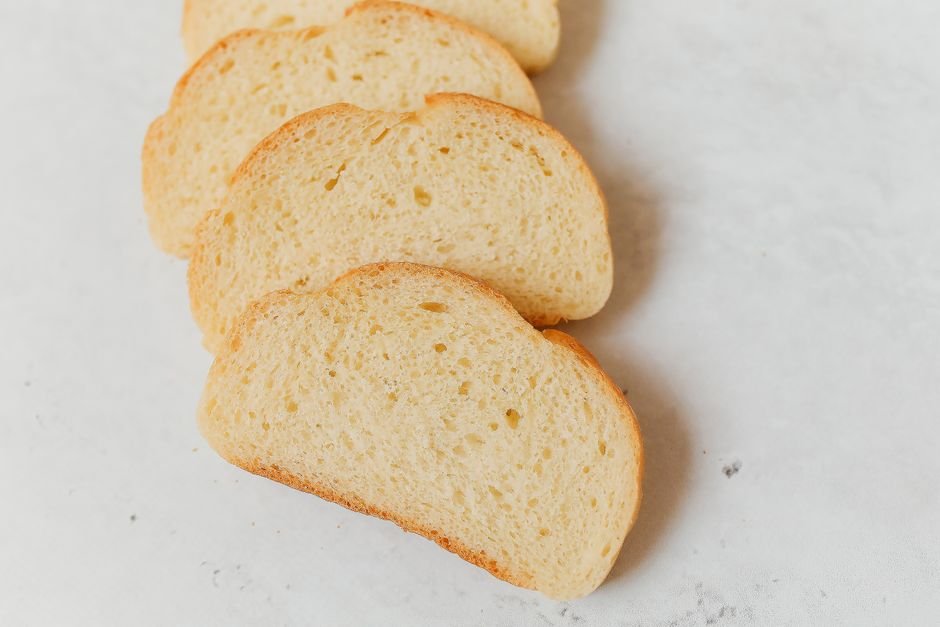
Is Rye Bread Good for Weight Loss?
Rye bread is one of the better bread choices for weight loss, primarily because of its high fiber content and low glycemic index (GI around 51–68, depending on type). Unlike white bread, which spikes blood sugar quickly and leaves you hungry, rye bread provides sustained fullness. A single slice is unlikely to trigger overeating, and the 2–2.4g of fiber per slice supports digestive regularity and microbiome health. That said, calories still add up—two slices contain roughly 160–200 calories, so portion awareness is essential.
Tips to Eat Rye Bread Without Gaining Weight:
- Stick to one or two slices per meal and pair with protein (cheese, cured meat, eggs) or healthy fats (avocado, nut butter) to increase satiety
- Use rye bread as a toast base rather than building tall sandwiches; watch the fillings, which often contribute more calories than the bread itself
- Choose dark rye over light rye when possible—the higher fiber means you’ll feel fuller on fewer calories
- Measure or count slices rather than free-pouring; bread portions are easy to underestimate visually
When eaten mindfully, rye bread supports weight loss better than white or soft wheat varieties, thanks to its satiety factor and stable impact on blood sugar.
How Portion Size Affects Calories
Rye bread calorie density is highly dependent on slice thickness and moisture content. A thinner slice might weigh only 22g (70 calories), while a thick deli-style slice can reach 40g (155 calories). Bakery slices are often heavier and denser than packaged bread from a grocery store, so two “standard” slices from different sources can vary by 30–50 calories.
Example:
- Thin slice (22g): 70 calories — a good choice if you’re being strict with portions
- Thick slice (40g): 155 calories — equivalent to two standard slices in calorie terms
Knowing your bread’s weight per slice (usually listed on packaged loaves) lets you log calories accurately and avoid underestimating your intake.
Best Way to Measure Rye Bread Accurately
The most reliable method is weighing each slice on a kitchen scale. Package labels typically list calories per slice and the weight of one slice; simply place your bread on the scale and match the weight. If you’re buying from a bakery without nutrition info, use the packaged-bread standard (28–35g per slice) as a rough guide. Visual estimation alone is notoriously inaccurate and often leads to underestimating portion size by 20–30%.
Options:
- Digital food scale: Most accurate method; place slice on scale and read the gram weight, then look up calories per gram from the label or a nutrition database
- Package label reference: If buying packaged rye bread, the label states grams per slice; count and weigh your slices against this standard
- Nutrition app logging: Apps like MyFitnessPal have barcode scanning for packaged breads, automatically filling in calories once you enter the serving weight
Calculate Your Exact Calorie Intake
Rye bread is straightforward to log, but what if you’re building a full meal—rye bread with cheese, butter, cured meats, and spreads? Each topping can quickly add 50–150 calories, and without accurate tracking, your sandwich could contain 400–600 calories instead of the 200–250 you assumed.
Our free AI nutrients calculator helps you build an entire meal, weigh each ingredient, and see the exact calorie and macro breakdown in seconds. Rather than guessing or piecing together multiple nutrition labels, you get a complete picture of every slice, spread, and topping.
- Track rye bread with any topping combination and see instant calorie totals
- Compare full meals to your daily targets without manual math
- Export your nutrition log to sync with fitness or health apps
Try the free calculator now to log your next rye bread meal accurately.
Common Mistakes When Eating Rye Bread
Even healthy bread choices can sabotage your diet or nutrition goals if you’re not intentional about how and how much you eat. Here are the most common missteps:
❌ Assuming all “rye” bread is whole grain — Many commercial rye breads are a rye-wheat blend with refined flour, offering less fiber than advertised.
❌ Pouring butter or spreads without measuring — A tablespoon of butter adds 100 calories; many people apply two or three without realizing it.
❌ Eating rye bread alone as a snack — Bread without protein or fat spikes blood sugar and leaves you hungry 90 minutes later; always pair it with cheese, eggs, or meat.
❌ Underestimating portion size visually — A “slice” varies wildly by loaf type; two slices from a deli bakery can contain as many calories as three slices from a supermarket package.
Being aware of these traps makes it far easier to enjoy rye bread as part of a balanced diet.
FAQ
How many calories are in 100g of rye bread?
A 100g serving of rye bread contains approximately 290–310 calories. This equals roughly three standard slices, depending on thickness and density.
Is rye bread fattening?
Rye bread is not inherently fattening when eaten in appropriate portions. At 80–100 calories per slice, it’s lower in calories than many breads and higher in fiber, which promotes satiety. The “fattening” label comes from overeating bread in general or pairing it with high-calorie spreads and fillings, not from rye itself.
Does rye bread have less gluten than wheat bread?
Rye bread contains gluten, though typically less than wheat bread. While rye does have gluten-containing proteins, they are less elastic, which is why rye dough is denser and stickier to work with. People with celiac disease or gluten sensitivity still cannot tolerate rye bread safely.
What’s the difference between rye bread and pumpernickel?
Pumpernickel is a dark, dense rye bread made with a coarser rye flour (often including rye bran) and sometimes molasses. It’s denser, darker, and contains slightly more fiber than standard dark rye bread. Both have similar calorie counts per slice but pumpernickel is heavier, so portions are naturally smaller.
Conclusion
Rye bread is a nutrient-dense, fiber-rich bread choice that supports weight management and stable blood sugar better than refined white or soft wheat breads. A standard slice contains 80–100 calories, 1.7–2.4g of fiber, and just 2.7g of protein, making it a lean base for healthy sandwiches and toast. Its low glycemic index and high satiety factor mean you’re less likely to overeat when rye is your bread of choice.
To truly maximize the nutritional benefit, measure your portions carefully, choose dark rye when possible, and always pair bread with protein or healthy fats to prevent blood sugar spikes and early hunger. For detailed tracking of your whole meal, including bread, spreads, and toppings, use a reliable nutrients calculator to log accurately and stay on top of your calorie and macro goals.
