
Salami is a cured, fermented meat product that’s eaten worldwide, particularly in Italian, Spanish, and German cuisines. It’s a popular addition to charcuterie boards, sandwiches, and antipasto platters, and is favored by people following high-protein or low-carb diets. Despite its popularity, salami is energy-dense due to its fat content, which makes understanding its calorie count important for anyone tracking intake.
If you’re wondering how many calories are in salami, the answer depends on the type (Italian, Spanish, beef-based) and serving size. This article breaks down the complete nutrition facts, compares salami to similar cured meats, and provides practical guidance for including it in a balanced diet.
Calories in Salami (Quick Answer)
A standard serving of salami is typically 1 ounce (28g) or about 5-6 thin slices.
- 1 ounce (28g) of salami: 110–130 calories
- 10 slices (55g, about 2 ounces): 220–260 calories
- 100g of salami: 380–420 calories
Calorie content varies depending on the type of salami (Italian vs. Spanish), fat percentage, and brand.
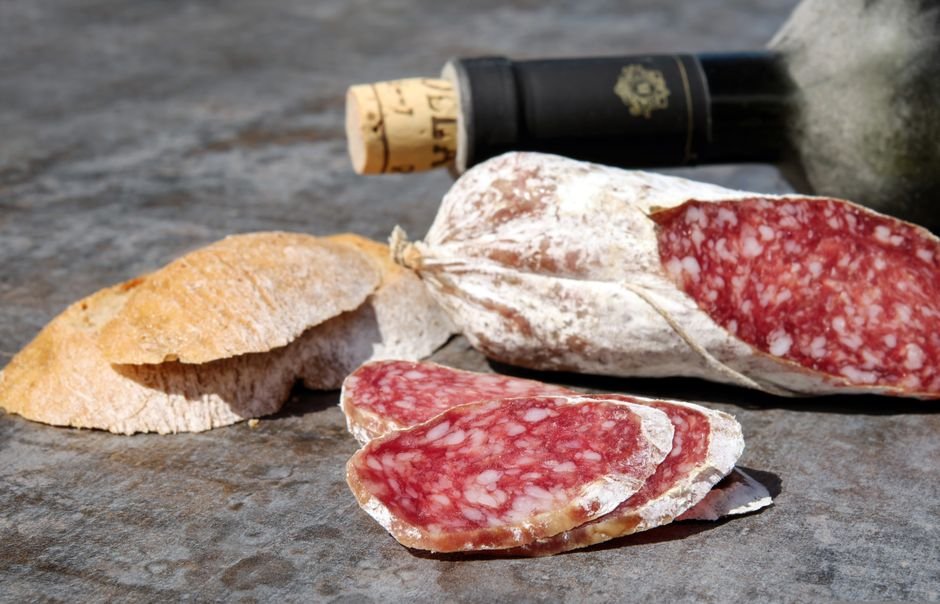
Full Nutrition Facts for 1 Ounce (28g) of Salami
Here’s the complete breakdown of nutrients for a standard 1-ounce (28g) serving of Italian salami, based on USDA data:
| Nutrient | Amount | % Daily Value |
|---|---|---|
| Calories | 119 | — |
| Total Fat | 10g | 13% |
| Saturated Fat | 3.8g | 19% |
| Cholesterol | 20mg | 7% |
| Sodium | 375mg | 16% |
| Total Carbohydrate | 0.5g | <1% |
| Dietary Fiber | 0g | 0% |
| Total Sugars | 0g | 0% |
| Protein | 7g | 14% |
| Iron | 0.3mg | 2% |
| Zinc | 1.2mg | 11% |
| Vitamin B12 | 0.4mcg | 17% |
*Percent Daily Values are based on a 2,000-calorie diet. Source: USDA FoodData Central.
Key insight: Salami packs significant protein (7g per ounce) in a small serving, making it calorie-efficient for muscle maintenance. However, nearly 90% of its calories come from fat, and a single ounce provides 16% of the daily sodium limit, so portion control is essential if you’re monitoring salt intake or managing blood pressure.
Etekcity Food Scale
0.1g accuracy — the perfect companion for exact portions.
Salami vs. Prosciutto: How They Compare
Salami
- Higher fat content (9–11g per ounce) due to meat blend and fermentation process
- More calories per ounce (110–130), but richer, more intense flavor
- Moderately high sodium (370–400mg per ounce) from curing
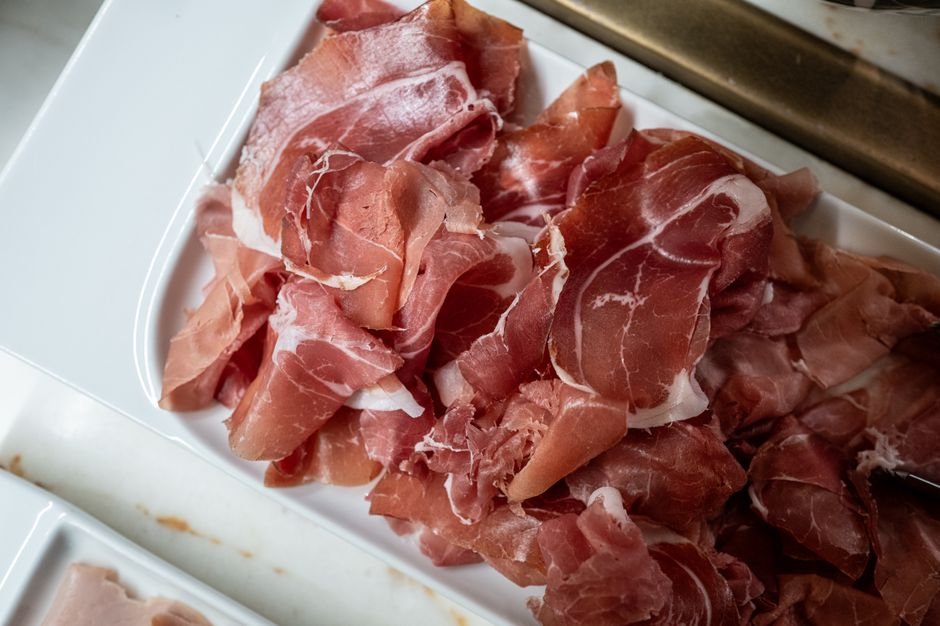
Prosciutto
- Lower fat content (4–5g per ounce) because it’s made from lean pork leg
- Fewer calories (50–70 per ounce), though still protein-rich
- Lower sodium (450mg per ounce) despite being aged; lower overall
Practical takeaway: If you’re cutting calories, prosciutto is the leaner choice, providing similar protein with roughly 40% fewer calories. If you’re on a budget and want more flavor and satiety per serving, salami’s higher fat content makes it more satiating, so you may eat less total. For those monitoring sodium strictly, both are cured meats and should be portioned carefully.
Is Salami Good for Weight Loss?
Salami can fit into a weight-loss plan when portioned carefully. It’s protein-rich and contains virtually no carbs, which supports satiety and helps preserve muscle during calorie deficits. However, its high calorie density (110+ calories per ounce) means that eating it mindlessly can quickly exceed your daily intake. The key is using it as a flavoring or accent rather than the main protein source, and measuring portions.
Tips to Eat Salami Without Gaining Weight:
- Limit to 1–2 ounces per day (1–2 slices on a sandwich or salad) to stay within calorie goals
- Pair with lower-calorie foods like vegetables, whole grains, or plain Greek yogurt to increase overall meal volume without excess calories
- Measure portions by weight (28g/1 ounce) rather than estimating slices, since thickness varies by brand
- Use it as a flavor-dense accent in meals rather than eating it standalone; a small amount satisfies cravings without overshooting intake
With portion awareness, salami can be part of a healthy, sustainable weight-loss diet.
How Portion Size Affects Calories
The calorie difference between small and large portions of salami adds up fast because it’s so energy-dense. A small handful of slices can easily provide 200+ calories, while an entire package can exceed 1,500 calories. Understanding portion scale helps you stay accountable and avoid unintended calorie creep during casual eating.
Example:
- Small portion: 4–5 thin slices (20g) = ~80 calories
- Large portion: 15–20 slices (1.5–2 ounces / 55g) = ~240 calories
A 160-calorie difference in one sitting can account for 10%+ of a 1,500-calorie daily intake, so measuring is worth the effort.
Best Way to Measure Salami Accurately
Because salami slices vary in thickness between brands and products, visual estimates are often inaccurate. The most reliable method is using a kitchen scale to weigh your portion to the nearest gram, aiming for 28g (1 ounce) as a reference serving. If a scale isn’t available, count slices and compare against a known package label, or use a post-it note marker on your package to track portions.
Options:
- Digital kitchen scale: Weigh to the gram; most accurate method. Place salami on the scale, note the weight, and log into a food tracker.
- Package labels: Most salami packages list servings per ounce and calories per serving. Use this as your baseline and count slices to match the serving size.
- Portion preset: Once you’ve weighed a standard portion, use that as a visual reference (e.g., a small stack fits two fingers wide). Reweigh weekly to verify consistency.
Calculate Your Exact Calorie Intake
If you eat salami regularly, even small daily portions can add up. Knowing your total daily intake—including salami and all other foods—is the most reliable way to meet nutrition goals, whether you’re losing weight, building muscle, or managing a health condition.
Our site offers a free AI-powered nutrients calculator that logs calories, macronutrients, and micronutrients from your meals. Simply enter your portion of salami (or any food) and the calculator provides instant nutrition breakdowns. Try the calculator here to track your intake in real time.
- Get accurate calorie counts for any serving size of salami you eat
- Track macros (protein, fat, carbs) to align with your fitness or health goals
- Log multiple foods in one meal to see total nutrition at a glance
Common Mistakes When Eating Salami
Many people underestimate how quickly salami calories add up, or pair it with other high-calorie foods without accounting for totals. Here are the most common pitfalls:
❌ Not measuring portions. Eyeballing a handful of salami can be 2–3× the intended serving, adding 100–200 unexpected calories.
❌ Pairing with other high-fat foods. Salami + cheese + crackers + mayo is a calorie tripwire that can reach 400+ calories in a small snack, sometimes without realizing it.
❌ Eating from the package. Standing in front of the fridge and slicing directly into your mouth makes it nearly impossible to track quantity; always plate your portion first.
❌ Ignoring sodium intake. One ounce of salami provides 16% of daily sodium; eating multiple portions or pairing with other salty foods (bread, cheese) can lead to excessive salt, which increases water retention and blood pressure.
Being mindful of these habits helps you enjoy salami without sabotaging your nutrition goals.
FAQ
How many calories are in 100g of salami?
100g of salami contains approximately 380–420 calories, depending on the type and fat content. This is roughly 3.5 ounces or about 18–20 thin slices.
Is salami fattening?
Salami is calorie-dense due to its high fat content (10g per ounce), so it can contribute to weight gain if eaten in large portions or frequently without accounting for total daily intake. Eaten in moderation (1–2 ounces per day) as part of a balanced diet, it is not inherently fattening.
Does salami contain carbs?
No, salami contains virtually no carbohydrates (0–0.5g per ounce), making it compatible with low-carb and ketogenic diets. Its carb count is negligible.
How much sodium is in salami?
One ounce (28g) of salami contains about 375mg of sodium, which is 16% of the 2,300mg daily recommended limit. People managing high blood pressure or salt-sensitive conditions should limit salami portions.
Conclusion
Salami is a nutrient-dense, protein-rich cured meat that delivers significant flavor and satiety in small servings. At 110–130 calories per ounce, it’s highly caloric due to its fat content, but that same fat makes it filling and helps support muscle maintenance during weight loss. Its minimal carb content suits low-carb diets, though its sodium level requires mindful portioning, especially for those managing blood pressure.
To include salami successfully in your diet, measure portions accurately using a kitchen scale, pair it with lower-calorie foods, and log your intake to stay within your daily calorie and sodium targets. A reliable nutrients calculator takes the guesswork out of tracking, ensuring you hit your nutrition goals without overeating.
