
Almond butter has become a staple for people pursuing fitness goals, managing diabetes, or simply seeking a nutritious alternative to peanut butter. Whether you’re building muscle, losing weight, or following a paleo or keto diet, understanding the calorie and nutrient content of this popular spread is essential for making informed dietary choices.
The question many nutrition-conscious people ask is: “How many calories are in almond butter?” The answer varies by serving size and preparation method, but knowing the exact figures helps you incorporate this food into your diet without overconsuming calories or fat.
Calories in Almond Butter (Quick Answer)
A standard 2-tablespoon (32g) serving of almond butter contains approximately 190–200 calories, depending on whether it’s made from raw or roasted almonds.
- Raw almond butter (2 tbsp, 32g): 190 calories
- Roasted almond butter (2 tbsp, 32g): 196 calories
- Honey-sweetened almond butter (2 tbsp, 32g): 200 calories
Calorie counts vary slightly by brand, roast level, and added ingredients like honey or oil. Always check the label on your specific jar.
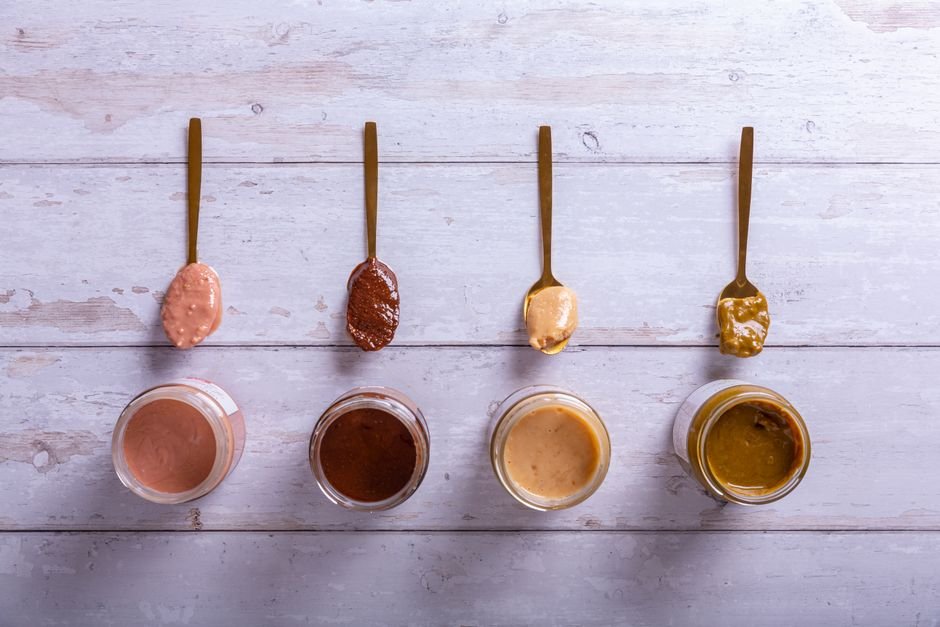
Full Nutrition Facts for 2 Tablespoons of Almond Butter
Below is the complete nutritional breakdown of a standard 2-tablespoon (32g) serving of roasted almond butter, based on USDA data:
| Nutrient | Amount | % Daily Value |
|---|---|---|
| Calories | 196 | 10% |
| Total Fat | 18g | 23% |
| Saturated Fat | 1.4g | 7% |
| Cholesterol | 0mg | 0% |
| Sodium | 94mg | 4% |
| Total Carbohydrate | 7g | 2% |
| Dietary Fiber | 3.3g | 12% |
| Total Sugars | 1.3g | — |
| Protein | 7g | 14% |
| Vitamin E (α-tocopherol) | 7.4mg | 49% |
| Magnesium | 76mg | 18% |
| Manganese | 0.57mg | 25% |
*Percent Daily Values are based on a 2,000-calorie diet. Source: USDA FoodData Central.
Key insight: Despite its high calorie density, almond butter is nutrient-rich. The 7g of protein per serving supports muscle maintenance, while 3.3g of dietary fiber aids digestive health. Nearly 50% of your daily Vitamin E needs comes from a single serving, making it an excellent source of this fat-soluble antioxidant. The fat content—predominantly unsaturated—supports heart health rather than driving inflammation.

Etekcity Food Scale
0.1g accuracy — the perfect companion for exact portions.
Raw Almond Butter vs. Roasted Almond Butter
Raw Almond Butter
- Slightly lower calorie count (approximately 190 calories per 2 tbsp)
- Retains more heat-sensitive enzymes and live phytonutrients
- Typically costs more; shorter shelf life once opened
Roasted Almond Butter
- Richer, deeper flavor due to the roasting process
- Marginally higher calorie content (approximately 196 calories per 2 tbsp) due to moisture loss during roasting
- Better shelf stability and more widely available at lower price points
Practical takeaway: The nutritional difference between raw and roasted almond butter is minimal (about 6 calories). Choose based on taste preference and budget—both are nutritionally excellent choices. Raw offers a fresher, nuttier profile; roasted delivers deeper flavor and better availability.
Is Almond Butter Good for Weight Loss?
Almond butter can support weight loss when eaten in controlled portions. Despite being calorie-dense (196 calories per 2 tablespoons), it’s protein-rich and high in fiber, both of which promote satiety and reduce overall calorie intake throughout the day. Studies on nut consumption show that people who eat nuts regularly do not gain excess weight, likely because the satisfying nature of nuts prevents overeating. The key is portion control: a 2-tablespoon serving is genuinely satisfying and won’t derail a calorie deficit when paired with whole foods.
Tips to Eat Almond Butter Without Gaining Weight:
- Measure with precision: Use a scale or tablespoon measure instead of eating directly from the jar. One “accidental” extra serving adds 100+ calories.
- Pair it with fiber: Spread 2 tbsp on apple slices, celery, or whole-grain toast to increase satiety and slow blood-sugar rises.
- Track consumption: Log it in a food app to stay aware of cumulative intake throughout the week.
- Choose unsweetened varieties: Honey-sweetened or flavored butters add 10–15 extra calories and unnecessary added sugars per serving.
When incorporated intentionally into a balanced diet, almond butter is a weight-loss-friendly food. The risk comes only when portion control slips or it replaces whole-food sources of nutrition.
How Portion Size Affects Calories
Almond butter’s caloric impact scales directly with portion size. A typical serving looks small on a plate—just 2 tablespoons—but represents nearly 200 calories. Doubling the portion (4 tablespoons) jumps to 390–400 calories, equivalent to a full meal for some diets. This is why almond butter is best measured by weight or tablespoon rather than eyeballed or spread generously.
Example:
- 1 tablespoon (16g): ~98 calories — appropriate for drizzling over smoothies or oatmeal
- 2 tablespoons (32g): ~196 calories — ideal as a satisfying snack or breakfast component
Going beyond 2 tablespoons is eating two servings and should be factored into your total daily intake.
Best Way to Measure Almond Butter Accurately
Precision matters when tracking calories and macronutrients. Eyeballing almond butter is notoriously unreliable—what feels like a tablespoon can easily be 1.5 or 2 tablespoons, doubling your calorie intake. Three reliable measurement methods ensure accuracy and consistency.
Options:
- Digital food scale: Most accurate method. Measure out 32g (or 16g per tbsp) directly into a bowl or onto your food. Costs $15–30 and pays for itself through portion awareness.
- Measuring spoon set: Standard tablespoon measures offer reasonable accuracy. Level the spoon with a knife for consistency. Inexpensive and kitchen-friendly.
- Pre-portioned packets: Some brands sell single-serving packets (1–2 tbsp each), eliminating guesswork. Convenient for travel but typically more expensive per ounce than bulk jars.
Calculate Your Exact Calorie Intake
If you eat almond butter multiple times per week—whether as a snack, in smoothies, or on toast—cumulative calories add up quickly. An extra tablespoon daily adds nearly 700 calories weekly, equivalent to 1.5 pounds of potential weight gain per month if not accounted for.
To ensure you’re hitting your nutrition targets, use a free AI-powered nutrients calculator. Our site’s free AI nutrients calculator lets you log almond butter by brand and portion, automatically tracking calories, protein, fiber, and micronutrients. This removes guesswork and helps you understand your actual intake.
- Log meals and see real-time macronutrient totals
- Identify nutrition gaps and adjust portions intelligently
- Build accountability without obsessive calorie counting
Common Mistakes When Eating Almond Butter
Even health-conscious eaters make predictable errors with almond butter, usually around portion control and hidden calories. Here are the most common pitfalls:
❌ Eating directly from the jar instead of measuring. A mindless 3-minute snacking session can easily become 100+ unmeasured calories.
❌ Pairing with high-calorie foods without accounting for total intake. Almond butter on regular bread with honey and banana can total 400+ calories—a significant meal that many treat as a light snack.
❌ Choosing flavored or honey-sweetened varieties without reading labels. These add 10–30 extra calories per serving plus unnecessary added sugars compared to plain almond butter.
❌ Assuming all brands are nutritionally identical. While most roasted almond butter is similar, “natural” brands may have less salt and slightly different macros than commercial versions.
Avoiding these mistakes—especially measuring carefully—transforms almond butter from a sneaky calorie source into a controlled, nutritious addition to your diet.
FAQ
How many calories are in 100g of almond butter?
A 100g serving of roasted almond butter contains approximately 613 calories. This is roughly equivalent to five 2-tablespoon servings. Most people consume far less than 100g in one sitting, which is why the standard 2-tablespoon reference is more practical.
Is almond butter fattening?
Almond butter is not inherently fattening when eaten in controlled portions. Its high fat content comes mostly from heart-healthy unsaturated fats, and its protein and fiber promote satiety. The risk of weight gain comes only from overconsumption—eating multiple unmeasured servings daily without accounting for calories in your overall diet.
Does roasting almond butter reduce its nutritional value?
Roasting almond butter does destroy some heat-sensitive vitamins (especially B vitamins and vitamin E), but the loss is modest. Raw almond butter retains marginally more micronutrients, but both roasted and raw versions remain nutritionally excellent sources of protein, fiber, magnesium, and Vitamin E.
Can almond butter fit into a low-carb or keto diet?
Yes, almond butter is keto-friendly. A 2-tablespoon serving contains only 7g total carbohydrate, of which 3.3g is dietary fiber, leaving just 3.7g net carbs. This fits comfortably within most ketogenic macros while providing satisfying fat and protein.
Conclusion
Almond butter is a nutrient-dense food with 196 calories, 7g protein, and 3.3g fiber per standard 2-tablespoon serving. It’s rich in Vitamin E, magnesium, and unsaturated fats—making it genuinely healthful despite its caloric density. The food supports weight loss, muscle building, and heart health when portioned thoughtfully.
The practical bottom line: measure consistently using a scale or tablespoon, pair it with whole foods (fruit, vegetables, whole grains), and track your intake. For precise guidance on how almond butter fits your specific nutrition goals, try a reliable nutrients calculator to see real-time macronutrient totals and stay accountable to your health objectives.
