We independently choose the products in this guide. As an Amazon Associate we earn from qualifying purchases, at no extra cost to you. How we make money.
Key takeaways
- Monk fruit and stevia sweeteners are plant-based and nearly calorie-free.
- Best overall: Lakanto Monk Fruit Classic. Best for coffee: SweetLeaf liquid stevia. Best for browning: allulose.
- Most “monk fruit” and “stevia” products are mostly erythritol or allulose with a little extract.
- Use them to cut added sugar, but aim to enjoy less sweetness over time.
Cutting added sugar is one of the most useful changes you can make; our guide to how much sugar per day explains the limits. Monk fruit and stevia sweeteners make it easier: they add sweetness with almost no calories and don’t raise blood sugar like sugar does. Here are the best, which to use for what, and what the research really says. For the full debate, see are artificial sweeteners safe?
Monk fruit vs stevia: what’s the difference?
- Stevia comes from the leaves of the stevia plant. Purified extracts are 200 to 400 times sweeter than sugar. Some people notice a slightly bitter or licorice aftertaste.
- Monk fruit (luo han guo) is a small melon whose extract is roughly 100 to 250 times sweeter than sugar. Many people find it tastes cleaner.
Because the extracts are so strong, most products mix a tiny amount with a bulking sweetener such as erythritol or allulose so you can swap it cup-for-cup with sugar.
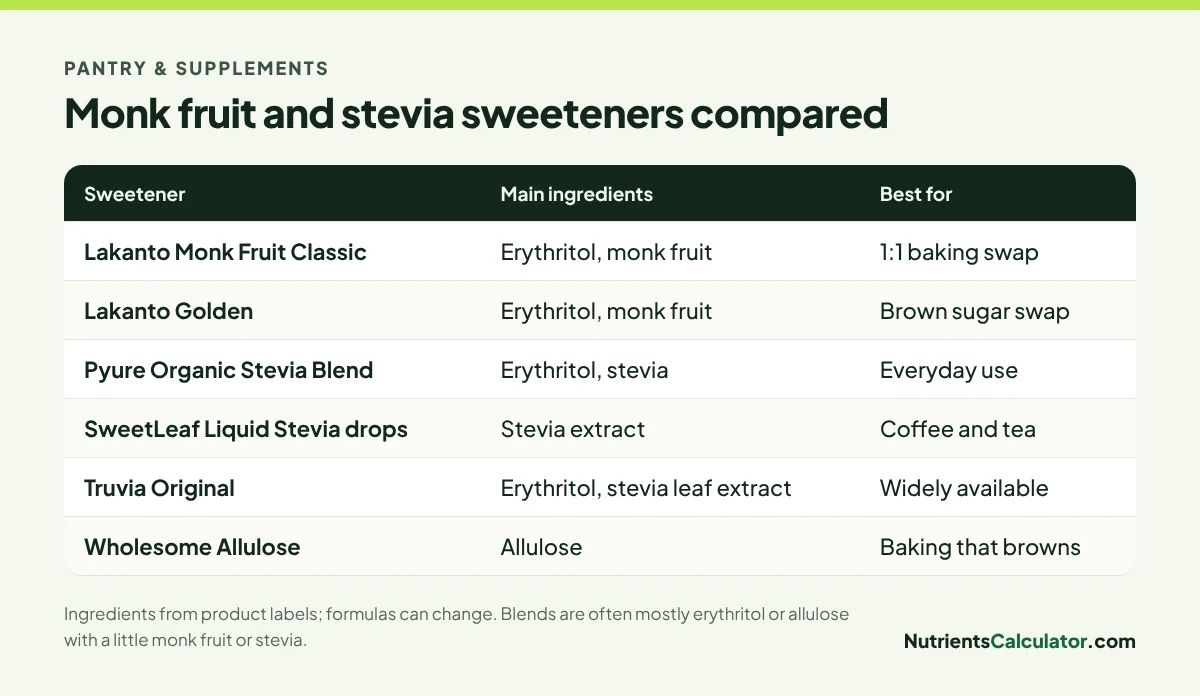
| Sweetener | Main ingredients | Best for |
|---|---|---|
| Lakanto Monk Fruit Classic | Erythritol, monk fruit | 1:1 baking swap |
| Lakanto Golden | Erythritol, monk fruit | Brown sugar swap |
| Pyure Organic Stevia Blend | Erythritol, stevia | Everyday use |
| SweetLeaf Liquid Stevia drops | Stevia extract | Coffee and tea |
| Truvia Original | Erythritol, stevia leaf extract | Widely available |
| Wholesome Allulose | Allulose | Baking that browns |
Etekcity Food Scale
0.1g accuracy — the perfect companion for exact portions.
The best monk fruit and stevia sweeteners
1. Lakanto Monk Fruit Sweetener Classic: best overall
Lakanto’s Classic blend of monk fruit and erythritol swaps 1:1 for sugar in coffee, tea and most baking. It has a clean taste and is easy to find.
- Watch out: erythritol can cause a cooling taste in baked goods.
Check price on Amazon Lakanto Monk Fruit Sweetener Classic
2. Lakanto Monk Fruit Sweetener Golden: best brown sugar swap
A golden version with a caramel note for oatmeal, cookies and anything that usually takes brown sugar.
Check price on Amazon Lakanto Monk Fruit Sweetener Golden
3. Pyure Organic Stevia Blend: best everyday stevia
Pyure blends stevia with erythritol. It’s sweeter than sugar, so you use less.
Check price on Amazon Pyure Organic Stevia Blend Granular Sweetener
4. SweetLeaf Liquid Stevia drops: best for coffee and tea
A few drops sweeten a whole mug. Flavored versions like vanilla and chocolate are popular for coffee, yogurt and oatmeal.
Check price on Amazon SweetLeaf Sweet Drops Liquid Stevia
5. Truvia Original: most widely available
Truvia combines erythritol and stevia leaf extract and is easy to find in packets or jars.
Check price on Amazon Truvia Original Calorie-Free Sweetener
6. Wholesome Allulose: best for baking that browns
Allulose is a rare sugar that tastes and browns much like sugar, with very few calories. It’s great for cookies, sauces and syrups. It’s slightly less sweet than sugar.
Check price on Amazon Wholesome Allulose Zero Calorie Sweetener
How to use monk fruit and stevia sweeteners
- Start with coffee, tea and yogurt, the easiest swaps.
- Baking: use 1:1 blends for cookies and muffins; expect slightly different texture and less browning (allulose helps).
- Cut gradually. Use half sugar and half sweetener at first, then reduce. Your taste for sweetness adjusts within a few weeks.
- Read labels: “sugar-free” products may still be high in calories or refined flour.
If cravings are the problem, see how to stop sugar cravings. For sweet snacks with protein, try our low-sugar protein bars.
What the research says
- The FDA considers high-purity stevia and monk fruit extracts generally recognized as safe.
- The WHO advises against using non-sugar sweeteners as a way to control weight long term, because evidence of lasting benefit is limited.
- A 2023 study found that higher blood levels of erythritol were linked with heart attack and stroke risk. It showed an association, not cause, but moderation is sensible, especially if you have heart disease risk factors.
Monk fruit and stevia sweeteners in baking
Sugar does more than sweeten baked goods: it adds moisture, helps browning and gives structure. When you swap in monk fruit and stevia sweeteners, expect a few differences:
- Less browning: erythritol-based blends brown less. Allulose browns well, so a mix can help.
- Cooling aftertaste: erythritol can feel cool on the tongue in large amounts, especially in frostings.
- Drier texture: add a spoon of yogurt, applesauce or an extra egg yolk.
- Faster browning with allulose: lower the oven temperature by about 25°F if baked goods color too quickly.
Start with recipes that are forgiving, like muffins, oatmeal bars and quick breads, before moving on to cookies and cakes. See healthy baking swaps for more ideas.
How to spot added sugar in “sugar-free” products
Some products labeled with monk fruit or stevia still contain sugar or high-glycemic fillers. Check the Nutrition Facts label for Added Sugars, and the ingredient list for dextrose, maltodextrin, cane sugar or syrups. Our guide to reading ingredient lists lists common names for sugar.
Monk fruit and stevia sweeteners vs other options
- Sucralose (Splenda) and aspartame are also zero-calorie sweeteners with long safety reviews.
- Honey and maple syrup are natural but still count as added sugar.
- Sugar alcohols like xylitol and erythritol add bulk with fewer calories than sugar. Keep xylitol away from dogs; it’s toxic to them.
A simple plan to cut sugar
- Week 1: swap sugar in coffee and tea for a few drops of stevia or a monk fruit blend.
- Week 2: switch flavored yogurt for plain yogurt sweetened with fruit and a little sweetener.
- Week 3: halve the sweetener you use.
- Week 4: try some drinks unsweetened.
Most people find their taste for sweetness adjusts within a few weeks. For more help, see hidden sugar foods and is fruit sugar bad?
The bottom line
Monk fruit and stevia sweeteners are useful tools for cutting added sugar. Lakanto Monk Fruit Classic is our top all-round pick, SweetLeaf drops are best for drinks, and allulose is best for baking. Use them to bridge the gap while you get used to less sweetness, and the benefits of cutting sugar will stick.
Frequently asked questions
Are monk fruit and stevia safe?
High-purity stevia extracts and monk fruit extracts are generally recognized as safe by the FDA. Most products blend them with erythritol or allulose, which are also allowed in foods.
Which is better, monk fruit or stevia?
They're similar: both are plant-based and nearly calorie-free. Some people notice a bitter aftertaste with stevia; monk fruit tends to taste cleaner. Try both in small packs.
Do sugar substitutes help with weight loss?
Swapping sugar for a zero-calorie sweetener cuts calories, but the WHO advises against relying on non-sugar sweeteners for long-term weight control. The best approach is gradually getting used to less sweetness overall.
Is erythritol safe?
Erythritol is approved for use in foods, and it's gentler on digestion than most sugar alcohols. A 2023 study linked higher blood erythritol levels to cardiovascular events, but it showed an association, not cause. If you have heart disease risk factors, moderation is sensible.
Can diabetics use monk fruit and stevia?
Pure monk fruit and stevia extracts don't raise blood sugar, which is why many people with diabetes use them. Check blends for added sugars or maltodextrin, and talk to your care team about your overall plan.
Do monk fruit and stevia sweeteners cause digestive problems?
The extracts themselves rarely do, but blends with erythritol or other sugar alcohols can cause bloating or a laxative effect in some people when eaten in large amounts.
Is monk fruit sweetener natural?
The extract comes from a fruit, but it's processed and usually blended with erythritol or allulose, so 'natural' on the label doesn't mean unprocessed.
Can I use stevia in baking?
Yes, but pure stevia is very concentrated and doesn't add bulk. Use a 1:1 baking blend, or follow recipes written for stevia.
Are monk fruit and stevia safe during pregnancy?
High-purity stevia and monk fruit extracts are generally recognized as safe, but talk to your doctor or midwife about sweeteners during pregnancy.
Do monk fruit and stevia affect gut bacteria?
Research is still early. Some studies suggest certain sweeteners can affect gut bacteria, but results are mixed and depend on the sweetener and dose.
Sources
- FDA: Aspartame and Other Sweeteners in Food
- WHO: Use of non-sugar sweeteners: WHO guideline (2023)
- Witkowski M et al. The artificial sweetener erythritol and cardiovascular event risk. Nat Med, 2023
This article is for general information and isn’t medical advice. Talk to your doctor or a registered dietitian about your own needs, especially if you have a health condition, are pregnant or take medication.