We independently choose the products in this guide. As an Amazon Associate we earn from qualifying purchases, at no extra cost to you. How we make money.
Key takeaways
- The best protein powders for beginners are third-party tested, simple and easy to digest.
- Best overall: Optimum Nutrition Gold Standard 100% Whey. Best vegan: Garden of Life Sport Plant-Based.
- Most people do well with 1.2–1.6 g of protein per kg of body weight a day; powder just fills gaps.
- Look for NSF Certified for Sport or Informed Sport seals.
Walk down the protein aisle and it’s easy to feel lost: whey, isolate, casein, pea, blends, dozens of flavors and big claims. The truth is simpler. You need a clean, tested product that mixes well and tastes good enough to drink. These protein powders for beginners tick those boxes. First, check whether you need one at all in do you need protein powder?
How we chose these protein powders for beginners
- Third-party testing: dietary supplements aren’t approved by the FDA before they’re sold. Certifications such as NSF Certified for Sport and Informed Sport/Choice test for banned substances and check that products contain what the label says. We favored certified products, and flagged ones that aren’t.
- Simple ingredients and a good amount of protein per scoop (around 20–25 g).
- Long track record and broad availability.
We haven’t been paid for any placement. Certifications change over time, so check the certifier’s database for any product before relying on it.
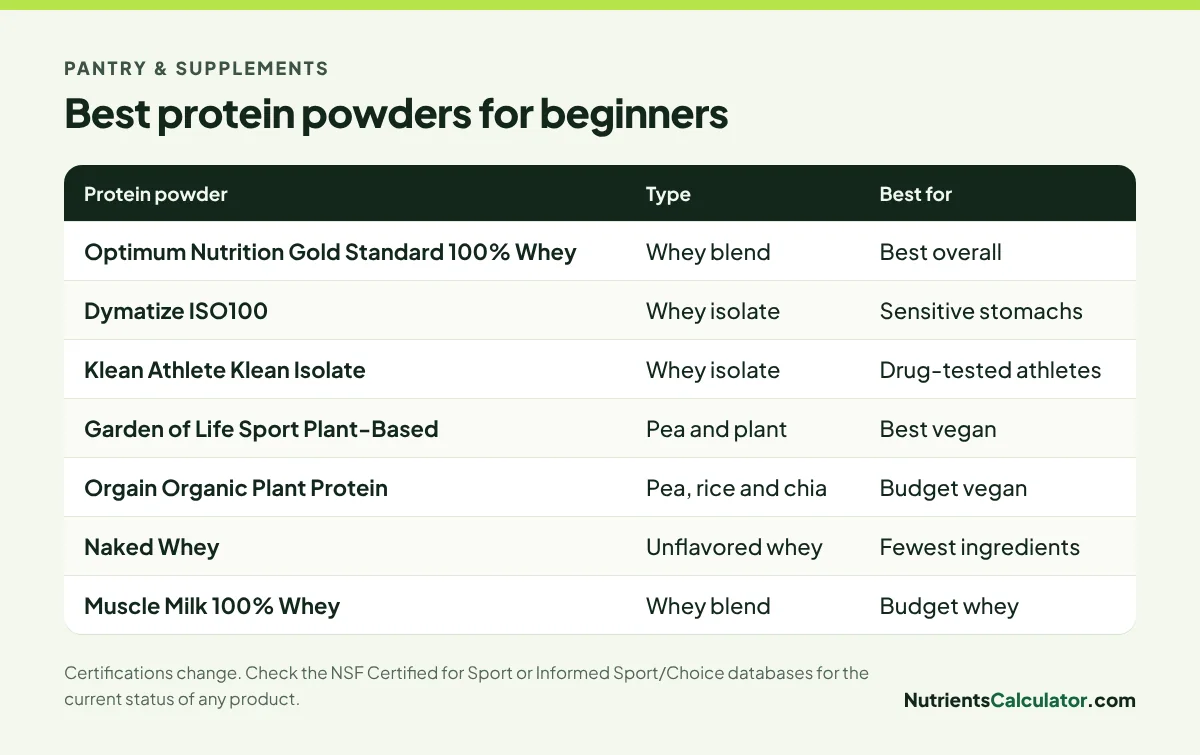
| Protein powder | Type | Best for |
|---|---|---|
| Optimum Nutrition Gold Standard 100% Whey | Whey blend | Best overall |
| Dymatize ISO100 | Whey isolate | Sensitive stomachs |
| Klean Athlete Klean Isolate | Whey isolate | Drug-tested athletes |
| Garden of Life Sport Plant-Based | Pea and plant | Best vegan |
| Orgain Organic Plant Protein | Pea, rice and chia | Budget vegan |
| Naked Whey | Unflavored whey | Fewest ingredients |
| Muscle Milk 100% Whey | Whey blend | Budget whey |
Etekcity Food Scale
0.1g accuracy — the perfect companion for exact portions.
Whey or plant protein?
- Whey comes from milk. It’s high in leucine, mixes easily, and is usually the best value. Whey isolate has most lactose removed and suits many people who are mildly lactose-sensitive.
- Plant proteins (pea, rice, soy) are dairy-free and vegan. Blends of pea and rice give a more complete amino acid profile. See plant-based protein sources.
The best protein powders for beginners
1. Optimum Nutrition Gold Standard 100% Whey: best overall
Gold Standard is one of the best-known protein powders for a reason: it mixes easily, comes in many flavors and has about 24 g of protein per scoop. It has carried third-party certification, which makes it a dependable first tub.
- Good for: most beginners who eat dairy.
Check price on Amazon Optimum Nutrition Gold Standard 100% Whey Protein Powder
2. Dymatize ISO100: best for sensitive stomachs
ISO100 is a hydrolyzed whey isolate, so most of the lactose and fat are removed. It’s a good choice if regular whey upsets your stomach.
Check price on Amazon Dymatize ISO100 Hydrolyzed Whey Protein Isolate
3. Klean Athlete Klean Isolate: best for tested athletes
Klean Athlete’s products are made for competitive athletes and carry NSF Certified for Sport. The isolate has minimal ingredients.
Check price on Amazon Klean Athlete Klean Isolate Whey Protein
4. Garden of Life Sport Organic Plant-Based Protein: best vegan

A pea-based blend with around 30 g of protein per serving and NSF Certified for Sport and Informed Sport certification. One of the most trusted vegan proteins.
- Good for: vegans and dairy-free diets.
- Watch out: plant proteins can taste earthier; try a small tub first.
Check price on Amazon Garden of Life Sport Organic Plant-Based Protein Powder
5. Orgain Organic Plant Protein: best budget vegan
Orgain is widely available and affordable, with a smooth texture for a plant protein. It isn’t third-party certified for sport, but it’s a popular everyday choice.
Check price on Amazon Orgain Organic Vegan Protein Powder
6. Naked Whey: fewest ingredients
Unflavored Naked Whey contains just whey protein concentrate. Great for adding to oatmeal, yogurt or baking without changing the flavor.
Check price on Amazon Naked Whey Unflavored Grass Fed Whey Protein
7. Muscle Milk 100% Whey: best budget whey
An affordable whey protein that has carried NSF certification, according to independent reviewers.
Check price on Amazon Muscle Milk 100% Whey Protein Powder
How much protein do you need?
Most active adults do well with about 1.2 to 1.6 grams of protein per kilogram of body weight a day, in line with the 2025–2030 Dietary Guidelines. For a 70 kg (154 lb) person, that’s about 85 to 110 g. Spread it over meals: 25 to 40 g per meal works for most people. See how much protein do I need a day? and how much protein per meal.
How to use protein powder
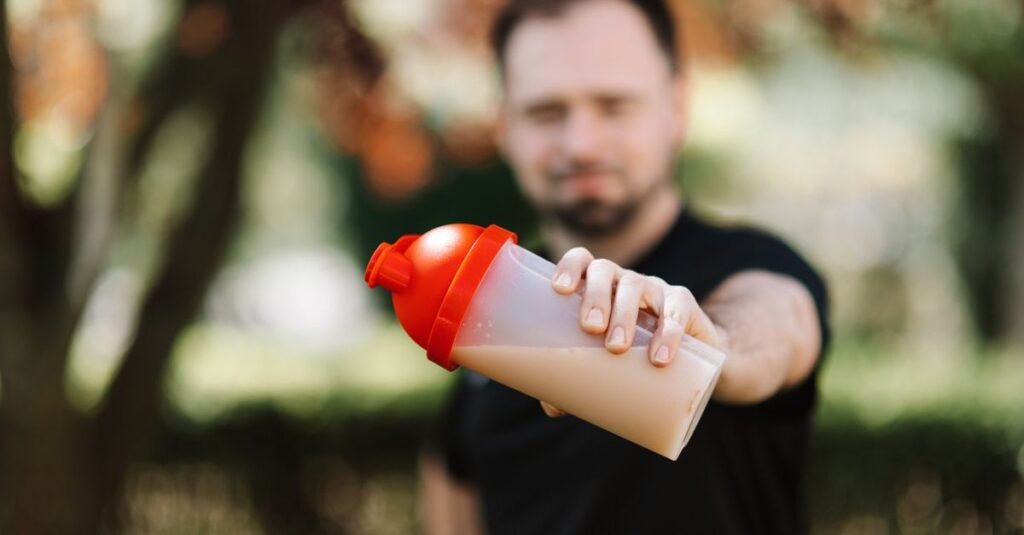
- Start with one scoop a day where you’re short, often breakfast or after a workout.
- Mix with milk or soy milk for extra protein, or water for fewer calories.
- Add it to food: oatmeal, yogurt, pancakes or a smoothie. A good blender or shaker helps.
- Count it in your totals. A scoop is roughly 100–130 calories.
What to avoid
- Proprietary blends that hide amounts.
- “Amino spiking”: added amino acids that inflate the protein number. Certified products are safer here.
- Big claims: no powder “melts fat” or builds muscle without training.
Protein powders for beginners: how to read the label
- Protein per scoop: around 20 to 25 g is typical for whey; plant blends vary.
- Calories per scoop: about 100 to 130 for most plain or lightly flavored powders.
- Ingredient list: shorter is usually better. The protein source should be first.
- Added sugar: ideally 0 to 3 g per scoop.
- Certification seal: NSF Certified for Sport or Informed Sport/Choice.
- Serving size in grams: scoops vary, so compare protein per gram if prices differ.
Whey concentrate, isolate or hydrolyzed?
- Concentrate: the most common and affordable form, with a little lactose and fat.
- Isolate: more filtered, so it’s higher in protein per scoop and lower in lactose.
- Hydrolyzed: partly broken down, often marketed for faster digestion; usually more expensive.
For most protein powders for beginners, a quality concentrate or isolate is all you need. If dairy bothers you, try an isolate or switch to a plant blend.
Common protein powder mistakes
- Replacing meals with shakes long term. Real meals provide fiber and micronutrients.
- Overdoing it. If you already eat enough protein, more powder adds calories without benefit.
- Buying giant tubs first. Try a small tub or sample packs to find a flavor you like.
- Ignoring certification. Especially important for athletes in tested sports.
Food sources that rival a scoop
You can hit 20 to 25 g of protein without powder:
- A 170 g pot of plain Greek yogurt (about 17 g) plus a handful of nuts.
- Three eggs and a slice of whole-grain toast.
- A can of tuna on salad.
- A cup of lentils with rice.
See the cheapest protein sources and best foods for muscle gain. If you need protein on the go, low-sugar protein bars are another option.
The bottom line
The best protein powders for beginners are simple, tested and easy to drink. Optimum Nutrition Gold Standard is our top whey pick, Dymatize ISO100 suits sensitive stomachs, and Garden of Life Sport is the best vegan option. Use powder to fill gaps in a diet built on real food, not replace it. For snacks on the go, see our low-sugar protein bars.
Frequently asked questions
Do beginners need protein powder?
No. Protein powder is a convenience food. If you can reach your protein target with meals and snacks, you don't need it. It's useful when you're busy, have a high protein goal or eat little meat.
Which protein powder is best for beginners?
A third-party tested whey protein such as Optimum Nutrition Gold Standard is a good start if you eat dairy. If you're vegan or dairy-free, try a pea-based blend such as Garden of Life Sport or Orgain.
When should I drink a protein shake?
Whenever it helps you reach your daily target. Total protein across the day matters more than timing, though a shake after training or with a light breakfast is convenient.
Is protein powder safe?
For healthy adults, protein powders used as directed are generally safe. Supplements aren't approved by the FDA before sale, so third-party certification is the best way to know a product contains what the label says and is screened for contaminants and banned substances. People with kidney disease should ask their doctor first.
How many scoops of protein powder a day is too many?
There's no fixed limit, but most people don't need more than one or two scoops a day. Use powder to fill gaps, and get most of your protein from foods that also provide fiber, vitamins and minerals.
Does protein powder make you gain weight?
Only if it pushes you over your calorie needs. A scoop is about 100 to 130 calories; more if mixed with milk, fruit or nut butter.
Is plant protein as effective as whey?
Plant protein blends can support muscle building when you eat enough total protein. Whey is slightly higher in leucine per gram, so plant users may need a slightly larger serving.
Does protein powder expire?
Yes. Check the best-by date and store it sealed in a cool, dry place. Throw it out if it smells off or clumps from moisture.
Can teenagers use protein powder?
Most teens can meet their protein needs from food. If a teen athlete wants to use powder, talk to their doctor or a sports dietitian first.
Sources
- NSF Certified for Sport
- Informed Sport
- FDA: Dietary Supplements
- Jäger R et al. International Society of Sports Nutrition position stand: protein and exercise. J Int Soc Sports Nutr, 2017
- Treeline Review: Best Protein Powder
This article is for general information and isn’t medical advice. Talk to your doctor or a registered dietitian about your own needs, especially if you have a health condition, are pregnant or take medication.