Part of our guide: How Much Protein Do You Need a Day? A Simple Guide by Weight and Goal
Key takeaways
- A useful protein per meal target is about 0.4 g per kg of body weight, which works out to 25–40 g for most adults.
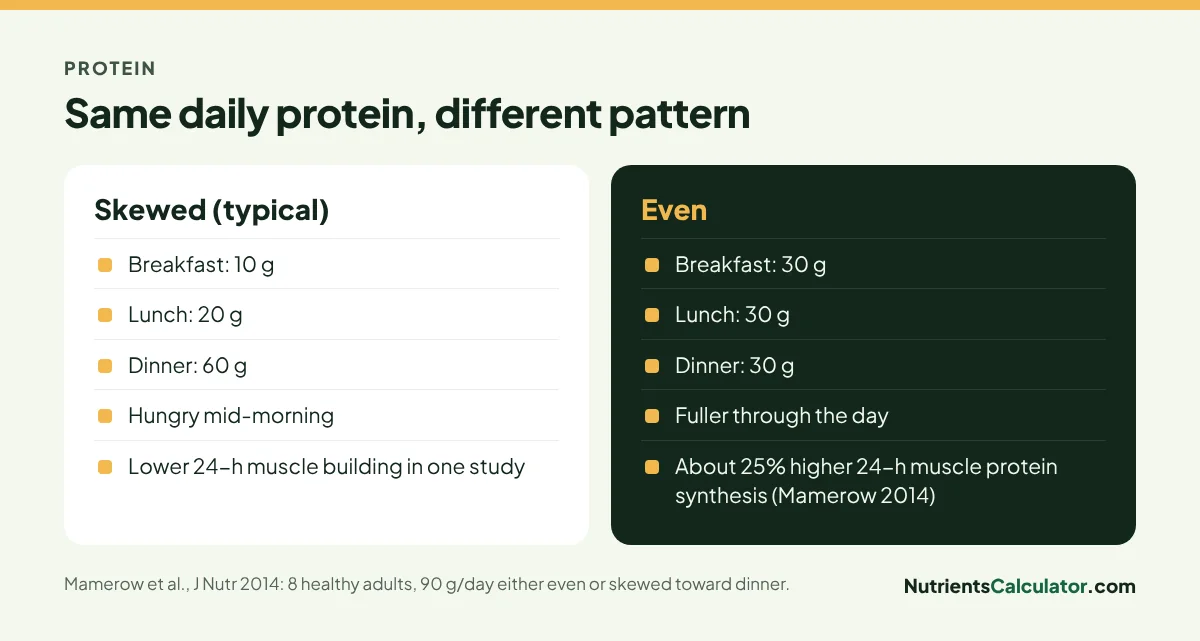
- In one controlled study, spreading 90 g of protein evenly (30/30/30) raised 24-hour muscle protein synthesis by about 25% versus a dinner-heavy pattern.
- Even protein also helps with fullness: fewer mid-morning cravings and less evening overeating.
- The easiest fix for most people is breakfast.
Most Americans eat protein in a lopsided pattern: a little at breakfast (cereal, toast), a bit more at lunch, and the majority at dinner. If you’re trying to reach the 1.2–1.6 g/kg range the Dietary Guidelines describe for many adults (see how much protein you need a day), that pattern makes the target harder, and it may not be the best way to use protein either.
What the research says

Even distribution and muscle
In a study at the University of Texas Medical Branch, healthy adults ate the same 90 g of protein a day in two patterns for a week each: evenly (about 30 g at breakfast, lunch and dinner) or skewed (about 10 g, 15 g and 65 g). Muscle protein synthesis over 24 hours was about 25% higher with the even pattern (Mamerow et al., 2014).
It was a small, short study, and not every later study has found the same size of effect. But the direction fits a broader body of research showing that muscle responds to protein meal by meal.
How much per meal is “enough”?
A review of the evidence suggested aiming for about 0.4 g per kg of body weight per meal, spread over at least four meals, to maximize muscle building across the day (Schoenfeld & Aragon, 2018). For common body weights:
| Body weight | 0.4 g/kg per meal | 0.55 g/kg per meal (upper) |
|---|---|---|
| 120 lb (54 kg) | 22 g | 30 g |
| 150 lb (68 kg) | 27 g | 37 g |
| 180 lb (82 kg) | 33 g | 45 g |
| 210 lb (95 kg) | 38 g | 52 g |
Older adults need a bigger dose
Older muscles are less responsive to small amounts of protein. Research comparing younger and older men found older men needed a higher relative dose per meal to get the same muscle-building response (Moore et al., 2015). If you’re over about 60, aim for the upper end: 30–40 g per meal.
Is there a maximum per meal?
The old idea that you can only “use” 20–30 g of protein at a time is too simple. Your body absorbs nearly all the protein you eat. Larger servings mostly last longer in their effect rather than being wasted. So a 50 g dinner isn’t a problem; it’s just that a 10 g breakfast is a missed opportunity.

Etekcity Food Scale
0.1g accuracy — the perfect companion for exact portions.
Protein and fullness
Protein is the most satiating macronutrient. A breakfast with 25–35 g of protein tends to keep people fuller until lunch than a low-protein breakfast with the same calories. If you often get hungry mid-morning or snack heavily in the evening, rebalancing protein across meals is one of the simplest things to try.
How to rebalance your day
Step 1: Find your current pattern
Log your meals for three typical days and note protein at each meal. Most people discover breakfast is under 15 g.
Step 2: Fix breakfast first
Add or swap one protein food: Greek yogurt, eggs, cottage cheese, tofu or a protein shake. Our list of 15 high-protein breakfasts has options with 25–40 g.
Step 3: Anchor lunch
Build lunch around a palm-sized portion of protein (3–4 oz cooked chicken, fish or tofu) or 1–1½ cups of beans or lentils. Use our hand portion guide to size it without a scale.
Step 4: Right-size dinner
If dinner was carrying 60 g of protein, you can reduce it to 30–40 g and move the difference to breakfast or a snack.
Step 5: Use a protein snack
A mid-afternoon snack with 10–20 g helps you reach your daily total and avoid arriving at dinner starving. See high-protein snacks under 200 calories.
An even-protein day (about 120 g)
- Breakfast (32 g): 1 cup Greek yogurt with oats and berries
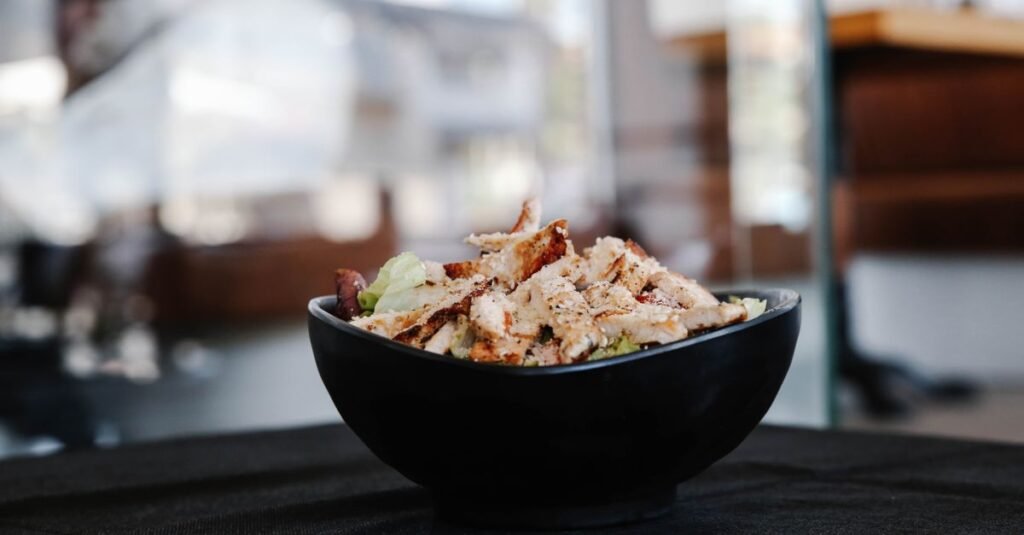
- Lunch (35 g): chicken and bean burrito bowl
- Snack (16 g): canned tuna on cucumber
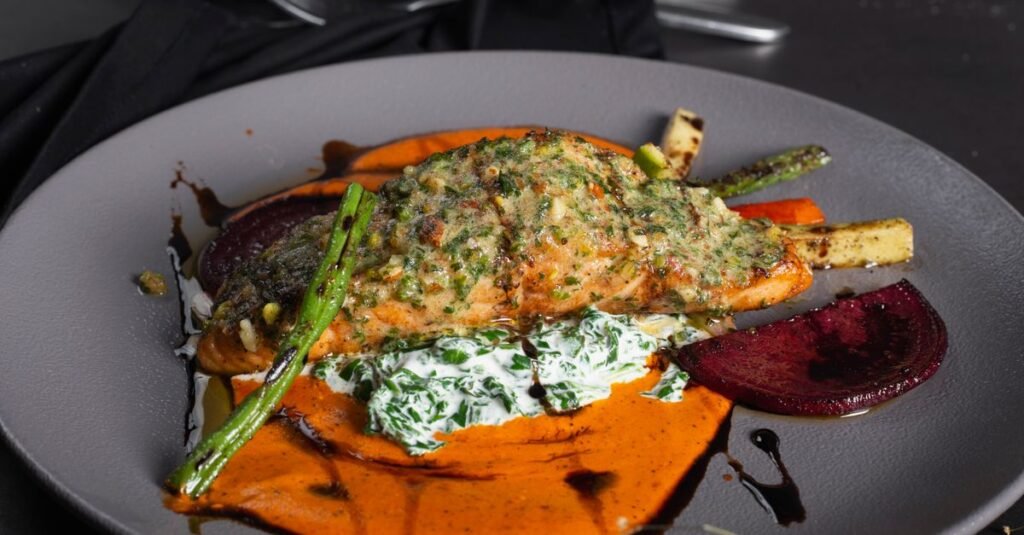
- Dinner (37 g): salmon, roasted potatoes and broccoli with a glass of milk
When the day doesn’t go to plan
Real days are messy: a skipped breakfast, a light lunch. The fix is to look at what’s left. If it’s 4 PM and you’ve had 30 g, dinner and an evening snack need to cover the rest. Our guide to what to eat with the calories you have left shows how to choose, and the free dashboard can suggest meals that fit your remaining calories and protein.
The bottom line
Aim for roughly 0.4 g of protein per kg of body weight at each meal (25–40 g for most adults), with older adults leaning higher. Spreading protein this way supports muscle and keeps you fuller through the day. Start by fixing breakfast; for most people that one change rebalances the whole day.
Frequently asked questions
How much protein can your body absorb in one meal?
Your body absorbs almost all the protein you eat; the question is how much it uses for muscle building at once. Research suggests about 0.4 g per kg of body weight per meal (roughly 25–40 g for most adults) gives a strong muscle-building response, and larger servings still contribute.
Is 30 grams of protein per meal enough?
For most adults, yes. Three meals of about 30 g plus a snack covers the 1.2–1.6 g/kg range for people up to around 75–80 kg. Larger or very active people may want 40 g per meal.
Is it bad to eat most of my protein at dinner?
It's not harmful, but spreading protein out tends to keep you fuller through the day and may support muscle better, especially for older adults.
Do older adults need more protein per meal?
Research suggests older muscles respond less to small doses, so older adults may benefit from around 0.4 g/kg or more per meal, often 30–40 g, rather than 20 g.
Sources
- Mamerow MM et al. Dietary protein distribution positively influences 24-h muscle protein synthesis in healthy adults. J Nutr, 2014
- Schoenfeld BJ, Aragon AA. How much protein can the body use in a single meal for muscle-building? J Int Soc Sports Nutr, 2018
- Moore DR et al. Protein ingestion to stimulate myofibrillar protein synthesis requires greater relative protein intakes in healthy older versus younger men. J Gerontol A, 2015
- Dietary Guidelines for Americans 2025–2030
This article is for general information and isn’t medical advice. Talk to your doctor or a registered dietitian about your own needs, especially if you have a health condition, are pregnant or take medication.