Part of our guide: How Much Protein Do You Need a Day? A Simple Guide by Weight and Goal
Key takeaways
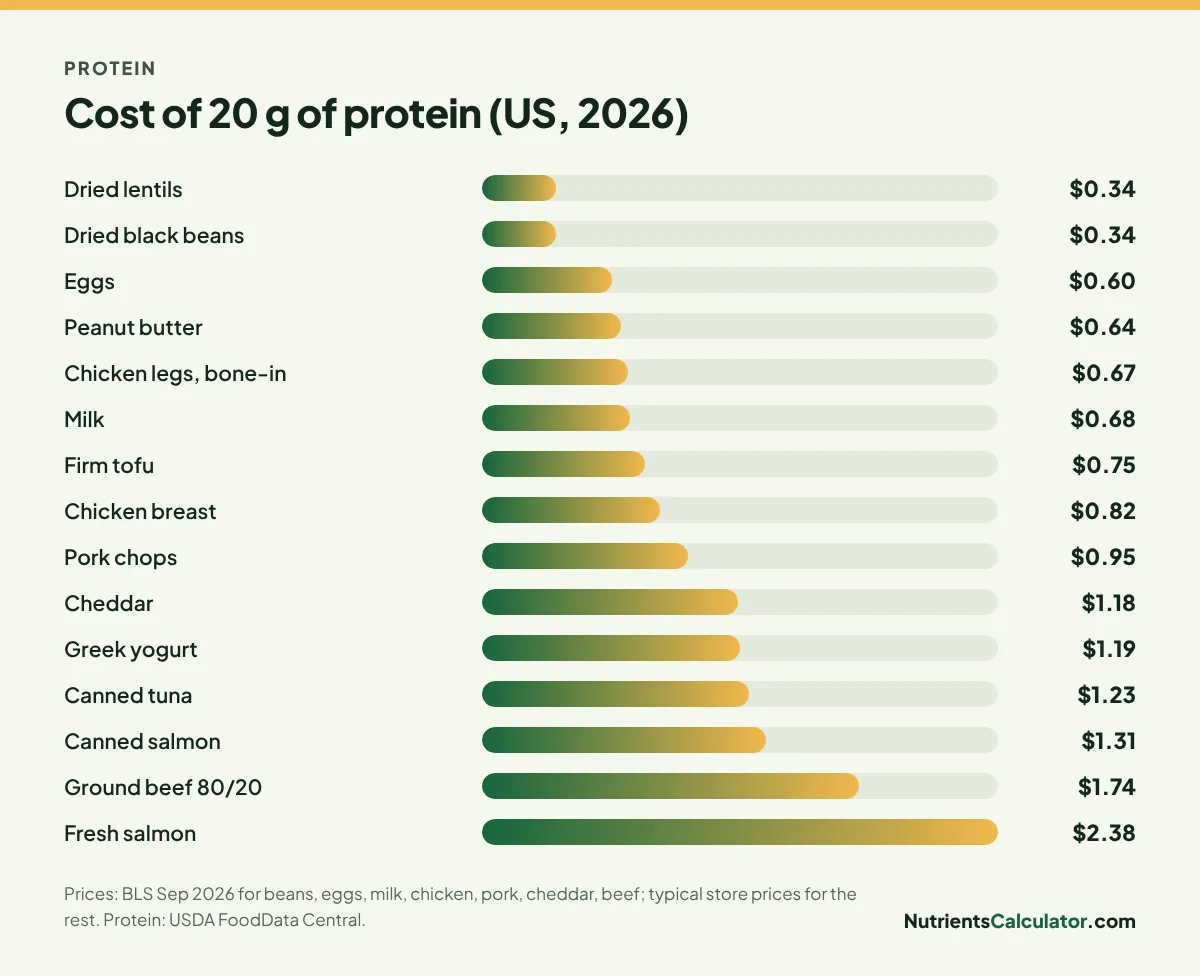
- The cheapest protein sources are dried lentils and beans: about 34 cents per 20 g at 2026 prices.
- Eggs, peanut butter, bone-in chicken and milk come next at 60–70 cents.
- Ground beef and fresh salmon cost five to seven times as much per gram of protein as beans.
- Mixing cheap staples with occasional premium proteins keeps both nutrition and budget on track.
Protein is usually the most expensive part of a healthy diet, and it’s also the part most people are trying to increase. If you’re aiming for the 1.2–1.6 g per kg range many adults benefit from (see how much protein you need a day), choosing the right sources can save hundreds of dollars a year.
We calculated what 20 grams of protein costs from fifteen common foods. Why 20 g? It’s a practical unit: roughly the protein in a small meal or a big snack.
How we calculated it
- Prices: U.S. Bureau of Labor Statistics average prices for September 2026 (US city average) for dried beans, eggs, milk, chicken, pork, cheddar and ground beef. For lentils, peanut butter, tofu, Greek yogurt, canned tuna, canned salmon and fresh salmon, which BLS doesn’t publish, we used typical US supermarket prices.
- Protein: USDA FoodData Central values for the food as purchased (raw meat, dry beans), adjusted for bone in chicken legs.
- Result: price ÷ total protein in the package × 20.
Your prices will differ by store and region, but the ranking is quite stable.
Etekcity Food Scale
0.1g accuracy — the perfect companion for exact portions.
The cheapest protein sources: full ranking
| Rank | Food | Typical price | Cost per 20 g protein |
|---|---|---|---|
| 1 | Dried lentils | $1.90/lb | $0.34 |
| 2 | Dried black beans | $1.67/lb (BLS) | $0.34 |
| 3 | Eggs, large | $2.27/dozen (BLS) | $0.60 |
| 4 | Peanut butter | $3.20/lb | $0.64 |
| 5 | Chicken legs, bone-in | $1.74/lb (BLS) | $0.67 |
| 6 | Milk | $4.11/gallon (BLS) | $0.68 |
| 7 | Firm tofu | $2.59 for 14 oz | $0.75 |
| 8 | Chicken breast, boneless | $4.20/lb (BLS) | $0.82 |
| 9 | Pork chops, boneless | $4.55/lb (BLS) | $0.95 |
| 10 | Cheddar cheese | $6.13/lb (BLS) | $1.18 |
| 11 | Greek yogurt, plain nonfat | $5.49 for 32 oz | $1.19 |
| 12 | Canned light tuna | $1.35 per 5 oz can | $1.23 |
| 13 | Canned pink salmon | $5.40 for 14.75 oz | $1.31 |
| 14 | Ground beef, 80/20 | $6.79/lb (BLS) | $1.74 |
| 15 | Fresh salmon fillet | $10.99/lb | $2.38 |
What the ranking means in practice
Beans and lentils: the budget anchor
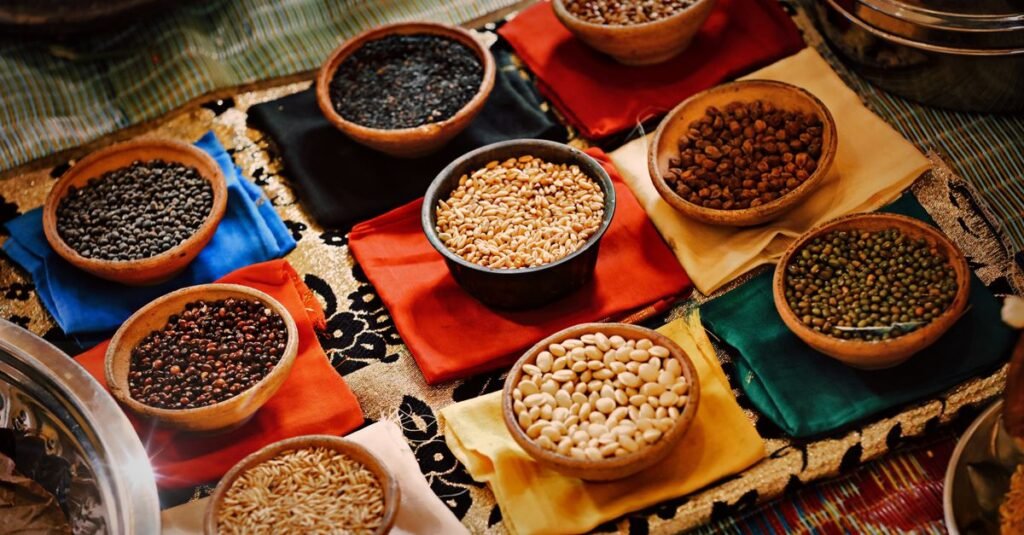
At 34 cents per 20 g, nothing else comes close. Beans and lentils also bring fiber, potassium, magnesium and iron, four nutrients most Americans need more of (see the most common nutrient gaps). Dried beans need soaking and cooking; canned beans cost more but still beat most meats. We compare them in dried vs canned beans.
Beans are lower in protein density than meat: 1 cup of cooked lentils has about 18 g of protein and 230 calories, compared with about 26 g and 140 calories in 3 oz of chicken breast. Combine them: beans with a little chicken, eggs or yogurt is both cheap and protein-dense.
Eggs: cheap, fast and complete
At about 60 cents per 20 g, eggs are the cheapest animal protein on the list in September 2026. They cook in minutes and work at any meal. Egg prices swing more than most foods (bird flu outbreaks have pushed them up sharply in recent years), so check current prices.
Peanut butter: cheap but calorie-dense
Peanut butter is cheap per gram of protein, but 20 g of protein from peanut butter comes with about 530 calories. Great for energy and flavor, less efficient if you’re trying to raise protein without raising calories.
Chicken: buy bone-in
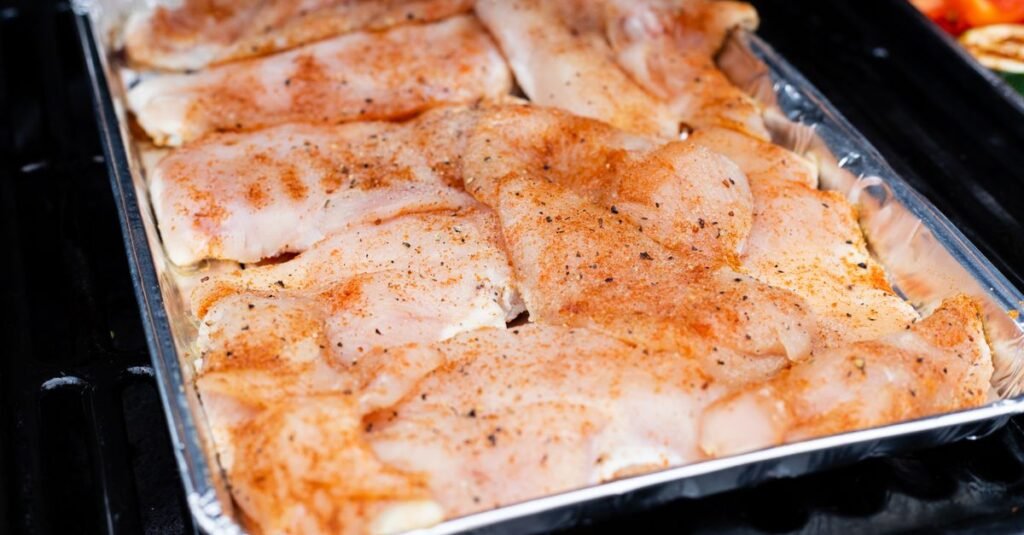
Bone-in chicken legs cost about 18% less per gram of protein than boneless breast, even after accounting for the bone. Thighs and drumsticks are also more forgiving to cook. A whole chicken (about $2.06/lb) is similarly cheap and gives you broth from the carcass.
Dairy: milk beats yogurt and cheese
Milk is about 68 cents per 20 g; a large tub of Greek yogurt about $1.19; single-serve cups usually much more. Buying yogurt in big tubs is one of the easiest savings on this list.
Canned fish: cheaper than fresh, with extra nutrients
Canned salmon costs about 45% less per gram of protein than fresh fillets and brings calcium from the soft bones and plenty of vitamin D. See canned salmon vs fresh.
Protein per dollar versus protein per calorie
If you’re also watching calories, the best choices are those that are cheap and lean:
- Cheap and lean: chicken breast, canned tuna, egg whites, nonfat Greek yogurt, lentils.
- Cheap but higher calorie: peanut butter, cheese, ground beef 80/20.
A sample day of cheap protein (about 110 g)
- Breakfast: 2 eggs and oatmeal made with milk (about 25 g)
- Lunch: black bean and rice bowl with ¼ cup cheese (about 22 g)
- Snack: a large scoop of Greek yogurt from a tub (about 17 g)
- Dinner: 2 roasted chicken legs with potatoes (about 45 g)
Total protein cost: roughly $3–3.50 for the day at the prices above.
Plan meals around the cheap end
The easiest way to use this list is to plan your week first, then shop. Our free meal planner, together with the account dashboard, prices your plan and suggests cheaper swaps, like chicken thighs instead of breast, or canned salmon instead of fresh.
The bottom line
Per gram of protein, the cheapest foods are dried lentils and beans, followed by eggs, peanut butter, bone-in chicken and milk. Fresh salmon and ground beef cost five to seven times as much as beans. You don’t have to give up the expensive ones; just build most meals on the cheap end and treat premium proteins as one meal a week, not one meal a day.
Frequently asked questions
What is the cheapest source of protein?
Dried lentils and dried beans are the cheapest, at about 34 cents per 20 g of protein at 2026 US prices. Eggs, peanut butter, bone-in chicken and milk follow at roughly 60–70 cents.
Is chicken or eggs cheaper for protein?
At September 2026 averages, eggs cost about 60 cents per 20 g of protein, bone-in chicken legs about 67 cents and boneless chicken breast about 82 cents.
Are plant proteins complete?
Most plant foods are low in one or more essential amino acids, but eating a variety (beans with grains, for example) across the day provides all of them. Soy foods like tofu are complete on their own.
Is protein powder a cheap protein source?
Whey is convenient but usually costs more per 20 g than eggs, beans or chicken. It makes sense when convenience matters more than price.
Sources
- U.S. Bureau of Labor Statistics: Average Price Data
- USDA FoodData Central
- Dietary Guidelines for Americans 2025–2030
This article is for general information and isn’t medical advice. Talk to your doctor or a registered dietitian about your own needs, especially if you have a health condition, are pregnant or take medication.