Part of our guide: How to Eat Healthy on a Budget: A Real Weekly Plan and What It Costs in 2026
Key takeaways
- Dried vs canned beans on price: dried cost about 28 cents per cooked cup; canned about 73 cents at 2026 US prices.
- Nutrition is nearly identical, except sodium: regular canned beans have about 400–500 mg per half cup; home-cooked have almost none.
- Rinsing canned beans removes a good share of the sodium; “no salt added” cans are even better.
- The easy compromise: batch-cook dried beans once a week and freeze can-size portions; keep a few cans for emergencies.
Beans are one of the best foods you can eat on a budget: cheap protein, lots of fiber, and good amounts of potassium, magnesium and iron. At 34 cents per 20 g of protein, dried beans are tied with lentils as the cheapest protein we priced (see cheapest protein sources). But should you buy them dried or canned? Here’s the full comparison.
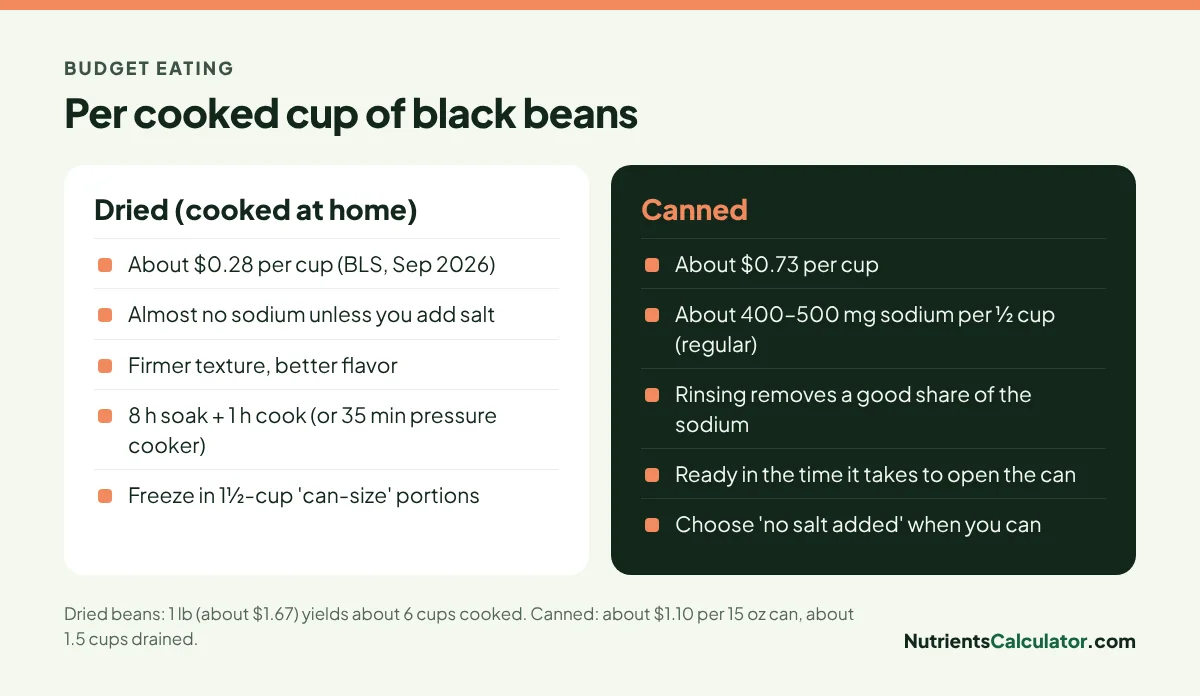
Dried vs canned beans: cost per serving
Using September 2026 Bureau of Labor Statistics average prices:
- Dried beans: about $1.67 per pound. One pound of dry beans makes about 6 cups cooked, so roughly 28 cents per cup.
- Canned beans: about $1.10 for a 15 oz can (typical store price), which drains to about 1½ cups, or roughly 73 cents per cup.
If your household eats three cans of beans a week, switching to dried saves about $1.40 a week, or around $75 a year. For a family that eats beans most days, the savings are larger.
Etekcity Food Scale
0.1g accuracy — the perfect companion for exact portions.
Nutrition: almost the same
Per cup of cooked black beans (USDA): about 227 calories, 15 g protein, 15 g fiber, 611 mg potassium, 120 mg magnesium and 3.6 mg iron. Canned beans are very close; the canning process causes small losses of some water-soluble vitamins but doesn’t change protein, fiber or minerals meaningfully.
Sodium: the real difference
- Home-cooked beans without salt: about 1–2 mg sodium per cup.
- Regular canned black beans: about 400–500 mg per half cup (including some of the liquid).
- Low-sodium canned beans: about 140–180 mg per half cup.
The Dietary Guidelines recommend less than 2,300 mg of sodium a day for adults. A full can of regular beans can deliver close to half of that.
Rinsing helps. Draining and rinsing canned beans in a colander for 10 seconds removes a significant share of the sodium, commonly reported as around 40%. It also removes some of the starchy liquid that contributes to gas.
Time and convenience
This is where canned beans win:
| Dried | Canned | |
|---|---|---|
| Hands-on time | 10 minutes | 1 minute |
| Total time | 8–12 h soak + 60–90 min simmer, or 35–45 min pressure cooker | None |
| Planning needed | Yes | No |
| Shelf life | 1–2 years (older beans take longer to cook) | 2–5 years |
How to batch-cook dried beans (the easy way)

- Rinse and sort 2 lb of dried beans, removing any small stones.
- Soak overnight in plenty of water, or skip soaking if you use a pressure cooker.
- Cook: drain, cover with fresh water by 2 inches, add a bay leaf and half an onion. Simmer 60–90 minutes until creamy inside, or pressure cook 8–12 minutes for soaked black beans (35–45 unsoaked), then let the pressure release naturally.
- Salt near the end (about 1 teaspoon per pound of dry beans), or leave unsalted and season each dish.
- Cool and portion into 1½-cup containers, the equivalent of one can, with a little cooking liquid.
- Refrigerate up to 3–4 days or freeze up to 3 months, following USDA leftover guidance.
From 2 lb dry you get about 8 “cans” of beans for around $3.34.
Which beans to buy dried, which canned
- Buy dried: black beans, pinto beans, kidney beans, chickpeas and white beans for weekly batch cooking. Lentils and split peas cook in 20–30 minutes with no soaking, so canned rarely makes sense for them.
- Keep a few cans: for nights you haven’t planned, for quick salads and for small amounts (a half cup for a bowl).
Do soaked beans cause less gas?
Beans contain fiber and certain carbohydrates (oligosaccharides) that gut bacteria ferment, producing gas. Soaking and discarding the water, rinsing canned beans, and increasing beans gradually all help. Most people’s digestion adapts within a few weeks of eating beans regularly. Our guide to reaching 28 g of fiber covers how to increase fiber comfortably.
Five cheap meals built on beans
- Black bean and rice bowls with salsa and cabbage slaw
- White bean and spinach soup with garlic and lemon
- Chickpea curry with canned tomatoes and frozen spinach
- Pinto bean and cheese burritos (freeze extras)
- Three-bean chili with ground turkey or extra beans
Each feeds four for well under $2 a serving at 2026 prices. More budget-friendly staples are in our cheap healthy grocery list.
See the difference in your grocery bill
If you plan meals in our free meal planner, the account dashboard prices your weekly shopping list and highlights swaps like dried beans instead of canned, with the estimated savings.
The bottom line
Dried and canned beans are nearly equal nutritionally. Dried beans are about 60% cheaper per cup and nearly sodium-free; canned beans save time. The best approach for most households is to batch-cook dried beans once a week, freeze can-size portions, and keep a few low-sodium cans for busy nights, rinsing them before use.
Frequently asked questions
Are dried beans healthier than canned?
Nutritionally they're very similar in protein, fiber, potassium and iron. The main difference is sodium: regular canned beans contain added salt, while beans you cook yourself contain almost none unless you salt them. Low-sodium canned beans and rinsing narrow the gap.
How much cheaper are dried beans?
At 2026 US prices, dried black beans cost about 28 cents per cooked cup versus about 73 cents for canned, roughly 60% less.
Does rinsing canned beans reduce sodium?
Yes. Draining and rinsing canned beans removes a substantial portion of the sodium, often cited as around 40%, according to food science testing.
Do I have to soak dried beans?
Soaking shortens cooking time and helps beans cook evenly, but it isn't required. Unsoaked beans take longer on the stove, or about 35–45 minutes in a pressure cooker. Lentils and split peas never need soaking.
Sources
- U.S. Bureau of Labor Statistics: Average Price Data
- USDA FoodData Central
- Dietary Guidelines for Americans (sodium under 2,300 mg/day)
- USDA FSIS: Leftovers and Food Safety
This article is for general information and isn’t medical advice. Talk to your doctor or a registered dietitian about your own needs, especially if you have a health condition, are pregnant or take medication.