Part of our guide: How to Eat Healthy on a Budget: A Real Weekly Plan and What It Costs in 2026
Key takeaways
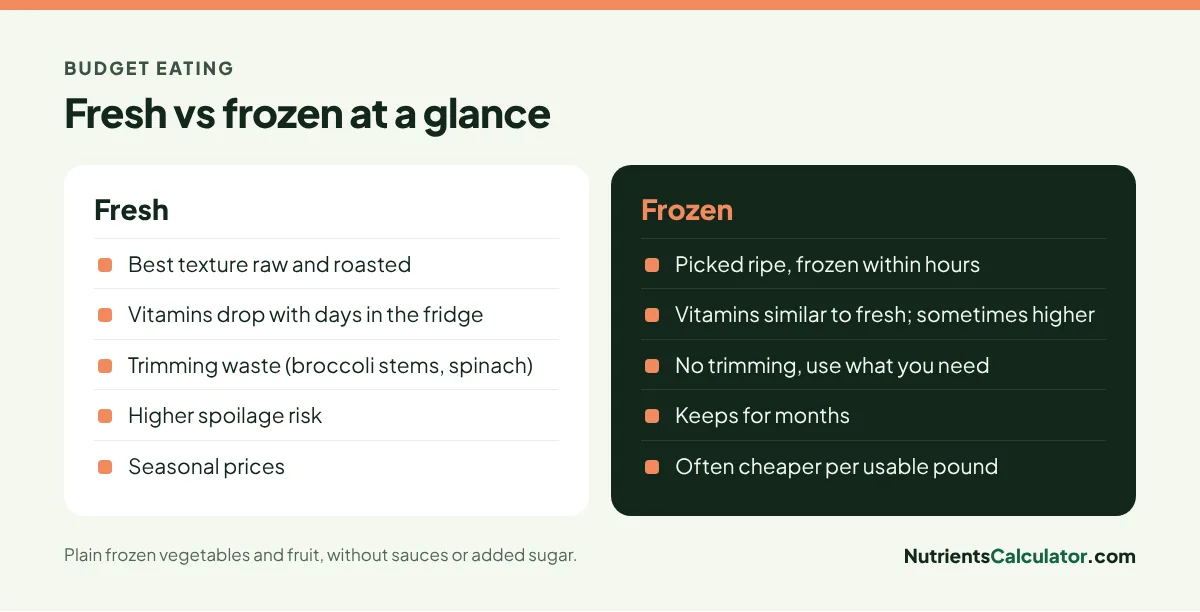
- On frozen vs fresh vegetables: frozen produce is picked ripe and frozen quickly, so its vitamin content is generally similar to fresh, and sometimes higher than fresh produce that’s sat in the fridge.
- Frozen is often cheaper per usable pound because there’s no trimming and no spoilage.
- Fresh wins on texture for salads, snacking and roasting crisp vegetables.
- The smartest kitchen uses both: fresh for the first half of the week, frozen for the rest.
“Fresh is best” is one of the most repeated food rules, and one of the most misleading for people on a budget. Frozen vegetables and fruit are often just as nutritious, cost less per usable pound, and almost never get thrown away. This guide compares them properly. It’s part of our series on eating healthy on a budget.
What happens to vegetables after harvest
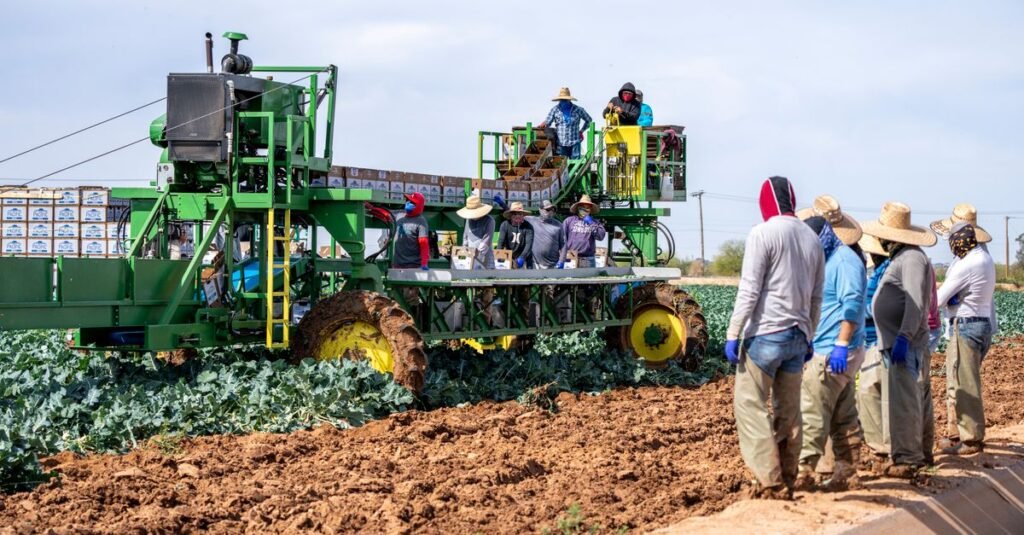
Fresh produce keeps “living” after it’s picked, using up some of its sugars and vitamins. It then spends time in transport, at the store and in your fridge. Vitamin C and folate are the most fragile; levels can drop noticeably over a week of refrigeration.
Frozen produce is usually harvested at peak ripeness, briefly blanched (dipped in hot water or steam to stop enzymes that cause spoilage) and frozen within hours. Blanching causes a small one-time loss of some water-soluble vitamins, after which levels stay quite stable in the freezer.
Etekcity Food Scale
0.1g accuracy — the perfect companion for exact portions.
Frozen vs fresh vegetables: what the studies show
A study from the University of California, Davis compared eight fruits and vegetables (including broccoli, spinach, peas, corn, green beans, carrots, strawberries and blueberries) bought fresh, stored fresh for five days, and frozen. Vitamin levels in frozen produce were generally comparable to fresh, and in some cases higher than produce that had been refrigerated for five days (Bouzari et al., 2015).
In practice: frozen broccoli from the freezer is often a better source of vitamin C than “fresh” broccoli that’s been in your crisper for a week.
The cost comparison
Price per pound on the sticker isn’t the whole story. You also pay for the parts you trim off and the food that spoils before you use it. Typical 2026 US prices:
| Item | Fresh | Frozen | Notes |
|---|---|---|---|
| Broccoli | about $2.29/lb (head) | about $2.00/lb (florets) | A fresh head includes stems you may discard |
| Spinach | about $5.59/lb (bagged) | about $2.00/lb | Frozen is already cooked down; far more spinach per dollar |
| Blueberries | about $4.49 per pint | about $3.49/lb (mixed berries) | Fresh berries spoil within days |
| Strawberries | about $2.84 per 12 oz (BLS) | about $3.49/lb (mixed berries) | Frozen better for smoothies and oats |
| Peas, corn | seasonal | about $1.80/lb | Frozen is the practical default |
US food waste is estimated at 30–40% of the food supply (USDA), and fresh produce is one of the most wasted categories at home. If you throw away a third of the fresh berries you buy, their real price is 50% higher than the sticker.
When fresh is the better choice
- Salads and raw snacking: lettuce, cucumber, tomatoes, peppers and carrots.
- Crisp roasted vegetables: fresh cauliflower, Brussels sprouts and broccoli brown better.
- In season and local: summer tomatoes and corn are cheap and delicious fresh.
- Long-keeping produce: cabbage, carrots, onions, potatoes and apples last weeks, so waste is low.
When frozen is the better choice
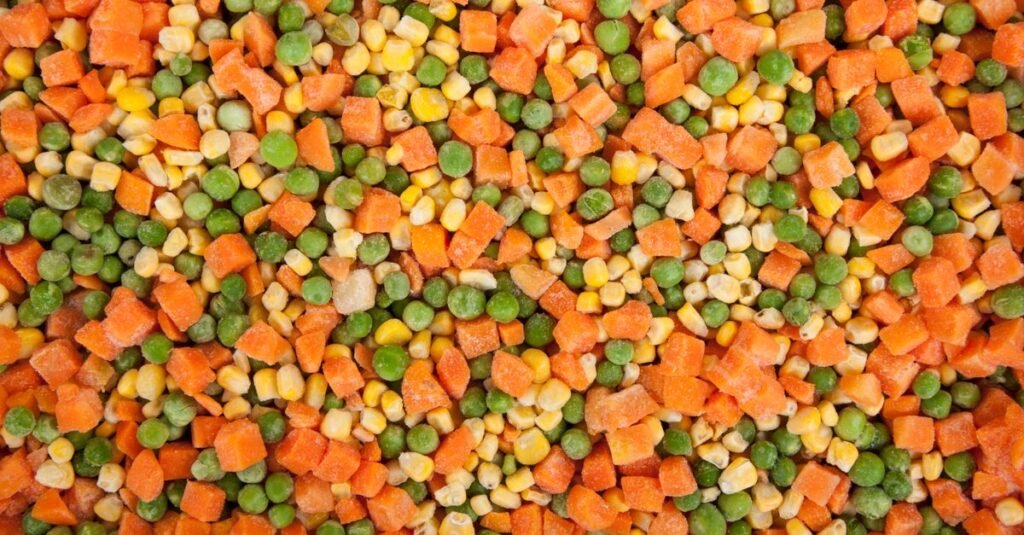
- Smoothies, oatmeal and baking: frozen berries are ideal and cheaper.
- Soups, stews, curries, fried rice and pasta sauce: texture doesn’t matter, convenience does.
- Leafy greens for cooking: frozen spinach adds iron, magnesium and potassium for pennies. See high-potassium foods.
- The end of the week: when the fresh produce is gone, frozen fills the gap without another shop.
How to cook frozen vegetables so they taste good

- Don’t thaw first for most vegetables. Cook straight from frozen.
- Roast at high heat (425°F / 220°C) on a preheated tray, spread out, with a little oil. Frozen broccoli and Brussels sprouts get nicely browned edges.
- Microwave or steam rather than boil, to keep more vitamins and better texture.
- Season boldly: garlic, lemon, chili flakes, soy sauce or parmesan.
- Squeeze excess water from thawed spinach before adding to eggs or pasta.
What to watch on the label
- Avoid sauces and butter packs if you want to control calories and sodium.
- Check fruit for added sugar or syrup.
- Look for single-ingredient bags: “broccoli florets”, “peas”, “mixed berries”.
Canned vegetables and fruit
Canned produce is also a good budget option. Canned tomatoes, beans, pumpkin and corn are nutritious and shelf-stable. Choose low-sodium or no-salt-added versions, rinse canned beans and vegetables, and pick fruit canned in juice or water rather than syrup. Canned fish is another standout; see canned vs fresh salmon.
Plan it, price it
When you plan meals for the week, it’s easy to see which ingredients could be frozen instead. If you use our free meal planner, the account dashboard prices your shopping list and points out swaps such as frozen berries or frozen broccoli where they’d save money.
The bottom line
Frozen vegetables and fruit are about as nutritious as fresh, often cost less per usable pound, and cut waste dramatically. Use fresh produce for salads, snacking and the first few days after shopping; rely on frozen for cooking, smoothies and the end of the week. Your diet and your budget both benefit.
Frequently asked questions
Are frozen vegetables as healthy as fresh?
Yes, in most cases. Studies comparing fresh, fresh-stored and frozen produce found vitamin levels in frozen produce were generally similar to fresh and sometimes higher than fresh produce that had been refrigerated for several days.
Do frozen vegetables lose nutrients when cooked?
Any vegetable loses some water-soluble vitamins (like vitamin C) when boiled. Steaming, microwaving or roasting frozen vegetables from frozen keeps more nutrients than long boiling.
Are frozen fruits high in sugar?
Plain frozen fruit has no added sugar; it has the same natural sugar as fresh. Check the ingredient list and avoid products packed in syrup or with added sugar.
Which vegetables are best frozen?
Peas, corn, spinach, broccoli, green beans, edamame, mixed stir-fry vegetables and berries freeze very well. Lettuce, cucumber and tomatoes for salads are better fresh.
Sources
- Bouzari A et al. Vitamin retention in eight fruits and vegetables: refrigerated vs frozen storage. J Agric Food Chem, 2015
- USDA: Food Waste FAQs
- U.S. Bureau of Labor Statistics: Average Price Data
- USDA FoodData Central
This article is for general information and isn’t medical advice. Talk to your doctor or a registered dietitian about your own needs, especially if you have a health condition, are pregnant or take medication.