Part of our guide: The Nutrient Gaps Most Americans Have (and the Everyday Foods That Fix Them)
Key takeaways
- High-potassium foods matter because the Daily Value is 4,700 mg and most adults get far less.
- Bananas are fine, but beans, potatoes, sweet potatoes, squash, cooked greens, lentils and avocado have more per serving.
- More potassium and less sodium together support healthy blood pressure.
- If you have kidney disease or take certain blood pressure medications, check with your doctor first.
Potassium helps regulate fluid balance, nerve signals and muscle contractions, including your heartbeat. Eating more high-potassium foods also counteracts some of sodium’s effect on blood pressure. The Dietary Guidelines have listed potassium among the nutrients most Americans don’t get enough of, alongside fiber, calcium and vitamin D (see common nutrient gaps).
How much you need
- Daily Value (food labels): 4,700 mg
- Adequate Intake (National Academies, 2019): 2,600 mg for adult women, 3,400 mg for adult men (NIH ODS)
Food labels use the 4,700 mg Daily Value, so a food listing “15% DV” has about 700 mg.
Etekcity Food Scale
0.1g accuracy — the perfect companion for exact portions.
The 20 best high-potassium foods (USDA)
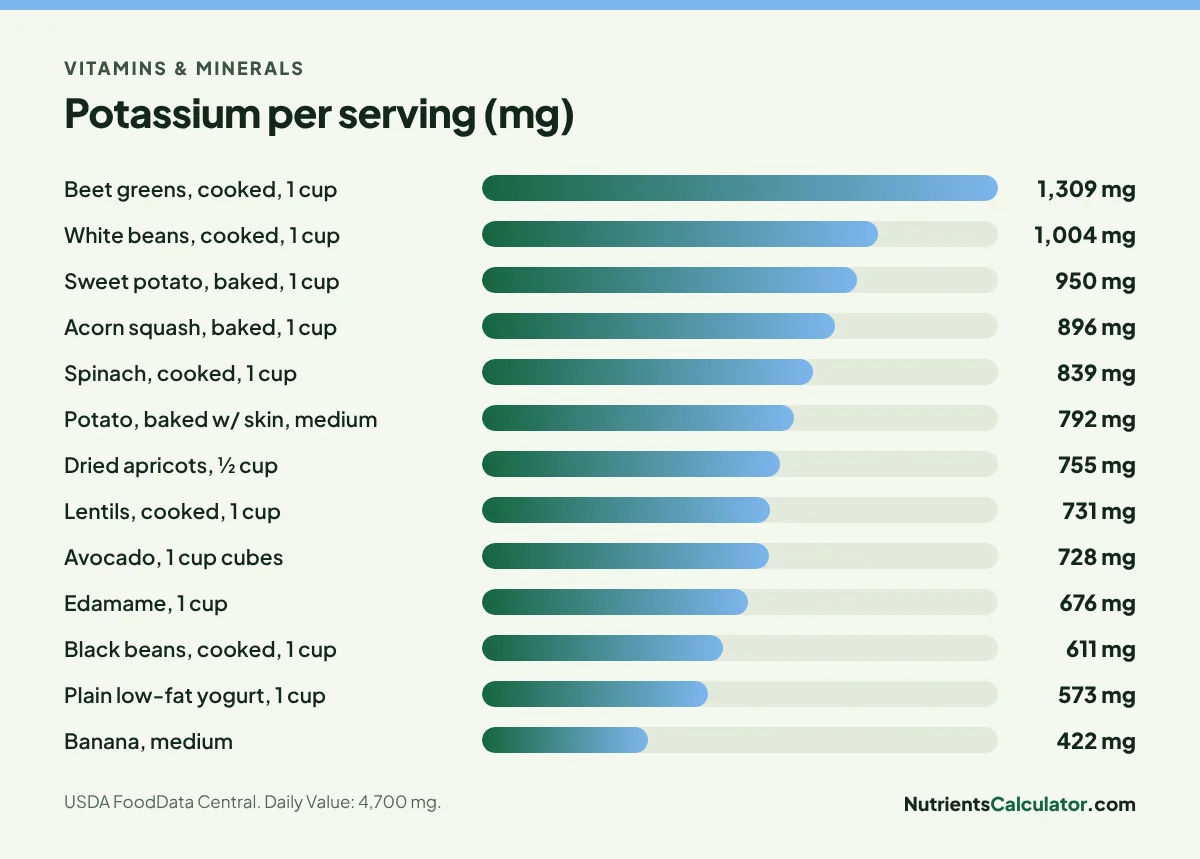
| Food | Serving | Potassium |
|---|---|---|
| Beet greens, cooked | 1 cup | 1,309 mg |
| White beans, cooked | 1 cup | 1,004 mg |
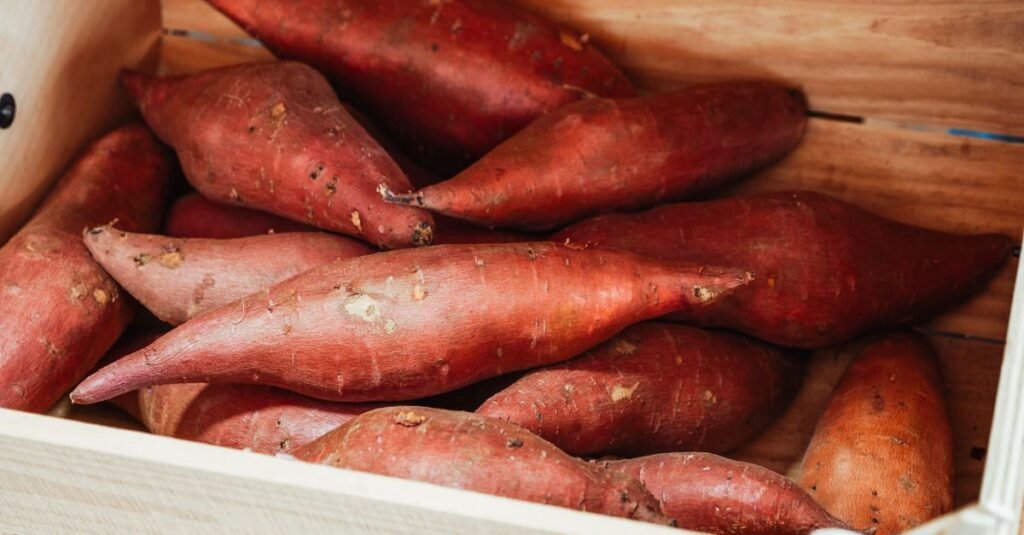
| Sweet potato, baked | 1 cup | 950 mg |
| Acorn squash, baked | 1 cup | 896 mg |
| Spinach, cooked | 1 cup | 839 mg |
| Potato, baked with skin | 1 medium | 792 mg |
| Dried apricots | ½ cup | 755 mg |
| Lentils, cooked | 1 cup | 731 mg |
| Avocado | 1 cup cubes | 728 mg |
| Kidney beans, cooked | 1 cup | 717 mg |
| Edamame | 1 cup | 676 mg |
| Black beans, cooked | 1 cup | 611 mg |
| Plain low-fat yogurt | 1 cup | 573 mg |
| Orange juice | 1 cup | 496 mg |
| Chickpeas, cooked | 1 cup | 477 mg |
| Canned tomatoes | 1 cup | 458 mg |
| Broccoli, cooked | 1 cup | 457 mg |
| Banana | 1 medium | 422 mg |
| 2% milk | 1 cup | 342 mg |
| Salmon, cooked | 3 oz | 326 mg |
Two patterns stand out among these high-potassium foods. First, cooked greens pack far more potassium than raw because cooking shrinks them: a cup of cooked spinach is several cups raw. Second, beans and potatoes, two of the cheapest foods in the store, are among the best sources. A baked potato has nearly twice the potassium of a banana.
A day that gets close to 4,700 mg
- Breakfast: 1 cup plain low-fat yogurt (573) with a banana (422) = 995 mg
- Lunch: 1 cup lentil soup with tomatoes (731 + about 230) = about 960 mg
- Snack: ¼ cup dried apricots (378) = 378 mg
- Dinner: 3 oz salmon (326), a medium baked potato with skin (792) and 1 cup cooked spinach (839) = 1,957 mg
- Drink: 1 cup 2% milk (342)
Total: about 4,630 mg. Most of it comes from plain, cheap potassium-rich foods: yogurt, lentils, potatoes, spinach.
Potassium and sodium: a balancing act
Diets high in sodium and low in potassium are linked to higher blood pressure. The Dietary Guidelines advise keeping sodium under 2,300 mg a day. In practice, the same swaps help both: cooking more meals from whole foods (naturally potassium-rich, low in sodium) and relying less on processed and restaurant foods (often high in sodium, low in potassium). Rinsing canned beans lowers sodium without affecting potassium much; see dried vs canned beans.
Easy ways to eat more potassium

- Keep the potato skin on, and bake rather than fry.
- Add beans or lentils to soups, salads and bowls four times a week.
- Use frozen spinach in eggs, pasta and soups. It’s cheap and concentrated (see frozen vs fresh vegetables).
- Swap one snack for a potassium-rich one: yogurt, a banana or a few dried apricots.
- Try winter squash and sweet potatoes as sides through fall and winter.
- Choose avocado in place of mayo or cheese on sandwiches.
Who should be careful
Too much potassium from food is rarely a problem for healthy kidneys. But people with chronic kidney disease, or those taking ACE inhibitors, ARBs or potassium-sparing diuretics, can build up dangerous levels. Salt substitutes made with potassium chloride also add a lot. If any of this applies to you, ask your doctor or dietitian how much potassium is right before adding lots of high-potassium foods.
See your own average
Food logs make potassium patterns easy to spot. When you log meals with a photo analyzer that estimates micronutrients, your weekly report card can show potassium as a percentage of the Daily Value. Remember it only counts what you logged, so partly logged days read low; use the weekly average.
Cooking methods that keep the potassium

Potassium dissolves in water, so how you cook matters:
- Boiling potatoes, beans or greens and pouring away the water removes some of the potassium. That’s useful for people on low-potassium diets, but not if you want more.
- Baking, roasting, steaming and microwaving keep more of it in the food.
- Soups and stews keep the potassium that leaches out, because you eat the liquid.
- Keep the skins on potatoes and sweet potatoes where you can; much of the potassium is near the skin.
For most people, the simplest rule is: bake potatoes, steam or microwave vegetables, and make bean soups rather than draining everything.
The bottom line
To get more potassium, think beyond bananas: beans and lentils, potatoes with skin, sweet potatoes, winter squash, cooked greens, yogurt and avocado are the heavy hitters among high-potassium foods, and most are inexpensive. Build two or three of them into each day, keep sodium in check, and check with your doctor first if you have kidney disease or take blood pressure medication.
Frequently asked questions
What food is highest in potassium?
Among everyday foods, cooked leafy greens (beet greens, spinach), white beans, potatoes, sweet potatoes, winter squash, lentils, avocado and dried apricots are the richest sources per serving.
How much potassium do I need a day?
The Daily Value on food labels is 4,700 mg. The Adequate Intake set by the National Academies is 2,600 mg for women and 3,400 mg for men. Most Americans fall short of both.
Are bananas a good source of potassium?
Yes, a medium banana has about 420 mg, but a medium baked potato with skin has nearly twice as much, and a cup of cooked white beans more than twice.
Who should limit potassium?
People with chronic kidney disease and those taking certain medications, such as some blood pressure drugs (ACE inhibitors, ARBs, potassium-sparing diuretics), may need to limit potassium. Ask your doctor before increasing it.
Sources
- NIH Office of Dietary Supplements: Potassium fact sheet
- FDA: Daily Value on the Nutrition and Supplement Facts Labels
- Dietary Guidelines for Americans
- USDA FoodData Central
This article is for general information and isn’t medical advice. Talk to your doctor or a registered dietitian about your own needs, especially if you have a health condition, are pregnant or take medication.