Part of our guide: The Nutrient Gaps Most Americans Have (and the Everyday Foods That Fix Them)
Key takeaways
- Magnesium-rich foods matter because magnesium is involved in over 300 enzyme reactions: muscle and nerve function, blood sugar control, blood pressure and bone health.
- Adults need 310–420 mg a day depending on sex and age; the Daily Value is 420 mg.
- The best sources are seeds, nuts, beans, leafy greens and whole grains, the same foods that close several other nutrient gaps.
- Food can’t give you too much; supplements can. Stay under 350 mg a day from supplements unless your doctor advises otherwise.
Magnesium doesn’t get the attention of vitamin D or iron, but national surveys consistently find that many Americans eat less than they need (NIH ODS). The reason is simple: refined grains lose most of their magnesium, and the richest sources (seeds, nuts, beans and leafy greens) are foods many people rarely eat. This is part of our series on common nutrient gaps.
How much you need
RDA (NIH ODS):
| Age | Women | Men |
|---|---|---|
| 19–30 | 310 mg | 400 mg |
| 31+ | 320 mg | 420 mg |
| Pregnancy (19–30 / 31+) | 350 / 360 mg | n/a |
The Daily Value on food labels is 420 mg.

Etekcity Food Scale
0.1g accuracy — the perfect companion for exact portions.
What magnesium does
- Supports normal muscle and nerve function, including heart rhythm.
- Helps regulate blood sugar and insulin action.
- Plays a role in blood pressure regulation.
- Contributes to bone structure alongside calcium and vitamin D.
- Helps make protein and DNA and produce energy.
The best magnesium-rich foods

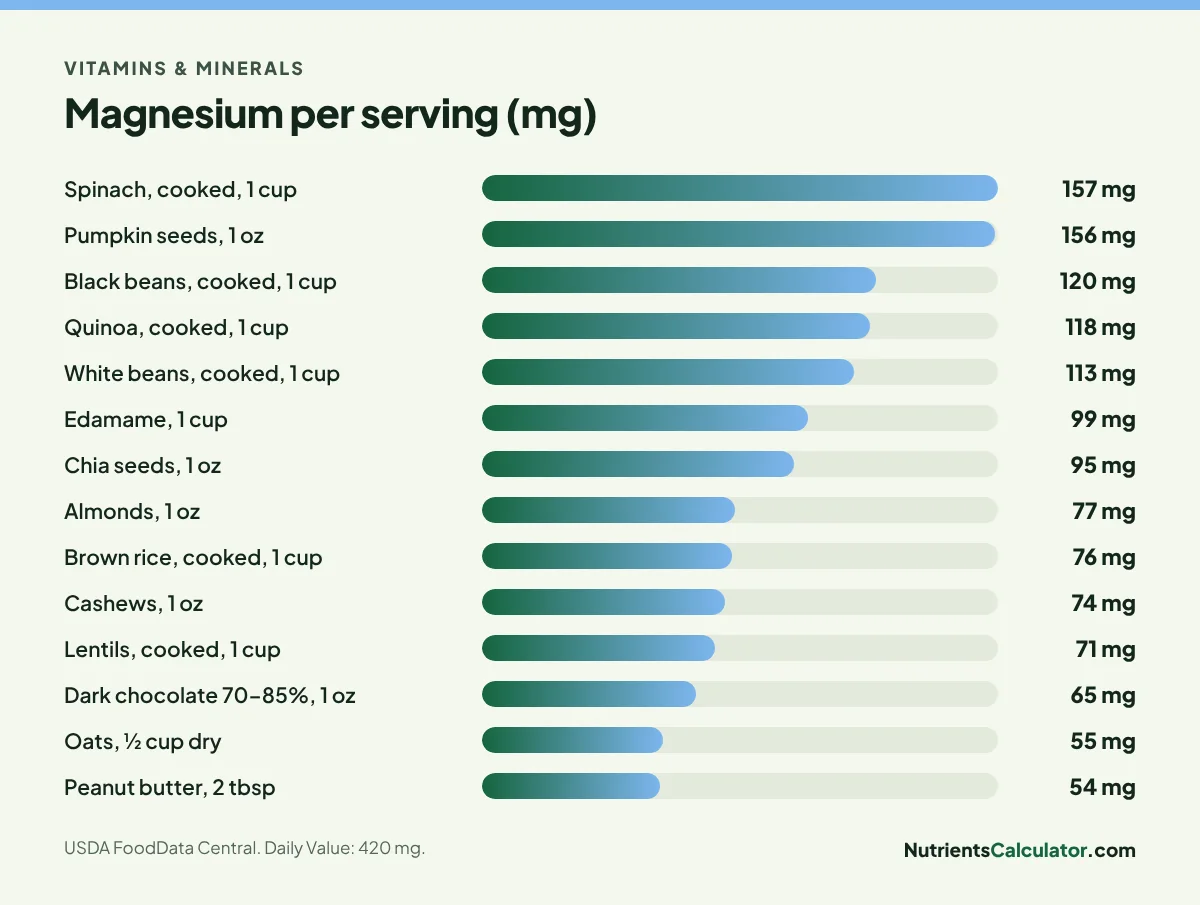
| Food | Serving | Magnesium |
|---|---|---|
| Spinach, cooked | 1 cup | 157 mg |
| Pumpkin seeds, roasted | 1 oz | 156 mg |
| Black beans, cooked | 1 cup | 120 mg |
| Quinoa, cooked | 1 cup | 118 mg |
| White beans, cooked | 1 cup | 113 mg |
| Edamame | 1 cup | 99 mg |
| Chia seeds | 1 oz | 95 mg |
| Almonds | 1 oz | 77 mg |
| Brown rice, cooked | 1 cup | 76 mg |
| Cashews, dry roasted | 1 oz | 74 mg |
| Lentils, cooked | 1 cup | 71 mg |
| Dark chocolate, 70–85% | 1 oz | 65 mg |
| Rolled oats | ½ cup dry | 55 mg |
| Flaxseed | 1 tbsp | about 40 mg |
| Peanut butter | 2 tbsp | 54 mg |
| Whole-wheat bread | 1 slice | 24 mg |
Pumpkin seeds are the standout: one ounce gives over a third of the Daily Value. They’re also one of the more protein-dense seeds (about 8.5 g per ounce), as noted in our high-protein snack list.
A sample day that reaches about 510 mg
- Breakfast: oatmeal (½ cup dry oats, 55 mg) with 1 tbsp chia seeds (about 40 mg) = 95 mg
- Lunch: black bean and brown rice bowl (1 cup beans 120 mg + ½ cup rice 38 mg) = 158 mg
- Snack: 1 oz almonds = 77 mg
- Dinner: salmon with 1 cup cooked spinach = about 157 mg + 25 mg from salmon = 182 mg
Total: about 510 mg. Swap the spinach for a salad and you’re still near 400 mg.
Simple ways to eat more magnesium

- Sprinkle seeds: pumpkin, chia, sunflower or flax on oatmeal, yogurt and salads.
- Swap refined grains for oats, brown rice, quinoa and whole-wheat bread.
- Eat beans or lentils several times a week (they also deliver fiber, potassium and iron).
- Add cooked greens: frozen spinach in eggs, soups and pasta is cheap and concentrated.
- Snack on nuts in a measured 1 oz portion; they’re calorie-dense (see foods with more calories than you think).
- Choose dark chocolate (70%+) when you want a treat.
Magnesium supplements: be careful

Magnesium from food is safe because healthy kidneys excrete any excess. Supplements are different:
- The upper limit from supplements is 350 mg a day for adults.
- Higher doses commonly cause diarrhea, nausea and cramping.
- People with kidney disease can build up dangerous levels and should only supplement on medical advice.
- Magnesium supplements can interact with some antibiotics, osteoporosis medications and others.
Talk to your doctor before taking a supplement, and get as much as you can from food first.
Track your weekly average
When you log meals with a photo analyzer that estimates minerals, your weekly report card can show magnesium as a percentage of the Daily Value next to fiber, potassium, iron and vitamin D. If it’s consistently low, add a serving of seeds or beans each day and recheck after two weeks.
Who is most likely to be low
According to the NIH Office of Dietary Supplements, some groups are more likely to fall short:
- Older adults, who tend to eat less and absorb less.
- People with type 2 diabetes, who lose more magnesium in urine.
- People with gastrointestinal conditions such as Crohn’s disease or celiac disease, which reduce absorption.
- People with alcohol use disorder.
- People taking certain medications, including some diuretics and long-term proton pump inhibitors.
If you’re in one of these groups, ask your doctor whether your magnesium should be checked rather than starting a supplement on your own. Note that a blood test doesn’t always reflect total body magnesium, because most of it is stored in bone and tissue.
The bottom line
Magnesium is a quiet but widespread gap. The best food sources (pumpkin and chia seeds, beans, spinach, quinoa, almonds and whole grains) overlap with the foods that fix fiber, potassium and iron too. Add seeds to breakfast, beans to lunch and greens to dinner, and most people reach their target without a supplement.
Frequently asked questions
What food is highest in magnesium?
Pumpkin seeds, cooked spinach, chia seeds, black beans, quinoa, almonds and cashews are among the richest common sources per serving.
How much magnesium do I need?
The RDA is 310–320 mg a day for adult women and 400–420 mg for adult men, depending on age. The Daily Value on food labels is 420 mg.
Can you get too much magnesium?
Not from food: healthy kidneys remove the excess. From supplements, the upper limit is 350 mg a day for adults. Higher doses commonly cause diarrhea, and people with kidney disease should avoid supplements unless their doctor advises them.
Why are so many people low in magnesium?
Refining grains removes most of their magnesium, and many diets are low in beans, nuts, seeds and leafy greens, the richest sources.
Sources
- NIH Office of Dietary Supplements: Magnesium fact sheet for health professionals
- FDA: Daily Value on the Nutrition and Supplement Facts Labels
- USDA FoodData Central
- Dietary Guidelines for Americans
This article is for general information and isn’t medical advice. Talk to your doctor or a registered dietitian about your own needs, especially if you have a health condition, are pregnant or take medication.