Key takeaways
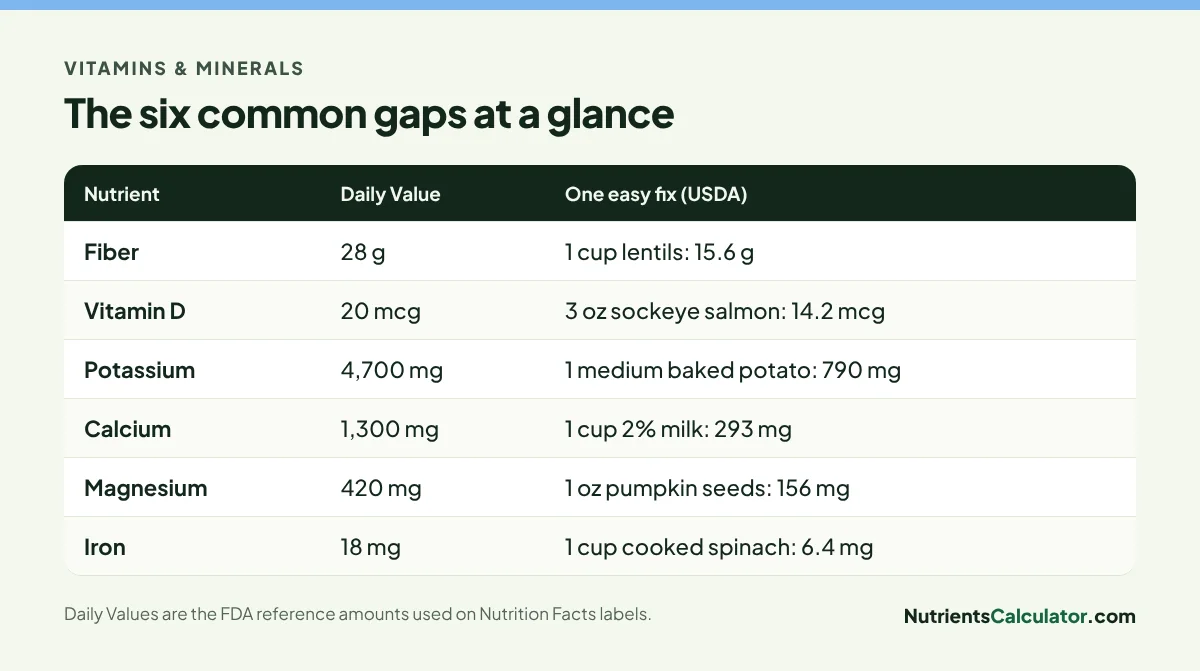
- The six most common nutrient gaps for Americans are fiber, vitamin D, potassium, calcium, magnesium and, for some groups, iron.
- Most of them come from the same foods: beans, vegetables, fruit, whole grains, dairy or fortified alternatives, nuts, seeds and fish.
- Adding beans or lentils a few times a week and an extra vegetable at dinner closes several gaps at once.
- Food logs show patterns, but only a blood test can diagnose a deficiency.
Most Americans eat plenty of calories, sodium and protein. Where we fall short is in nutrients that come from plants, dairy and fish. The Dietary Guidelines for Americans have flagged calcium, potassium, fiber and vitamin D as “nutrients of public health concern” because low intakes are so widespread and linked to health problems (Dietary Guidelines). Magnesium is also commonly low, and iron matters for specific groups.
The good news: these gaps share solutions. A few habit changes can close most of them together.
1. Fiber: the biggest gap
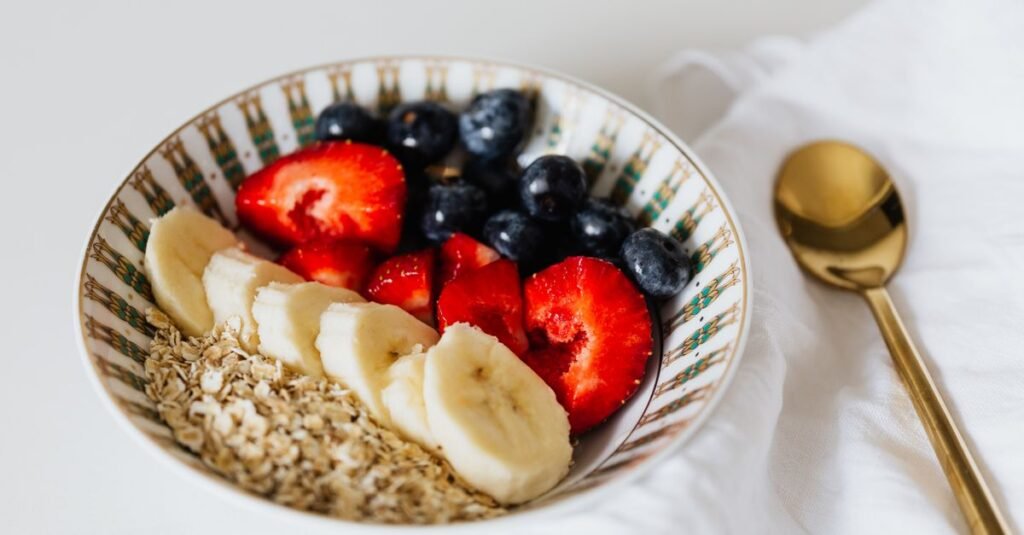
Daily Value: 28 g. Most Americans get roughly half that, and only about 5% meet recommendations (Quagliani & Felt-Gunderson, 2017).
Fiber feeds the gut bacteria, keeps digestion regular, helps manage blood sugar and cholesterol, and makes meals more filling. Top sources per serving (USDA):
- Lentils, cooked, 1 cup: 15.6 g
- Black beans, cooked, 1 cup: 15 g
- Avocado, 1 cup cubes: 10 g
- Chia seeds, 1 oz: 9.8 g
- Raspberries, 1 cup: 8 g
- Green peas, 1 cup: 7.2 g
- Pear, 1 medium: 5.5 g
- Broccoli, cooked, 1 cup: 5.1 g
Increase fiber gradually and drink more water as you do, to avoid bloating. We built a full sample day that reaches 28 g in how to eat 28 grams of fiber a day.
Etekcity Food Scale
0.1g accuracy — the perfect companion for exact portions.
2. Vitamin D
Daily Value: 20 mcg (800 IU). Vitamin D helps you absorb calcium and supports bones and muscles. Your skin makes it from sunlight, but how much depends on season, latitude, skin tone and time outdoors, so many people come up short, especially in winter (NIH ODS).
Few foods contain much. The best (USDA):
- Rainbow trout, farmed, 3 oz: 16 mcg
- Sockeye salmon, 3 oz: 14.2 mcg
- Canned pink salmon, 3 oz: 11.6 mcg
- UV-exposed white mushrooms, 1 cup: about 18 mcg
- Fortified milk or soy milk, 1 cup: about 2.7–2.9 mcg
- Egg, 1 large: about 1 mcg
Because food sources are limited, many people need sunlight or a supplement too. Ask your doctor before supplementing. Full list and practical tips: foods high in vitamin D.
3. Potassium

Daily Value: 4,700 mg. Potassium helps balance the effect of sodium on blood pressure. Most adults get well under the target. Bananas are famous for it, but they’re not the top source:
- Beet greens, cooked, 1 cup: 1,309 mg
- White beans, cooked, 1 cup: 1,004 mg
- Sweet potato, baked, 1 cup: 950 mg
- Acorn squash, baked, 1 cup: 896 mg
- Spinach, cooked, 1 cup: 839 mg
- Potato, baked with skin, 1 medium: 792 mg
- Avocado, 1 cup cubes: 728 mg
- Banana, 1 medium: 422 mg
If you have kidney disease or take certain blood pressure medicines, ask your doctor about potassium first. More in high-potassium foods beyond bananas.
4. Calcium
Daily Value: 1,300 mg. Calcium builds and maintains bones. Dairy is the easiest source, but there are good alternatives:
- Plain low-fat yogurt, 1 cup: 448 mg
- Canned sardines with bones, 3 oz: 325 mg
- Calcium-fortified soy milk, 1 cup: about 300 mg
- 2% milk, 1 cup: 293 mg
- Firm tofu made with calcium sulfate, ½ cup: 253 mg
- Cooked spinach, 1 cup: 245 mg (though less of it is absorbed)
- Canned salmon with bones, 3 oz: 183 mg
- Chia seeds, 1 oz: 179 mg
5. Magnesium
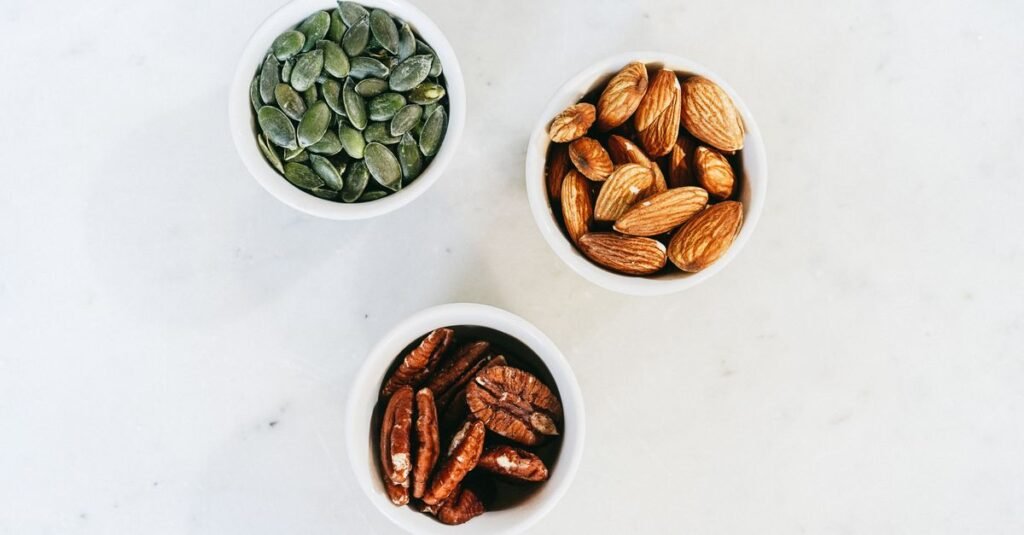
Daily Value: 420 mg. Magnesium is involved in hundreds of reactions in the body, from muscle and nerve function to blood sugar control (NIH ODS). Many people fall short because refined grains lose most of it.
- Pumpkin seeds, 1 oz: 156 mg
- Spinach, cooked, 1 cup: 157 mg
- Black beans, cooked, 1 cup: 120 mg
- Quinoa, cooked, 1 cup: 118 mg
- Chia seeds, 1 oz: 95 mg
- Almonds, 1 oz: 77 mg
- Dark chocolate (70–85%), 1 oz: 65 mg
See magnesium-rich foods and how much you need for a full list by serving.
6. Iron (for some people)
Daily Value: 18 mg. Most men get enough. Women who menstruate, pregnant women, young children, frequent blood donors and some vegetarians are at higher risk of low iron. Iron from meat and fish (heme iron) is absorbed better than iron from plants (non-heme), but you can boost plant iron absorption by pairing it with vitamin C. How to do that, and what blocks absorption, is in how to absorb more iron from food.
One plan that closes the common nutrient gaps
You don’t need six separate strategies. These five habits cover most of the list:
- Eat beans, lentils or chickpeas at least four times a week. Fiber, potassium, magnesium and iron in one food.
- Add one extra vegetable at dinner, leafy greens or a potato or squash a few times a week.
- Have dairy or a fortified alternative twice a day. Calcium and some vitamin D.
- Eat fish twice a week, with canned salmon or sardines as cheap options. Vitamin D, calcium, omega-3s.
- Snack on nuts, seeds or fruit instead of chips or crackers. Magnesium, fiber, potassium.
How to see your own gaps
Food logs show patterns over time. When you log meals with a photo analyzer that estimates micronutrients, your weekly summary can show which nutrients you consistently get the least of, compared with the Daily Value. Treat these as clues, not diagnoses: they only count what you logged, and they’re estimates. If a nutrient looks low week after week, add the foods above and mention it to your doctor at your next checkup.
A day that covers all six gaps
Here’s what a day built around these foods looks like (USDA values):
| Meal | Foods | What it covers |
|---|---|---|
| Breakfast | Oatmeal made with fortified milk, raspberries, chia seeds | Fiber 13 g, calcium about 300 mg, magnesium about 95 mg, some vitamin D |
| Lunch | Lentil soup with spinach and tomatoes, whole-wheat bread | Fiber 10 g, iron about 6 mg (vitamin C from tomatoes helps absorb it), potassium about 900 mg |
| Snack | Pumpkin seeds and an orange | Magnesium 156 mg, vitamin C for iron absorption |
| Dinner | Canned salmon patties, baked potato with skin, broccoli | Vitamin D about 11.6 mcg (over half the Daily Value), calcium from the bones, potassium about 1,500 mg |
That single day lands near or above the Daily Value for fiber, magnesium and potassium, and gets most of the way for calcium, iron and vitamin D. It isn’t a special diet; it’s ordinary food chosen with these nutrients in mind.
The bottom line
The most common nutrient gaps in the American diet (fiber, vitamin D, potassium, calcium, magnesium and iron for some) all point to the same kinds of foods: beans, vegetables, fruit, whole grains, dairy or fortified alternatives, nuts, seeds and fish. Start with beans four times a week and one extra vegetable a day, and you’ll make progress on most of the list at once.
Frequently asked questions
What are the most common nutrient deficiencies in the US?
The Dietary Guidelines named calcium, potassium, dietary fiber and vitamin D as nutrients of public health concern because so many Americans fall short. Magnesium is also commonly under-consumed, and iron is a concern for menstruating women, pregnant women and young children.
Should I take a multivitamin instead?
A multivitamin can help fill some gaps, but it doesn't provide fiber or enough potassium, calcium or magnesium to matter much. Food is the better base. Ask your doctor before taking supplements, especially vitamin D or iron, which can be harmful in excess.
How do I know if I'm low in a nutrient?
Food logs can show patterns, but only a blood test and a clinician can diagnose a deficiency. If you have symptoms like ongoing fatigue, talk to your doctor rather than self-treating.
Why does my app say I'm low in potassium every day?
Potassium's Daily Value of 4,700 mg is high, and most people get roughly half of that. Apps also only count what you log, so partly logged days read low. Focus on the weekly average and on adding potassium-rich foods.
Sources
- Dietary Guidelines for Americans
- FDA: Daily Value on the Nutrition and Supplement Facts Labels
- NIH Office of Dietary Supplements: Vitamin D fact sheet
- NIH Office of Dietary Supplements: Magnesium fact sheet
- Quagliani D, Felt-Gunderson P. Closing America's fiber intake gap. Am J Lifestyle Med, 2017
- USDA FoodData Central
This article is for general information and isn’t medical advice. Talk to your doctor or a registered dietitian about your own needs, especially if you have a health condition, are pregnant or take medication.