Part of our guide: How to Eat Healthy on a Budget: A Real Weekly Plan and What It Costs in 2026
Key takeaways
- Meal prep for beginners can be one 90-minute session that produces five lunches and five breakfasts.
- Cook components (protein, grain, vegetables, beans) rather than five identical meals, and vary the sauces.
- The plan below uses about $21 of groceries at 2026 US prices for 10 meals: roughly $2 per meal.
- Follow food-safety basics: cool food within two hours, eat within 3–4 days, freeze the rest.
Meal prep has a reputation for rows of identical containers and joyless chicken and broccoli. It doesn’t have to be like that. The beginner-friendly approach is to cook a few versatile components in one session, then mix them into different meals through the week. This plan takes about 90 minutes and covers weekday lunches and breakfasts. It’s the cooking side of our guide to eating healthy on a budget.
The menu

Lunches (5): bowls built from roasted chicken thighs, roasted vegetables, rice and lentils, with three different sauces.
Breakfasts (5): overnight oats with Greek yogurt and berries, plus hard-boiled eggs.
Per lunch: about 550 calories and 40 g protein. Per breakfast: about 360 calories and 28 g protein, plus 6 g from an egg if you add one. Calculated from USDA values.
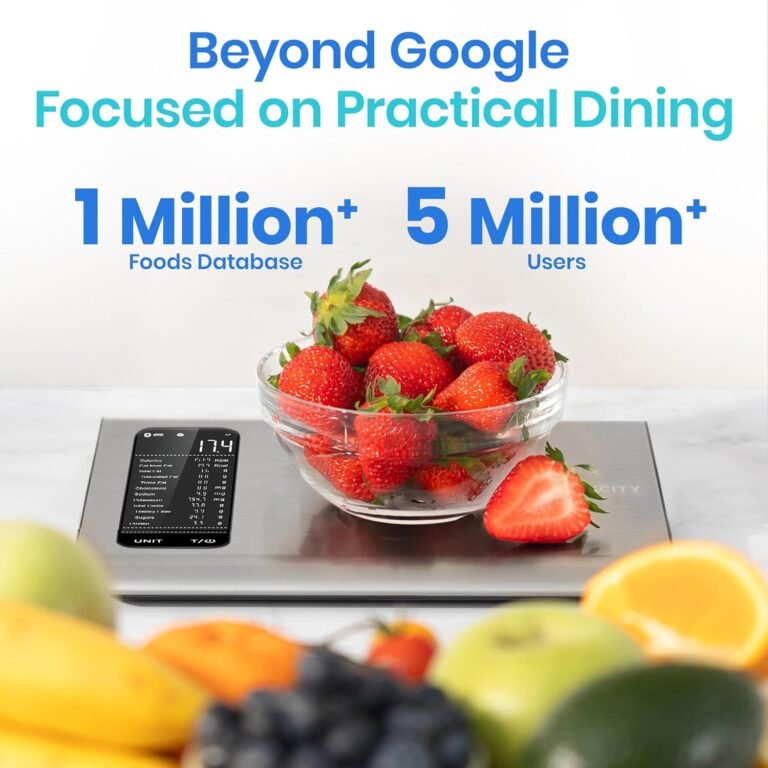
Etekcity Food Scale
0.1g accuracy — the perfect companion for exact portions.
Shopping list (2026 average prices)
| Item | Amount | Approx. cost |
|---|---|---|
| Chicken thighs, bone-in (or legs) | 2.5 lb | $4.35 |
| Dried lentils | ½ lb | $0.95 |
| Rice | 1 lb | $1.12 |
| Broccoli (frozen is fine) | 1 lb | $2.00 |
| Carrots | 1 lb | $1.19 |
| Bell peppers | 2 | $2.58 |
| Onion | 1 | $0.45 |
| Rolled oats | 1 lb | $2.28 |
| Plain Greek yogurt | 32 oz tub (use most) | $5.49 |
| Frozen berries | about ½ lb | $1.75 |
| Eggs | 5 | $0.95 |
| Pantry: oil, spices, salsa, soy sauce, lemon | on hand | |
| Total | about $23 (about $21 used this week) |
Some items (half the rice and oats, spices) carry over. Prices are BLS September 2026 averages where published, typical store prices elsewhere.
Equipment
Two sheet pans, two saucepans, a sharp knife, a cutting board, five lunch containers and five jars or small containers for oats.
The 90-minute plan
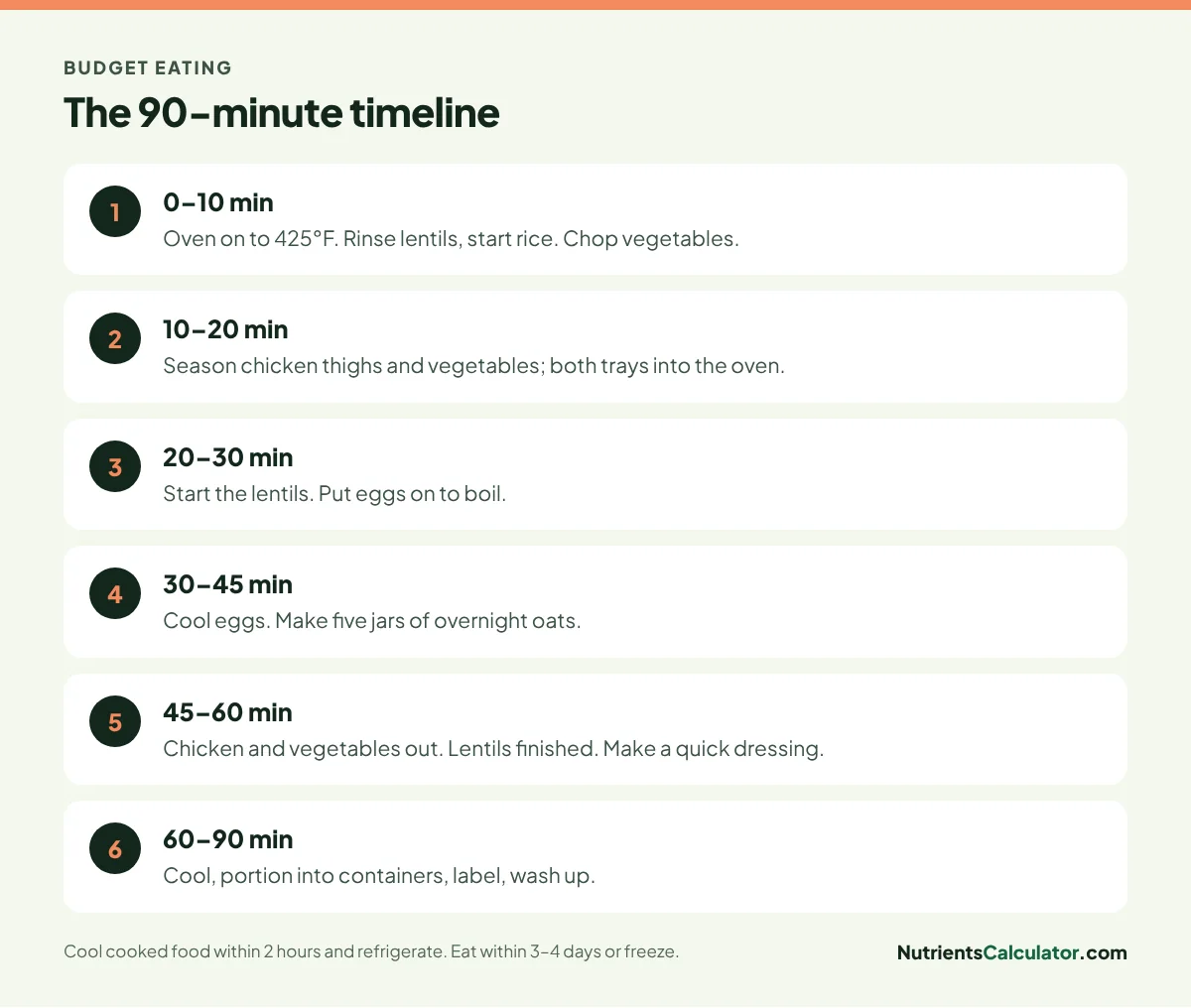
0–10 minutes: get things going
- Heat the oven to 425°F (220°C).
- Rinse 1 cup of rice and start it (stove or rice cooker).
- Rinse 1 cup of lentils.
- Chop carrots, peppers and onion.
10–20 minutes: into the oven
- Toss chicken thighs with oil, salt, pepper, garlic powder and paprika on one tray.
- Toss vegetables with a tablespoon of oil and salt on the second tray.
- Both trays into the oven. Vegetables need about 25–30 minutes; chicken about 35–45 minutes, until it reaches 165°F (74°C) inside, per USDA guidance.
20–30 minutes: lentils and eggs
- Simmer lentils in 3 cups of water with a bay leaf for 20–25 minutes until tender; drain and salt.
- Put 5 eggs in a pan of cold water, bring to a boil, cover, turn off the heat and leave for 10–12 minutes.
30–45 minutes: breakfasts
- Move eggs to cold water.
- In each of 5 jars: ½ cup oats, ¾ cup Greek yogurt, ½ cup milk or water, a handful of frozen berries, cinnamon. Lid on, into the fridge.
45–60 minutes: finish cooking
- Take out vegetables, then chicken when done. Let chicken rest, then pull the meat from the bones.
- Stir together three quick sauces: salsa; Greek yogurt with lemon and garlic; soy sauce with a little honey and sesame.
60–90 minutes: portion and clean up
- Divide rice, lentils, chicken and vegetables into five containers.
- Keep sauces in small separate containers so bowls don’t get soggy.
- Label with the day; put days 4 and 5 in the freezer if you like.
- Wash up while things cool (refrigerate within 2 hours of cooking).
Five different lunches from the same components
- Monday, burrito bowl: add salsa and a little cheese.
- Tuesday, Mediterranean: lemon-garlic yogurt sauce, cucumber, a few olives.
- Wednesday, teriyaki-style: soy-sesame sauce and chili flakes.
- Thursday, soup: heat the bowl with broth to make a quick chicken and lentil soup.
- Friday, wrap: fill a tortilla with chicken, vegetables and lentils.
Lentils boost fiber, potassium and iron; for why that matters, see how to eat 28 g of fiber a day.
Food safety basics

- Cool quickly: don’t leave cooked food out more than 2 hours.
- Fridge time: eat cooked leftovers within 3–4 days (USDA FSIS).
- Freeze later-week portions and thaw overnight in the fridge.
- Reheat to 165°F (74°C), until steaming hot throughout.
Meal prep for beginners: tips for sticking with it
- Start small: if 90 minutes is too much, prep just lunches for three days.
- Plan on paper first: the review and planning habit makes prep sessions faster. See the 10-minute weekly review.
- Use the same base recipe for a few weeks; speed comes from repetition.
- Change one component each week (beans instead of lentils, potatoes instead of rice) to avoid boredom.
Plan, prep and price it in one place
If you plan your meals in our free meal planner, your account turns the plan into a shopping list grouped by aisle, estimates the cost of the week, and suggests cheaper swaps. It’s an easy way to see what each prep session really costs.
The bottom line
Meal prep for beginners works best as a short session of cooking components (protein, grain, beans, vegetables) that you combine differently each day with simple sauces. In about 90 minutes and for roughly $2 a meal at 2026 prices, you can have five lunches and five high-protein breakfasts ready, with less waste and fewer last-minute takeout orders.
Frequently asked questions
How long does meal prep last in the fridge?
USDA food-safety guidance is to eat cooked leftovers within 3–4 days. For a five-day plan, freeze the last one or two portions and move them to the fridge the night before.
Is meal prepping cheaper?
Usually, yes. Buying ingredients for a batch costs far less per meal than buying lunch out, and planning reduces food waste. The plan in this guide works out to about $2 per meal at 2026 average prices.
What are the best foods to meal prep?
Roasted chicken thighs, beans and lentils, grains like rice and quinoa, roasted vegetables, hard-boiled eggs, soups, chili and overnight oats all keep and reheat well.
How do I keep meal prep from getting boring?
Cook plain components and change the sauce: the same chicken, rice and vegetables become a burrito bowl with salsa, a Mediterranean bowl with lemon and yogurt, or an Asian bowl with soy and sesame.
Sources
- USDA FSIS: Leftovers and Food Safety
- USDA FSIS: Safe Minimum Internal Temperature Chart
- U.S. Bureau of Labor Statistics: Average Price Data
- USDA FoodData Central
This article is for general information and isn’t medical advice. Talk to your doctor or a registered dietitian about your own needs, especially if you have a health condition, are pregnant or take medication.