Key takeaways
- How much protein do I need a day? The minimum for healthy adults is 0.8 g of protein per kg of body weight (about 0.36 g per lb).
- The 2025–2030 Dietary Guidelines say many people, including older and active adults, may benefit from 1.2–1.6 g/kg.
- For most adults that lands between about 70 and 130 g of protein a day.
- Spread it out: roughly 25–40 g at each meal is easier to hit and better used than one huge dinner.
Protein is the nutrient people ask about most, and the answers online range from “you get plenty already” to “eat 1 g per pound no matter what”. The truth sits in between and depends on your weight, your age, how active you are and what you’re trying to achieve. This guide gives you a daily protein number in grams, then shows you how to turn it into meals.
The quick answer: grams of protein a day
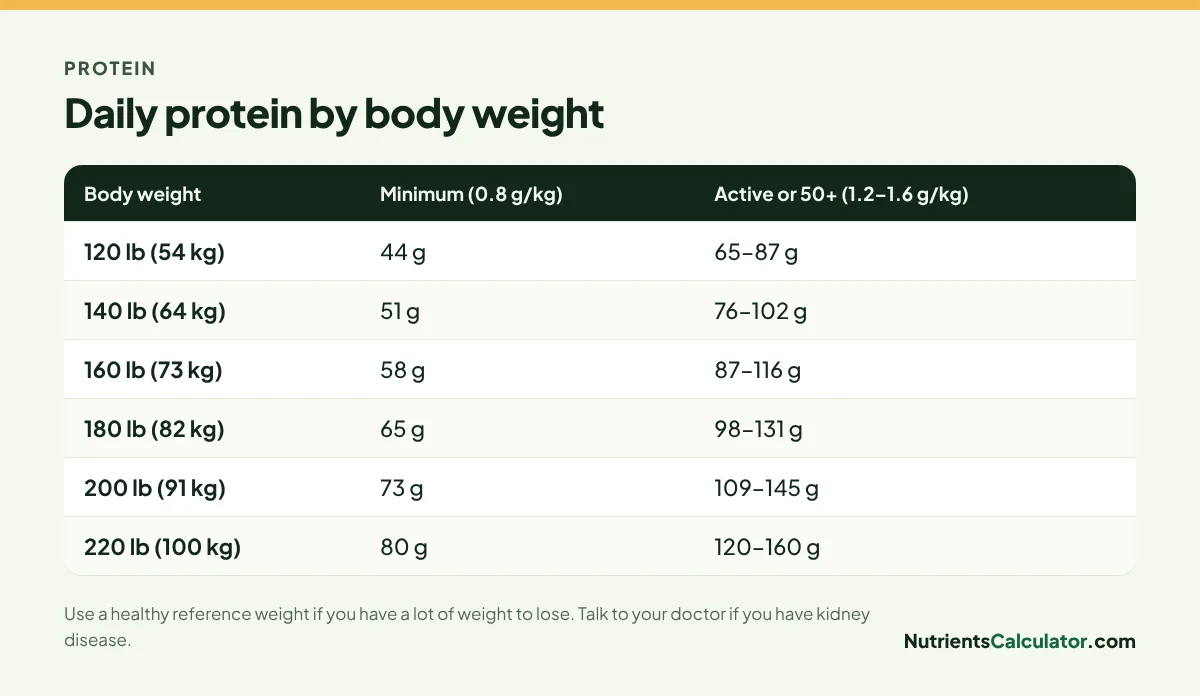
To find your daily protein target, multiply your weight in kilograms by:
- 0.8 for the minimum that prevents deficiency in healthy, inactive adults.
- 1.2–1.6 if you are active, over about 50, or trying to lose fat while keeping muscle.
Don’t know your weight in kilograms? Divide pounds by 2.2. A 150 lb person weighs about 68 kg, so their range is 54 g of protein a day (minimum) to 82–109 g (active or losing weight).
Etekcity Food Scale
0.1g accuracy — the perfect companion for exact portions.
Where these numbers come from
The RDA: 0.8 g/kg
The Recommended Dietary Allowance of 0.8 g/kg has been the baseline for decades. It’s the amount that meets the needs of almost all healthy adults to avoid deficiency. It was never meant as an optimal daily protein target for building or keeping muscle, staying full, or aging well.
The 2025–2030 Dietary Guidelines: 1.2–1.6 g/kg for many people
The current Dietary Guidelines for Americans, released in January 2026, keep 0.8 g/kg as the RDA but note that some groups, including older adults and physically active people, may benefit from roughly 1.2–1.6 g/kg per day (Oklahoma State Extension summary). The guidelines also put more emphasis on protein foods across the day.
Sports nutrition: 1.4–2.0 g/kg for training
The International Society of Sports Nutrition recommends 1.4–2.0 g/kg for people who exercise regularly, especially with resistance training (Jäger et al., 2017). Most people don’t need the top of this range, but it shows that eating well above the RDA is considered safe for healthy adults.
Adjust your daily protein for your goal
| Your situation | Suggested range | Why |
|---|---|---|
| Healthy, mostly inactive | 0.8–1.0 g/kg | Covers basic needs |
| Losing weight | 1.2–1.6 g/kg | Protects muscle, improves fullness |
| Over 50 | 1.0–1.2 g/kg or more | Muscle becomes harder to keep with age |
| Strength training | 1.4–2.0 g/kg | Supports muscle repair and growth |
| Pregnant or breastfeeding | Ask your provider | Needs rise, especially later in pregnancy |
If you have a lot of weight to lose, use a reasonable goal weight in the formula. A 260 lb person aiming for 190 lb can base their target on 190 lb (86 kg): about 105–140 g of protein a day rather than 140–190 g.
If you have kidney disease, your doctor may recommend less protein. Follow their advice over any general guide.
What 100 grams of protein looks like
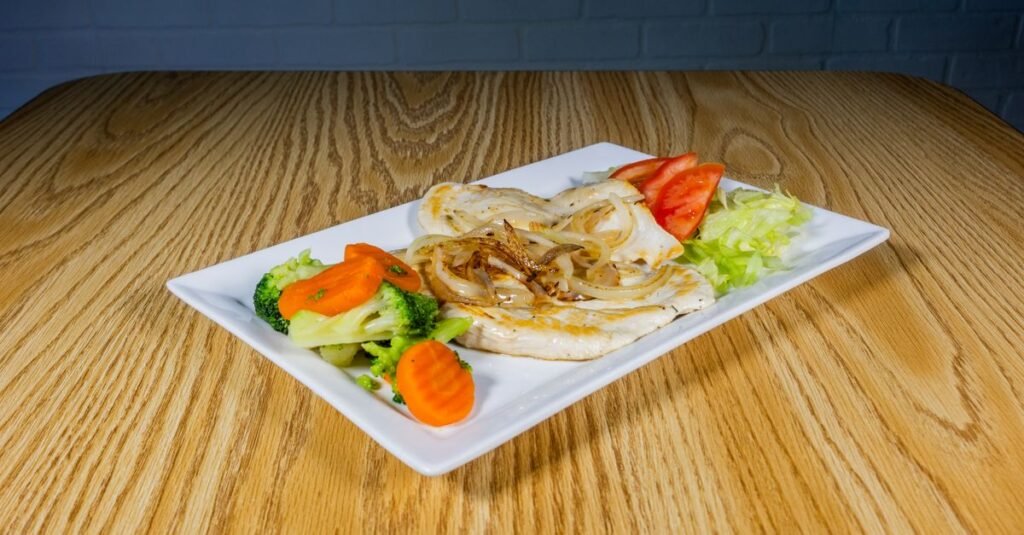
Numbers are easier when you can see them as food. Here’s one day at about 115 g of protein using USDA values:
- Breakfast: 1 cup plain nonfat Greek yogurt (about 25 g) with ½ cup oats (about 5 g) and berries.
- Lunch: a bowl with 4 oz cooked chicken breast (about 35 g) and 1 cup black beans (about 15 g).
- Snack: 2 hard-boiled eggs (about 12.5 g).
- Dinner: 3 oz salmon (about 19 g) with vegetables and rice (about 4 g).
That’s roughly 115 g without a protein shake. If breakfast is your weak spot, our list of high-protein breakfasts with 25 g or more has 15 options with calories.
Why spreading protein across meals helps
Many people eat 10 g at breakfast, 20 g at lunch and 60 g at dinner. A small controlled study found that spreading the same daily protein evenly (about 30 g per meal) raised 24-hour muscle protein synthesis by about 25% compared with skewing it toward dinner (Mamerow et al., 2014). Even if your main goal isn’t muscle, spreading protein makes your daily protein target easier to reach and keeps you fuller through the day. The details are in how much protein per meal?
Best protein sources (per typical serving)

From USDA FoodData Central:
| Food | Serving | Protein | Calories |
|---|---|---|---|
| Chicken breast, roasted | 3 oz | 26 g | 140 |
| Salmon, sockeye, cooked | 3 oz | 23 g | 133 |
| Greek yogurt, plain nonfat | 6 oz container | 17 g | 100 |
| Canned light tuna | 3 oz | 16.5 g | 73 |
| Lentils, cooked | 1 cup | 18 g | 230 |
| Edamame | 1 cup | 18.5 g | 190 |
| Cottage cheese, 2% | 4 oz | 12 g | 92 |
| Eggs, hard-boiled | 2 large | 12.6 g | 155 |
| Tofu, firm | ½ cup | 11 g | 98 |
Want the most protein for your money? We priced 15 sources using 2026 US average grocery prices in the cheapest protein sources per 20 g.
Signs you might be short on protein
Protein deficiency is rare in the US, but a protein intake below what you’d benefit from is common, especially among older adults and dieters. Signs that more protein might help:
- You’re hungry soon after meals.
- You’re losing weight but feel weaker or are losing strength in the gym.
- Your meals are mostly refined carbs: cereal, toast, pasta, crackers.
Can you eat too much?
For healthy adults, protein intakes up to about 2 g/kg appear safe in the research. The practical downsides of very high protein are mostly about what it crowds out: if protein replaces vegetables, fruit, whole grains and beans, you lose fiber and other nutrients. Aim for your range and fill the rest of the plate with plants.
How to hit your daily protein number without tracking every gram
- Anchor every meal with a protein food the size of your palm.
- Pick one high-protein snack (Greek yogurt, cottage cheese, eggs, edamame). Our list of high-protein snacks under 200 calories has 15 more.
- Check your daily protein for a week. Log your meals for seven days to see your real average, then adjust.
- Plan the next meal around what’s left. If it’s 3 PM and you’re at 40 g, dinner needs to do more work. Our guide to what to eat with the calories you have left shows how.
Protein on a vegetarian or vegan diet

Plant proteins can absolutely cover your needs; they just take a little more planning:
- Aim for the upper part of your range. Plant proteins are slightly less digestible and some are low in one essential amino acid, so many dietitians suggest vegans aim about 10% higher.
- Mix sources across the day. Beans and lentils are low in methionine; grains are low in lysine. Eating both over the day covers all essential amino acids. They don’t need to be in the same meal.
- Lean on soy. Tofu, tempeh, edamame and soy milk are complete proteins. A cup of edamame has about 18.5 g.
- Use dairy and eggs if you eat them. Greek yogurt and cottage cheese are among the most protein-dense foods per calorie.
A vegetarian day at about 100 g: Greek yogurt and oats at breakfast (30 g), a lentil and quinoa bowl at lunch (26 g), edamame as a snack (18.5 g) and a tofu stir-fry at dinner (25 g).
Protein after 50
Muscle mass naturally declines with age, and older muscles respond less to small amounts of protein. That’s why many experts suggest adults over 50 aim for at least 1.0–1.2 g/kg, spread over three meals of 25–40 g, and combine it with strength exercise two or three times a week. Protein alone doesn’t build muscle; it supports the muscle you use.
The bottom line
Start with 0.8 g per kg as the floor, and aim for 1.2–1.6 g per kg if you’re active, over 50 or losing weight. For most adults that’s 70–130 g of protein a day. Spread it across three or four meals, build each meal around a protein food, and check your weekly average instead of chasing a perfect number every day.
Frequently asked questions
How much protein do I need a day to lose weight?
Many people losing weight do well at about 1.2–1.6 g per kg of body weight. Higher protein helps you stay full and protects muscle while you eat fewer calories. If you have a lot of weight to lose, base the number on a healthy goal weight rather than your current weight.
Is 100 grams of protein a day too much?
For most healthy adults, no. 100 g is within the 1.2–1.6 g/kg range for anyone between roughly 140 and 180 lb. People with chronic kidney disease should follow their doctor's protein advice.
Do women need less protein than men?
Protein needs scale with body weight and activity, not sex alone. A 140 lb woman and a 140 lb man with the same activity level have similar needs.
Can I get enough protein without meat?
Yes. Eggs, dairy, Greek yogurt, tofu, tempeh, edamame, lentils and beans all provide meaningful protein. Vegans may want to aim for the upper end of the range because plant proteins are slightly less digestible.
Sources
- Dietary Guidelines for Americans 2025–2030
- Oklahoma State University Extension: The New Dietary Guidelines for Americans 2025–2030
- Jäger R et al. ISSN Position Stand: Protein and exercise. J Int Soc Sports Nutr, 2017
- Mamerow MM et al. Dietary protein distribution and muscle protein synthesis. J Nutr, 2014
- USDA FoodData Central
This article is for general information and isn’t medical advice. Talk to your doctor or a registered dietitian about your own needs, especially if you have a health condition, are pregnant or take medication.