
Blackberries are a popular berry crop enjoyed fresh, frozen, and processed across North America, Europe, and beyond. Whether you’re blending them into smoothies, topping yogurt, or eating them straight, blackberries offer a tart-sweet flavor and striking dark color that signals antioxidant content. For anyone tracking calories—whether for weight loss, diabetes management, or general nutrition awareness—blackberries are a nutrient-dense choice worth understanding.
So how many calories are in blackberries? The answer depends on portion size and form (fresh vs. frozen vs. jam), but this guide breaks down the complete nutrition profile, portion strategies, and practical tips for making blackberries work in any eating pattern.
Calories in Blackberries (Quick Answer)
One cup (about 150g) of fresh, raw blackberries contains roughly 62 calories. Here are common serving sizes:
- 1 cup (150g) raw blackberries: 62 calories
- 1/2 cup (75g) raw blackberries: 31 calories
- 100g raw blackberries: 43 calories
Calorie content varies slightly by freshness, ripeness, and water content; frozen blackberries are nearly identical when unsweetened, but blackberry jam or syrup versions contain significantly more calories due to added sugar.
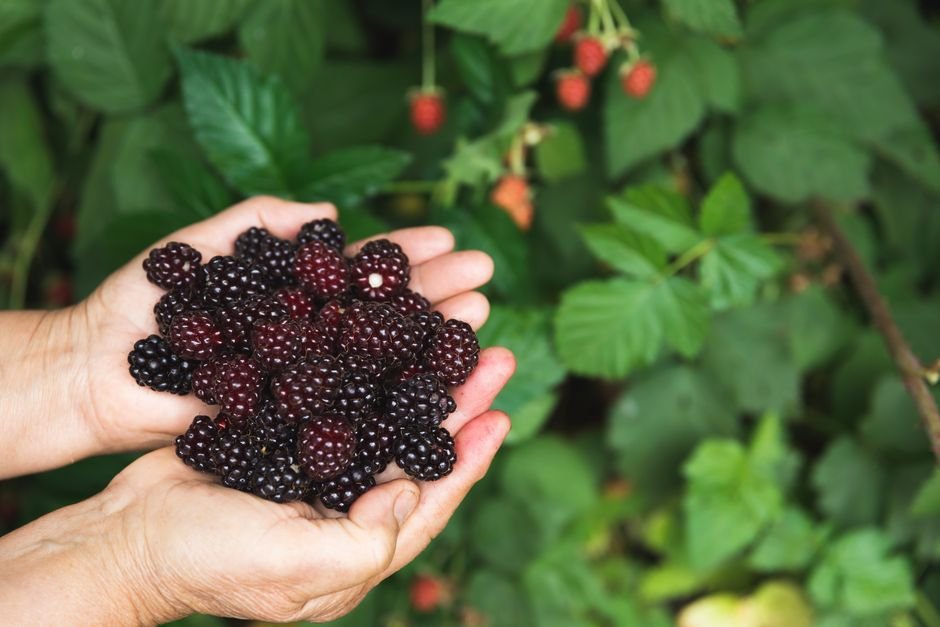
Full Nutrition Facts for 1 Cup (150g) of Fresh Blackberries
Here’s the complete nutritional breakdown for a standard serving of fresh, raw blackberries:
| Nutrient | Amount | % Daily Value |
|---|---|---|
| Calories | 62 | 3% |
| Total Fat | 0.7g | 1% |
| Saturated Fat | 0g | 0% |
| Cholesterol | 0mg | 0% |
| Sodium | 2mg | <1% |
| Total Carbohydrate | 14g | 5% |
| Dietary Fiber | 7.6g | 30% |
| Total Sugars | 7.4g | — |
| Protein | 2g | 4% |
| Vitamin C | 30mg | 50% |
| Vitamin K | 29µg | 36% |
| Manganese | 0.9mg | 46% |
*Percent Daily Values are based on a 2,000-calorie diet. Source: USDA FoodData Central.
Key insight: Despite being low in calories, blackberries deliver 30% of your daily fiber goal in just one cup—more than half a bowl of oatmeal. That high fiber-to-calorie ratio is why they’re so satiating: the bulk of the carbs is insoluble fiber, which doesn’t spike blood sugar and keeps you full longer than sugary snacks.
Etekcity Food Scale
0.1g accuracy — the perfect companion for exact portions.
Raw Blackberries vs. Blackberry Jam: Which Is Better?
Raw Blackberries
- 62 calories per cup: Minimal processing preserves the fruit’s water content and fiber structure.
- 7.6g fiber: Full fiber content intact; supports digestive health and satiety.
- Natural sugars only: 7.4g of sugar with no added sweeteners; blood-sugar impact is blunted by fiber.
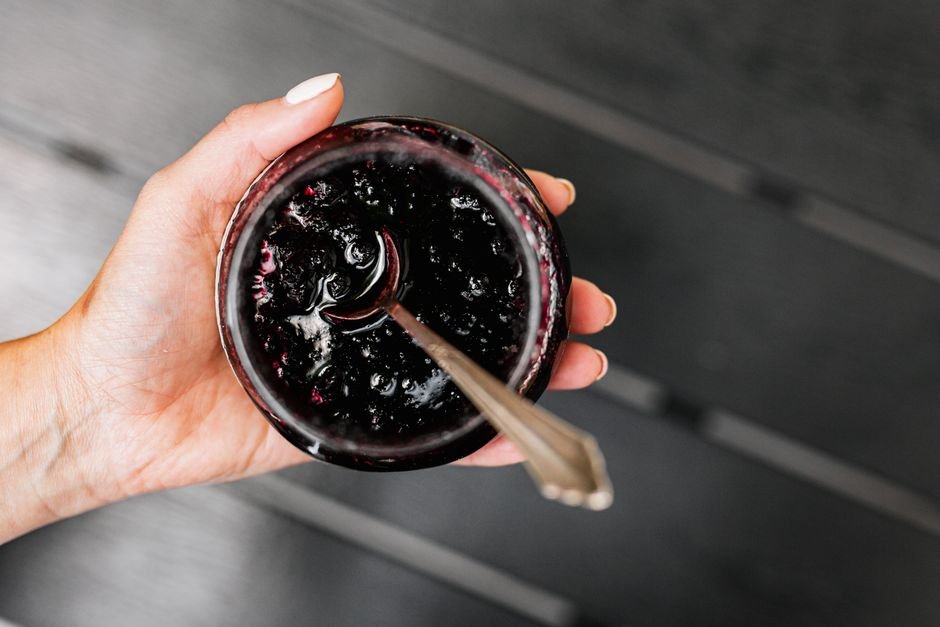
Blackberry Jam
- 240–280 calories per tablespoon: Added sugar concentrates calories dramatically; a standard serving (2 tbsp) tops 500 calories.
- Minimal fiber: Processing and cooking breaks down fiber; added sugar provides empty calories.
- High glycemic load: Concentrated sugars spike blood glucose; sustained energy and satiety are poor compared to whole berries.
Practical takeaway: If you enjoy blackberry flavor, whole fresh or frozen berries are the clear winner for weight loss and blood-sugar management. Jam is best reserved for occasional use (a drizzle on yogurt, not the main event) due to its calorie density and refined-sugar content. Freezing raw berries at peak ripeness gives you all the nutrition of fresh with no added calories or processing.
Is Blackberries Good for Weight Loss?
Yes—blackberries are an excellent weight-loss food. At just 62 calories per cup, they’re among the lowest-calorie fruits, and their 7.6g of fiber per cup creates volume and satiety that helps you eat fewer overall calories. The combination of water, fiber, and natural antioxidants makes them nutrient-dense; you’re getting serious nutritional bang for minimal caloric cost. Unlike fruit juices or dried fruit, whole blackberries have a low glycemic index, so they won’t trigger hunger spikes an hour later.
Tips to Eat Blackberries Without Gaining Weight:
- Stick to fresh or unsweetened frozen: Skip jams, syrups, and sweetened preparations. Plain frozen blackberries have identical nutrition and keep for months.
- Measure portions mindfully: A cup (150g) is filling; even 2–3 cups won’t derail a calorie deficit. Pair with protein (Greek yogurt, cottage cheese, nuts) for sustained fullness.
- Use as a topping, not a smoothie base: Blending breaks down fiber and increases how quickly you consume calories. Top oatmeal or salad instead of drinking them.
- Avoid pairing with added sugars: Blackberries + honey, chocolate, or sweetened cream can flip a healthy snack into a dessert. Enjoy them plain or with unsweetened yogurt.
Blackberries fit easily into any calorie target. One to three cups daily leaves room for other foods while maximizing micronutrient intake and fiber, both of which support sustainable weight loss.
How Portion Size Affects Calories
Blackberry calories scale linearly with portion size, but the absolute numbers stay small even when eating generous servings. A typical snack or breakfast topping might be 1/2 to 1 cup; eating three cups would require deliberate overconsumption and still total fewer calories than a standard dessert. The key insight is that blackberries’ calorie density is so low that portion flexibility is built in—you can eat until satisfied without precise weighing.
Example:
- Small snack (1/2 cup / 75g): 31 calories, 3.8g fiber. Eat this plain or add to a salad.
- Generous bowl (2 cups / 300g): 124 calories, 15g fiber. Tops yogurt, oatmeal, or eaten as a light meal with nuts.
Even a 2-cup serving fits comfortably into low-calorie diets and adds serious nutritional value without “counting against” your calorie budget.
Best Way to Measure Blackberries Accurately
Because blackberries are irregular in shape and size, weight-based measurement (a food scale) is most accurate for tracking calories or nutrition. If you don’t own a scale, cup measurements are reasonable approximations; a standard measuring cup holds about 150g of loosely packed berries. Visual estimation (a small handful, a cereal bowl) is the least accurate but workable for general eating patterns. For weight-loss or diabetes-management goals, a scale removes guesswork.
Options:
- Food scale (most accurate): Place blackberries in a bowl on the scale, tare to zero, and measure by grams. Works for fresh or frozen.
- Standard measuring cup: Fill a 1-cup measure; one level cup of loosely packed berries ≈ 150g and 62 calories.
- Visual guideline: A small handful of blackberries ≈ 1/4 cup (37g, ~16 calories). Useful for quick snacking when precision isn’t critical.
Calculate Your Exact Calorie Intake
If you eat blackberries regularly—or combine them with other foods in smoothies, bowls, or recipes—knowing your total calorie and nutrient intake matters for hitting your goals. Manually adding up nutrition facts from each ingredient is tedious and error-prone.
Our free AI nutrients calculator lets you input any food or meal combination and instantly see calories, macros, fiber, and key micronutrients. Simply enter “blackberries” (or your full meal) and adjust portion sizes to match your actual serving. It’s the fastest way to log accurately without app subscriptions or guesswork.
- Instant nutrition data: See carbs, protein, fat, fiber, and 20+ micronutrients in seconds.
- Adjust portions live: Change grams or cups and watch your numbers update.
- Save recipes: Build reusable meals (blackberry yogurt bowl, smoothie) and track them at a glance.
Use the calculator now to log your blackberries and any other foods in your diet.
Common Mistakes When Eating Blackberries
Even a healthy food can derail your progress if prepared or eaten carelessly. Here are the biggest pitfalls:
❌ Buying pre-sweetened or candied blackberries in bulk. Dried blackberries with added sugar pack 200+ calories per ounce—more than chocolate—and lack the water and fiber of fresh, which means less satiety per calorie.
❌ Blending blackberries into smoothies without accounting for the liquid calories added by milk, juice, yogurt, or sweeteners. A “healthy smoothie” can easily hit 300+ calories when blackberries are just the berry component.
❌ Pairing blackberries only with high-calorie toppings (chocolate chips, whipped cream, sugary granola) instead of protein-rich options (nuts, seeds, Greek yogurt), missing the opportunity to boost satiety.
❌ Assuming frozen blackberries are less nutritious than fresh. Freezing happens within hours of harvest and locks in nutrients; many frozen options are superior to out-of-season fresh berries shipped long distances.
Stay mindful of prep methods and pairings, and blackberries become a weight-loss asset rather than an afterthought.
FAQ
How many calories are in 100g of blackberries?
One hundred grams of raw blackberries contain approximately 43 calories. This is a standard reference point for nutrition labels and tracking; most food scales allow you to measure directly in grams.
Are blackberries fattening?
No. Blackberries are among the least calorie-dense fruits and high in fiber, which promotes satiety and digestive health. Eating blackberries is associated with lower body weight and better metabolic markers, not weight gain. The risk comes from added sugars or pairing them with high-calorie toppings, not the fruit itself.
Can I eat unlimited blackberries on a diet?
While blackberries are low in calories, eating unlimited amounts of any food can exceed your total calorie target. Practically, eating 2–3 cups of blackberries daily fits easily into a deficit and provides substantial fiber and micronutrients. Beyond that, prioritize variety to avoid nutrient gaps from other foods.
Are frozen blackberries as good as fresh?
Nutritionally, unsweetened frozen blackberries are equivalent to or sometimes better than fresh. They’re frozen at peak ripeness, preserving antioxidants and fiber. Fresh berries lose nutrients over days of storage. Choose unsweetened frozen to avoid added sugars, and use them in the same way you would fresh berries.
Conclusion
Blackberries deliver impressive nutrition in a tiny calorie package: 62 calories, 7.6g fiber, and 30% of your daily vitamin C in just one cup. Their fiber-to-calorie ratio makes them uniquely satiating, and their low glycemic load protects against blood-sugar spikes. Whether you’re managing weight, blood sugar, or simply trying to eat more whole foods, blackberries fit seamlessly into any goal.
The practical strategy is simple: choose fresh or unsweetened frozen, measure by weight or cup, and pair with protein or healthy fats to maximize fullness. Avoid jams and sweetened versions unless they’re an occasional indulgence. If you’re tracking multiple foods or combining blackberries into meals, use a reliable nutrients calculator to stay accurate and remove guesswork from your nutrition plan.
