
Eggplant is a versatile nightshade vegetable enjoyed across Mediterranean, Asian, and Middle Eastern cuisines. Whether you’re making baba ganoush, eggplant parmesan, or stir-fries, eggplant is a low-calorie staple for weight-conscious cooks and anyone following plant-based diets. Its mild flavor and adaptable texture make it appealing to home cooks and professional chefs alike.
But how many calories are actually in eggplant? And what does its nutritional profile tell us about fiber, antioxidants, and carbohydrates? This guide breaks down eggplant’s complete nutrition facts, portion sizes, and practical tips for incorporating it into your diet.
Calories in Eggplant (Quick Answer)
A medium eggplant contains roughly 137 calories in its raw form, while individual servings vary by preparation method.
- 1 cup raw eggplant (82g): 21 calories
- 1 medium raw eggplant (about 350g): 88 calories
- 1 cup cooked eggplant (96g): 35 calories
Values vary depending on cooking method, variety (Japanese, Chinese, Italian), and how long the eggplant is stored before use.
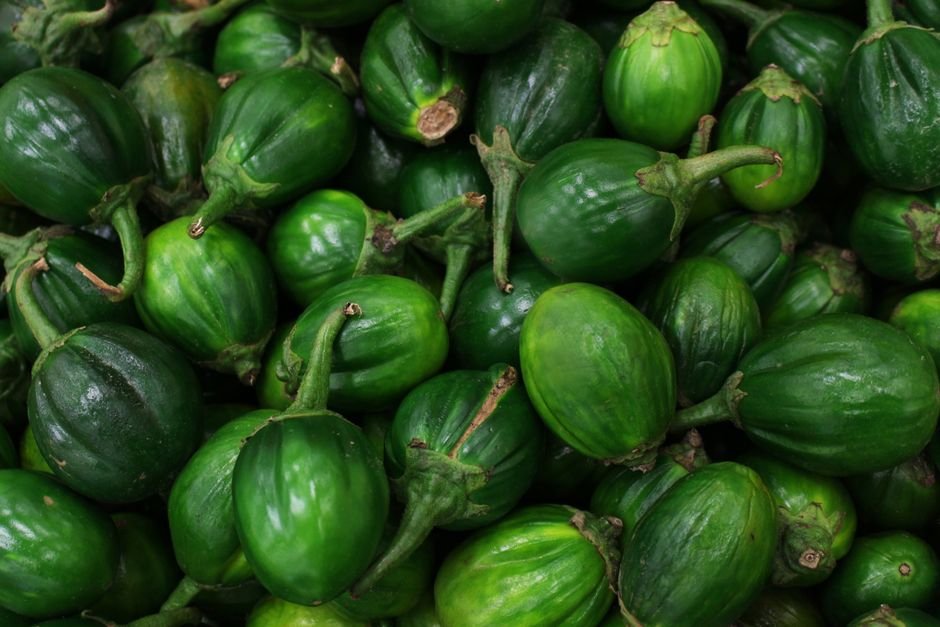
Full Nutrition Facts for 1 Cup Raw Eggplant (82g)
A single cup of raw eggplant delivers minimal calories while supplying meaningful fiber, potassium, and polyphenols. Here’s the complete breakdown:
| Nutrient | Amount | % Daily Value |
|---|---|---|
| Calories | 21 | — |
| Total Fat | 0.2g | <1% |
| Saturated Fat | 0g | 0% |
| Cholesterol | 0mg | 0% |
| Sodium | 2mg | <1% |
| Total Carbohydrate | 5g | 2% |
| Dietary Fiber | 1.2g | 5% |
| Total Sugars | 2.8g | — |
| Protein | 0.8g | 2% |
| Potassium | 188mg | 5% |
| Vitamin K | 3.5mcg | 4% |
| Folate | 22mcg | 6% |
*Percent Daily Values are based on a 2,000-calorie diet. Source: USDA FoodData Central.
Key insight: Eggplant’s real nutritional strength lies in its polyphenol content, particularly nasunin (the purple pigment) and chlorogenic acid. These compounds function as potent antioxidants and may help reduce inflammation and support brain health. Despite its high water content (92%), eggplant provides meaningful fiber relative to its calorie count—ideal for satiety without excess calories.
Etekcity Food Scale
0.1g accuracy — the perfect companion for exact portions.
Raw Eggplant vs. Cooked Eggplant: What Changes
Raw Eggplant
- Firmer texture with a slightly bitter, earthy flavor; maintains nearly all water content and antioxidants.
- Only 21 calories per cup; contains all original fiber and micronutrients unaffected by heat.
- Less commonly eaten plain; used in salads or thinly sliced for raw preparations.
Cooked Eggplant
- Softer, creamier texture; cooking reduces water content and concentrates minerals; heat may slightly reduce some heat-sensitive antioxidants.
- 35 calories per cup when boiled; calories rise significantly if roasted with oil (60–80 calories per cup when roasted with 1–2 tsp oil).
- More commonly eaten roasted, grilled, sautéed, or baked in dishes like ratatouille, pasta, or dips.
Practical takeaway: Raw eggplant is marginally lower in calories and retains all original fiber, making it the choice for strict calorie counting. Cooked eggplant becomes more digestible and bioavailable for certain nutrients, but added cooking oils can triple its calorie content. Steaming or boiling preserves the lowest-calorie advantage; roasting with minimal oil balances taste and nutrition.

Is Eggplant Good for Weight Loss?
Yes, eggplant is excellent for weight loss. At 21–35 calories per cup, it’s one of the lowest-calorie vegetables available, with negligible fat and protein that supports satiety. Its high water and fiber content means you can eat large portions without exceeding calorie goals, and its versatility allows it to replace higher-calorie ingredients in many dishes. The antioxidants in eggplant may also support metabolic health and reduce inflammation associated with weight gain.
Tips to Eat Eggplant Without Gaining Weight:
- Cook without oil: Steam, boil, or bake eggplant plain or with water instead of sautéing in butter or olive oil. If roasting, use a light mist of oil spray rather than pooling oil in the pan.
- Pair with protein: Serve eggplant alongside beans, tofu, chicken, or fish to balance macronutrients and increase satiety without dramatically raising calories.
- Control portion of high-calorie toppings: Eggplant parmesan and baba ganoush are delicious but calorie-dense due to cheese and tahini. Measure these components carefully or choose lighter versions.
- Eat raw or lightly cooked: Raw eggplant in salads and lightly steamed eggplant keep calories minimal; avoid deep-frying and heavy cream-based sauces.
When prepared mindfully, eggplant can anchor a weight-loss diet without restriction or boredom. Most people can eat generous portions without concern.
How Portion Size Affects Calories
Eggplant’s low calorie density means small differences in portion size have minimal caloric impact. However, cooking method—especially added fat—matters far more than the eggplant itself. A cup of raw eggplant is 21 calories; a large bowl (2–3 cups) is still only 42–63 calories. The same applies to cooked eggplant, where the core vegetable remains negligible in calories unless oil or cream is added during preparation.
Example:
- Small portion (1 cup raw eggplant): 21 calories, 1.2g fiber, 0.8g protein.
- Large portion (3 cups raw eggplant): 63 calories, 3.6g fiber, 2.4g protein.
The larger portion still totals under 70 calories—a realistic serving in a meal. The main caloric variable is cooking fat: roasting 3 cups with 1 tablespoon of oil adds approximately 120 calories.
Best Way to Measure Eggplant Accurately
Eggplant varies in size—a small Japanese eggplant weighs 60g, a medium Italian eggplant 200–250g, and a large globe eggplant 400g or more. For accurate calorie tracking, weighing is more reliable than measuring by cup, though cup measurements are reasonable for quick estimates. Raw eggplant measures more consistently than cooked (cooking loses water and shrinks volume unpredictably).
Options:
- Kitchen scale (most accurate): Weigh raw or cooked eggplant in grams. Raw eggplant is approximately 26 calories per 100g; cooked, approximately 36 calories per 100g (varies by cooking method).
- Cup measurements: 1 cup raw eggplant ≈ 82g ≈ 21 calories; 1 cup cooked ≈ 96g ≈ 35 calories. Use measuring cups for chopped or diced eggplant.
- Whole eggplant estimates: A medium eggplant (200–250g) ≈ 52–65 calories raw. Note the variety and size, then adjust based on actual weight if using a scale.
Calculate Your Exact Calorie Intake
If you’re tracking calories for weight loss or muscle gain, knowing eggplant’s contribution is just one piece of the puzzle. Are you eating it with olive oil, cheese, or beans? Are you counting the entire meal or just the eggplant? A reliable nutrients calculator removes guesswork from your diet.
Our free AI nutrients calculator analyzes your meals in seconds and provides detailed macros and micronutrients. Simply input your eggplant serving size (raw or cooked), cooking method, and any added ingredients, and get instant calorie and nutrition breakdowns tailored to your goals. Access it here: Calculate Your Nutrition
- Instantly track calories, protein, fiber, and 20+ micronutrients per meal.
- Compare raw vs. cooked eggplant side-by-side to see how cooking affects your macros.
- Plan weekly meals with confidence, knowing exactly where your calories come from.
Common Mistakes When Eating Eggplant
Eggplant itself is hard to overeat, but how it’s prepared and paired often derails nutrition goals. Here are the four most common pitfalls:
❌ Drowning eggplant in oil during cooking. A single tablespoon of olive oil adds 120 calories to a dish. Roasting, frying, or sautéing eggplant in large amounts of oil negates its low-calorie advantage. Use oil spray, steaming, or boiling instead.
❌ Assuming eggplant parmesan or baba ganoush are low-calorie. These beloved dishes combine eggplant with cheese (150–200 cal per oz), tahini (90 cal per tablespoon), or mayo. A typical serving of eggplant parmesan is 400–500 calories—more than 10 times a plain eggplant cup.
❌ Eating eggplant without balancing macronutrients. Eggplant is very low in protein (less than 1g per cup). Eating a large eggplant-based meal without protein, healthy fat, or whole grains leaves you hungry shortly after.
❌ Peeling eggplant before cooking. The skin contains most of the polyphenols and fiber. Peeling removes these beneficial compounds while adding no caloric savings.
Awareness of these mistakes lets you enjoy eggplant’s benefits without sabotaging your goals.
FAQ
How many calories are in 100g of eggplant?
Raw eggplant contains approximately 25–26 calories per 100g. Cooked eggplant (boiled) contains roughly 35 calories per 100g. If roasted or sautéed with oil, calorie content rises to 60–100+ calories per 100g depending on the amount of oil used.
Is eggplant fattening?
No. Eggplant is one of the lowest-calorie vegetables and contains virtually no fat (less than 0.3g per cup). It becomes fattening only when prepared with significant oil, cream, cheese, or served as part of high-calorie dishes like eggplant parmesan. Plain cooked or raw eggplant supports weight loss.
Does cooking eggplant destroy its antioxidants?
Moderate cooking (steaming, boiling, roasting) preserves most of eggplant’s polyphenols, though prolonged or very high-heat cooking may reduce some heat-sensitive compounds. Steaming for 5–10 minutes is ideal for retaining both antioxidants and nutrients.
Can I eat eggplant skin?
Yes, eggplant skin is completely edible and highly nutritious—it contains nasunin and chlorogenic acid, the primary antioxidants. Simply wash the eggplant well before cooking or eating raw. You’ll improve fiber intake and phytonutrient consumption by leaving the skin intact.
Conclusion
Eggplant is an exceptionally nutrient-dense, low-calorie vegetable that fits seamlessly into any balanced diet. At 21 calories per raw cup and 35 per cooked cup, it allows generous portions without calorie concerns. Its fiber, potassium, and antioxidants—particularly nasunin—support digestive health, cardiovascular function, and metabolic wellness. Whether you’re pursuing weight loss, managing carbohydrate intake, or simply seeking vegetable variety, eggplant delivers nutrition and satiety without excess calories.
The key to maximizing eggplant’s benefits is mindful preparation: skip excess oil, pair it with protein and whole grains for balanced meals, and keep the skin on to capture all its polyphenols. For precise tracking of your eggplant intake and its role in your overall nutrition, use a reliable nutrients calculator to log your exact portions and cooking methods. This ensures you’re meeting your macronutrient and micronutrient targets while enjoying eggplant’s unique culinary versatility.
