Calories in boysenberries: 66 calories per 1 cup (132 g)
- 1.5 g protein
- 16 g carbs
- 0.3 g fat
- 7 g fiber
Source: USDA FoodData Central · 50 kcal per 100 g
One cup of boysenberries (unthawed, 132 g) has 66 calories in the USDA record for frozen, unsweetened boysenberries. That cup also gives 16 g of carbohydrate, 7 g of dietary fiber and 0.3 g of fat, so most of the calories come from carbs.
What stands out is the fiber. At 5.3 g per 100 g, boysenberries carry more fiber than sugar-free calories would suggest, and the fiber makes up a large share of the total carbohydrate.
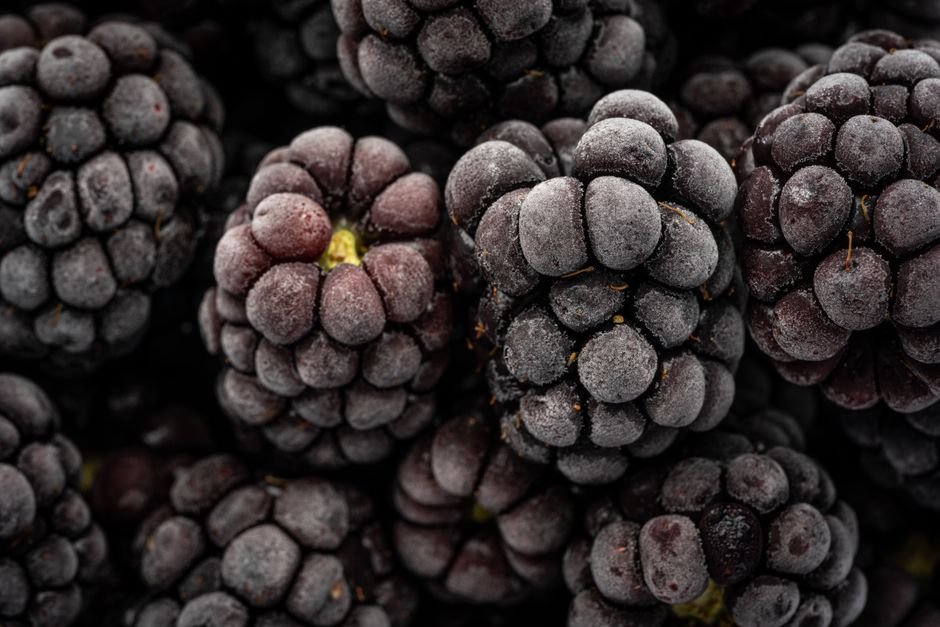
Calories in Boysenberries by Serving Size
Calories in boysenberries for each common serving, with protein, carbs and fat:
| Serving | Calories | Protein | Carbs | Fat |
|---|---|---|---|---|
| 1 cup, unthawed (132 g) | 66 | 1.5 g | 16 g | 0.3 g |
| 1 package (10 oz) (284 g) | 142 | 3.1 g | 35 g | 0.7 g |
| 100 g | 50 | 1.1 g | 12 g | 0.3 g |
| 1 oz | 14 | 0.3 g | 3.5 g | 0.1 g |
Boysenberries Nutrition Facts
Calories in boysenberries and the full nutrition facts per 1 cup, unthawed (132 g):
| Nutrient | Amount | % Daily Value* |
|---|---|---|
| Calories | 66 kcal | |
| Protein | 1.5 g | 3% |
| Total Fat | 0.3 g | 0% |
| Saturated Fat | 0 g | 0% |
| Cholesterol | 0 mg | 0% |
| Sodium | 1.3 mg | 0% |
| Total Carbohydrate | 16 g | 6% |
| Dietary Fiber | 7 g | 25% |
| Total Sugars | 9.1 g | |
| Calcium | 36 mg | 3% |
| Iron | 1.1 mg | 6% |
| Potassium | 183 mg | 4% |
| Magnesium | 21 mg | 5% |
| Zinc | 0.3 mg | 3% |
| Phosphorus | 36 mg | 3% |
| Selenium | 0.3 mcg | 0% |
| Vitamin A (RAE) | 4 mcg | 0% |
| Vitamin C | 4.1 mg | 5% |
| Vitamin E | 1.1 mg | 8% |
| Vitamin K | 10 mcg | 9% |
| Thiamin (B1) | 0.1 mg | 6% |
| Riboflavin (B2) | 0 mg | 4% |
| Niacin (B3) | 1 mg | 6% |
| Vitamin B6 | 0.1 mg | 4% |
| Folate (DFE) | 83 mcg | 21% |
Where the calories come from: 88% carbs · 8% protein · 4% fat
*Percent Daily Values are based on a 2,000-calorie diet (FDA reference values). Source: USDA FoodData Central — Boysenberries, frozen, unsweetened (FDC ID 171713, SR Legacy, published 4/1/2019). Values for other servings are calculated from the per-100 g data.
Is There a Difference Between Frozen and Fresh Boysenberries?
The numbers on this page come from the USDA record for frozen, unsweetened boysenberries, and they apply to the fruit as that record describes it. The record does not list a separate entry for fresh berries, so this page does not compare the two. The label on your bag matters: the record covers unsweetened fruit only, so sweetened frozen boysenberries will have a different calorie count.
The serving sizes also differ in how they are measured. The cup figure is for unthawed fruit, and the package figure is for a 10 oz bag. Weigh or measure the fruit the same way each time if you are tracking.

Where the Carbs and Fiber Come From
Per 100 g, boysenberries have 12 g of total carbohydrate, of which 5.3 g is dietary fiber and 6.9 g is total sugars. That means fiber is a little under half of the carbohydrate by weight, which is unusual for a sweet fruit. The fiber is a big part of why a cup of these berries feels like a light serving rather than a dessert.
Calorie-wise, the record shows 88% of calories from carbohydrate, 8% from protein and 4% from fat. Protein is small at 1.1 g per 100 g, so boysenberries are not a meaningful protein source.
Vitamins and Minerals Worth Noting
The standout micronutrients in the record are folate and vitamin K. A single cup provides 83 mcg of folate (21% DV) and 10 mcg of vitamin K (9% DV). Vitamin C is 4.1 mg per cup (5% DV), and vitamin E is 1.1 mg (8% DV).
Potassium is 183 mg per cup (4% DV) and magnesium is 21 mg (5% DV). Iron is 1.1 mg per cup (6% DV). These are modest amounts, so the berries work best as one part of a varied diet rather than as a main source of any single nutrient.
Portion Sizes and What They Add Up to
The record gives four servings you can compare directly. Using the USDA figures:
- 1 cup, unthawed (132 g): 66 kcal, 16 g carbohydrate, 0.3 g fat
- 1 oz (28 g): 14 kcal, 3.5 g carbohydrate, 0.1 g fat
- 100 g: 50 kcal, 12 g carbohydrate, 0.3 g fat
- 1 package, 10 oz (284 g): 142 kcal, 35 g carbohydrate, 0.7 g fat
A 10 oz package is roughly two cups’ worth of fruit by weight, so it holds about 142 calories. If you eat the whole package at once, the carb count rises to 35 g.
How Boysenberries Compares
Per 100 g, next to similar foods in our database:
| Food (100 g) | Calories | Protein | Carbs | Fat |
|---|---|---|---|---|
| Boysenberries | 50 | 1.1 g | 12 g | 0.3 g |
| Tangelo | 53 | 0.8 g | 13 g | 0.3 g |
| Loquat | 47 | 0.4 g | 12 g | 0.2 g |
| Plum Tomato | 46 | 0.7 g | 11 g | 0.3 g |
| Kiwano | 44 | 1.8 g | 7.6 g | 1.3 g |
| Kiwifruit Green | 58 | 1.1 g | 14 g | 0.4 g |
Boysenberries FAQ
Do boysenberries have sugar?
Yes. The record lists 6.9 g of total sugars per 100 g, or 9.1 g in one cup (132 g). The same cup also has 7 g of dietary fiber.
Are boysenberries high in sodium?
No. The record lists 1 mg of sodium per 100 g and 1.3 mg per cup, which is 0% DV.
The Bottom Line
A cup of unsweetened frozen boysenberries (132 g) has 66 calories, 7 g of fiber and very little fat. Check the bag for added sugar, because the USDA record covers the unsweetened version only.