
Brie is a soft-ripened French cheese with a creamy interior and thin white rind that has become a global staple in charcuterie boards, cheese platters, and gourmet cooking. Its rich, buttery texture and mild flavor make it popular across all age groups, from casual appetizers to fine dining. Whether you’re watching your weight, monitoring fat intake, or simply curious about what you’re eating, understanding brie’s nutritional profile is essential.
But how many calories are actually in brie, and what does that calorie count include? This guide breaks down the complete nutrition facts for brie cheese, compares it to similar cheeses, and shows you how to fit it into your diet without overdoing it.
Calories in Brie (Quick Answer)
A standard 1-ounce (28g) serving of brie cheese contains approximately 95 calories, making it one of the richer cheeses by weight.
- 1 oz (28g) wedge: 95 calories
- 1/4 wheel (small brie, ~45g): 135 calories
- Whole small wheel (250g): 750 calories
Calorie counts vary slightly depending on the specific brand, milk source (cow vs. goat), and aging process, but the USDA values above reflect standard brie cheese from cow’s milk.
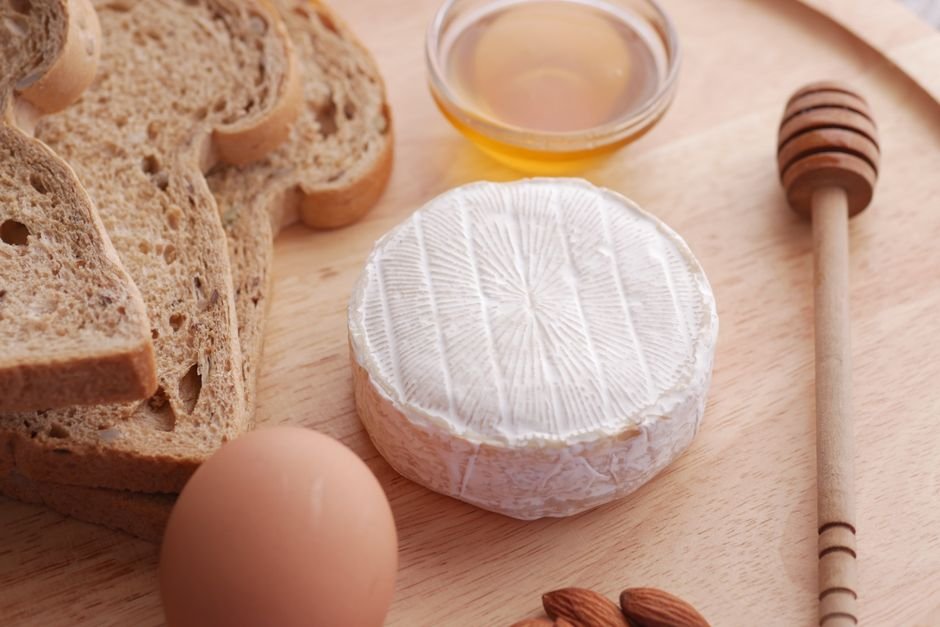
Full Nutrition Facts for 1 oz (28g) of Brie
Here’s the complete breakdown of what’s in a standard serving of brie cheese:
| Nutrient | Amount | % Daily Value |
|---|---|---|
| Calories | 95 | — |
| Total Fat | 7.9g | 10% |
| Saturated Fat | 5.0g | 25% |
| Cholesterol | 28mg | 9% |
| Sodium | 178mg | 8% |
| Total Carbohydrate | 0.1g | <1% |
| Dietary Fiber | 0g | 0% |
| Total Sugars | 0.1g | — |
| Protein | 6.0g | 12% |
| Calcium | 163mg | 13% |
| Vitamin A | 240 IU | 5% |
| Sodium | 178mg | 8% |
*Percent Daily Values are based on a 2,000-calorie diet. Source: USDA FoodData Central.
Key insight: Despite its high calorie density, brie delivers 6g of protein per ounce and is an excellent source of calcium, with 13% of the daily value in a single serving. However, nearly 83% of its calories come from fat, with saturated fat accounting for roughly half of that. Brie is naturally free of carbohydrates and sugar, making it suitable for low-carb and ketogenic diets—but portion control is crucial because those fat calories add up quickly.
Etekcity Food Scale
0.1g accuracy — the perfect companion for exact portions.
Brie vs. Cheddar Cheese: Which Has More Calories?
Brie (1 oz / 28g)
- 95 calories
- 7.9g total fat (5.0g saturated)
- 6.0g protein
Cheddar (1 oz / 28g)
- 113 calories
- 9.3g total fat (5.9g saturated)
- 7.1g protein
The takeaway: Cheddar is roughly 15% higher in calories than brie, with more fat and protein per ounce. Brie’s lower calorie density makes it the lighter choice for cheese lovers, but it’s still calorie-dense enough that you should measure portions carefully. If you’re eating brie for its creamy texture, a small wedge satisfies more than the same weight of cheddar, which may help with portion control. Both cheeses are carb-free and high in saturated fat, so choose based on taste preference and your dietary goals rather than calorie count alone.
Is Brie Good for Weight Loss?
Brie can fit into a weight-loss diet, but only with careful portion control. Because it’s calorie-dense and high in saturated fat, eating brie mindlessly—especially on a full cheese board—can quickly derail a calorie deficit. However, a small amount of brie delivers significant flavor and satisfaction, which means a modest serving can actually help prevent overeating by increasing satiety. The key is eating it intentionally, measuring your portions, and accounting for those calories in your daily intake.
Tips to Eat Brie Without Gaining Weight:
- Stick to 1 oz (28g) per serving: A single ounce is a satisfying amount on a charcuterie board or alongside crackers, and it’s easy to measure with a small kitchen scale.
- Pair it with protein and fiber: Eat brie with nuts, whole-grain crackers, or fresh fruit to slow digestion, increase satiety, and prevent you from overeating it.
- Count it in your daily fat intake: One ounce of brie delivers nearly 8g of fat. If you’re tracking macros, budget that fat into your daily allowance to avoid exceeding your goals.
- Treat it as an occasional indulgence: Save brie for special occasions or planned meals rather than keeping it as a constant snack. This approach makes each serving feel more rewarding and prevents daily calorie creep.
When eaten deliberately as part of a balanced diet, brie can absolutely fit into weight loss goals. The issue arises when it becomes a habitual snack or when portions go unmeasured.
How Portion Size Affects Calories
Because brie is energy-dense, small changes in portion size create significant calorie differences. A slice that looks small might contain 100+ calories, while doubling your portion can easily add 200 calories to your meal. Using a food scale or learning to eyeball standard portions is far more effective than relying on “feeling full” when eating high-fat cheese.
Example:
- Small piece (0.5 oz): 48 calories, 4g fat
- Generous wedge (1.5 oz): 142 calories, 12g fat
That difference—nearly 100 calories for a portion that might not look dramatically larger—shows why weighing brie is worth the effort if you’re tracking intake.
Best Way to Measure Brie Accurately
Since brie varies in density depending on its ripeness and exact composition, the most reliable way to track calories is by weight rather than visual estimation. A kitchen scale removes guesswork and makes calorie accounting consistent. If you don’t have a scale, learn to recognize what 1 ounce looks like: roughly the size of a sugar cube or a small dice of cheese.
Options:
- Digital food scale: Place the cheese directly on the scale and measure to the nearest 0.1 oz for precise tracking. Most inexpensive scales cost under $20.
- Standard knife cut: If buying a whole wheel, cut the brie into equal wedges. A small 8-10 oz wheel divided into 8-10 pieces gives you roughly 1-ounce servings.
- Pre-portioned packages: Some stores sell brie in individual wedges or small portions clearly labeled with weight. These eliminate guesswork and are ideal for portion-conscious eaters.
Calculate Your Exact Calorie Intake
If brie is a regular part of your diet, tracking your full daily calorie intake—not just individual foods—is the most accurate way to see how it affects your overall nutrition. Are you staying in a deficit for weight loss? Meeting your protein goals? Getting enough fiber? One food alone doesn’t determine these outcomes.
Our free AI-powered nutrients calculator can help you track your daily intake across all meals and snacks. Simply log what you eat, and get an instant breakdown of calories, macronutrients, and key micronutrients. This approach gives you the full picture of how brie—and every other food—fits into your personal nutrition goals.
- Track all meals and snacks in one place
- See your daily macronutrient breakdown at a glance
- Get personalized insights into your eating patterns
Use the calculator now to begin tracking your nutrition accurately.
Common Mistakes When Eating Brie
Even though brie is a straightforward food, several common mistakes can turn a modest serving into a calorie bomb:
❌ Not measuring portions: Brie is easy to slice and eat mindlessly while socializing. One bite often leads to three, and suddenly you’ve consumed 300+ calories without consciously registering it.
❌ Pairing brie only with refined carbs: Brie on white crackers or bread spikes blood sugar and provides little satiety. Pair it with whole grains, nuts, or vegetables instead.
❌ Assuming “gourmet” means healthier: Brie’s soft, creamy texture and mild taste don’t make it lower-calorie than harder cheeses. It’s pure fat and protein, just in an elegant package.
❌ Forgetting the rind: The white rind is edible and adds calories, though minimal amounts. If you’re being precise with portions, eat the rind too—don’t discard it after eating only the interior.
Awareness of these pitfalls makes it much easier to enjoy brie without unintended consequences.
FAQ
How many calories are in 100g of brie?
A 100g serving of brie contains approximately 334 calories. That’s equivalent to a full small wheel or a substantial portion that would easily exceed recommended serving sizes for a single meal.
Is brie fattening?
Brie is high in fat (80%+ of calories) and calorie-dense, so yes—it can contribute to weight gain if eaten in excess. However, small measured portions can fit into a healthy diet because fat increases satiety and brie pairs well with whole foods that balance the meal.
Can I eat brie on a keto diet?
Yes, brie is ideal for keto diets because it has zero net carbs and high fat content. A 1-ounce serving fits easily into daily macros. Just track portions since fat calories still count toward total energy intake.
What makes brie different from other soft cheeses?
Brie has a higher water content and lower density than hard cheeses like cheddar, which affects its mouthfeel but not its calorie density per ounce. Its unique characteristic is the edible white mold rind, which gives it a distinctive appearance and slightly earthy flavor.
Conclusion
Brie is a calorie-dense, nutrient-rich cheese that delivers significant flavor in small portions. At 95 calories per ounce, it’s manageable within a balanced diet when portions are measured and accounted for. The cheese provides 6g of protein and 13% of your daily calcium, but nearly all of its calories come from fat—which is both its appeal (satiety, flavor) and its challenge (easy to overeat).
Whether you’re enjoying brie on a charcuterie board or incorporating it into cooked dishes, the best approach is intentional eating combined with accurate tracking. Measure your portions, pair brie with whole foods, and use a **reliable nutrients calculator** to see how it fits into your daily intake. When you understand the numbers and eat with awareness, brie can be part of a healthy lifestyle.
