
Cantaloupe is a classic summer fruit enjoyed at picnics, breakfast tables, and salads across North America and Europe. It’s affordable, widely available, and popular among people managing their weight or blood sugar, thanks to its high water content and natural sweetness. Whether you’re buying cantaloupe at a farmers’ market or slicing it at home, understanding its nutritional profile helps you fit it into your daily calorie and carbohydrate goals.
The core question is simple: how many calories are in cantaloupe? This guide covers the exact calorie counts by serving size, complete nutrition facts, and practical tips for eating cantaloupe without derailing your health goals.
Calories in Cantaloupe (Quick Answer)
A medium cantaloupe (about 1,000g whole) contains roughly 188 calories when raw and unpeeled. Here are the most common serving sizes:
- 1 cup diced cantaloupe (160g): 54 calories
- 1 medium cantaloupe (1,000g whole): 188 calories
- 100g of cantaloupe: 34 calories
Exact values vary slightly depending on ripeness and storage, but these figures are reliable for fresh, raw cantaloupe year-round.
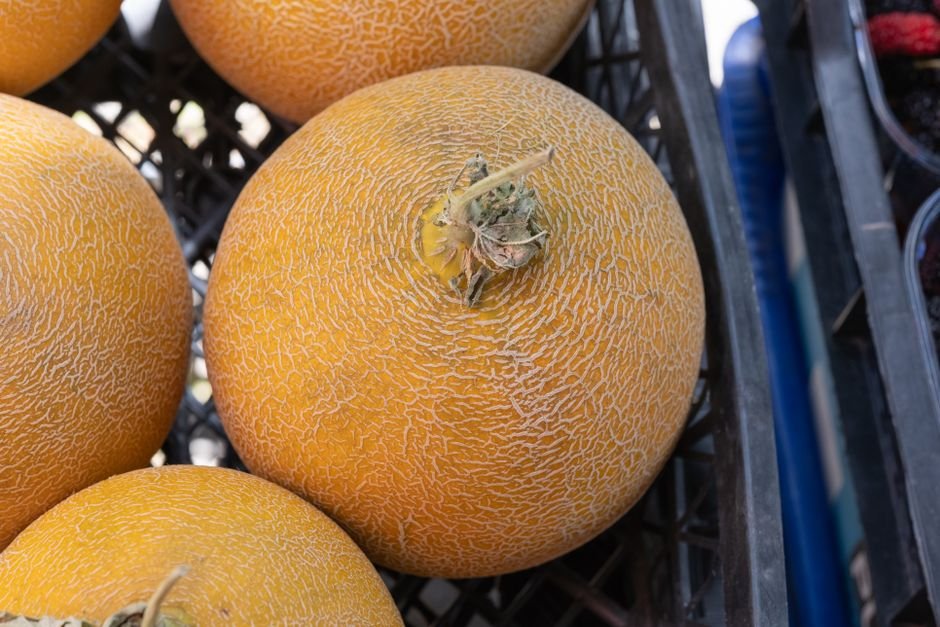
Full Nutrition Facts for 1 Cup (160g) of Cantaloupe
One cup of diced cantaloupe is a common serving that fits easily into breakfast, snacks, or dessert. Here’s the complete nutritional breakdown:
| Nutrient | Amount | % Daily Value |
|---|---|---|
| Calories | 54 | 2% |
| Total Fat | 0.4g | 0% |
| Saturated Fat | 0.1g | 0% |
| Cholesterol | 0mg | 0% |
| Sodium | 25mg | 1% |
| Total Carbohydrate | 13g | 4% |
| Dietary Fiber | 1.4g | 5% |
| Total Sugars | 12g | — |
| Protein | 1.3g | 3% |
| Vitamin A (RAE) | 269 mcg | 30% |
| Vitamin C | 29mg | 48% |
| Potassium | 473mg | 10% |
*Percent Daily Values are based on a 2,000-calorie diet. Source: USDA FoodData Central.
Key insight: Cantaloupe’s standout nutrients are its vitamin A and vitamin C content—one cup delivers 30% and 48% of your daily needs, respectively. This makes it excellent for immune function and eye health. The high water content (about 90%) is why cantaloupe is so low in calories despite tasting sweet; most of the weight is fluid, not sugar.
Etekcity Food Scale
0.1g accuracy — the perfect companion for exact portions.
Cantaloupe vs. Honeydew: Calories and Nutrition Comparison
Both are popular melons, but cantaloupe and honeydew have distinct differences in flavor, color, and nutrition. Here’s how they stack up:
Cantaloupe
- Calories: 54 per cup (160g)
- Vitamin A: 269 mcg (30% DV)—cantaloupe’s defining nutrient
- Fiber: 1.4g per cup; slightly higher than honeydew
Honeydew Melon
- Calories: 61 per cup (170g)—slightly more calorie-dense
- Vitamin A: 10 mcg (negligible)—much lower than cantaloupe
- Sweetness: Often sweeter and milder in flavor; preferred by those avoiding beta-carotene
Practical takeaway: If you want maximum vitamin A and antioxidants, cantaloupe wins. If you prefer a milder, sweeter flavor and are tracking calories closely, the difference is negligible (7 calories per cup). Both are excellent low-calorie choices for weight loss and summer snacking.
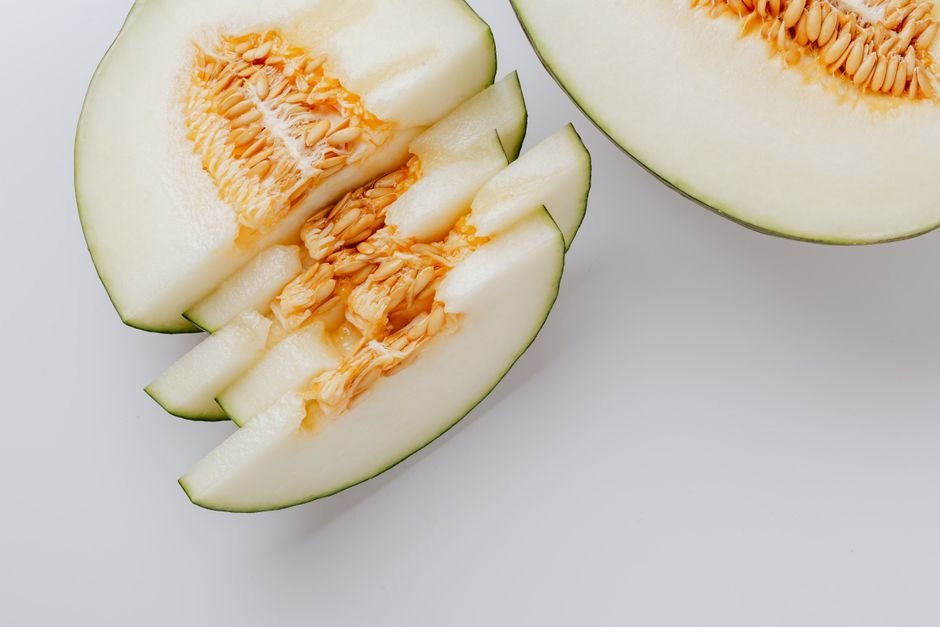
Is Cantaloupe Good for Weight Loss?
Yes, cantaloupe is an excellent fruit for weight loss. At 54 calories per cup with nearly 90% water content, it’s filling and hydrating without being calorie-dense. The 1.4g of fiber per cup supports satiety and digestive health. The natural sweetness satisfies cravings without added sugars, and cantaloupe is nutrient-rich—you get substantial vitamins and minerals per calorie spent.
Tips to Eat Cantaloupe Without Gaining Weight:
- Portion control: A full medium cantaloupe is 188 calories—reasonable, but be mindful if eating the whole fruit in one sitting. Aim for 1–2 cups per serving.
- Pair it with protein: Combine cantaloupe with Greek yogurt, cottage cheese, or nuts to slow sugar absorption and improve satiety.
- Avoid candied or sugared varieties: Buy fresh cantaloupe, not canned syrup or dried versions, which concentrate sugars and calories.
- Eat it as a meal component, not dessert alone: Include it in breakfast bowls, salads, or snack platters rather than eating it as a standalone sweet treat.
When eaten mindfully as part of a balanced diet, cantaloupe supports weight loss goals without requiring restriction.
How Portion Size Affects Calories
Portion size is where cantaloupe’s calorie count varies most. Because it’s sold whole and often shared, understanding how size translates to calories helps you avoid unintentional overeating. A small cantaloupe may weigh 750g (141 calories), while a large one reaches 1,500g (282 calories)—a 2× difference.
Example:
- Small 1-cup serving (160g): 54 calories—fits easily into any meal
- Large 3-cup serving (480g): 163 calories—still moderate, but equivalent to a light snack
Using a kitchen scale or measuring cups ensures you stay on track with portion goals, especially if tracking macros or calories precisely.
Best Way to Measure Cantaloupe Accurately
Measuring cantaloupe can be tricky because it’s sold whole and varies by size. The most reliable methods avoid guessing and give you exact calorie counts for your portion. A kitchen scale is the gold standard, but visual estimates and standardized measurements work well too.
Options:
- Kitchen scale (most accurate): Weigh diced or cubed cantaloupe in grams. 160g = 1 cup = 54 calories. This is the best method for tracking macros precisely.
- Measuring cups: Scoop diced cantaloupe into a standard 1-cup measure. Simple, fast, and accurate enough for most goals.
- Whole-fruit method: If eating a whole small cantaloupe (750g), divide by the number of servings you consume. For example, a 750g cantaloupe (141 calories) split into 3 servings = 47 calories per portion.
Calculate Your Exact Calorie Intake
Tracking cantaloupe and other foods manually can be tedious, especially if you’re managing multiple nutrients. If you’re serious about precise calorie and macro counting, a calculator saves time and improves accuracy.
Our site offers a free AI-powered nutrients calculator that lets you input your food and get instant calorie, protein, carb, and fat breakdowns. Simply input “160g cantaloupe” or “1 cup cantaloupe” and get exact numbers—no guessing.
- Instant results: No more searching USDA databases or counting manually
- Macro tracking: See protein, carbs, and fat in real time as you build meals
- Custom portions: Enter any weight or serving size and get accurate values
Visit the free nutrients calculator to start tracking your cantaloupe intake and other foods today.
Common Mistakes When Eating Cantaloupe
Many people eat cantaloupe without realizing they’re consuming more calories, sugar, or sodium than they think. Here are the biggest pitfalls:
❌ Eating a whole cantaloupe in one sitting: A medium cantaloupe is 188 calories—manageable—but many people eat 2–3 cups without measuring, easily reaching 150+ calories plus 30g of sugar.
❌ Assuming cantaloupe has no calories because it’s “just water”: While 90% water, the remaining 10% contains carbs and sugars. A cup still has 13g of carbs and 54 calories—relevant if you’re counting.
❌ Pairing cantaloupe with high-calorie additions: Adding whipped cream, honey, or candied nuts turns a 54-calorie snack into a 250+ calorie dessert.
❌ Ignoring ripeness: An unripe cantaloupe has more starch and less sugar (lower GI), while a very ripe one is sweeter and spikes blood sugar faster—relevant for diabetics.
Measuring your portions, eating cantaloupe with protein, and being honest about ripeness help you enjoy this fruit without surprises.
FAQ
How many calories are in 100g of cantaloupe?
One hundred grams of raw, unpeeled cantaloupe contains approximately 34 calories. This is a useful reference point for precise portion tracking using a kitchen scale.
Is cantaloupe fattening?
No. Cantaloupe is very low in fat (0.4g per cup) and calories (54 per cup). It is not fattening; in fact, it’s one of the lowest-calorie fruits. The high water and fiber content makes it satiating without promoting weight gain when eaten in reasonable portions.
Does cantaloupe have a lot of sugar?
Cantaloupe contains 12g of sugar per cup, but this is natural fruit sugar, not added sugar. The fiber content (1.4g) moderates blood sugar impact. For most people, cantaloupe’s sugar is not a concern, though those managing diabetes should track portion sizes and pair it with protein.
Can I eat cantaloupe on a low-carb diet?
Cantaloupe is moderate in carbs (13g per cup) and may fit into some low-carb approaches if you budget carefully, but it’s not ideal for strict keto diets. Other melons and berries (like raspberries) are lower-carb options if you’re aiming for under 20–30g net carbs daily.
Conclusion
Cantaloupe is a nutritional powerhouse for anyone watching calories. At just 54 calories per cup, it delivers exceptional amounts of vitamin A, vitamin C, and potassium, all while being naturally low in fat and sodium. Its high water content makes it filling and hydrating, making it ideal for weight loss, summer snacking, and balanced nutrition.
To eat cantaloupe effectively, measure your portions, pair it with protein for sustained energy, and buy fresh rather than canned or candied varieties. Whether you’re tracking macros, managing blood sugar, or simply enjoying a healthy snack, using a reliable nutrients calculator removes the guesswork and keeps your goals on track.
