Calories in carrot juice: 94 calories per 1 cup (236 g)
- 2.2 g protein
- 22 g carbs
- 0.4 g fat
- 1.9 g fiber
Source: USDA FoodData Central · 40 kcal per 100 g
One cup (236 g) of canned carrot juice has 94 calories in the USDA record, so the calories in carrot juice come almost entirely from carbohydrate: about 22 g per cup, with 9.2 g of that as total sugars. Protein is 2.2 g and fat is 0.4 g.
What stands out is the vitamin A. One cup provides 2256 mcg RAE, which is 251% of the Daily Value.
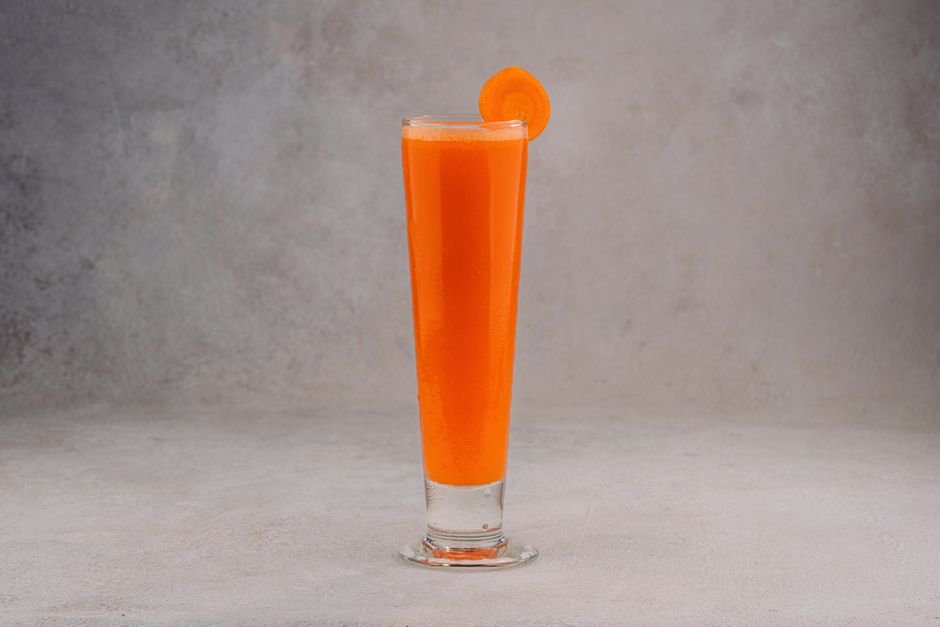
Calories in Carrot Juice by Serving Size
Calories in carrot juice for each common serving, with protein, carbs and fat:
| Serving | Calories | Protein | Carbs | Fat |
|---|---|---|---|---|
| 1 cup (236 g) | 94 | 2.2 g | 22 g | 0.4 g |
| 1 fl oz (30 g) | 12 | 0.3 g | 2.7 g | 0 g |
| 100 g | 40 | 1 g | 9.3 g | 0.2 g |
Carrot Juice Nutrition Facts
Calories in carrot juice and the full nutrition facts per 1 cup (236 g):
| Nutrient | Amount | % Daily Value* |
|---|---|---|
| Calories | 94 kcal | |
| Protein | 2.2 g | 4% |
| Total Fat | 0.4 g | 0% |
| Saturated Fat | 0.1 g | 0% |
| Cholesterol | 0 mg | 0% |
| Sodium | 156 mg | 7% |
| Total Carbohydrate | 22 g | 8% |
| Dietary Fiber | 1.9 g | 7% |
| Total Sugars | 9.2 g | |
| Calcium | 57 mg | 4% |
| Iron | 1.1 mg | 6% |
| Potassium | 689 mg | 15% |
| Magnesium | 33 mg | 8% |
| Zinc | 0.4 mg | 4% |
| Phosphorus | 99 mg | 8% |
| Selenium | 1.4 mcg | 3% |
| Vitamin A (RAE) | 2256 mcg | 251% |
| Vitamin C | 20 mg | 22% |
| Vitamin E | 2.7 mg | 18% |
| Vitamin K | 37 mcg | 30% |
| Thiamin (B1) | 0.2 mg | 18% |
| Riboflavin (B2) | 0.1 mg | 10% |
| Niacin (B3) | 0.9 mg | 6% |
| Vitamin B6 | 0.5 mg | 30% |
| Folate (DFE) | 9.4 mcg | 2% |
Where the calories come from: 88% carbs · 9% protein · 3% fat
*Percent Daily Values are based on a 2,000-calorie diet (FDA reference values). Source: USDA FoodData Central — Carrot juice, canned (FDC ID 170491, SR Legacy, published 4/1/2019). Values for other servings are calculated from the per-100 g data.
Why Carrot Juice Is So High in Vitamin a
Carrots get their orange color from carotenoids, and the USDA record lists the vitamin A content as retinol activity equivalents (RAE). Per 100 g the juice has 956 mcg RAE, so a single cup at 236 g brings in 2256 mcg. That is far above the 251% DV shown on the lead serving, and it is the number most people search for when they ask about this drink.
Because vitamin A is fat-soluble, the record’s near-zero fat content (0.4 g per cup) is worth keeping in mind. The juice itself does not supply much fat to help with absorption, so pairing it with a meal that includes some fat is a common approach, though this data does not measure absorption.
Carrot Juice Sugar and Carbs: Is It a Low-Carb Drink?
No. One cup contains 22 g of total carbohydrate, and carbohydrate supplies 88% of the calories in this food. Fiber is low at 1.9 g per cup, so most of the carbohydrate is sugar and starch that the juice does not keep bound up in fiber.
For comparison, the 1 fl oz serving (30 g) has 12 calories and 2.7 g of carbohydrate. If you are counting carbs, measure the serving you actually pour; a glass can easily be more than one cup.
Sodium, Potassium, and What the Minerals Look Like
Carrot juice is a useful source of potassium at 689 mg (15% DV) per cup, and it contains 156 mg of sodium (7% DV). The sodium is naturally present in the juice, and this canned record does not include added salt in its numbers.
- Potassium: 689 mg per cup (15% DV)
- Sodium: 156 mg per cup (7% DV)
- Calcium: 57 mg per cup (4% DV)
- Magnesium: 33 mg per cup (8% DV)
Check the label on the can or carton you buy. Versions with added salt or other ingredients will differ from the USDA record, which describes plain canned carrot juice.
Is Carrot Juice Good for Weight Loss or Blood Sugar?
Calories are moderate at 94 per cup, but the drink is liquid carbohydrate with little fiber, so a cup is quick to drink and does not add much bulk. The record’s 9.2 g of total sugars per cup is the figure to watch if you track sugar intake closely.
Whole raw carrots contain more fiber per calorie than the juice, which is a point to consider if you are choosing between the two. This page does not compare them with exact numbers, since the carrot record is not part of this data.
How Carrot Juice Compares
Per 100 g, next to similar foods in our database:
| Food (100 g) | Calories | Protein | Carbs | Fat |
|---|---|---|---|---|
| Carrot Juice | 40 | 1 g | 9.3 g | 0.2 g |
| Celeriac | 42 | 1.5 g | 9.2 g | 0.3 g |
| Blackberry Juice | 38 | 0.3 g | 7.8 g | 0.6 g |
| Parsley | 36 | 3 g | 6.3 g | 0.8 g |
| Brussels Sprouts Cooked | 36 | 2.6 g | 7.1 g | 0.5 g |
| Kiwano | 44 | 1.8 g | 7.6 g | 1.3 g |
Carrot Juice FAQ
How many calories are in 1 fl oz of carrot juice?
One fluid ounce (30 g) of canned carrot juice has 12 calories, with 2.7 g of carbohydrate and 0.3 g of protein. The fat content rounds to 0 g in this serving.
How much vitamin C is in a cup of carrot juice?
One cup (236 g) contains 20 mg of vitamin C, which is 22% of the Daily Value. Vitamin C is lower in the juice than the vitamin A, which is the standout nutrient.
The Bottom Line
One cup of canned carrot juice has 94 calories, 22 g of carbohydrate, and 2256 mcg of vitamin A (251% DV), so it is a nutrient-dense drink that is mostly carbohydrate. Measure your serving, since a glass often holds more than one cup.