
Celery is one of the most accessible low-calorie vegetables, found in kitchens and restaurants worldwide. It’s a staple in weight-loss diets, juice cleanses, and everyday snacking, popular with people managing diabetes, reducing sodium intake, or simply seeking nutrient-dense, filling foods without excessive calories.
If you’re counting calories or tracking nutrition, understanding celery’s exact calorie content and macronutrient profile is essential. This guide covers everything you need to know about celery’s nutrition, how preparation affects its calories, and how to measure it accurately for your health goals.
Calories in Celery (Quick Answer)
One medium raw celery stalk (about 40g) contains roughly 6 calories, making it one of the lowest-calorie vegetables available.
- One medium raw celery stalk (40g): 6 calories
- One cup chopped raw celery (100g): 16 calories
- One cup cooked celery (150g): 27 calories
Calorie counts remain relatively consistent across celery varieties, though water content, stalk thickness, and cooking method can cause minor variations.

Full Nutrition Facts for One Cup Chopped Raw Celery (100g)
Raw celery is composed primarily of water (95%) and contains minimal fat and protein. Here’s the complete nutritional profile for 100g of raw celery:
| Nutrient | Amount | % Daily Value |
|---|---|---|
| Calories | 16 | 1% |
| Total Fat | 0.2g | <1% |
| Saturated Fat | 0g | 0% |
| Cholesterol | 0mg | 0% |
| Sodium | 64mg | 3% |
| Total Carbohydrate | 3.7g | 1% |
| Dietary Fiber | 0.7g | 3% |
| Total Sugars | 1.6g | 3% |
| Protein | 0.7g | 1% |
| Vitamin K | 29.3mcg | 24% |
| Potassium | 260mg | 7% |
| Vitamin A | 22.2mcg RAE | <1% |
*Percent Daily Values are based on a 2,000-calorie diet. Source: USDA FoodData Central.
Key insight: Celery is exceptionally high in vitamin K—one cup provides nearly a quarter of your daily requirement. This fat-soluble vitamin is critical for bone health and blood clotting. The fiber content, though modest at 0.7g per cup, becomes significant when celery is eaten as part of a varied vegetable-rich diet. The sodium content (64mg per 100g) is moderate and naturally occurring, not added salt.
Etekcity Food Scale
0.1g accuracy — the perfect companion for exact portions.
Raw Celery vs. Cooked Celery: Nutritional Differences
Raw Celery
- Retains all vitamin K and vitamin C content
- Maintains crisp texture and water content (95% water)
- Contains 16 calories per 100g, making it ideal for weight loss
Cooked Celery
- Cooking reduces water content, concentrating nutrients per bite (27 calories per 150g cooked)
- Heat breaks down cell walls, making fiber and minerals more bioavailable
- Some vitamin C loss during cooking, but mineral content remains stable
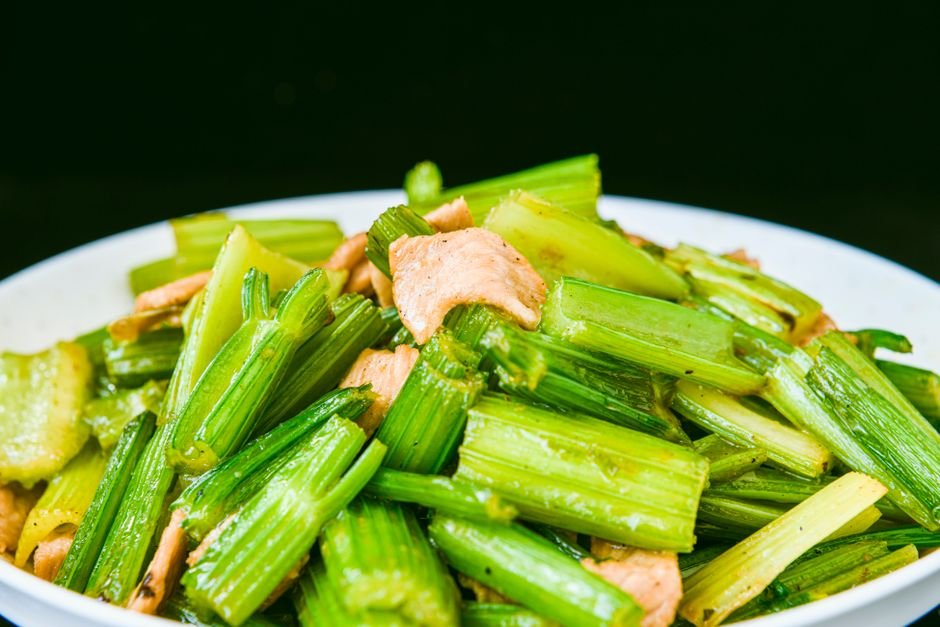
Practical takeaway: Raw celery is superior for weight loss and vitamin retention, while cooked celery may enhance nutrient absorption and is gentler for people with digestive sensitivities. Both are excellent choices; select based on your meal preparation style and digestive comfort.
Is Celery Good for Weight Loss?
Celery is one of the best vegetables for weight loss. At just 16 calories per 100g, it provides volume and fiber with virtually no impact on daily calorie totals. The high water content (95%) creates satiety—the feeling of fullness—without contributing meaningful calories. Its low glycemic index means it won’t trigger blood sugar spikes or cravings. Celery is genuinely useful in any calorie-controlled diet, though the myth about “negative calories” (that digesting celery burns more calories than it contains) is overstated.
Tips to Eat Celery Without Gaining Weight
- Pair with lean protein: Celery with hummus (2 tablespoons, ~100 calories) or almond butter (1 tablespoon, ~95 calories) creates a balanced snack without excessive calories.
- Avoid high-calorie dips: Ranch dressing (2 tablespoons = ~150 calories) can exceed the celery itself. Choose Greek yogurt-based or vinegar-based dressings instead.
- Use in soups and broths: Adding chopped celery to vegetable or bone broth adds volume and nutrients with negligible calories.
- Juice thoughtfully: Celery juice concentrates sugars; one 16oz glass of pure celery juice = ~90 calories. Dilute or pair with whole celery stalks for fiber.
Celery’s role in weight loss is real but straightforward: it’s a low-calorie, high-volume food that helps you eat more food (by weight) while staying in a calorie deficit. It’s not magic, but it is genuinely useful.
How Portion Size Affects Calories
Celery’s calorie density is so low that portion size matters less than with other foods, but precise measurement helps when tracking nutrition comprehensively. A single stalk versus a full bunch creates a visible difference in total intake. Understanding standard portions prevents accidental underestimation when celery is part of a larger meal.
Example:
- One small stalk (20g, about the width of your index finger): ~3 calories
- One large stalk (60g, about the width of your thumb): ~10 calories
For practical purposes, you could eat an entire head of celery (~500g) for under 80 calories—equivalent to a single apple.
Best Way to Measure Celery Accurately
Celery’s irregular shape makes volume measurement less reliable than weight. A cup of chopped celery varies significantly based on how densely it’s packed and stalk thickness. A kitchen scale (digital, 0.1g precision) is the gold standard for nutrition tracking. If you don’t own a scale, consistent visual benchmarking—always using the same bowl or cup and filling it the same way—provides repeatability within acceptable margins.
Options:
- Digital kitchen scale: Measure raw, chopped celery by weight (grams). Most accurate method for tracking.
- Standardized cup measure: Use a measuring cup, loosely fill, level off. Expect ±10% variation between measurements.
- Stalk count: Count individual stalks and estimate average weight per stalk for your celery bunch (~40g per medium stalk). Simple and practical for everyday eating.
Calculate Your Exact Calorie Intake
If celery is a regular part of your diet and you’re tracking macronutrients for specific health goals—muscle building, diabetes management, or precise calorie deficits—knowing its exact contribution matters. Manual calculation becomes tedious when multiple foods are involved.
Our free AI nutrients calculator instantly breaks down celery’s complete macronutrient and micronutrient profile, plus your total daily intake across all meals. Simply log your portions and get precise nutrition data:
- Automatic portion-to-gram conversion for any food
- Complete daily macronutrient and micronutrient totals
- Comparison against your personal nutrition targets
Use the free nutrients calculator now →
Common Mistakes When Eating Celery
Even with a low-calorie food like celery, common eating patterns can inadvertently add calories or reduce nutritional benefit:
❌ Pairing celery exclusively with calorie-dense dips (ranch, cheese dips, peanut butter) without counting those calories, which can exceed the celery’s nutritional contribution.
❌ Overcooking celery in butter or oil-heavy soups, which increases fat content and reduces water-soluble vitamin retention.
❌ Drinking celery juice as a “detox” substitute for eating whole celery, missing fiber benefits and consuming concentrated natural sugars without satiety.
❌ Assuming raw celery is always superior to cooked; cooking can improve mineral bioavailability, though some heat-sensitive vitamins are reduced.
Focus on whole celery stalks as part of a varied diet, pair with balanced proteins and healthy fats, and avoid calorie-heavy dips if weight loss is your goal.
FAQ
How many calories are in 100g of celery?
100g of raw celery contains 16 calories. This makes celery one of the lowest-calorie vegetables available—you could eat over 6 cups of raw celery for 100 calories.
Is celery fattening?
No. Celery is not fattening; it’s one of the lowest-calorie vegetables available. Weight gain occurs from consuming more calories than you burn. Celery’s 16 calories per 100g makes it nearly impossible to gain weight from celery alone, even if eaten in large quantities.
Does celery have any protein?
Celery contains 0.7g of protein per 100g—minimal, and not a significant protein source. For protein, pair celery with Greek yogurt, cottage cheese, nuts, or lean meats rather than relying on celery itself.
Can I eat unlimited celery on a diet?
Yes, from a calorie perspective, you can eat unlimited raw celery. However, excessive consumption can cause bloating or digestive discomfort due to fiber volume. Aim for balance: enjoy celery as part of a varied vegetable intake rather than in extreme quantities.
Conclusion
Celery is genuinely one of the most diet-friendly vegetables available: 16 calories per 100g, virtually zero fat, excellent vitamin K content, and high water volume for satiety. Its nutritional profile is straightforward—it’s not a protein or calorie source, but a low-density filler that supports weight loss and provides micronutrients. Raw celery retains maximum vitamins and fiber, while cooked celery may improve mineral absorption for some people. Whether you’re eating celery as a snack, in soups, or as part of structured meals, portion tracking is simple due to its minimal calorie density.
For anyone tracking nutrition seriously—especially across multiple foods daily—manual calculation becomes inefficient. Use a free nutrients calculator to log celery alongside your other meals and get instant totals for calories, macronutrients, and micronutrients. This removes guesswork and keeps you accountable to your actual health goals rather than food myths.
