Calories in dried apricots: 313 calories per 1 cup (130 g)
- 4.4 g protein
- 81 g carbs
- 0.7 g fat
- 9.5 g fiber
Source: USDA FoodData Central · 241 kcal per 100 g
A cup of dried apricots (130 g) contains 313 calories, nearly all from carbohydrate.
Dried apricots are also among the richest common dried fruits in potassium (1511 mg per cup), iron (3.5 mg per cup), and vitamin E. The sulfuring process used to preserve them (and keep their orange color) does not meaningfully change their nutritional profile compared to unsulfured varieties.
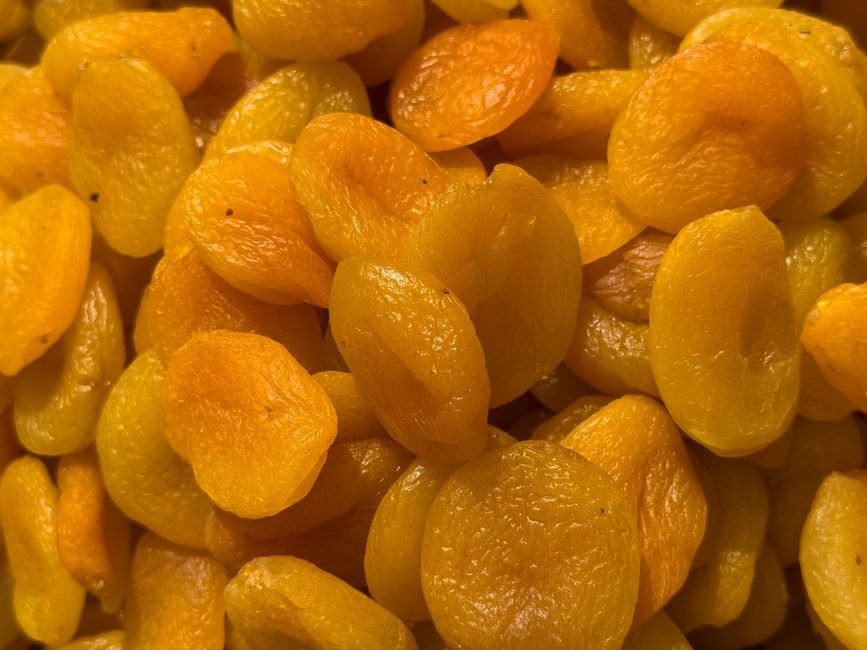
Calories in Dried Apricots by Serving Size
Calories in dried apricots for each common serving, with protein, carbs and fat:
| Serving | Calories | Protein | Carbs | Fat |
|---|---|---|---|---|
| 1 cup, halves (130 g) | 313 | 4.4 g | 81 g | 0.7 g |
| 1 half (3.5 g) | 8 | 0.1 g | 2.2 g | 0 g |
| 100 g | 241 | 3.4 g | 63 g | 0.5 g |
| 1 oz | 68 | 1 g | 18 g | 0.1 g |
Dried Apricots Nutrition Facts
Calories in dried apricots and the full nutrition facts per 1 cup, halves (130 g):
| Nutrient | Amount | % Daily Value* |
|---|---|---|
| Calories | 313 kcal | |
| Protein | 4.4 g | 9% |
| Total Fat | 0.7 g | 1% |
| Saturated Fat | 0 g | 0% |
| Cholesterol | 0 mg | 0% |
| Sodium | 13 mg | 1% |
| Total Carbohydrate | 81 g | 30% |
| Dietary Fiber | 9.5 g | 34% |
| Total Sugars | 69 g | |
| Calcium | 72 mg | 6% |
| Iron | 3.5 mg | 19% |
| Potassium | 1511 mg | 32% |
| Magnesium | 42 mg | 10% |
| Zinc | 0.5 mg | 5% |
| Phosphorus | 92 mg | 7% |
| Selenium | 2.9 mcg | 5% |
| Vitamin A (RAE) | 234 mcg | 26% |
| Vitamin C | 1.3 mg | 1% |
| Vitamin E | 5.6 mg | 38% |
| Vitamin K | 4 mcg | 3% |
| Thiamin (B1) | 0 mg | 2% |
| Riboflavin (B2) | 0.1 mg | 7% |
| Niacin (B3) | 3.4 mg | 21% |
| Vitamin B6 | 0.2 mg | 11% |
| Folate (DFE) | 13 mcg | 3% |
Where the calories come from: 93% carbs · 5% protein · 2% fat
*Percent Daily Values are based on a 2,000-calorie diet (FDA reference values). Source: USDA FoodData Central — Apricots, dried, sulfured, uncooked (FDC ID 173941, SR Legacy, published 4/1/2019). Values for other servings are calculated from the per-100 g data.
Why Dried Apricots Are High in Sugar but Still Fiber-Rich
Dried apricots contain 69 g of sugar per cup, but 9.5 g of that cup is dietary fiber.
The high sugar content does make portion control important if you’re watching calorie or carbohydrate intake. A single apricot half is only 8 calories and 2.2 g carbohydrate, so measured snacking is practical; a cup, by contrast, is a significant carbohydrate load (81 g per cup) suitable as a whole snack or mixed into a meal, not an all-day grazer.

Potassium, Iron, and Vitamin E per Cup
One cup of dried apricots provides 1511 mg of potassium—about 32% of the daily adequate intake—plus 3.5 mg of iron (19% of the daily value for men; higher for menstruating women).
The vitamin A content (234 mcg per cup, 26% of the daily value) is also notable, coming from beta-carotene in the fruit. These nutrients reflect dried apricots’ position as a nutrient-dense food, not just a sugar source.
Sulfured Vs. Unsulfured: Does It Matter for Calories?
Sulfur dioxide is used to preserve dried apricots and maintain their bright orange color; unsulfured apricots are typically darker and brown. The sulfuring process does not add or remove calories, protein, fiber, or the major minerals. If you have a sulfite sensitivity, you’d want unsulfured, but nutritionally the two are equivalent.
Dried Apricots as a Potassium-Rich Snack
A cup delivers more potassium than a medium banana would, and without the moisture or spoilage risk of fresh fruit. One ounce (a small handful, about 28 g) provides 360 mg of potassium and just 68 calories, making it a practical portion for a quick energy boost.
How Dried Apricots Compares
Per 100 g, next to similar foods in our database:
| Food (100 g) | Calories | Protein | Carbs | Fat |
|---|---|---|---|---|
| Dried Apricots | 241 | 3.4 g | 63 g | 0.5 g |
| Tamarind | 239 | 2.8 g | 63 g | 0.6 g |
| Raspberry Red | 221 | 3 g | 53 g | 1.3 g |
| Gooseberry Dried | 277 | 3.3 g | 64 g | 0.9 g |
| Lychee Dried | 277 | 3.8 g | 71 g | 1.2 g |
| Raspberry Jam | 278 | 0.4 g | 69 g | 0.1 g |
Dried Apricots FAQ
How many dried apricots are in a cup?
A cup of halves weighs about 130 g. Since each half weighs roughly 3.5 g, a cup contains approximately 37 halves. If you're buying whole dried apricots, a cup would hold fewer individual fruits but the same total weight and nutrition.
Do dried apricots have any vitamin C?
Very little: only 1 mg per 100 g (1.3 mg per cup). Vitamin C is largely lost during drying and storage, so dried apricots are not a reliable source.
Can I rehydrate dried apricots and eat them differently?
Yes, soaking dried apricots in water plumps them and adds water weight, which lowers the calorie and sugar density per bite—though the total nutrients remain the same. Cooking apricots (in compote or stewed) also adds water. Nutritionally, these methods don't change the food significantly, but texture and eating experience do change.
The Bottom Line
Dried apricots are calorie-dense (313 per cup) but loaded with fiber, potassium, iron, and vitamin E—nutrients that make them more sustaining and nutrient-rich than their sugar content alone suggests. Portion control with a measured handful or cup keeps them a practical, portable snack.