Calories in goat cheese: 452 calories per 100 g (100 g)
- 31 g protein
- 2.2 g carbs
- 36 g fat
Source: USDA FoodData Central · 452 kcal per 100 g
A 100 g serving of goat cheese has 452 calories in the USDA record for hard-type goat cheese, while a 1 oz (28 g) serving has 128 calories. Calories in goat cheese come mostly from fat, which supplies 71% of the total, with protein making up another 27%.
The standout numbers are the fat and the calcium. Each 100 g carries 36 g of fat, 25 g of it saturated, and 895 mg of calcium, which is 69% of the Daily Value. It is also a good source of riboflavin, at 92% DV per 100 g.
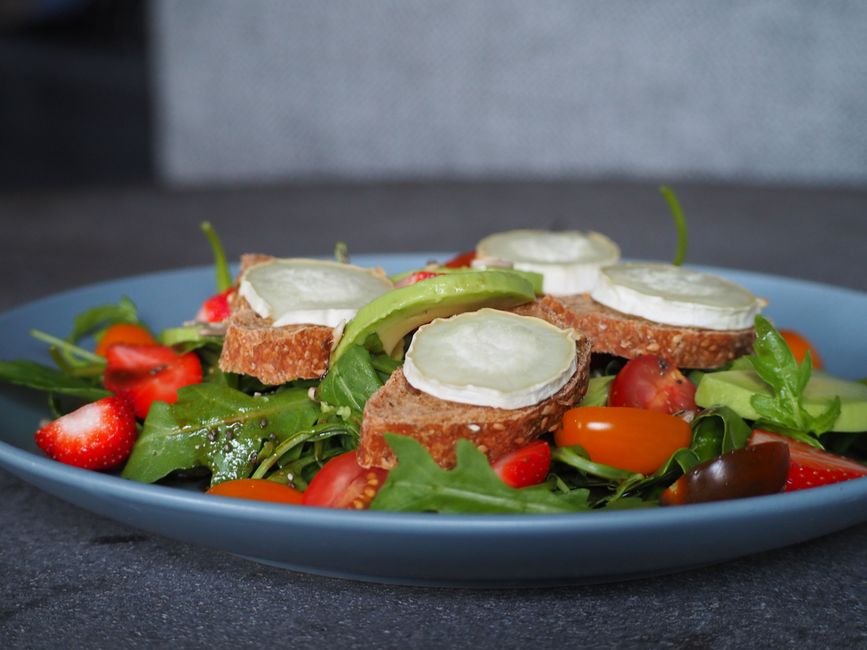
Calories in Goat Cheese by Serving Size
Calories in goat cheese for each common serving, with protein, carbs and fat:
| Serving | Calories | Protein | Carbs | Fat |
|---|---|---|---|---|
| 1 oz | 128 | 8.7 g | 0.6 g | 10 g |
| 100 g | 452 | 31 g | 2.2 g | 36 g |
Goat Cheese Nutrition Facts
Calories in goat cheese and the full nutrition facts per 100 g (100 g):
| Nutrient | Amount | % Daily Value* |
|---|---|---|
| Calories | 452 kcal | |
| Protein | 31 g | 61% |
| Total Fat | 36 g | 46% |
| Saturated Fat | 25 g | 123% |
| Cholesterol | 105 mg | 35% |
| Sodium | 423 mg | 18% |
| Total Carbohydrate | 2.2 g | 1% |
| Dietary Fiber | 0 g | 0% |
| Total Sugars | 2.2 g | |
| Vitamin D | 0.7 mcg | 4% |
| Calcium | 895 mg | 69% |
| Iron | 1.9 mg | 10% |
| Potassium | 48 mg | 1% |
| Magnesium | 54 mg | 13% |
| Zinc | 1.6 mg | 14% |
| Phosphorus | 729 mg | 58% |
| Selenium | 5.5 mcg | 10% |
| Vitamin A (RAE) | 486 mcg | 54% |
| Vitamin E | 0.3 mg | 2% |
| Vitamin K | 3 mcg | 3% |
| Thiamin (B1) | 0.1 mg | 12% |
| Riboflavin (B2) | 1.2 mg | 92% |
| Niacin (B3) | 2.4 mg | 15% |
| Vitamin B6 | 0.1 mg | 5% |
| Folate (DFE) | 4 mcg | 1% |
| Vitamin B12 | 0.1 mcg | 5% |
Where the calories come from: 71% fat · 27% protein · 2% carbs
*Percent Daily Values are based on a 2,000-calorie diet (FDA reference values). Source: USDA FoodData Central — Cheese, goat, hard type (FDC ID 172197, SR Legacy, published 4/1/2019). Values for other servings are calculated from the per-100 g data.
How Many Calories Are in a 1 Oz Serving of Goat Cheese?
A 1 oz (28 g) serving provides 128 calories, 8.7 g of protein, 0.6 g of carbohydrate and 10 g of fat. Because the record is for a hard-type goat cheese, the numbers reflect a firm, aged-style cheese rather than a soft spreadable log, so check the label if your product is different.
Cheese is easy to overeat by the piece, so weighing a portion once can show you what a typical slice or crumble actually adds up to. The 100 g column is useful for comparing products by weight, while the 1 oz column matches how most packaged cheese is sold.

Why Goat Cheese Is So High in Fat and Saturated Fat
Fat is the main source of energy in goat cheese, and the 36 g per 100 g is what drives the calorie count. The saturated fat in that 36 g is 25 g, which is 123% of the Daily Value per 100 g.
Carbohydrate is almost absent. The record lists 2.2 g per 100 g, all of it sugar, with no fiber. That is why the calorie split is so heavily weighted toward fat, and why goat cheese fits into low-carbohydrate eating without adding much to the carb count.
Sodium and Calcium in Goat Cheese
Each 100 g contains 423 mg of sodium, or 18% DV. That is a moderate amount for a cheese, but it adds up quickly if you use a large portion on salads, pizza or crackers. People tracking sodium should look at the amount they actually put on the plate rather than the amount per block.
Calcium is the nutrient to notice on the positive side. The record shows 895 mg per 100 g, or 69% DV. Phosphorus is 729 mg (58% DV) and magnesium 54 mg (13% DV), so the cheese also contributes several minerals alongside its fat and protein.
Riboflavin, Vitamin a and Other Nutrients in the Record
Riboflavin (B2) is the largest micronutrient figure on this record, at 1.2 mg per 100 g, or 92% DV. Vitamin A (RAE) is 486 mcg per 100 g, or 54% DV. Niacin is 2.4 mg (15% DV) and zinc 1.6 mg (14% DV).
Several nutrients are low or absent. Fiber is 0 g, vitamin C is 0 mg, and potassium is 48 mg (1% DV). Goat cheese should be paired with other foods if you want fiber or vitamin C in the same meal.
How Goat Cheese Compares
Per 100 g, next to similar foods in our database:
| Food (100 g) | Calories | Protein | Carbs | Fat |
|---|---|---|---|---|
| Goat Cheese | 452 | 31 g | 2.2 g | 36 g |
| Hemp Milk | 446 | 7.6 g | 72 g | 14 g |
| Parmesan Cheese Grated | 420 | 28 g | 14 g | 28 g |
| Skyr Plain | 407 | 12 g | 74 g | 6.6 g |
| Colby Cheese | 394 | 24 g | 2.6 g | 32 g |
| Pecorino Romano | 387 | 32 g | 3.6 g | 27 g |
Goat Cheese FAQ
Is goat cheese higher in calories than cheddar?
This page only covers goat cheese, so it cannot compare it to cheddar. The USDA record for goat cheese lists 452 kcal and 36 g of fat per 100 g, and you can check any other cheese's record in the same database for a direct comparison.
Does goat cheese have any carbs?
Very few. The record shows 2.2 g of total carbohydrate per 100 g, all of it from sugars, and 0 g of dietary fiber. A 1 oz serving has 0.6 g of carbohydrate.
How much protein is in an ounce of goat cheese?
A 1 oz (28 g) serving provides 8.7 g of protein. Per 100 g, the record shows 31 g of protein, or 61% DV.
The Bottom Line
Goat cheese is calorie-dense, with 452 kcal per 100 g and 128 kcal per 1 oz, mostly from fat. Its strengths are calcium and riboflavin, while its sodium and saturated fat are worth measuring in the portion you actually eat.