Calories in prosciutto: 18 calories per 1 thin slice (9.2 g)
- 2.6 g protein
- 0 g carbs
- 0.8 g fat
Source: USDA FoodData Central · 195 kcal per 100 g
One thin slice of prosciutto (9.2 g) has 18 calories in prosciutto, so a typical stack of several slices stays light on calories per bite. The lead serving gives 2.6 g of protein, 0.8 g of fat, and no carbohydrate.
The standout number is sodium: that same thin slice carries 248 mg, or 11% of the Daily Value. Prosciutto is also almost pure protein and fat, with 0.3 g of carbohydrate and no fiber or sugar per 100 g.
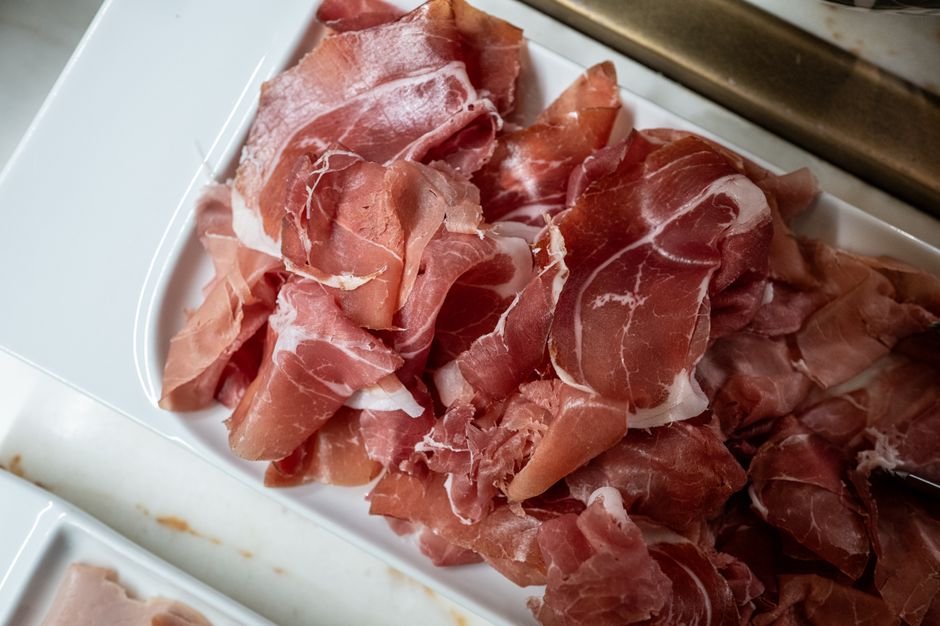
Calories in Prosciutto by Serving Size
Calories in prosciutto for each common serving, with protein, carbs and fat:
| Serving | Calories | Protein | Carbs | Fat |
|---|---|---|---|---|
| 1 thin slice (9.2 g) | 18 | 2.6 g | 0 g | 0.8 g |
| 1 slice (9.2 g) | 18 | 2.6 g | 0 g | 0.8 g |
| 1 cup (56 g) | 109 | 16 g | 0.2 g | 4.7 g |
| 1 oz, boneless (28 g) | 55 | 7.9 g | 0.1 g | 2.4 g |
| 1 surface inch (0.4 g) | 1 | 0.1 g | 0 g | 0 g |
| 100 g | 195 | 28 g | 0.3 g | 8.3 g |
Prosciutto Nutrition Facts
Calories in prosciutto and the full nutrition facts per 1 thin slice (9.2 g):
| Nutrient | Amount | % Daily Value* |
|---|---|---|
| Calories | 18 kcal | |
| Protein | 2.6 g | 5% |
| Total Fat | 0.8 g | 1% |
| Saturated Fat | 0.3 g | 1% |
| Cholesterol | 6.4 mg | 2% |
| Sodium | 248 mg | 11% |
| Total Carbohydrate | 0 g | 0% |
| Dietary Fiber | 0 g | 0% |
| Total Sugars | 0 g | |
| Vitamin D | 0.1 mcg | 0% |
| Calcium | 0.9 mg | 0% |
| Iron | 0.1 mg | 1% |
| Potassium | 47 mg | 1% |
| Magnesium | 2.3 mg | 1% |
| Zinc | 0.3 mg | 2% |
| Phosphorus | 29 mg | 2% |
| Selenium | 2.4 mcg | 4% |
| Vitamin E | 0 mg | 0% |
| Thiamin (B1) | 0.1 mg | 4% |
| Riboflavin (B2) | 0 mg | 2% |
| Niacin (B3) | 0.4 mg | 2% |
| Vitamin B6 | 0 mg | 2% |
| Folate (DFE) | 0.5 mcg | 0% |
| Vitamin B12 | 0.1 mcg | 3% |
Where the calories come from: 59% protein · 40% fat · 1% carbs
*Percent Daily Values are based on a 2,000-calorie diet (FDA reference values). Source: USDA FoodData Central — Ham, prosciutto (FDC ID 2705879, Survey (FNDDS), published 10/31/2024). Values for other servings are calculated from the per-100 g data.
Why Prosciutto Is Mostly Protein by Calories
Per 100 g, the USDA record puts prosciutto at 195 calories, with 28 g of protein and 8.3 g of fat. Protein supplies about 59% of those calories and fat about 40%. Carbohydrate contributes about 1%.
That split is why prosciutto reads as a high-protein deli meat rather than a fatty one.
Because the carb count is so low, prosciutto fits easily into low-carb eating. It has no sugar and no fiber, so it adds protein and salt to a plate but no plant-based carbohydrate.
How Much Sodium Is in Prosciutto?
Sodium is the nutrient to watch. The record shows 2,700 mg per 100 g, and one thin slice provides 248 mg. Curing with salt is what drives this number, so it is not a sign of a different cut of meat.
People who are tracking sodium should look at the serving size, not just the calorie count. Two thin slices and a 1 oz portion land in very different sodium ranges, so weighing or measuring the portion matters more than with lean fresh meats.
The U.S. Dietary Guidelines recommend limiting sodium, and cured meats are one of the main places it comes from in a typical day. Rinsing or patting slices dry will not remove much of the salt, since it is absorbed into the meat during curing.
What Prosciutto Adds Besides Protein
Prosciutto is a modest source of several minerals and B vitamins. The lead slice shows 0.1 mg of thiamin (4% DV), 0.1 mcg of vitamin B12 (3% DV), 29 mg of phosphorus (2% DV), and 2.4 mcg of selenium (4% DV).
It contains no vitamin C, no vitamin A, and no vitamin K in the record. Fruits and vegetables are still needed to cover those nutrients, so prosciutto works better as a protein add-on than as a complete meal.
Iron, zinc, and potassium are present in small amounts. Zinc is 0.3 mg per slice (2% DV), and potassium is 47 mg (1% DV). None of these numbers is large on its own, but they add up if you eat prosciutto regularly.
Pairing Prosciutto Without Adding Extra Calories
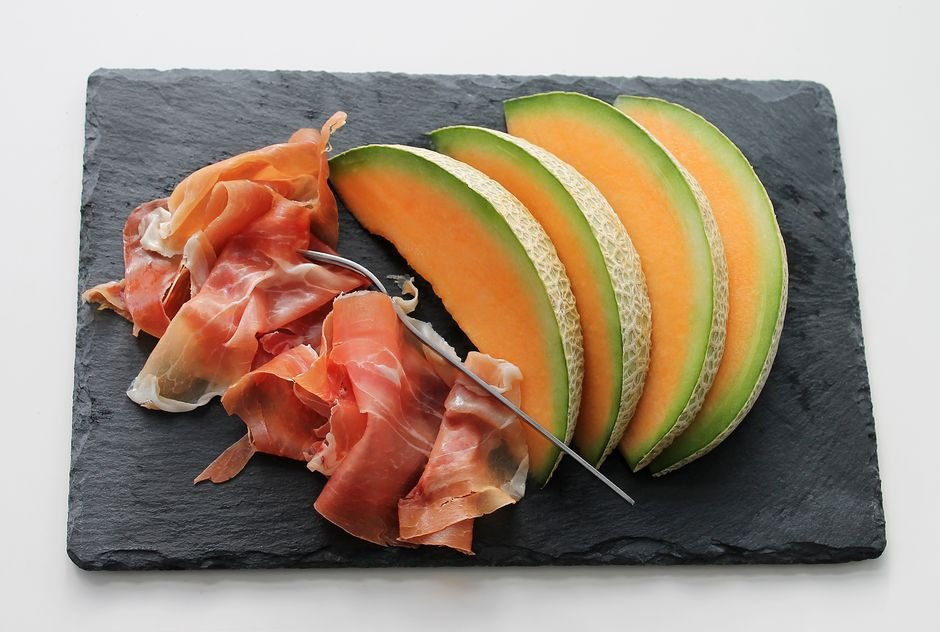
Prosciutto is often served with melon, figs, bread, or cheese. Those pairings add the carbohydrate and calories that the meat itself does not contain. A thin slice of prosciutto alone adds 18 calories, while a 1 oz portion adds 55 calories.
- Wrap prosciutto around fresh fruit or vegetables for protein with little added fat.
- Use thin slices in place of a larger portion of deli meat, since sodium scales with weight.
- Check the label on pre-packaged prosciutto, because brands can differ from the USDA record.
How Prosciutto Compares
Per 100 g, next to similar foods in our database:
| Food (100 g) | Calories | Protein | Carbs | Fat |
|---|---|---|---|---|
| Prosciutto | 195 | 28 g | 0.3 g | 8.3 g |
| Beef Chuck | 194 | 32 g | 0 g | 7.1 g |
| Veal Liver | 192 | 28 g | 3.8 g | 6.3 g |
| Beef Liver Pate | 191 | 29 g | 5.1 g | 5.3 g |
| Pork Chop Boneless | 202 | 25 g | 0.8 g | 11 g |
| Beef Sirloin | 188 | 30 g | 0 g | 6.6 g |
Prosciutto FAQ
Is prosciutto high in calories?
Not per slice. One thin slice (9.2 g) has 18 calories, and 100 g has 195 calories. Calories rise quickly with a larger portion, so the serving size matters.
Does prosciutto have any carbs?
Very few. The record shows 0 g of carbohydrate per thin slice and 0.3 g per 100 g, with no sugar or fiber.
How much protein is in a slice of prosciutto?
One thin slice provides 2.6 g of protein. A 1 oz portion (28 g) provides 7.9 g, and 100 g provides 28 g.
The Bottom Line
One thin slice of prosciutto has 18 calories, 2.6 g of protein, and no carbohydrate, but 248 mg of sodium. Count the sodium along with the calories if you are watching salt.