37 calories in 10 watermelon balls of watermelon (122 g)
- 0.7 g protein
- 9.2 g carbs
- 0.2 g fat
Source: USDA FoodData Central · 30 kcal per 100 g
Calories in watermelon are remarkably low: 10 watermelon balls contain just 37 calories, with over 91% of the fruit’s weight being water. Nearly all those calories come from carbohydrates—mostly natural sugars—and there is virtually no fat or protein.
What stands out is the volume you get for so few calories. A whole cup of diced watermelon has only 46 calories, making it easy to eat a satisfying portion without significantly affecting your calorie intake.
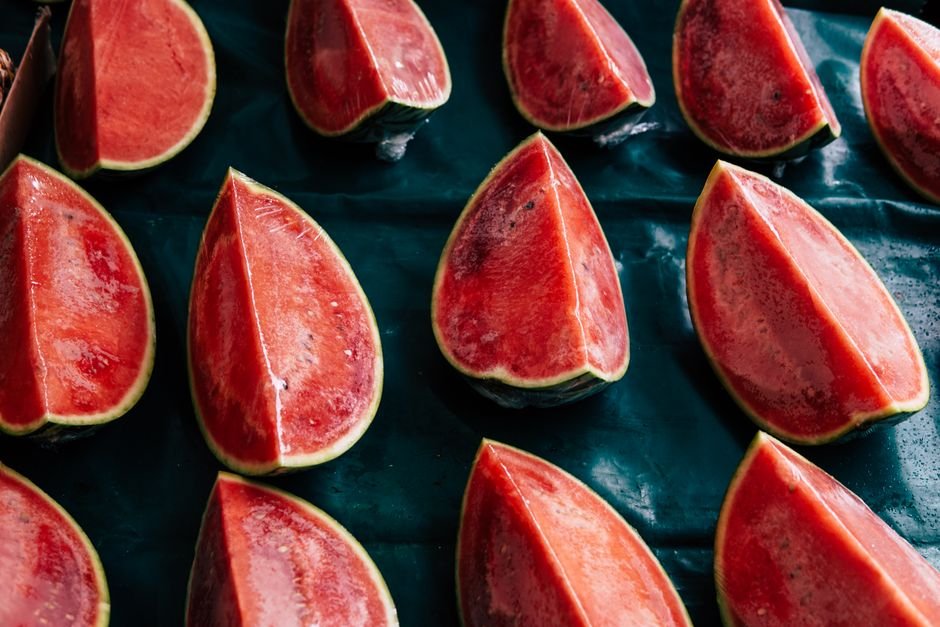
Calories in Watermelon by Serving Size
| Serving | Calories | Protein | Carbs | Fat |
|---|---|---|---|---|
| 10 watermelon balls (122 g) | 37 | 0.7 g | 9.2 g | 0.2 g |
| 1 cup, balls (154 g) | 46 | 0.9 g | 12 g | 0.2 g |
| 1 cup, diced (152 g) | 46 | 0.9 g | 11 g | 0.2 g |
| 1 melon (15" long x 7-1/2" dia) (4518 g) | 1355 | 28 g | 341 g | 6.8 g |
| 1 wedge (approx 1/16 of melon) (286 g) | 86 | 1.7 g | 22 g | 0.4 g |
| 1 NLEA serving (280 g) | 84 | 1.7 g | 21 g | 0.4 g |
| 100 g | 30 | 0.6 g | 7.6 g | 0.2 g |
| 1 oz | 9 | 0.2 g | 2.1 g | 0 g |
Watermelon Nutrition Facts
Per 10 watermelon balls (122 g):
| Nutrient | Amount | % Daily Value* |
|---|---|---|
| Calories | 37 kcal | |
| Protein | 0.7 g | 1% |
| Total Fat | 0.2 g | 0% |
| Saturated Fat | 0 g | 0% |
| Cholesterol | 0 mg | 0% |
| Sodium | 1.2 mg | 0% |
| Total Carbohydrate | 9.2 g | 3% |
| Dietary Fiber | 0.5 g | 2% |
| Total Sugars | 7.6 g | |
| Calcium | 8.5 mg | 1% |
| Iron | 0.3 mg | 2% |
| Potassium | 137 mg | 3% |
| Magnesium | 12 mg | 3% |
| Zinc | 0.1 mg | 1% |
| Phosphorus | 13 mg | 1% |
| Selenium | 0.5 mcg | 1% |
| Vitamin A (RAE) | 34 mcg | 4% |
| Vitamin C | 9.9 mg | 11% |
| Vitamin E | 0.1 mg | 0% |
| Vitamin K | 0.1 mcg | 0% |
| Thiamin (B1) | 0 mg | 3% |
| Riboflavin (B2) | 0 mg | 2% |
| Niacin (B3) | 0.2 mg | 1% |
| Vitamin B6 | 0.1 mg | 3% |
| Folate (DFE) | 3.7 mcg | 1% |
Where the calories come from: 89% carbs · 7% protein · 4% fat
*Percent Daily Values are based on a 2,000-calorie diet (FDA reference values). Source: USDA FoodData Central — Watermelon, raw (FDC ID 167765, SR Legacy, published 4/1/2019). Values for other servings are calculated from the per-100 g data.
Why Watermelon Is So Low in Calories
The remaining 9% is mostly carbohydrates—about 7.6 g per 100 g—of which 6.2 g is natural sugar. The tiny amount of fat (0.2 g per 100 g) and protein (0.6 g per 100 g) contribute almost nothing to the calorie count, which is why the fruit tops out at just 30 calories per 100 g.
This high water content is precisely why watermelon fills your stomach without a calorie penalty. You can eat a whole wedge (286 g, about 1/16 of a melon) for only 86 calories.
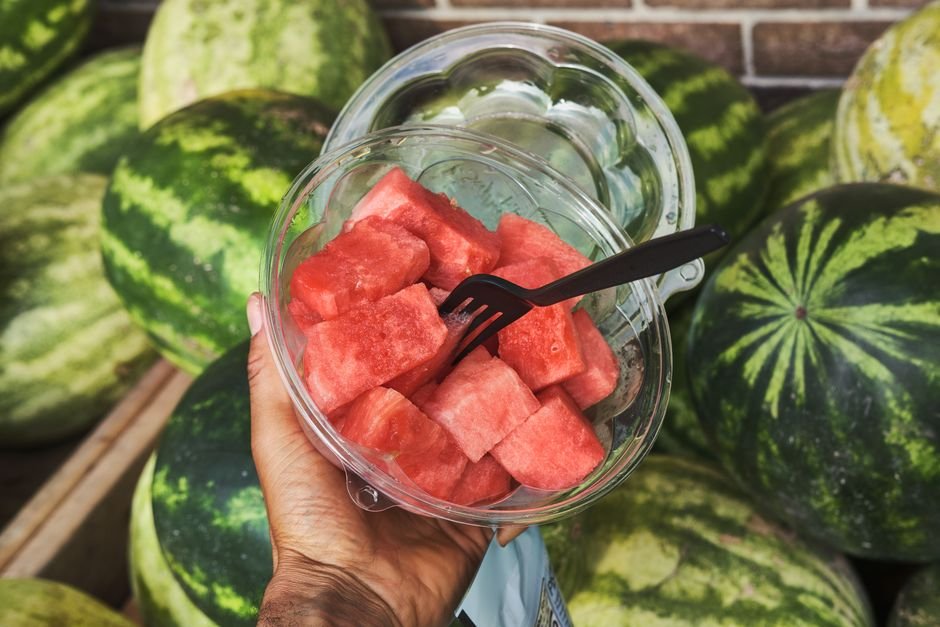
Watermelon by Preparation: Whole Vs. Cut
The form in which you eat watermelon—whether as balls, wedges, or diced—does not change the calories per serving size. A cup of balls (154 g) and a cup of diced (152 g) both contain 46 calories, because you’re eating nearly the same weight of the same food. Cutting it smaller makes it feel like more, but the nutrition is identical.
If you’re measuring by weight rather than visual portion size, this becomes irrelevant. But if you’re scooping watermelon balls into a bowl, cutting it into pieces may encourage you to eat more volume without realizing it—which, given the low calorie density, is not a concern nutritionally.
Sugar Content: Natural Carbs, Not Added
A 10-ball serving (122 g) contains 7.6 g of sugar, all of it naturally present in the fruit. There are no added sugars. The total carbohydrate load is 9.2 g per serving, with 0.5 g of dietary fiber, leaving a net carb count of 8.7 g if you track that way.
A single wedge (286 g) contains 22 g of carbohydrate and 15 g of sugar, which can add up if eaten in large quantities.
Vitamins and Minerals in Watermelon
Watermelon provides modest amounts of several nutrients.
These amounts are not generous compared to denser foods, but they are present. The vitamin C content, in particular, is noticeable enough to make watermelon a minor contributor to your daily intake if you eat it regularly.
How Watermelon Compares
Per 100 g, next to similar foods in our database:
| Food (100 g) | Calories | Protein | Carbs | Fat |
|---|---|---|---|---|
| Watermelon | 30 | 0.6 g | 7.6 g | 0.2 g |
| Grapefruit Pink Raw | 30 | 0.6 g | 7.5 g | 0.1 g |
| Persian Lime | 30 | 0.7 g | 11 g | 0.2 g |
| Tomatillo | 32 | 1 g | 5.8 g | 1 g |
| Collard Greens | 32 | 3 g | 5.4 g | 0.6 g |
| Guava Juice | 33 | 0 g | 7.8 g | 0 g |
Watermelon FAQ
How many calories are in a whole watermelon?
A medium watermelon measuring 15 inches long by 7½ inches in diameter (4518 g) contains approximately 1355 calories. However, most people eat a fraction of a whole melon at one time—a single wedge is about 86 calories.
Does watermelon have more sugar than other fruits?
Per 100 g, watermelon has 6.2 g of sugar. The data provided does not include comparable figures for other fruits, so a precise comparison cannot be made. However, because watermelon is so water-heavy, a typical serving size often contains less total sugar by weight than denser fruits, even though the sugar concentration may vary.
Is watermelon good for weight loss?
Watermelon's low calorie density (30 calories per 100 g) and high water content make it a food you can eat in large volume without consuming many calories. Whether this supports your weight-loss goals depends on your overall eating patterns and calorie needs.
Can I eat watermelon on a low-carb diet?
A 10-ball serving contains 9.2 g of carbohydrate, and a cup contains 12 g. Whether this fits a low-carb approach depends on your daily carb limit; some low-carb plans allow fruit in moderation, while others restrict it more strictly.
The Bottom Line
Watermelon is one of the lowest-calorie fruits due to its water content, delivering satisfying portions for minimal calorie impact.