Calories in rhubarb: 26 calories per 1 cup (122 g)
- 1.1 g protein
- 5.5 g carbs
- 0.2 g fat
- 2.2 g fiber
Source: USDA FoodData Central · 21 kcal per 100 g
One cup of diced raw rhubarb (122 g) has 26 calories in rhubarb, with 5.5 g of carbohydrate, 2.2 g of fiber, and 1.1 g of protein. Most of those calories come from carbohydrate, and the amount of fat is negligible.
What stands out is how little sugar the raw stalks contain. Total sugars are 1.3 g per cup, so the tartness is natural rather than a sign of a sugar-heavy food. Rhubarb is also a good source of vitamin K, at 30% of the Daily Value per cup.
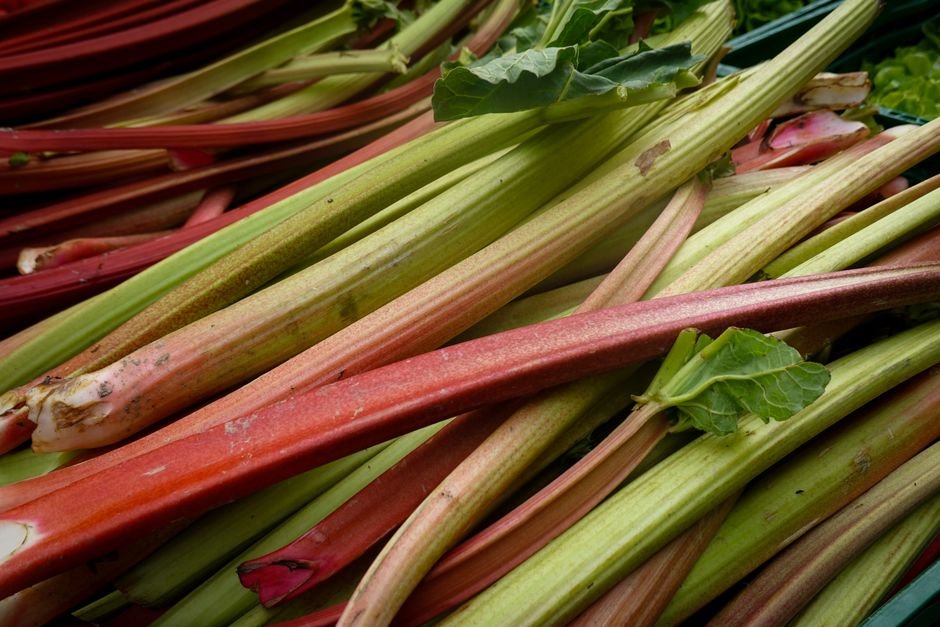
Calories in Rhubarb by Serving Size
Calories in rhubarb for each common serving, with protein, carbs and fat:
| Serving | Calories | Protein | Carbs | Fat |
|---|---|---|---|---|
| 1 cup, diced (122 g) | 26 | 1.1 g | 5.5 g | 0.2 g |
| 1 stalk (51 g) | 11 | 0.5 g | 2.3 g | 0.1 g |
| 100 g | 21 | 0.9 g | 4.5 g | 0.2 g |
| 1 oz | 6 | 0.3 g | 1.3 g | 0.1 g |
Rhubarb Nutrition Facts
Calories in rhubarb and the full nutrition facts per 1 cup, diced (122 g):
| Nutrient | Amount | % Daily Value* |
|---|---|---|
| Calories | 26 kcal | |
| Protein | 1.1 g | 2% |
| Total Fat | 0.2 g | 0% |
| Saturated Fat | 0.1 g | 0% |
| Cholesterol | 0 mg | 0% |
| Sodium | 4.9 mg | 0% |
| Total Carbohydrate | 5.5 g | 2% |
| Dietary Fiber | 2.2 g | 8% |
| Total Sugars | 1.3 g | |
| Calcium | 105 mg | 8% |
| Iron | 0.3 mg | 1% |
| Potassium | 351 mg | 7% |
| Magnesium | 15 mg | 3% |
| Zinc | 0.1 mg | 1% |
| Phosphorus | 17 mg | 1% |
| Selenium | 1.3 mcg | 2% |
| Vitamin A (RAE) | 6.1 mcg | 1% |
| Vitamin C | 9.8 mg | 11% |
| Vitamin E | 0.3 mg | 2% |
| Vitamin K | 36 mcg | 30% |
| Thiamin (B1) | 0 mg | 2% |
| Riboflavin (B2) | 0 mg | 3% |
| Niacin (B3) | 0.4 mg | 2% |
| Vitamin B6 | 0 mg | 2% |
| Folate (DFE) | 8.5 mcg | 2% |
Where the calories come from: 77% carbs · 15% protein · 8% fat
*Percent Daily Values are based on a 2,000-calorie diet (FDA reference values). Source: USDA FoodData Central — Rhubarb, raw (FDC ID 167758, SR Legacy, published 4/1/2019). Values for other servings are calculated from the per-100 g data.
How Many Calories Are in a Stalk of Rhubarb?
A single raw stalk weighing 51 g has 11 calories, with 2.3 g of carbohydrate and 0.5 g of protein. Because stalks vary in thickness and length, weighing them is more reliable than counting stalks.
Per 100 g, raw rhubarb has 21 calories, 4.5 g of carbohydrate, and 1.8 g of fiber. A 1 oz (28 g) portion has only 6 calories. If you are logging rhubarb, the 1 cup diced serving (122 g) and the 100 g figure are the two most useful references.

Is Rhubarb Low in Sugar Compared With Other Fruit?
Yes, raw rhubarb is very low in sugar. The USDA record lists just 1.1 g of total sugars per 100 g, and 1.3 g per cup. Most of the carbohydrate is fiber and other plant carbohydrate rather than sugar.
The sourness is the reason most recipes add sugar. Any sweetener you add to a pie, compote, or crisp will likely account for more calories than the rhubarb itself. Sugar content of the finished dish depends on how much you add, so check the recipe rather than the raw numbers.
What Nutrients Does Rhubarb Provide?
Vitamin K is the headline nutrient. One cup provides 36 mcg, or 30% of the Daily Value, and 100 g provides 29 mcg. Potassium is also notable at 351 mg per cup (7% DV), along with calcium at 105 mg (8% DV) and vitamin C at 9.8 mg (11% DV).
- Fat: 0.2 g per cup, with almost no saturated fat
- Sodium: 4.9 mg per cup
- Alcohol: none
Rhubarb is not a meaningful source of B vitamins, vitamin B12, or vitamin D according to this record.
Does Cooking Rhubarb Change the Calories?
The numbers on this page are for raw rhubarb only. Once you cook it with sugar, butter, or flour, the calorie count of the dish changes, mostly because of the added ingredients rather than the rhubarb. Stewed rhubarb with no added sugar stays close to the raw values, but the USDA data here does not cover cooked preparations, so treat it as a rough guide.
When you make a dessert, weigh the rhubarb and the added sugar separately before cooking. This gives you a more accurate total than estimating from a finished serving.
How Rhubarb Compares
Per 100 g, next to similar foods in our database:
| Food (100 g) | Calories | Protein | Carbs | Fat |
|---|---|---|---|---|
| Rhubarb | 21 | 0.9 g | 4.5 g | 0.2 g |
| Lemon Juice | 22 | 0.4 g | 6.9 g | 0.2 g |
| Watermelon Rind | 19 | 0.5 g | 4.2 g | 0.1 g |
| Lime Juice | 25 | 0.4 g | 8.4 g | 0.1 g |
| Mustard Greens | 27 | 2.9 g | 4.7 g | 0.4 g |
| Celery Root | 15 | 0.5 g | 3.3 g | 0.2 g |
Rhubarb FAQ
How many calories are in 100 g of rhubarb?
Raw rhubarb has 21 calories per 100 g, with 4.5 g of carbohydrate, 1.8 g of fiber, and 0.9 g of protein. It has almost no fat, at 0.2 g.
Is rhubarb high in potassium?
A cup of diced raw rhubarb (122 g) has 351 mg of potassium, which is 7% of the Daily Value. Per 100 g, it has 288 mg.
How many calories are in one stalk of rhubarb?
One raw stalk weighing 51 g has about 11 calories. Stalk size varies, so weigh it if you need an exact number.
The Bottom Line
Raw rhubarb is low in calories and sugar, with a cup of diced stalks at 26 calories and 1.3 g of sugar. The calories you add will mostly come from the sugar and other ingredients in a recipe.Note: Figures are for raw rhubarb from USDA FoodData Central.