Calories in mango: 202 calories per 1 fruit without refuse (336 g)
- 2.8 g protein
- 50 g carbs
- 1.3 g fat
- 5.4 g fiber
Source: USDA FoodData Central · 60 kcal per 100 g
One whole mango (336 g, the USDA “1 fruit without refuse” serving) has 202 calories in mango form, with 50 g of carbohydrate and 2.8 g of protein. Per 100 g, raw mango has 60 calories, so the calories in mango depend mostly on how much you eat.
What stands out is how little fat the fruit contains. Only 1.3 g of fat per whole fruit, and about 90% of its calories come from carbohydrate, mostly natural sugars. The same fruit supplies 136% of the Daily Value for vitamin C, which is the nutrient to look at first.
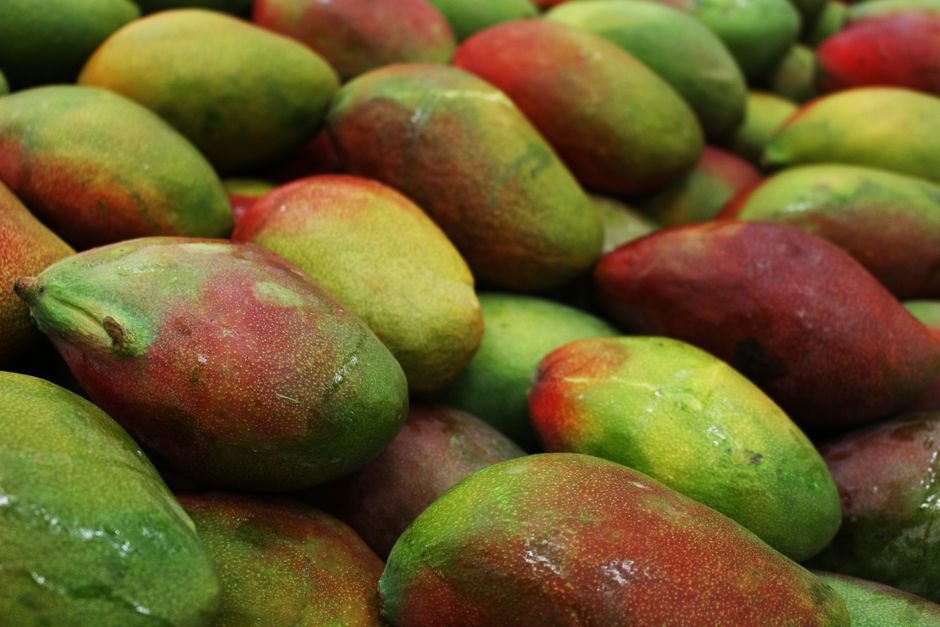
Calories in Mango by Serving Size
Calories in mango for each common serving, with protein, carbs and fat:
| Serving | Calories | Protein | Carbs | Fat |
|---|---|---|---|---|
| 1 fruit without refuse (336 g) | 202 | 2.8 g | 50 g | 1.3 g |
| 1 cup pieces (165 g) | 99 | 1.4 g | 25 g | 0.6 g |
| 100 g | 60 | 0.8 g | 15 g | 0.4 g |
| 1 oz | 17 | 0.2 g | 4.2 g | 0.1 g |
Mango Nutrition Facts
Calories in mango and the full nutrition facts per 1 fruit without refuse (336 g):
| Nutrient | Amount | % Daily Value* |
|---|---|---|
| Calories | 202 kcal | |
| Protein | 2.8 g | 6% |
| Total Fat | 1.3 g | 2% |
| Saturated Fat | 0.3 g | 2% |
| Cholesterol | 0 mg | 0% |
| Sodium | 3.4 mg | 0% |
| Total Carbohydrate | 50 g | 18% |
| Dietary Fiber | 5.4 g | 19% |
| Total Sugars | 46 g | |
| Calcium | 37 mg | 3% |
| Iron | 0.5 mg | 3% |
| Potassium | 564 mg | 12% |
| Magnesium | 34 mg | 8% |
| Zinc | 0.3 mg | 3% |
| Phosphorus | 47 mg | 4% |
| Selenium | 2 mcg | 4% |
| Vitamin A (RAE) | 181 mcg | 20% |
| Vitamin C | 122 mg | 136% |
| Vitamin E | 3 mg | 20% |
| Vitamin K | 14 mcg | 12% |
| Thiamin (B1) | 0.1 mg | 8% |
| Riboflavin (B2) | 0.1 mg | 10% |
| Niacin (B3) | 2.2 mg | 14% |
| Vitamin B6 | 0.4 mg | 24% |
| Folate (DFE) | 144 mcg | 36% |
Where the calories come from: 90% carbs · 5% protein · 5% fat
*Percent Daily Values are based on a 2,000-calorie diet (FDA reference values). Source: USDA FoodData Central — Mangos, raw (FDC ID 169910, SR Legacy, published 4/1/2019). Values for other servings are calculated from the per-100 g data.
How Much Sugar Is in a Mango?
A whole 336 g mango contains 46 g of total sugars and 5.4 g of fiber, so most of the carbohydrate is sugar rather than starch. Per 100 g, the fruit has 14 g of total sugars. Those sugars are naturally present in the fruit, and the USDA record does not list any added sugar.
The portion size matters more than the fruit type. A 1 cup serving (165 g) gives 25 g of carbohydrate, and a 1 oz serving (28 g) gives 4.2 g. If you are counting carbs, weigh the piece or use the gram amount rather than estimating by eye.

Mango Nutrition: What You Get Beyond Calories
The whole fruit provides 181 mcg of vitamin A (RAE), 14 mcg of vitamin K, 144 mcg of folate, and 564 mg of potassium, along with 136% DV of vitamin C. Those figures are from the DATA sheet for one whole fruit. A 1 cup serving gives smaller amounts, so the whole-fruit numbers are the ones to use when you want the full picture.
It contains no vitamin B12 and no vitamin D.
Ripe, Green, or Dried: Does Preparation Change the Numbers?
The numbers on this page are for raw mango as sold, with no cooking or added ingredients. Mango is often eaten in other forms, and those can be very different. Dried mango concentrates the sugars and calories into a much smaller weight, so a handful of dried pieces can carry far more sugar than a fresh serving of the same weight. Canned mango in syrup adds sugar that is not part of the raw fruit. Check the label on any processed product, because the USDA raw numbers do not apply to it.
Ripeness changes the flavor and texture, but this page does not have ripe-versus-unripe numbers to compare, so no specific claim is made here.
Who Should Pay Attention to Mango Portions?
A whole fruit carries 50 g of carbohydrate, while a 1 oz serving carries 4.2 g. Many people find that splitting one mango over several servings is easier to fit into a meal plan than eating a whole fruit at once.
Mango contains very little sodium and no alcohol, so it is a simple fruit to include if you are watching salt intake.
How Mango Compares
Per 100 g, next to similar foods in our database:
| Food (100 g) | Calories | Protein | Carbs | Fat |
|---|---|---|---|---|
| Mango | 60 | 0.8 g | 15 g | 0.4 g |
| Guanabana | 59 | 0.1 g | 15 g | 0.2 g |
| Kiwifruit Green | 58 | 1.1 g | 14 g | 0.4 g |
| Black Currant | 63 | 1.4 g | 15 g | 0.4 g |
| Grape Juice | 66 | 0.2 g | 16 g | 0.3 g |
| Soursop | 66 | 1 g | 17 g | 0.3 g |
Mango FAQ
How many calories are in a 100 g serving of mango?
A 100 g serving of raw mango has 60 calories, 0.8 g of protein, 0.4 g of fat, and 15 g of carbohydrate. These values come from the USDA record for raw mangos.
Is mango high in fat?
No. A whole 336 g mango has only 1.3 g of total fat, and 0.1 g per 28 g ounce serving… more precisely, the 1 oz serving has 0.1 g of fat. Most of the fruit's calories come from carbohydrate.
Does mango have a lot of potassium?
A whole mango provides 564 mg of potassium, which is 12% of the Daily Value. A 100 g serving provides 168 mg.
The Bottom Line
A whole mango has 202 calories, mostly from natural sugar, and is an excellent source of vitamin C (136% DV). Measure portions by weight if you are counting carbs, and check labels on dried or canned mango since those change the numbers.