Calories in mung bean noodles: 160 calories per 1 cup (190 g)
- 0.1 g protein
- 39 g carbs
- 0 g fat
Source: USDA FoodData Central · 84 kcal per 100 g
One cup of cooked mung bean noodles (190 g) has 160 calories in mung bean noodles, with 39 g of carbohydrate, 0.1 g of protein and no fat. Nearly all of the calories come from carbohydrate.
What stands out is how little else is in them. Per 100 g, the noodles provide 84 calories, so the cup measurement is the one to use if you are reading the label on a bowl of noodles.

Calories in Mung Bean Noodles by Serving Size
Calories in mung bean noodles for each common serving, with protein, carbs and fat:
| Serving | Calories | Protein | Carbs | Fat |
|---|---|---|---|---|
| 1 cup, cooked (190 g) | 160 | 0.1 g | 39 g | 0 g |
| 100 g | 84 | 0 g | 21 g | 0 g |
| 1 oz | 24 | 0 g | 5.9 g | 0 g |
Mung Bean Noodles Nutrition Facts
Calories in mung bean noodles and the full nutrition facts per 1 cup, cooked (190 g):
| Nutrient | Amount | % Daily Value* |
|---|---|---|
| Calories | 160 kcal | |
| Protein | 0.1 g | 0% |
| Total Fat | 0 g | 0% |
| Saturated Fat | 0 g | 0% |
| Cholesterol | 0 mg | 0% |
| Sodium | 9.5 mg | 0% |
| Total Carbohydrate | 39 g | 14% |
| Dietary Fiber | 0.2 g | 1% |
| Total Sugars | 0 g | |
| Calcium | 13 mg | 1% |
| Iron | 0.8 mg | 5% |
| Potassium | 3.8 mg | 0% |
| Magnesium | 1.9 mg | 0% |
| Zinc | 0.2 mg | 2% |
| Phosphorus | 13 mg | 1% |
| Selenium | 3.6 mcg | 7% |
| Vitamin E | 0.1 mg | 0% |
| Thiamin (B1) | 0 mg | 4% |
| Niacin (B3) | 0.1 mg | 0% |
| Vitamin B6 | 0 mg | 1% |
Where the calories come from: 100% carbs · 0% protein · 0% fat
*Percent Daily Values are based on a 2,000-calorie diet (FDA reference values). Source: USDA FoodData Central — Long rice noodles, made from mung beans, cooked (FDC ID 2708355, Survey (FNDDS), published 10/31/2024). Values for other servings are calculated from the per-100 g data.
Mung Bean Noodles Calories by Serving
The USDA record for these noodles is for the cooked product, so every number here assumes they have been boiled or soaked to the ready-to-eat stage. A 1 oz (28 g) portion of cooked noodles has 24 calories and 5.9 g of carbohydrate. A full cup, at 190 g, has 160 calories and 39 g of carbohydrate.
Because cooked noodles are mostly water, weight and volume do not line up with dry noodles. The 190 g cup weighs much more than the 28 g ounce, so if you weigh your portion, use the gram figures rather than estimating from a serving that looks similar.
Are Mung Bean Noodles Low in Carbs?
Not by most low-carb standards. Carbohydrate supplies 100% of the calories in these noodles, and a 1 cup cooked portion provides 39 g of carbohydrate with only 0.2 g of fiber. Fiber is so low that it barely changes the net carb count.
If you are tracking carbs, the noodles behave like other starchy noodles in that respect: the carbohydrate is the main thing you are eating. Pairing them with protein or vegetables changes the meal, but the noodles themselves add little beyond starch and calories.
What Mung Bean Noodles Do Not Provide
The record lists almost no vitamins or minerals. Most vitamins are at 0 per cup, including vitamin C, vitamin B12, folate and vitamin K. The thiamin figure in the record is rounded to 0 mg per gram, but the per-cup figure is listed at 4% of the daily value, so a cup contributes a small amount of that one B vitamin.
- Iron: 0.8 mg per cup (5% DV)
- Selenium: 3.6 mcg per cup (7% DV)
- Zinc: 0.2 mg per cup (2% DV)
- Sodium: 9.5 mg per cup (0% DV)
Sodium is very low in the plain noodles. Any sodium in a finished dish will come mostly from the sauce, broth or seasoning added during cooking, not from the noodles.
Watch the Sauce and Add-Ins
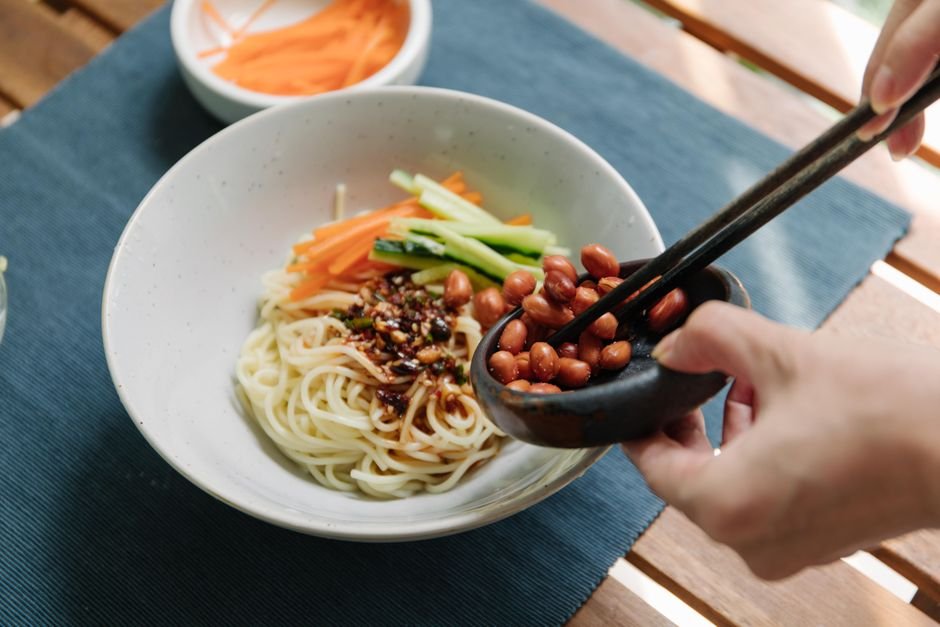
Plain cooked noodles are close to a pure carbohydrate food, so most of what changes the nutrition is what goes on top. Oil, peanut sauce, fish sauce, sugar-based dressings and fried toppings all add fat, sugar or sodium that the noodles do not carry on their own. Those add-ins can easily outweigh the noodles in calories.
If you want more protein or fiber from the meal, the noodles will not supply it. Adding a protein source or vegetables to the bowl is the way to change the balance. The record does not cover those foods, so check their own labels for their numbers.
How Mung Bean Noodles Compares
Per 100 g, next to similar foods in our database:
| Food (100 g) | Calories | Protein | Carbs | Fat |
|---|---|---|---|---|
| Mung Bean Noodles | 84 | 0 g | 21 g | 0 g |
| Chickpea Sprouts Cooked | 81 | 8.5 g | 6.5 g | 4.5 g |
| Pinto Beans Refried | 87 | 4.1 g | 13 g | 1.9 g |
| Navy Bean Sprouts | 78 | 7.1 g | 15 g | 0.8 g |
| Lima Bean Sprouts | 92 | 4.3 g | 19 g | 0.5 g |
| Black Bean Pasta | 94 | 3.1 g | 13 g | 3.9 g |
Mung Bean Noodles FAQ
How many calories are in 100 grams of mung bean noodles?
Per 100 g of cooked mung bean noodles, the USDA record lists 84 calories, 21 g of carbohydrate and 0 g of fat. Per cup (190 g), the total is 160 calories.
Do mung bean noodles have any fat or sugar?
The USDA record lists 0 g of total fat and 0 g of total sugars for both the 100 g and cup servings.
How much fiber is in a cup of mung bean noodles?
A 1 cup cooked serving has 0.2 g of dietary fiber, which is 1% of the daily value. The noodles are not a meaningful source of fiber.
Are mung bean noodles a good source of protein?
No. A 1 cup cooked serving has 0.1 g of protein, which is 0% of the daily value. You would need to add a protein food to the dish.
The Bottom Line
One cup of cooked mung bean noodles has 160 calories, almost all from carbohydrate, with little fiber, protein or micronutrients. Keep the sauce and add-ins in mind, because they will change the meal's calories, sodium and sugar more than the noodles will.