Calories in pork ham hock: 375 calories per 1 cup (140 g)
- 20 g protein
- 1.5 g carbs
- 32 g fat
Source: USDA FoodData Central · 268 kcal per 100 g
One cup (140 g) of pork ham hock has 375 calories in the USDA record “Pork, ham hocks,” which is the lead serving for this page. A single ham hock (85 g) comes to 228 calories, and 100 g comes to 268 calories. The cup serving also carries 32 g of fat, 20 g of protein, and 1,456 mg of sodium.
Calories in pork ham hock come almost entirely from fat and protein. Only about 2% of the calories come from carbohydrate, and the record lists 0 g of fiber. The sodium is the figure that stands out most: one cup provides 63% of the Daily Value.
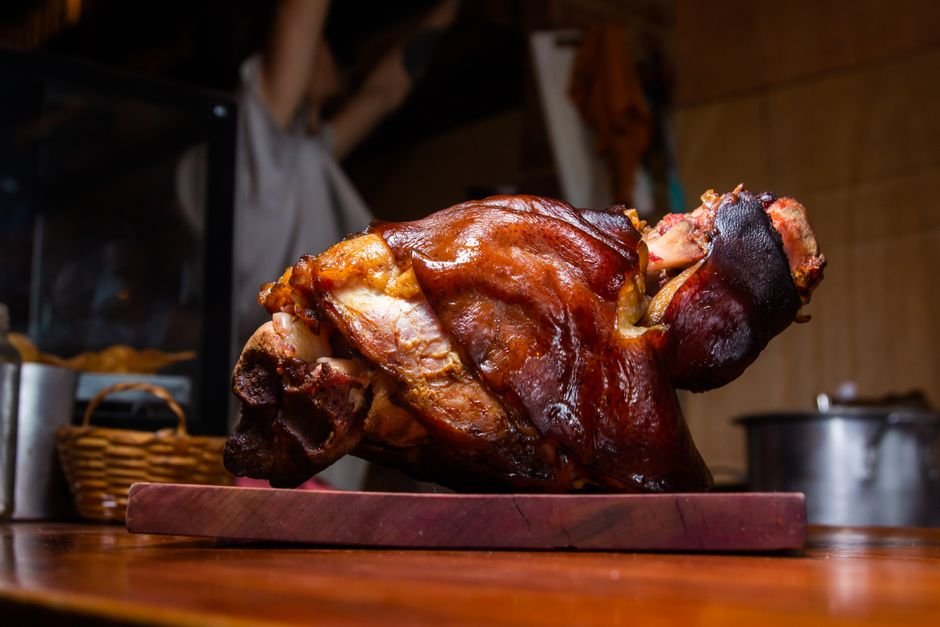
Calories in Pork Ham Hock by Serving Size
Calories in pork ham hock for each common serving, with protein, carbs and fat:
| Serving | Calories | Protein | Carbs | Fat |
|---|---|---|---|---|
| 1 cup (140 g) | 375 | 20 g | 1.5 g | 32 g |
| 1 ham hock (85 g) | 228 | 12 g | 0.9 g | 19 g |
| 100 g | 268 | 15 g | 1.1 g | 23 g |
| 1 oz | 76 | 4.1 g | 0.3 g | 6.5 g |
Pork Ham Hock Nutrition Facts
Calories in pork ham hock and the full nutrition facts per 1 cup (140 g):
| Nutrient | Amount | % Daily Value* |
|---|---|---|
| Calories | 375 kcal | |
| Protein | 20 g | 41% |
| Total Fat | 32 g | 41% |
| Saturated Fat | 11 g | 57% |
| Cholesterol | 84 mg | 28% |
| Sodium | 1456 mg | 63% |
| Total Carbohydrate | 1.5 g | 1% |
| Dietary Fiber | 0 g | 0% |
| Total Sugars | 1.5 g | |
| Vitamin D | 1.4 mcg | 7% |
| Calcium | 18 mg | 1% |
| Iron | 1 mg | 6% |
| Potassium | 360 mg | 8% |
| Magnesium | 22 mg | 5% |
| Zinc | 2.1 mg | 19% |
| Phosphorus | 309 mg | 25% |
| Selenium | 38 mcg | 69% |
| Vitamin A (RAE) | 22 mcg | 2% |
| Vitamin E | 0.2 mg | 1% |
| Thiamin (B1) | 0.4 mg | 37% |
| Riboflavin (B2) | 0.3 mg | 20% |
| Niacin (B3) | 7 mg | 43% |
| Vitamin B6 | 0.5 mg | 27% |
| Folate (DFE) | 1.4 mcg | 0% |
| Vitamin B12 | 0.6 mcg | 26% |
Where the calories come from: 77% fat · 22% protein · 2% carbs
*Percent Daily Values are based on a 2,000-calorie diet (FDA reference values). Source: USDA FoodData Central — Pork, ham hocks (FDC ID 2705900, Survey (FNDDS), published 10/31/2024). Values for other servings are calculated from the per-100 g data.
Why Is Pork Ham Hock So High in Sodium?
The record shows 1,040 mg of sodium per 100 g, and the cup serving brings that to 1,456 mg, or 63% of the Daily Value. Hocks are typically cured or smoked before they reach the store, and that process adds a lot of salt. The USDA record describes the food as it is listed, so the sodium figure reflects that the meat is seasoned this way rather than fresh.
If sodium is a concern for you, check the label on the package you buy, since cured and smoked products vary. Cooking the hock in a large pot of water and then discarding that liquid is not something the data covers, so do not assume it removes salt. Using the broth in soups or beans will carry much of that sodium into the dish.
The Dietary Guidelines for Americans advise limiting sodium, so a single cup can take up most of a day’s allowance on its own.
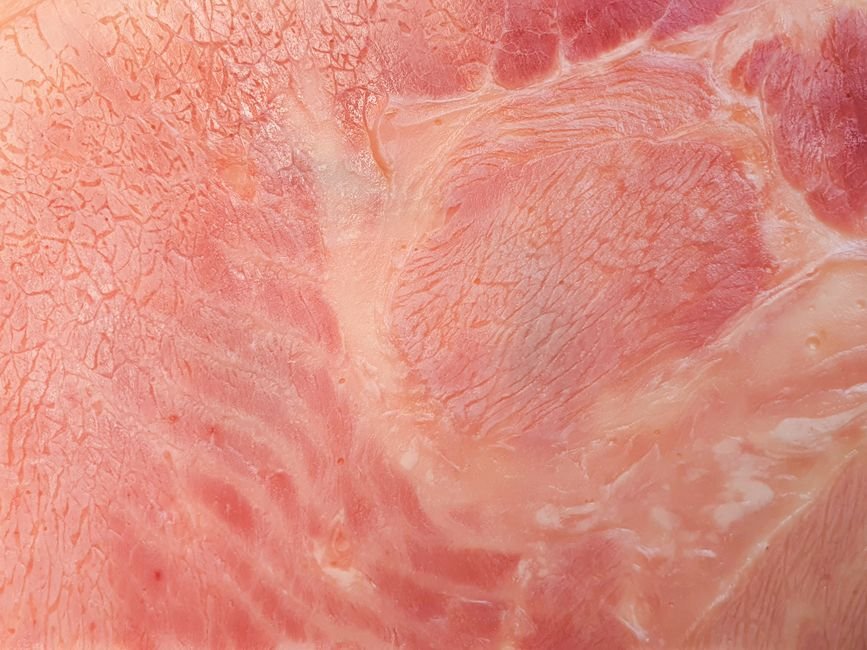
Ham Hock Fat, Saturated Fat, and Cholesterol
Most of the calories are from fat, at 77% of the total, so this is a rich, fatty cut.
A single ham hock (85 g) has 19 g of fat and 228 calories, which is a smaller portion if you are not sure how much you want. The fat is a large part of what makes the meat flavorful and tender after long cooking, but it is also the main reason the calorie count is high.
- 1 cup (140 g): 375 kcal, 32 g fat
- 1 ham hock (85 g): 228 kcal, 19 g fat
- 1 oz (28 g): 76 kcal, 6.5 g fat
What Nutrients Does Ham Hock Provide?
Ham hock is a useful source of several B vitamins and minerals in this record. One cup provides 37% of the Daily Value for thiamin (B1), 43% for niacin (B3), 27% for vitamin B6, and 26% for vitamin B12. It also supplies 69% of the Daily Value for selenium and 19% for zinc.
The record lists no vitamin C and no vitamin K, and it shows almost no fiber or carbohydrate. The protein is 20 g per cup, which is 41% of the Daily Value. Those numbers describe the food itself, and the nutrient content of the hock you buy will depend on how it was cured and cooked.
How Pork Ham Hock Compares
Per 100 g, next to similar foods in our database:
| Food (100 g) | Calories | Protein | Carbs | Fat |
|---|---|---|---|---|
| Pork Ham Hock | 268 | 15 g | 1.1 g | 23 g |
| Lamb Ground | 283 | 25 g | 0 g | 20 g |
| Beef Tongue | 284 | 19 g | 0 g | 22 g |
| Beef Stew Meat | 251 | 28 g | 0 g | 15 g |
| Beef Brisket | 251 | 18 g | 0.5 g | 19 g |
| Lamb Rib | 235 | 28 g | 0 g | 13 g |
Pork Ham Hock FAQ
How many calories are in a ham hock?
A single ham hock weighing 85 g has 228 calories, with 19 g of fat and 12 g of protein according to the USDA record. The 100 g figure is 268 calories.
Does pork ham hock have any carbs?
Very few. The record shows 1.5 g of total carbohydrate per cup (140 g), all of it counted as sugar, and 0 g of fiber.
How much protein is in a cup of pork ham hock?
One cup (140 g) provides 20 g of protein, which is 41% of the Daily Value. A 100 g serving has 15 g.
The Bottom Line
One cup of pork ham hock is 375 calories, mostly from fat, with 1,456 mg of sodium. If you eat it, a smaller portion such as one ham hock (228 calories) keeps the fat and salt more modest.