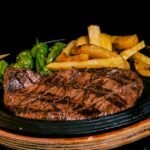
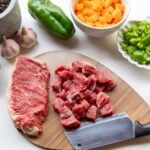
Calories in beef brisket: 803 calories per 1 piece (320 g)
- 58 g protein
- 1.5 g carbs
- 61 g fat
Source: USDA FoodData Central · 251 kcal per 100 g
One 320 g cooked piece of beef brisket (excluding refuse) has 803 kcal in the USDA record, with 58 g of protein and 61 g of fat. Per 100 g cooked, the figure is 251 kcal, so the calorie count depends almost entirely on how much meat and fat you eat.
What stands out is the macro split: about 70% of the calories come from fat and 30% from protein, with almost no carbohydrate. The sodium is also high, at 3,114 mg in that same lead serving, which is 135% of the Daily Value.
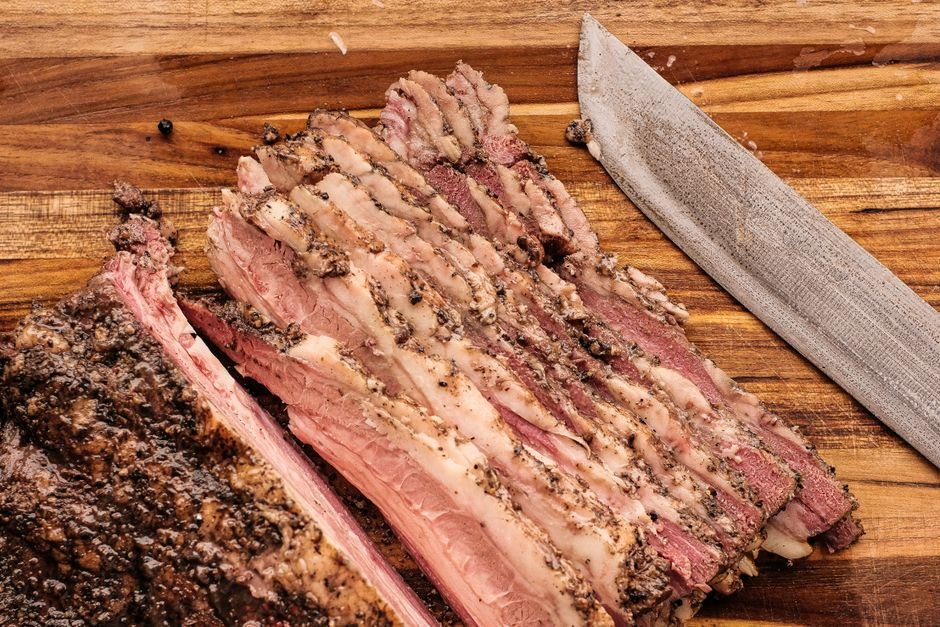
Calories in Beef Brisket by Serving Size
Calories in beef brisket for each common serving, with protein, carbs and fat:
| Serving | Calories | Protein | Carbs | Fat |
|---|---|---|---|---|
| 1 piece, cooked, excluding refuse (yield from 1 lb raw meat with refuse) (320 g) | 803 | 58 g | 1.5 g | 61 g |
| 3 oz | 213 | 15 g | 0.4 g | 16 g |
| 100 g | 251 | 18 g | 0.5 g | 19 g |
| 1 oz | 71 | 5.2 g | 0.1 g | 5.4 g |
Beef Brisket Nutrition Facts
Calories in beef brisket and the full nutrition facts per 1 piece, cooked, excluding refuse (yield from 1 lb raw meat with refuse) (320 g):
| Nutrient | Amount | % Daily Value* |
|---|---|---|
| Calories | 803 kcal | |
| Protein | 58 g | 116% |
| Total Fat | 61 g | 78% |
| Saturated Fat | 20 g | 101% |
| Cholesterol | 314 mg | 105% |
| Sodium | 3114 mg | 135% |
| Total Carbohydrate | 1.5 g | 1% |
| Dietary Fiber | 0 g | 0% |
| Total Sugars | 0 g | |
| Vitamin D | 0.3 mcg | 2% |
| Calcium | 26 mg | 2% |
| Iron | 6 mg | 33% |
| Potassium | 464 mg | 10% |
| Magnesium | 38 mg | 9% |
| Zinc | 15 mg | 133% |
| Phosphorus | 400 mg | 32% |
| Selenium | 105 mcg | 191% |
| Vitamin E | 0.5 mg | 3% |
| Vitamin K | 4.8 mcg | 4% |
| Thiamin (B1) | 0.1 mg | 7% |
| Riboflavin (B2) | 0.5 mg | 42% |
| Niacin (B3) | 9.7 mg | 61% |
| Vitamin B6 | 0.7 mg | 43% |
| Folate (DFE) | 19 mcg | 5% |
| Vitamin B12 | 5.2 mcg | 217% |
Where the calories come from: 70% fat · 30% protein · 1% carbs
*Percent Daily Values are based on a 2,000-calorie diet (FDA reference values). Source: USDA FoodData Central — Beef, cured, corned beef, brisket, cooked (FDC ID 170200, SR Legacy, published 4/1/2019). Values for other servings are calculated from the per-100 g data.
How Many Calories Are in a Slice of Brisket?
The USDA record used here is for cooked corned beef brisket, so these numbers describe brisket that has been cured and cooked. Values per common amount are: 3 oz (85 g) at 213 kcal, 1 oz (28 g) at 71 kcal, and 100 g at 251 kcal. The 3 oz figure gives 15 g of protein and 16 g of fat.
Because brisket is sold in large cuts and portions vary, the lead serving of 1 piece (320 g) is useful as a reference for a whole piece. It provides 803 kcal, 58 g of protein, 1.5 g of carbohydrate and 61 g of fat. Weigh your portion when you can, since a trimmed slice and a fat-heavy slice can differ a lot.

Why Brisket Is High in Fat and Sodium
Fat supplies roughly 70% of brisket’s calories in this record. Saturated fat is 6.3 g per 100 g, and the lead serving has 20 g, which is 101% of the Daily Value.
Sodium is the other number that stands out. The record shows 973 mg per 100 g, and the 320 g piece has 3,114 mg. The curing process is the reason corned beef is salty. If you are watching sodium, a smaller portion or a lower-sodium product choice will matter more than any other change.
What Brisket Provides Besides Calories
Brisket is nearly free of carbohydrate and fiber, with 0.5 g of carbohydrate and 0 g of fiber per 100 g. Within this record, the nutrients with the largest percent Daily Values in the lead serving are zinc (133%), selenium (191%) and vitamin B12 (217%). Niacin (61%), riboflavin (42%) and vitamin B6 (43%) are also present in meaningful amounts.
Iron is 6 mg in the lead serving, which is 33% of the Daily Value. Potassium and calcium are modest, at 464 mg and 26 mg respectively.
Fitting Brisket Into a Low-Carb or High-Protein Plan
Because brisket has almost no carbohydrate, it fits easily into low-carb eating on its own. The protein is substantial, but the high fat content means the calorie count rises quickly with each serving. Many people pair it with vegetables that have little added fat or sugar, which keeps the meal more balanced.
If you are trying to limit saturated fat or sodium, the numbers above are the place to start. Compare the per-gram values on the label of the specific product you buy, since cured and packaged versions can differ from this USDA record.
How Beef Brisket Compares
Per 100 g, next to similar foods in our database:
| Food (100 g) | Calories | Protein | Carbs | Fat |
|---|---|---|---|---|
| Beef Brisket | 251 | 18 g | 0.5 g | 19 g |
| Beef Stew Meat | 251 | 28 g | 0 g | 15 g |
| Lamb Rib | 235 | 28 g | 0 g | 13 g |
| Lamb Chop Rib | 234 | 32 g | 0 g | 12 g |
| Pork Ham Hock | 268 | 15 g | 1.1 g | 23 g |
| Veal Loin | 226 | 34 g | 0 g | 9.2 g |
Beef Brisket FAQ
Is the calorie count different for raw brisket?
This page uses only the USDA record for cooked, cured corned beef brisket, so the numbers here apply to cooked meat. Raw brisket has different values, and cooking changes the weight as water is lost, so the same piece can have different per-gram numbers depending on its state.
How much protein is in brisket?
Per 100 g cooked, the record shows 18 g of protein. The 3 oz (85 g) serving has 15 g, and the 320 g piece has 58 g.
The Bottom Line
Brisket is very high in calories, fat and sodium per serving, so portion size matters more than with leaner meats. Its protein, zinc, selenium and B12 are the main nutritional strengths.