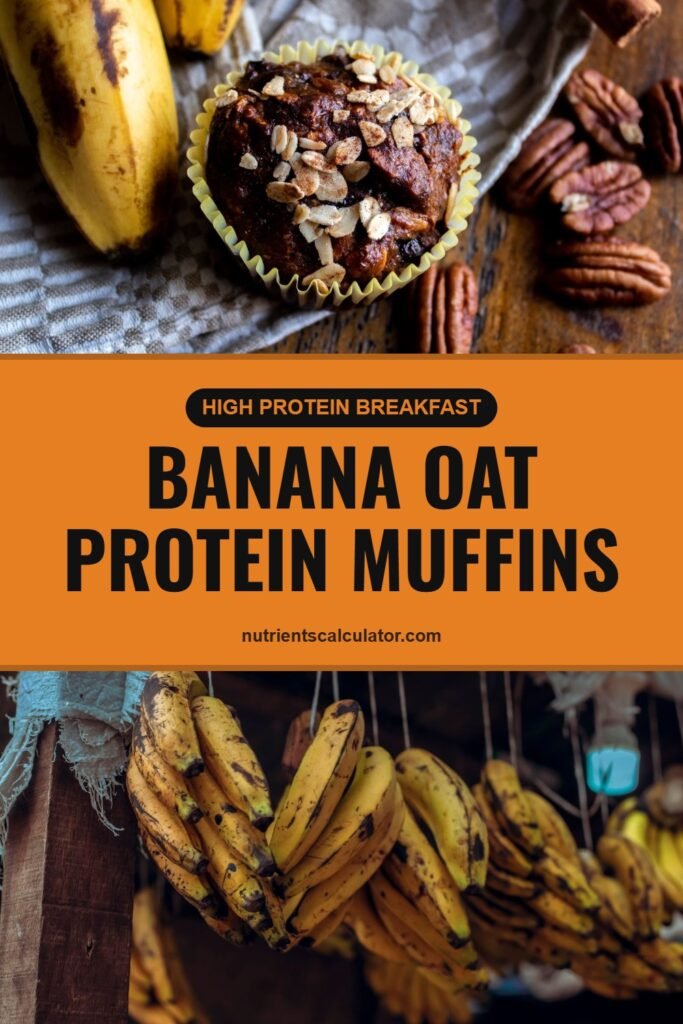
These banana oat protein muffins are a practical answer to a common breakfast problem: you want something you can grab on the way out the door that still keeps you full until lunch. Protein muffins can be dry or rubbery when they are built around protein powder alone, so this recipe balances it with Greek yogurt, mashed ripe banana and oats, which keep the crumb soft and moist.
The batter comes together in one large bowl in about 10 minutes, and the muffins bake in 20 to 22 minutes at 350°F. Each recipe makes 12 muffins, so you can bake once and eat through most of the week. Use the storage guidance below to keep them fresh.
If you are new to building high-protein baked goods, the protein math is simple: the Greek yogurt, egg and protein powder carry most of the grams, while the oats and banana add fiber and natural sweetness. The recipe card lists the approximate totals for each ingredient so you can check the numbers against your own brands.
Full recipe below
Banana Oat Protein Muffins
Why this recipe works for a high-protein breakfast
Most protein muffins fail for one of two reasons: too much protein powder makes them dense and chalky, or too little structure makes them fall apart. This version solves both problems by pairing a moderate amount of whey or plant protein with plain Greek yogurt and an egg. The yogurt adds protein and tenderness, and the egg helps the muffins rise and hold together.
Ripe bananas do double duty here. They replace much of the added sugar and oil, and their starch and moisture keep the crumb soft. Rolled oats add chewiness and soluble fiber, which slows digestion so the muffins feel more filling than a typical bakery muffin. For more on how protein supports fullness, see how much protein you need per day.
Because the batter is mixed by hand in one bowl, there is no mixer to clean and no special equipment beyond a standard 12-cup muffin tin. Baking them with the oat and banana base also means you can adjust the sweetness and mix-ins without changing the structure.
Ingredients you need and how to choose them
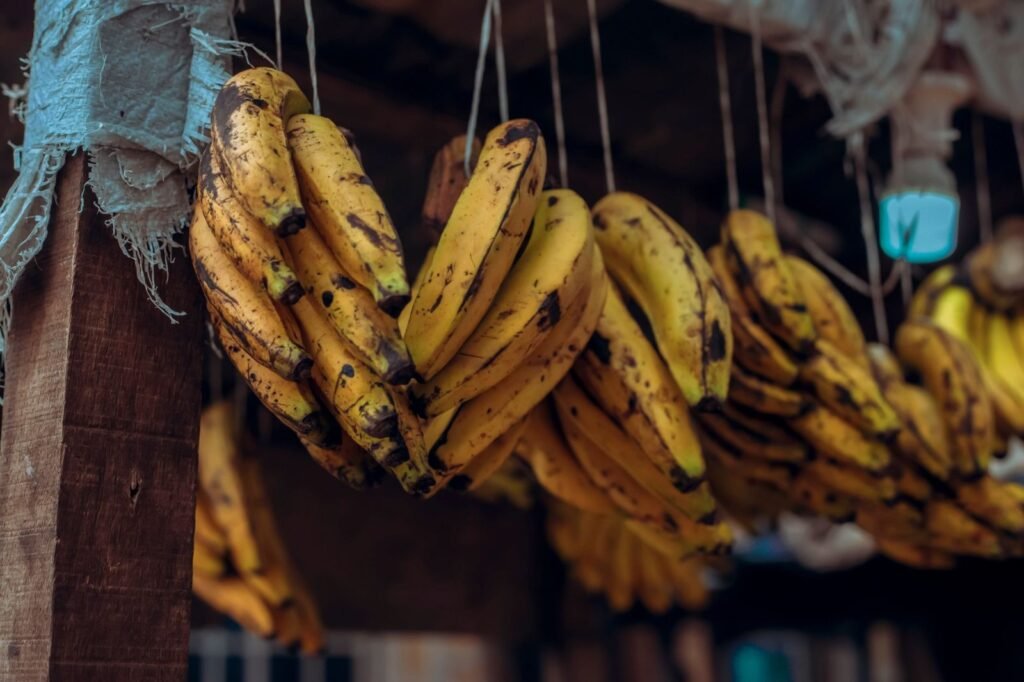
- Ripe bananas (2 medium, about 1 cup mashed): choose bananas with heavy brown speckling. They are sweeter and more moist, so you can use less added sweetener.
- Rolled oats (1 1/2 cups, or 135 g): old-fashioned rolled oats give the best texture. Quick oats work but produce a softer, more cake-like crumb. Avoid steel-cut oats, which stay too firm.
- Vanilla or unflavored protein powder (1/2 cup, about 60 g): whey gives the lightest texture. Plant protein blends often absorb more liquid, so you may need an extra tablespoon of milk. Check the label for the grams of protein per serving.
- Plain Greek yogurt, 2% or nonfat (1 cup, about 245 g): unsweetened yogurt keeps the sugar low and adds protein. Avoid flavored yogurt, which adds sugar and can make the batter too thin.
- Large egg (1, about 50 g): a whole egg adds structure. Bring it to room temperature so it blends smoothly into the yogurt.
- Milk of choice (1/4 cup, about 60 g): dairy or unsweetened soy milk works well. Add more only if the batter is very thick.
- Baking powder (2 tsp) and cinnamon (1 tsp): baking powder gives lift. Cinnamon adds warmth without extra sugar.
- Pure maple syrup or honey (2 tbsp, about 40 g): optional, but it helps browning and softness. Taste the batter first if your bananas are very ripe.
- Walnuts or dark chocolate chips (1/3 cup, optional): chopped nuts add healthy fats and crunch. Use mini chips if you want chocolate in every bite.
How to make banana oat protein muffins step by step
- Preheat the oven to 350°F. Line a 12-cup muffin tin with paper liners or grease the cups well with nonstick spray.
- In a large bowl, mash the bananas with a fork until mostly smooth, leaving a few small lumps if you like a rustic texture.
- Whisk in the Greek yogurt, egg, milk and maple syrup until the mixture looks uniform and slightly glossy.
- In a separate bowl, whisk together the oats, protein powder, baking powder and cinnamon so the leavening is evenly distributed.
- Add the dry ingredients to the wet ingredients and stir with a spatula just until no dry streaks remain. Overmixing develops gluten and makes the muffins tough, even though this batter has little gluten.
- Let the batter rest for 5 minutes. The oats absorb liquid during this time, so the batter thickens and the muffins hold their shape.
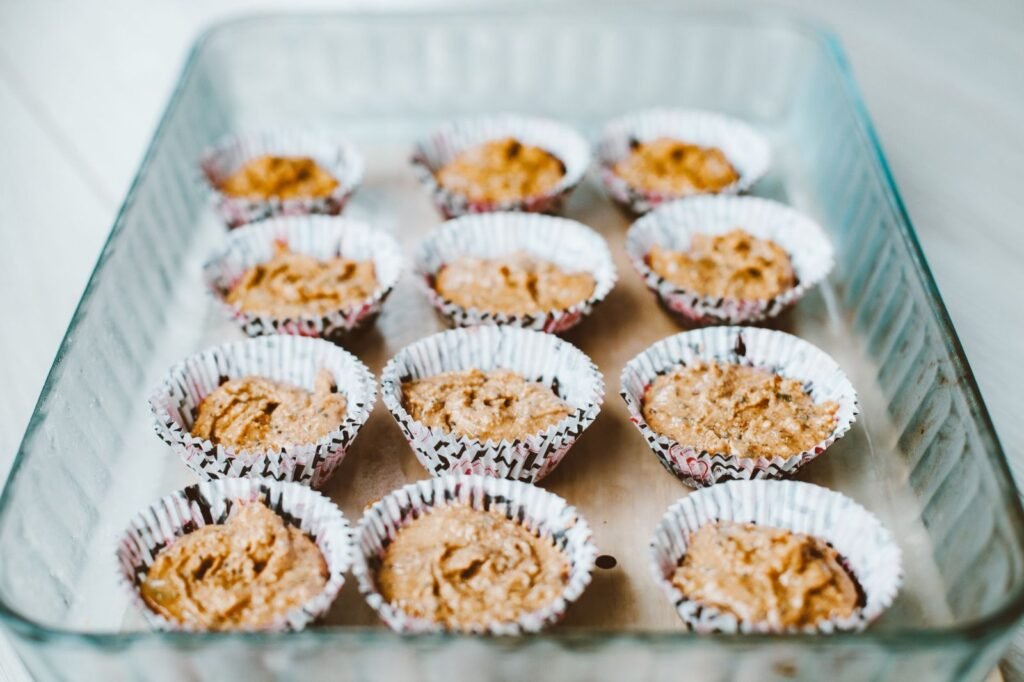
- Fold in walnuts or chocolate chips if using. Divide the batter evenly among the 12 cups, filling each about three-quarters full.
- Bake for 20 to 22 minutes, until the tops are set and golden and a toothpick inserted in the center comes out clean or with a few moist crumbs.
- Cool in the tin for 5 minutes, then transfer the muffins to a wire rack. They firm up as they cool, so avoid cutting them while still hot.
- For food safety, the baked muffins are ready when the center reaches about 200°F on an instant-read thermometer, but most cooks check the toothpick method instead. The egg is fully cooked well before that point. Raw egg in batter should never be eaten, so do not taste the batter if it contains uncooked egg.
Storage, reheating and freezing your muffins
Once completely cool, store the muffins in an airtight container at room temperature for up to 2 days, or refrigerate them for up to 5 days. Because they contain dairy and egg, refrigeration is the safer choice for longer storage. Following the guidance on the FoodSafety.gov cold food storage chart will help you decide how long leftovers stay safe.
To freeze, wrap each cooled muffin tightly in plastic wrap and place them in a freezer bag. They keep well for up to 3 months. Thaw overnight in the refrigerator or on the counter for about 1 hour.
To reheat, microwave a refrigerated muffin on a plate for 20 to 30 seconds. Let it sit for 30 seconds so the heat distributes evenly. Reheated muffins taste best within the first day or two.

Common mistakes to avoid with protein muffins
- Using too much protein powder: more than 1/2 cup in this batter makes the muffins dry and dense. Stick to the amount listed, and substitute extra yogurt rather than more powder if you want a softer result.
- Skipping the rest time: the oats need about 5 minutes to soak up the liquid. Baking the batter right away often leaves a gritty texture.
- Using very underripe bananas: green or yellow bananas are starchy and less sweet, so the muffins taste bland and may need more liquid to mash properly.
- Overbaking: protein-heavy muffins dry out fast. Pull them as soon as a toothpick comes out with only a few moist crumbs.
- Measuring oats by volume loosely: packing too many oats into the cup changes the texture. A kitchen scale helps, and the food scale guide explains how to weigh dry ingredients accurately.
- Assuming all protein powders behave the same: check the label, since some plant blends are very absorbent and some whey blends include added sweeteners.
Swaps, variations and a lighter option
- Lighter version: replace the walnuts and maple syrup with 1/2 cup blueberries and use nonfat Greek yogurt. This trims about 60 calories per muffin while keeping the protein steady.
- Chocolate peanut butter: stir 2 tbsp natural peanut butter into the wet ingredients and add mini chocolate chips. The added fat makes the muffins richer.
- Dairy-free: use unsweetened soy yogurt, a plant protein powder and oat or soy milk. Check that the yogurt is high in protein, since many plant yogurts have far less than dairy yogurt.
- Apple cinnamon: replace one banana with 1/2 cup finely grated apple and increase the cinnamon to 1 1/2 tsp.
- Nutrition data: the values for each ingredient come from the USDA FoodData Central database, so your totals will shift a little depending on brands and ripeness.
What to serve with banana oat protein muffins
For a balanced breakfast, pair one muffin with a hard-boiled egg or a small glass of milk. This adds a little more protein and fat, which helps keep you full. If you want something heartier, serve the muffin alongside a bowl of fruit and plain Greek yogurt, following the ideas in Greek yogurt breakfast bowls.
They also work well as a snack after a workout, especially with a piece of fruit. Pairing them with vegetables is less common, but a side of sliced cucumber or a small green salad turns the muffin into a lighter lunch-style plate.
For a quick overall plan, the Dietary Guidelines for Americans recommend building meals around a variety of protein foods, fruits and whole grains, which this muffin fits into easily.
Frequently asked questions
How much protein is in one banana oat protein muffin?
Using the ingredient amounts in this recipe, each of the 12 muffins contains roughly 12g of protein, depending on the protein powder brand you choose. Check your powder's label to confirm the grams per scoop.
Can I make protein muffins without protein powder?
Yes. Replace the 1/2 cup protein powder with 1/2 cup extra oats and an additional 1/4 cup Greek yogurt. The muffins will have less protein, about 7g each, but the texture stays soft and moist.
Why did my protein muffins come out dry?
The most common causes are too much protein powder, overbaking, or skipping the 5-minute rest that lets the oats absorb liquid. Bake only until a toothpick comes out with a few moist crumbs.
Are these protein muffins good for weight loss?
They can fit into a weight-loss plan because the protein and fiber help you feel full. Overall results depend on your total daily calories, so use the lighter variation and portion control if needed.
Can I freeze banana oat protein muffins?
Yes. Wrap cooled muffins individually and freeze them for up to 3 months. Thaw in the refrigerator overnight or reheat from frozen in the microwave for about 45 seconds.

Banana Oat Protein Muffins
Soft, moist banana oat protein muffins made with Greek yogurt and protein powder for about 12g protein each.
Ingredients
Instructions
- Preheat the oven to 350°F and line a 12-cup muffin tin with liners or grease well.
- Mash the bananas in a large bowl until mostly smooth.
- Whisk in the Greek yogurt, egg, milk and maple syrup until uniform.
- In a separate bowl, whisk the oats, protein powder, baking powder and cinnamon.
- Add the dry ingredients to the wet and stir just until combined.
- Rest the batter for 5 minutes so the oats absorb liquid.
- Fold in walnuts if using and divide the batter among the cups, filling each about three-quarters full.
- Bake 20 to 22 minutes until set and a toothpick comes out with a few moist crumbs.
- Cool 5 minutes in the tin, then move to a wire rack to cool completely.
Notes
- Store airtight at room temperature up to 2 days or refrigerated up to 5 days. Freeze up to 3 months.
- Use the lighter variation with blueberries and nonfat yogurt to reduce calories per muffin.
Nutrition per serving
- Calories
- 129
- Protein
- 9.3g
- Carbs
- 17.4g
- Fat
- 4.8g
- Saturated fat
- 1.3g
- Fiber
- 2.5g
- Sugar
- 5.3g
- Sodium
- 58mg
- Cholesterol
- 21mg