
Pretzels are one of the most popular snacks across the globe, loved for their crispy texture and satisfying crunch. Whether eaten at sporting events, movie theaters, or as a casual office snack, pretzels have become a staple in both American and European diets. They’re often chosen by people seeking a seemingly lighter alternative to chips or cookies, though their nutritional profile—particularly sodium content—deserves careful attention.
But how many calories are actually in a serving of pretzels? The answer varies depending on the type, size, and whether they’re salted or flavored. This guide covers everything you need to know about pretzel nutrition, calorie counts, and smart ways to include them in a balanced diet.
Calories in Pretzels (Quick Answer)
A standard serving of pretzels is about 28g (roughly 12-15 small twists), containing the following calorie counts:
- Standard salted pretzels (28g): 110 calories
- Whole wheat pretzels (28g): 105 calories
- Filled or yogurt-coated pretzels (28g): 140–160 calories
Calorie content can vary slightly by brand, preparation method (baked vs. fried), and whether pretzels are coated with cheese, chocolate, or other toppings. Always check the nutrition label for the specific product you’re eating.
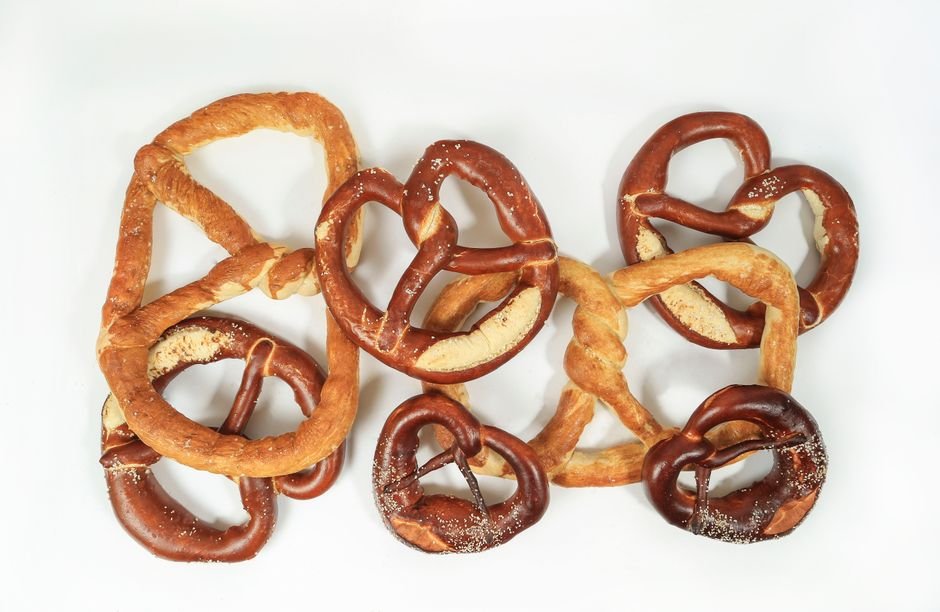
Full Nutrition Facts for 28g of Salted Pretzels
Here’s the complete breakdown of a standard 28g serving of salted pretzels, based on USDA FoodData Central data:
| Nutrient | Amount | % Daily Value |
|---|---|---|
| Calories | 110 | — |
| Total Fat | 1g | 2% |
| Saturated Fat | 0.2g | 1% |
| Cholesterol | 0mg | 0% |
| Sodium | 386mg | 17% |
| Total Carbohydrate | 21g | 8% |
| Dietary Fiber | 2g | 7% |
| Total Sugars | 1g | — |
| Protein | 3g | 6% |
| Iron | 0.9mg | 5% |
| Magnesium | 16mg | 4% |
| Phosphorus | 44mg | 4% |
*Percent Daily Values are based on a 2,000-calorie diet. Source: USDA FoodData Central.
Key insight: The most striking feature of pretzels is their sodium content—a single 28g serving delivers 17% of your daily value in salt. While pretzels are low in fat and calories, and provide modest amounts of protein and fiber, their high sodium is a major consideration for anyone monitoring salt intake or managing blood pressure.
Etekcity Food Scale
0.1g accuracy — the perfect companion for exact portions.
Salted vs. Unsalted Pretzels: Nutrition Comparison
Salted Pretzels (28g serving)
- 110 calories
- 386mg sodium (17% DV)
- 1g total fat
Unsalted Pretzels (28g serving)
- 110 calories
- 68mg sodium (3% DV)
- 1g total fat
Practical takeaway: The calorie and fat content are virtually identical between salted and unsalted pretzels. The key difference is sodium: choosing unsalted pretzels cuts your salt intake by over 80% per serving. For people with hypertension, kidney disease, or those simply trying to reduce sodium, unsalted pretzels are the clear choice. For others, salted pretzels in moderation are a reasonable snack—just be aware that a few servings can quickly add up to significant sodium consumption.

Are Pretzels Good for Weight Loss?
Pretzels can fit into a weight-loss plan, but with important caveats. At 110 calories per 28g serving, they’re lower in calories than many snacks—making them seem like a diet-friendly choice. However, pretzels are highly processed and provide mostly empty carbohydrates with minimal fiber or protein to promote satiety. This means you can eat a large handful without feeling satisfied, making overeating easy. Their low fat and protein content also means they won’t keep you full long-term, which can lead to consuming more calories throughout the day.
Tips to Eat Pretzels Without Gaining Weight
- Measure your portions: Stick to a single 28g serving (about 12–15 small twists) rather than eating straight from the bag. Use a small bowl to make portion control easier.
- Pair with protein: Combine pretzels with cheese, nuts, or hummus to add satiety and slow digestion, preventing blood sugar spikes and hunger crashes.
- Choose whole wheat: Whole wheat pretzels contain slightly more fiber, which aids digestion and helps you feel fuller longer.
- Limit frequency: Enjoy pretzels as an occasional snack, not a daily staple. Their high sodium and refined carbs make them less suitable for regular consumption during weight loss.
If you’re actively trying to lose weight, pretzels are best treated as an occasional treat paired with more nutrient-dense foods rather than a go-to snack.
How Portion Size Affects Calories
Because pretzels are small and easy to eat mindlessly, portion size matters enormously. A single pretzel weighs only 2-3 grams, meaning it’s easy to consume far more than you realize. The difference between a measured serving and casual snacking can mean the difference between 110 calories and 400+ calories in a single sitting.
Example:
- One small handful (28g / 12 pretzels): 110 calories
- One large handful (85g / 36 pretzels): 330 calories
This is why pre-portioning pretzels into bags or bowls before eating is one of the most effective strategies for staying within your calorie goals.
Best Way to Measure Pretzels Accurately
Because pretzels vary in size and weight, counting individual pieces is unreliable. A “large” pretzel might weigh 4g while a “small” one weighs 2g, throwing off your calorie estimate. For accurate measurement, use a kitchen scale to weigh pretzels in grams, matching the nutrition label’s serving size. If a scale isn’t available, count pretzels and note that a standard serving is roughly 12–15 small twists, though this can vary by brand.
Options:
- Kitchen scale: The most accurate method—weigh to the gram and match the nutrition label’s serving size (usually 28–31g).
- Measuring cup: Fill a 1/4 cup measuring cup with pretzels, which approximates one serving for most brands.
- Visual estimate with verification: Check the brand’s nutrition label for the number of pieces per serving (often 12–15 for small twists), then count out that exact amount at least once to calibrate your visual estimate.
Calculate Your Exact Calorie Intake
If you eat pretzels regularly, knowing their exact nutritional contribution to your daily diet is valuable. But calculating macros and micronutrients manually is tedious and error-prone, especially when combining multiple foods and snacks throughout the day.
Our free AI-powered nutrients calculator makes this effortless. Simply input your daily meals—including your pretzel servings—and the calculator instantly breaks down your calories, protein, fat, carbs, fiber, sodium, and key micronutrients. You’ll see exactly where pretzels fit into your overall nutrition profile.
- Track calories and all macronutrients instantly
- See how snacks like pretzels impact your daily nutrition goals
- Get personalized insights based on your dietary needs
Use the free AI nutrients calculator here to start tracking your pretzel consumption and overall diet in seconds.
Common Mistakes When Eating Pretzels
Even though pretzels seem straightforward, several common mistakes can derail your nutrition goals:
❌ Eating directly from a large bag without portioning, which makes calorie overeating almost inevitable.
❌ Assuming all pretzels have the same nutrition, when flavored, coated, and whole wheat varieties can differ significantly in calories, sodium, and added sugars.
❌ Ignoring sodium content and consuming pretzels frequently without accounting for their high salt load, which can contribute to water retention and blood pressure issues.
❌ Pairing pretzels with high-calorie dips or cheese sauce without counting those calories, turning a 110-calorie snack into a 300+ calorie indulgence.
Being mindful of these pitfalls helps you enjoy pretzels as part of a balanced diet rather than accidentally sabotaging your health goals.
FAQ
How many calories are in 100g of pretzels?
A 100g serving of salted pretzels contains approximately 390 calories. This is useful for estimating larger quantities if you’re weighing a bulk serving or comparing pretzels to other snacks by weight.
Are pretzels fattening?
Pretzels themselves are low in fat (1g per 28g serving) and not inherently fattening. However, they’re high in calories relative to their nutritional density and lack the protein and fiber needed for satiety. This makes them easy to overeat, which can lead to weight gain. When portion-controlled and paired with protein, they’re a reasonable snack.
Do pretzels have any health benefits?
Pretzels contain modest amounts of iron, magnesium, and phosphorus, plus 2g of fiber per serving. However, they’re not a significant source of any micronutrient. Their main value is as a low-fat, convenient snack; they’re not chosen primarily for their nutritional benefits.
What’s the difference between pretzels and crackers in terms of calories?
A 28g serving of pretzels (110 calories) is comparable to most crackers (100–130 calories per serving), though fiber and protein vary. Whole grain or seed crackers typically offer more nutritional value, while traditional pretzels are lower in fat but higher in sodium.
Conclusion
Pretzels are a light, convenient snack that fits reasonably into most diets when portion-controlled. At 110 calories per 28g serving, they’re lower in calories and fat than many alternatives, making them appealing for anyone watching their weight. However, their most significant drawback is sodium—a single serving delivers 17% of your daily limit if you choose salted pretzels. Combined with their minimal protein and whole-grain content, pretzels are best enjoyed as an occasional snack rather than a dietary staple.
To make pretzels work for your goals, measure your portions carefully, choose unsalted varieties when possible, and pair them with protein-rich foods to increase satiety. Understanding the nutritional impact of snacks you eat regularly helps you make informed choices and avoid mindless overeating. For a complete picture of how pretzels and other foods fit into your daily nutrition, use a reliable nutrients calculator to track your intake and ensure you’re meeting your health objectives.
