
Scallops are a premium seafood choice prized by home cooks and restaurant chefs alike. Found in coastal waters worldwide, they’re a staple in Mediterranean, Asian, and North American cuisines. Whether you’re tracking macros for muscle building, monitoring sodium intake, or simply curious about the nutritional value of this delicacy, understanding scallop nutrition is essential.
The question isn’t just “How many calories are in scallops?”—it’s how their protein-to-calorie ratio, mineral content, and preparation method affect your diet and health goals. This guide breaks down the complete nutritional profile, portion sizes, and practical eating strategies.
Calories in Scallops (Quick Answer)
A 3-ounce serving of cooked scallops contains around 95 calories, making them an exceptionally lean protein source.
- 3 oz (85g) cooked scallops: 95 calories
- 6 oz (170g) cooked scallops: 190 calories
- 100g raw scallops: 69 calories
Values vary based on cooking method—pan-seared scallops may absorb butter or oil, increasing calories, while steamed or boiled scallops remain closer to baseline.
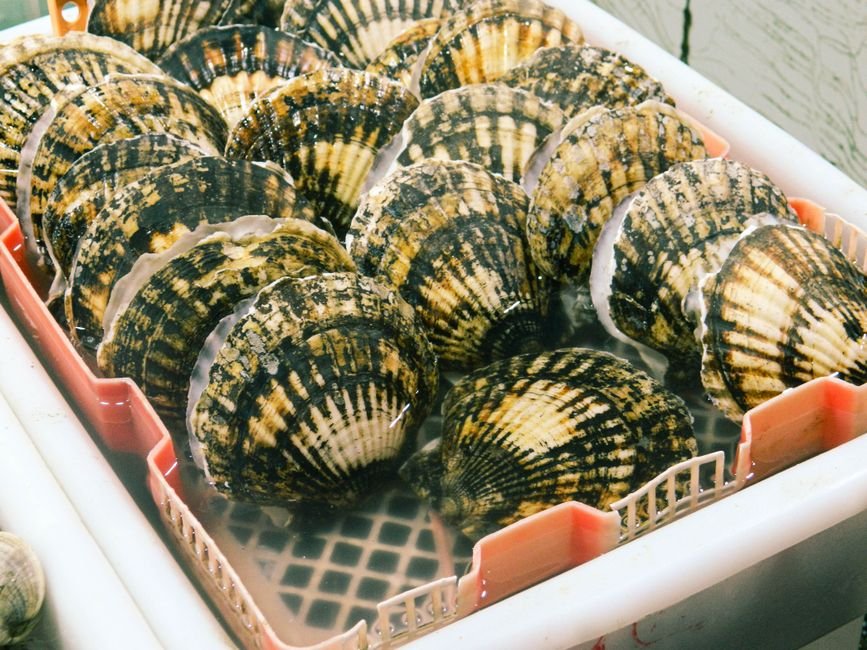
Full Nutrition Facts for 3 oz (85g) of Cooked Scallops
Here’s the complete nutritional breakdown for a standard 3-ounce serving of cooked sea scallops, based on USDA data:
| Nutrient | Amount | % Daily Value |
|---|---|---|
| Calories | 95 | — |
| Total Fat | 1.5g | 2% |
| Saturated Fat | 0.3g | 1% |
| Cholesterol | 33mg | 11% |
| Sodium | 161mg | 7% |
| Total Carbohydrate | 3.2g | 1% |
| Dietary Fiber | 0g | 0% |
| Total Sugars | 0g | 0% |
| Protein | 17.9g | 36% |
| Vitamin B12 | 1.5mcg | 63% |
| Selenium | 26.3mcg | 48% |
| Zinc | 1.3mg | 12% |
*Percent Daily Values are based on a 2,000-calorie diet. Source: USDA FoodData Central.
Key insight: Scallops deliver nearly 18g of protein in just 95 calories—a protein-to-calorie ratio superior to most fish and lean meats. Their minimal fat content (1.5g per 3 oz) makes them ideal for low-calorie, high-protein diets. Additionally, they’re an exceptional source of B12 (63% DV) and selenium (48% DV), two nutrients crucial for energy metabolism and thyroid function.
Etekcity Food Scale
0.1g accuracy — the perfect companion for exact portions.
Raw Scallops vs. Cooked Scallops: What’s the Difference?
Raw Scallops
- Calories: 69 per 100g—lower than cooked due to water content remaining
- Texture: Tender, translucent, delicate flavor profile
- Nutrients: All vitamins and minerals intact; no nutrient loss from heat
Cooked Scallops
- Calories: 95 per 3 oz (85g)—slightly higher as water evaporates and protein concentrates
- Texture: Firmer, opaque, developed flavor from heat
- Safety: Cooking eliminates potential pathogens; safer for most populations
What’s the takeaway? If you’re eating raw scallops (sashimi or crudo), you’ll consume fewer calories per gram but must source them from a reputable fishmonger to ensure safety. Cooked scallops are more practical for most home cooks and slightly more calorie-dense due to moisture loss. Neither method destroys significant nutrients—cooking doesn’t substantially reduce B12 or selenium content.
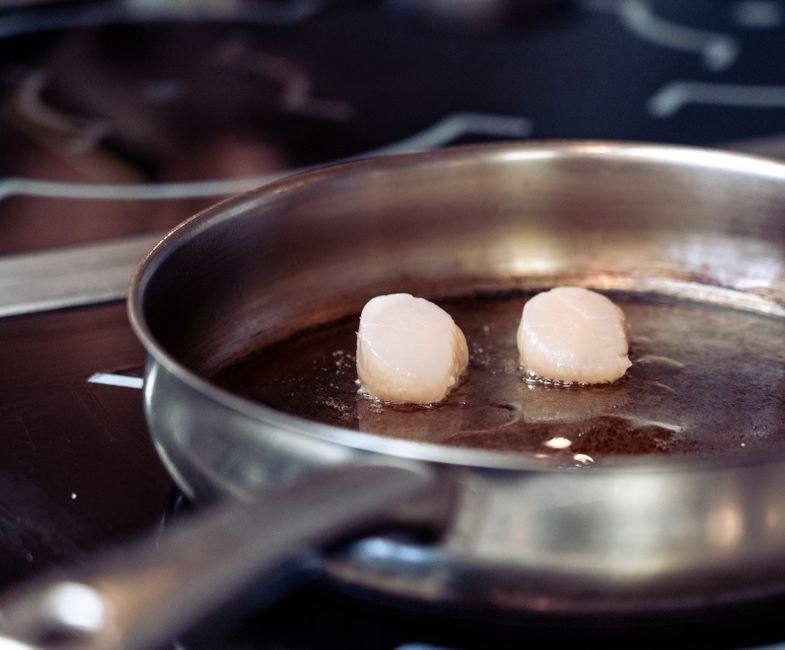
Is Scallops Good for Weight Loss?
Scallops are an excellent choice for weight loss. With only 95 calories and nearly 18g of protein per 3-ounce serving, they support satiety without excess calories. The high protein content increases thermogenesis (calories burned during digestion) and helps preserve muscle mass during caloric restriction. Their minimal carbohydrate content (3.2g) also makes them compatible with low-carb and keto diets.
Tips to Eat Scallops Without Gaining Weight:
- Avoid butter-heavy cooking: Pan-sear in a light spray of oil or poach instead of drowning in butter or cream sauces
- Control portion size: Measure 3-4 oz servings; it’s easy to overeat when enjoying something delicious
- Pair with fiber: Combine scallops with vegetables, quinoa, or brown rice to maximize fullness and nutrient density
- Skip breading: Breaded scallops add 50-100 extra calories per serving; opt for naked or simply seasoned preparations
When prepared simply—grilled, steamed, or lightly sautéed—scallops remain a weight-loss-friendly protein that feels indulgent without derailing your goals.
How Portion Size Affects Calories
Scallops are small and easy to overeat visually. A small portion versus a generous restaurant serving can create a 200-calorie difference. Understanding standard portion sizes prevents calorie creep while allowing you to enjoy larger quantities without guilt.
Example:
- Small portion (3 oz / 85g): 95 calories, 17.9g protein—a typical appetizer or side protein
- Large portion (8 oz / 227g): 250 calories, 47g protein—a full entrée, restaurant-standard
Most restaurants serve 6-8 ounces of scallops per entrée, which contains 190-250 calories before sauce or butter additions.
Best Way to Measure Scallops Accurately
Scallops vary in size (bay scallops are tiny; sea scallops are large), making visual estimation unreliable. Weight is the most accurate measurement method. If you’re tracking calories or macros precisely, a kitchen scale is essential.
Options:
- Food scale (most accurate): Measure raw or cooked scallops in grams; adjust for cooking method if comparing to raw nutrition data
- Ounce measurement: 3 oz is roughly 12-15 medium sea scallops or 40-50 bay scallops
- USDA serving guide: One “serving” = 3.5 oz cooked; use this as your baseline reference
Calculate Your Exact Calorie Intake
If you’re meal-prepping scallop dishes or combining them with multiple ingredients, knowing your total calorie load requires precision. Cooking method, added fats, and side dishes all shift the final calorie count.
Our free AI nutrients calculator lets you input scallop weight, cooking method, and accompanying ingredients to get an instant breakdown of calories, protein, and micronutrients. No guessing—just accurate nutrition data tailored to your meal.
- Input exact portion sizes and cooking methods for personalized results
- Track macros across entire meals, not just the protein component
- Adjust recipes and see real-time impact on calorie totals
Use the calculator here to dial in your scallop nutrition to the gram.
Common Mistakes When Eating Scallops
Even a healthy food can sabotage your diet if prepared poorly. Here are the most common mistakes people make:
❌ Drowning scallops in butter or cream sauce. A light pan-sear adds 50-100 calories; a compound butter or beurre blanc adds 200-300. Check restaurant menu descriptions carefully.
❌ Assuming all cooking methods are equal. Breaded and fried scallops contain 3x the calories of grilled ones. Always ask preparation method when ordering out.
❌ Forgetting to account for added oil or cooking fat. Even 1 tablespoon of oil adds 120 calories to your scallop serving. Use cooking spray or measure carefully.
❌ Eating unlimited quantities because they feel “light.” Restaurant portions often contain 6-8 oz of scallops (190-250 calories) before any sauce, plus bread or pasta sides. Track the full meal, not just the protein.
Mindful preparation and portion awareness keep scallops a nutrition win.
FAQ
How many calories are in 100g of scallops?
100g of raw scallops contains approximately 69 calories. Cooked scallops are slightly denser and contain around 112 calories per 100g.
Is scallops fattening?
No. Scallops are lean, low in total and saturated fat, and high in protein. They’re among the least fattening seafood options available, provided they’re not cooked in heavy sauces or breading.
Do scallops contain mercury?
Scallops are low in mercury compared to large predatory fish like shark or swordfish. They’re safe to eat multiple times per week for most populations, including pregnant women (in moderation).
Are scallops high in cholesterol?
Scallops contain 33mg of cholesterol per 3 oz serving (11% DV)—moderate for a shellfish and less than red meat or egg yolks. They’re a better choice than higher-cholesterol seafood like shrimp (190mg per 3 oz).
Conclusion
Scallops are a nutritional powerhouse: ultra-lean, protein-rich, and loaded with B12 and selenium. At just 95 calories per 3-ounce serving with nearly 18g of protein, they fit seamlessly into weight-loss, muscle-building, and general health diets. Their minimal carbohydrate and saturated fat content makes them compatible with nearly any eating pattern.
The key to maximizing scallop nutrition is preparation: skip heavy sauces and breading, measure portions accurately, and combine them with whole-food sides for a balanced meal. When precision matters, use a **reliable nutrients calculator** to account for cooking method and added ingredients—it ensures you’re hitting your nutrition targets with confidence.
