
Sourdough bread has become a staple in bakeries and home kitchens worldwide, prized for its distinctive tangy flavor and chewy texture. It’s particularly popular among people managing blood sugar levels and those seeking alternatives to commercial yeast breads, thanks to its longer fermentation process and lower glycemic impact. Whether you’re a daily toast-maker or someone watching your carb and calorie intake, understanding the nutrition profile of sourdough is essential for making informed dietary choices.
But how many calories are actually in a slice of sourdough bread? This article breaks down the complete nutrition facts, compares sourdough to other bread types, and shows you how portion size and measurement methods affect your daily intake.
Calories in Sourdough Bread (Quick Answer)
A typical slice of sourdough bread contains around 160–180 calories, depending on thickness, crust-to-crumb ratio, and the baker’s recipe.
- One standard slice (about 43g): 160–170 calories
- One thicker slice or large slice (about 60g): 210–240 calories
- One whole small loaf (about 450g): 1,200–1,400 calories
Calorie counts vary by bakery, flour type, and hydration level. Artisan sourdoughs made with longer fermentation times may have slightly lower carbohydrate availability than commercial versions.
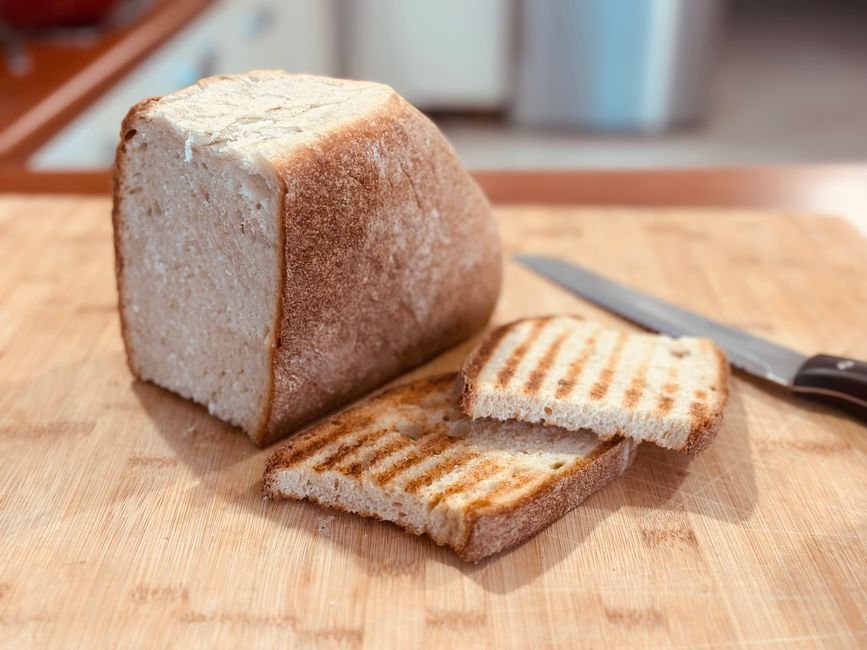
Full Nutrition Facts for One Slice (43g) of Sourdough Bread
Here’s the complete nutritional breakdown for a standard 43-gram slice of sourdough bread, based on USDA FoodData Central:
| Nutrient | Amount | % Daily Value |
|---|---|---|
| Calories | 163 | — |
| Total Fat | 1.4g | 2% |
| Saturated Fat | 0.3g | 1% |
| Cholesterol | 0mg | 0% |
| Sodium | 380mg | 17% |
| Total Carbohydrate | 31g | 11% |
| Dietary Fiber | 1.8g | 7% |
| Total Sugars | 1.2g | — |
| Protein | 5.8g | 12% |
| Thiamine (B1) | 0.12mg | 10% |
| Iron | 1.9mg | 11% |
| Folate | 72mcg | 18% |
*Percent Daily Values are based on a 2,000-calorie diet. Source: USDA FoodData Central.
Key insight: Sourdough bread’s long fermentation process (typically 12–48 hours) breaks down phytic acid and reduces the glycemic load compared to rapid-rise breads. This means your body digests it more slowly, potentially causing a smaller blood sugar spike. The relatively high protein content (5.8g per slice) also supports satiety, making sourdough a more filling choice than many commercial white breads.

Etekcity Food Scale
0.1g accuracy — the perfect companion for exact portions.
Sourdough Bread vs. White Bread: Nutritional Comparison
Sourdough Bread (per 43g slice)
- 163 calories
- 31g carbs, 1.8g fiber (net carbs: 29g)
- 5.8g protein, lower glycemic impact due to fermentation
White Bread (per 28g slice)
- 75–80 calories (lighter density)
- 14g carbs, 0.6g fiber (net carbs: 13.4g)
- 2.7g protein, faster digestion and higher blood sugar response
The takeaway: While a slice of sourdough has more total calories and carbs than a lighter slice of white bread, the comparison isn’t one-to-one—sourdough slices are typically denser and larger. More importantly, sourdough’s fermentation acids and complex structure result in a lower glycemic response, steadier energy release, and better satiety. For people monitoring blood sugar or seeking sustained energy, sourdough is the superior choice, even if you need to watch portion sizes to manage overall calorie intake.
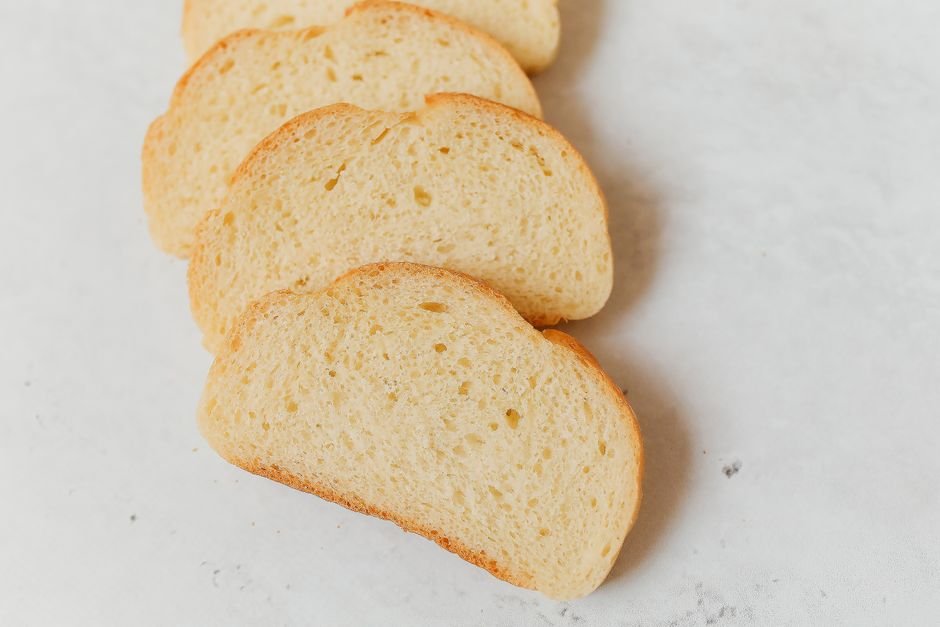
Is Sourdough Bread Good for Weight Loss?
Sourdough can be part of a weight-loss diet, but only with portion control. A single slice is reasonable, but eating half a loaf in one sitting (around 600–700 calories) will easily exceed a reasonable addition to most calorie targets. The fermentation process does improve digestibility and nutrient absorption compared to regular white bread, which is a metabolic advantage. The key is treating sourdough as a controlled carb source, not an unlimited staple.
Tips to Eat Sourdough Bread Without Gaining Weight:
- Measure one slice: Use a kitchen scale or pre-slice loaves to avoid eating oversized portions; 43–50g is standard.
- Pair with protein and fat: Top with eggs, avocado, cheese, or nut butter to stabilize blood sugar and increase satiety.
- Limit to one slice per meal: Make sourdough a side, not the center of your plate. Pair with a salad, soup, or protein-forward entrée.
- Choose whole-grain sourdough when possible: 100% whole-grain or rye sourdough adds fiber (2.5–3g per slice) and keeps you fuller longer.
For weight loss, sourdough works best as an occasional indulgence or a measured component of a balanced meal, not as a daily base for multiple meals.
How Portion Size Affects Calories
A single gram difference in slice weight compounds quickly when you’re eating bread multiple times a day. A bakery sourdough loaf may vary in slice thickness from 35g to 65g per slice, resulting in a 120–200 calorie swing. Home-sliced loaves are the worst offender: without a bread knife guide, you might accidentally cut slices 50% larger or smaller than intended, throwing your calorie count off by 80+ calories per slice.
Example:
- Small slice (35g): 140 calories — good for sandwiches or toast with toppings
- Large slice (65g): 260 calories — comparable to a small meal in its own right
The difference between a 35g and 65g slice is 120 calories—nearly a 10-minute run for many people. Always measure your bread slices if you’re tracking calories seriously.
Best Way to Measure Sourdough Bread Accurately
The biggest mistake people make is eyeballing slice size. A kitchen scale is non-negotiable if you’re counting calories or macros. Measuring by slice count alone is unreliable because bakery loaves and home loaves vary wildly in density and moisture content. For the most consistent results, measure by weight and use that to calculate nutrition.
Options:
- Digital kitchen scale (most accurate): Place your slice directly on the scale and read the weight in grams. Compare to USDA data for 43g or your chosen portion size.
- Pre-sliced sourdough from a supermarket: Check the nutrition label on the package; most list calories per slice and weight per slice, removing guesswork.
- Bread knife guide or slicing tool: Some bread knives have spacer guides that produce uniform 16–20 slices per loaf; use this as a baseline, then spot-check one slice with a scale to confirm weight.
Calculate Your Exact Calorie Intake
If you eat sourdough bread regularly—whether for breakfast toast, lunch sandwiches, or dinner sides—knowing your true intake matters. A 10-slice-per-week habit with inconsistent portions could range from 1,100 to 2,000 calories depending on slice size. Over a month, that uncertainty compounds into real weight gain or loss effects.
Use the site’s free AI-powered nutrients calculator to log your exact sourdough intake and see how it fits into your daily carbs, protein, and fat targets. Simply enter the weight of your slice and get instant totals.
- See your real macros instantly—no guessing
- Track multiple slices and meals to find patterns
- Compare sourdough to other breads in your diet
Common Mistakes When Eating Sourdough Bread
Even well-intentioned eaters often make avoidable mistakes with sourdough. Here are the four most common ones:
❌ Eating unmarked slices: Assuming all slices are 43g when they could range from 35–70g. Always measure at least the first few slices from a new loaf to set your baseline.
❌ Double-toasting and not reducing other carbs: Adding sourdough toast to an already carb-heavy breakfast (oatmeal, fruit, juice) without realizing you’ve eaten 80–100g of carbs before lunch.
❌ Confusing “healthy” sourdough with “low-calorie” sourdough: Whole-grain and sprouted sourdoughs are more nutrient-dense, but they’re not meaningfully lower in calories—they’re actually often *higher* due to added ingredients.
❌ Buying “sourdough-flavored” bread from supermarkets: Many commercial breads labeled “sourdough” use citric acid and flavor compounds instead of true fermentation, losing the metabolic advantages and blood-sugar benefits while keeping all the calories.
Read labels, weigh your slices, and verify that your sourdough is actually fermented—look for a 12+ hour fermentation time on the label or buy from a local bakery that publishes its process.
FAQ
How many calories are in 100g of sourdough bread?
A 100g serving of sourdough bread contains approximately 379 calories. This is useful for scaling portions: if a slice is 43g and 163 calories, a 100g portion (roughly 2.3 slices) would be about 379 calories.
Is sourdough bread fattening?
Sourdough itself is not inherently fattening—it’s low in fat (1.4g per slice) and cholesterol-free. However, it’s calorie-dense due to carbohydrates (31g per slice). Whether it causes weight gain depends entirely on total calorie intake and portion control. Eaten in moderation as part of a balanced diet, sourdough doesn’t promote fat gain more than other whole grains.
Why does sourdough have a lower glycemic impact than regular bread?
The long fermentation process (12–48 hours) produces lactic and acetic acids that slow carbohydrate digestion and reduce blood sugar spikes. This fermentation also partially breaks down gluten and reduces phytic acid, improving nutrient absorption and digestibility compared to rapid-rise breads.
Can I eat sourdough bread on a low-carb diet?
Sourdough is not suitable for strict low-carb diets (under 50g carbs per day) since a single slice contains 31g carbs. However, on moderate-carb or balanced diets (100–150g carbs daily), one slice per meal is reasonable, especially when paired with protein and fat to minimize blood sugar spikes.
Conclusion
Sourdough bread is a nutrient-respectable carbohydrate choice, delivering 163 calories and 5.8g of protein per 43-gram slice, along with meaningful amounts of iron, folate, and B vitamins. The fermentation process gives it a genuine metabolic edge over commercial white bread, slowing digestion and reducing blood sugar volatility. While sourdough is not a weight-loss food, it’s a satisfying, whole-grain-adjacent option that works well in portion-controlled, balanced diets.
The critical factor is measurement. Whether you’re managing weight, blood sugar, or simply tracking your nutrition, **weighing your sourdough slices** and logging them accurately is the difference between informed choices and calorie creep. Use a **reliable nutrients calculator** to verify your intake, and you’ll find sourdough fits easily into most healthy eating patterns.
