Calories in star anise: 23 calories per 1 tbsp (6.7 g)
- 1.2 g protein
- 3.4 g carbs
- 1.1 g fat
- 1 g fiber
Source: USDA FoodData Central · 337 kcal per 100 g
One tablespoon of whole star anise (6.7 g) has 23 calories in star anise, with 1.2 g of protein, 3.4 g of carbohydrate and 1.1 g of fat. A teaspoon of whole pods (2.1 g) comes to 7 calories, so the calorie count stays small at typical spice amounts.
The USDA record used here is for anise seed, the closest match in the database, so the numbers describe a spice eaten in small pinches rather than a food eaten by the cup. Per 100 g the profile is dense: 337 calories, 50 g of carbohydrate, 15 g of fiber and 1441 mg of potassium.
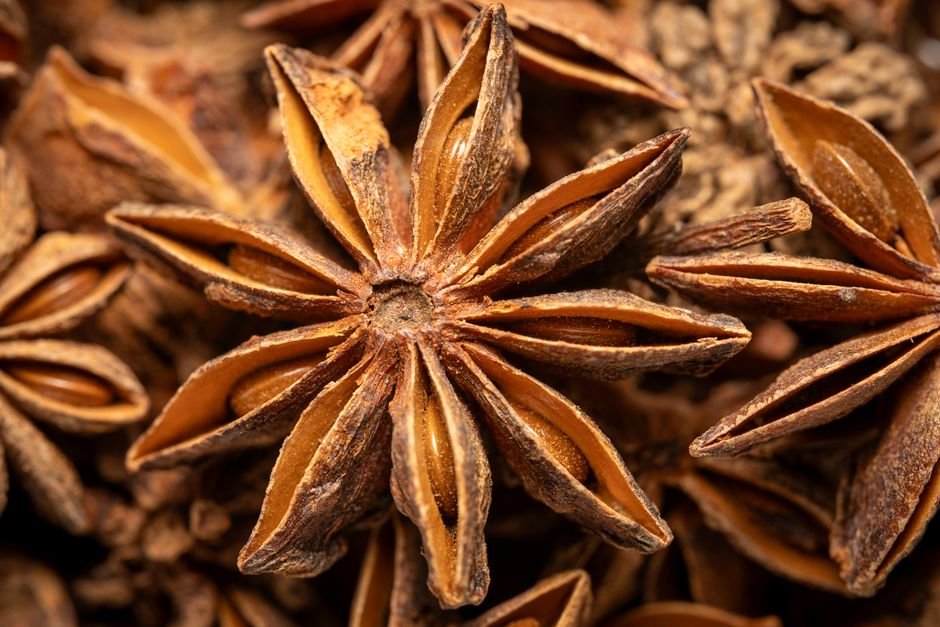
Calories in Star Anise by Serving Size
Calories in star anise for each common serving, with protein, carbs and fat:
| Serving | Calories | Protein | Carbs | Fat |
|---|---|---|---|---|
| 1 tbsp, whole (6.7 g) | 23 | 1.2 g | 3.4 g | 1.1 g |
| 1 tsp, whole (2.1 g) | 7 | 0.4 g | 1.1 g | 0.3 g |
| 100 g | 337 | 18 g | 50 g | 16 g |
| 1 oz | 96 | 5 g | 14 g | 4.5 g |
Star Anise Nutrition Facts
Calories in star anise and the full nutrition facts per 1 tbsp, whole (6.7 g):
| Nutrient | Amount | % Daily Value* |
|---|---|---|
| Calories | 23 kcal | |
| Protein | 1.2 g | 2% |
| Total Fat | 1.1 g | 1% |
| Saturated Fat | 0 g | 0% |
| Cholesterol | 0 mg | 0% |
| Sodium | 1.1 mg | 0% |
| Total Carbohydrate | 3.4 g | 1% |
| Dietary Fiber | 1 g | 3% |
| Calcium | 43 mg | 3% |
| Iron | 2.5 mg | 14% |
| Potassium | 97 mg | 2% |
| Magnesium | 11 mg | 3% |
| Zinc | 0.4 mg | 3% |
| Phosphorus | 29 mg | 2% |
| Selenium | 0.3 mcg | 1% |
| Vitamin A (RAE) | 1.1 mcg | 0% |
| Vitamin C | 1.4 mg | 2% |
| Thiamin (B1) | 0 mg | 2% |
| Riboflavin (B2) | 0 mg | 1% |
| Niacin (B3) | 0.2 mg | 1% |
| Vitamin B6 | 0 mg | 3% |
| Folate (DFE) | 0.7 mcg | 0% |
Where the calories come from: 48% carbs · 35% fat · 17% protein
*Percent Daily Values are based on a 2,000-calorie diet (FDA reference values). Source: USDA FoodData Central — Spices, anise seed (FDC ID 171316, SR Legacy, published 4/1/2019). Values for other servings are calculated from the per-100 g data.
How Many Calories Are in Star Anise by Amount?
Star anise is almost always measured by the piece or the spoonful, and the numbers scale directly from the record. One whole teaspoon (2.1 g) has 7 calories, 0.4 g of protein, 1.1 g of carbohydrate and 0.3 g of fat. One whole tablespoon (6.7 g) has 23 calories, 1.2 g of protein, 3.4 g of carbohydrate and 1.1 g of fat.
An ounce (28 g) comes to 96 calories, with 5 g of protein, 14 g of carbohydrate and 4.5 g of fat. These are the values for the record as listed, which is anise seed. Whole star anise pods are a different product, so treat these figures as the closest reference rather than an exact label.

What Stands Out in Star Anise Nutrition?
Most of the calories come from carbohydrate (48%) and fat (35%), with protein making up 17%. Fiber is notable: 15 g per 100 g, and about 1 g in a single tablespoon. Sodium is very low at 1.1 mg per tablespoon.
Mineral content is the other highlight. A tablespoon provides 43 mg of calcium, 2.5 mg of iron (14% DV) and 97 mg of potassium. The vitamin content is minor at spice doses, and the record does not show meaningful vitamin D or B12 at all.
Does Star Anise Add Much Sugar or Carbs to Food?
At one teaspoon or tablespoon, the carbohydrate is small, at 1.1 g and 3.4 g respectively. Because most of that carbohydrate is fiber-rich plant material rather than sugar, the spice adds little to the nutrition of a dish compared with sweeteners or syrups used alongside it.
Star anise is often steeped in syrups, teas or broths. The spice itself contributes the numbers above, but any sugar, honey or cooking liquid added with it will change the total for the dish.
Whole Pods vs Ground Star Anise
The record describes the spice as listed in the USDA database, and the weight of a tablespoon depends on how finely it is ground. Whole pods are lighter per volume than a powder, so a tablespoon of whole pods (6.7 g) and a tablespoon of ground spice can differ in weight. Use the gram values as the reliable basis when you weigh your spice.
For most home cooks, the practical difference is flavor release. Whole pods infuse slowly in liquids and are removed before serving, while ground spice disperses through the dish and is harder to strain out. Nutrition from either form is small at normal amounts.
Who Should Watch Their Intake?
Because the calorie and carb amounts per pinch are low, star anise is not usually a concern for calorie or carb tracking. People who use large amounts in tea or spice blends should note that the figures scale with the quantity used. A 100 g portion is far more than a typical recipe calls for, and the record shows that amount at 337 calories.
Potassium is high per gram, at 1441 mg per 100 g, but only 97 mg per tablespoon. Anyone who has been advised to track potassium intake closely should weigh the spice rather than estimate it.
How Star Anise Compares
Per 100 g, next to similar foods in our database:
| Food (100 g) | Calories | Protein | Carbs | Fat |
|---|---|---|---|---|
| Star Anise | 337 | 18 g | 50 g | 16 g |
| Brown Sugar Substitute | 347 | 2.1 g | 85 g | 0 g |
| Rice Cakes White | 371 | 6.9 g | 84 g | 1 g |
| Almond Meal | 379 | 7.8 g | 77 g | 4.9 g |
| Popcorn Caramel | 381 | 2 g | 90 g | 1.4 g |
| Rice Chips | 384 | 8.2 g | 82 g | 2.8 g |
Star Anise FAQ
Is star anise high in calories?
Not at normal amounts. One whole tablespoon (6.7 g) has 23 calories, and one teaspoon (2.1 g) has 7 calories. The 337 calories per 100 g figure only applies to a large weighed quantity.
How much fiber is in star anise?
One tablespoon of whole star anise (6.7 g) has about 1 g of dietary fiber, which is 3% of the Daily Value. The record shows 15 g of fiber per 100 g.
Does star anise contain vitamin D or B12?
The USDA record lists 0 mcg of both vitamin D and vitamin B12 per 100 g, and 0 mcg of each per tablespoon.
The Bottom Line
A tablespoon of whole star anise has 23 calories and only about 1 g of fiber and 1.1 g of fat, so it adds little energy to a dish. Weigh it if you need precise numbers, since the same volume can vary in weight by form.