Calories in tuna steak: 158 calories per 1 small/regular fillet (90 g)
- 27 g protein
- 0 g carbs
- 4.6 g fat
Source: USDA FoodData Central · 176 kcal per 100 g
Calories in tuna steak come almost entirely from protein and fat, and the protein share is the main thing that stands out.
Per 100 g, the cooked fish provides 176 calories, 30 g of protein, and 5.1 g of fat. Protein supplies about 72% of calories and fat about 28%, with carbohydrate at 0%. The fish also stands out for its niacin, selenium, and vitamin B12 content relative to the serving size.
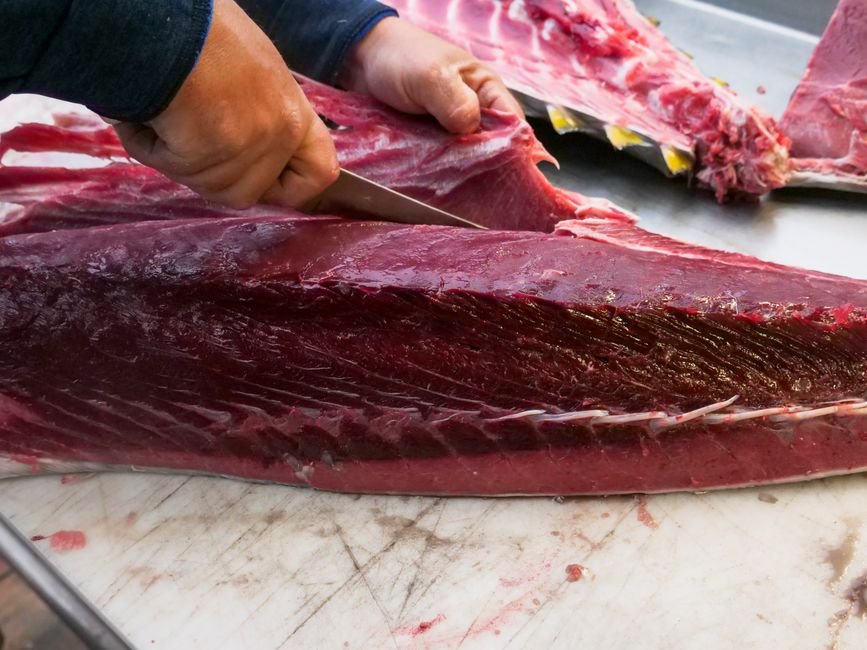
Calories in Tuna Steak by Serving Size
Calories in tuna steak for each common serving, with protein, carbs and fat:
| Serving | Calories | Protein | Carbs | Fat |
|---|---|---|---|---|
| 1 small/regular fillet (90 g) | 158 | 27 g | 0 g | 4.6 g |
| 1 large fillet (135 g) | 238 | 41 g | 0 g | 6.9 g |
| 1 steak (135 g) | 238 | 41 g | 0 g | 6.9 g |
| 1 cup (135 g) | 238 | 41 g | 0 g | 6.9 g |
| 1 oz yields (20 g) | 35 | 6.1 g | 0 g | 1 g |
| 1 cubic inch (17 g) | 30 | 5.2 g | 0 g | 0.9 g |
| 100 g | 176 | 30 g | 0 g | 5.1 g |
| 1 oz | 50 | 8.6 g | 0 g | 1.5 g |
Tuna Steak Nutrition Facts
Calories in tuna steak and the full nutrition facts per 1 small/regular fillet (90 g):
| Nutrient | Amount | % Daily Value* |
|---|---|---|
| Calories | 158 kcal | |
| Protein | 27 g | 55% |
| Total Fat | 4.6 g | 6% |
| Saturated Fat | 1.3 g | 6% |
| Cholesterol | 47 mg | 16% |
| Sodium | 244 mg | 11% |
| Total Carbohydrate | 0 g | 0% |
| Dietary Fiber | 0 g | 0% |
| Total Sugars | 0 g | |
| Vitamin D | 2 mcg | 10% |
| Calcium | 5.4 mg | 0% |
| Iron | 0.9 mg | 5% |
| Potassium | 493 mg | 10% |
| Magnesium | 40 mg | 9% |
| Zinc | 0.4 mg | 4% |
| Phosphorus | 311 mg | 25% |
| Selenium | 101 mcg | 183% |
| Vitamin A (RAE) | 35 mcg | 4% |
| Vitamin E | 0.9 mg | 6% |
| Vitamin K | 3.5 mcg | 3% |
| Thiamin (B1) | 0.1 mg | 9% |
| Riboflavin (B2) | 0.1 mg | 9% |
| Niacin (B3) | 21 mg | 129% |
| Vitamin B6 | 1 mg | 57% |
| Folate (DFE) | 1.8 mcg | 0% |
| Vitamin B12 | 2.1 mcg | 87% |
Where the calories come from: 72% protein · 28% fat · 0% carbs
*Percent Daily Values are based on a 2,000-calorie diet (FDA reference values). Source: USDA FoodData Central — Fish, tuna, cooked (FDC ID 2706310, Survey (FNDDS), published 10/31/2024). Values for other servings are calculated from the per-100 g data.
How Many Calories Are in a Large Tuna Steak?
Calories rise with weight, so the portion you cook matters more than the label word “steak.” A 135 g fillet or steak has 238 calories, 41 g of protein, and 6.9 g of fat. A 20 g ounce-yield portion has 35 calories, which is useful if you are weighing pieces you trim off a larger cut.
Per cubic inch (17 g), the fish has 30 calories. Because the record lists several sizes, weighing the cooked piece on a kitchen scale gives the most accurate match to the numbers above.

Does Cooking Change the Calories in Tuna?
The numbers on this page are for tuna listed as cooked in the USDA record, so they do not describe raw, canned, or seared-on-the-outside preparations. Cooking drives off water, which concentrates the nutrients per gram. Raw and cooked tuna are not interchangeable when you compare labels, so check that the source matches the preparation you are eating.
Added oil, butter, or breading will add calories that are not included in these figures. A tablespoon of oil used in a pan is a separate calorie source, and it can easily double the fat in a simple fillet.
What Stands Out in Tuna Steak Nutrition?
Tuna steak is a high-protein, very low-fat food with no carbohydrate and no fiber. The 90 g fillet provides 27 g of protein and 4.6 g of fat, which is why it fits easily into meals built around lean protein.
- Niacin: 21 mg per fillet, which is 129% of the Daily Value.
- Selenium: 101 mcg per fillet, 183% of the Daily Value.
- Vitamin B12: 2.1 mcg per fillet, 87% of the Daily Value.
- Vitamin B6: 1 mg per fillet, 57% of the Daily Value.
- Potassium: 493 mg per fillet, 10% of the Daily Value.
Those two numbers are worth watching if you track them.
Who Should Watch Sodium and Cholesterol in Tuna?
Sodium in this record is 271 mg per 100 g, or 244 mg in a 90 g fillet, and it is naturally present in the fish. Canned or seasoned tuna products are not described here and can differ a lot. If you are limiting sodium, the cooked fillet is a simpler choice to track than a brined or marinated product.
Saturated fat is low at 1.3 g per fillet, which is 6% of the Daily Value. People with specific dietary restrictions should check guidance from their own clinician.
How Tuna Steak Compares
Per 100 g, next to similar foods in our database:
| Food (100 g) | Calories | Protein | Carbs | Fat |
|---|---|---|---|---|
| Tuna Steak | 176 | 30 g | 0 g | 5.1 g |
| Lobster Meat | 177 | 15 g | 9.8 g | 8.3 g |
| Abalone | 177 | 21 g | 7.5 g | 6.1 g |
| Salmon Atlantic | 182 | 25 g | 0 g | 8.1 g |
| Eel | 184 | 18 g | 0 g | 12 g |
| Sardines in Tomato Sauce | 185 | 21 g | 0.5 g | 10 g |
Tuna Steak FAQ
Is tuna steak low in fat?
Yes. Fat makes up about 28% of the calories in this food.
How much protein is in a tuna steak?
A 90 g small or regular fillet has 27 g of protein, and a 135 g steak has 41 g. Per 100 g, the cooked fish has 30 g of protein.
Does tuna steak have any carbohydrates?
No. The USDA record lists 0 g of total carbohydrate, 0 g of sugars, and 0 g of fiber per serving.
The Bottom Line
A 90 g cooked tuna steak fillet has 158 calories, 27 g of protein, and no carbohydrate, with very little fat. Weigh the cooked portion and watch added oils, marinades, and sodium, since those are not part of these numbers.