Calories in turkey jerky: 1066 calories per 1 back (525 g)
- 134 g protein
- 0 g carbs
- 59 g fat
Source: USDA FoodData Central · 203 kcal per 100 g
Turkey jerky has about 203 calories per 100 g, or 58 calories per 1 oz (28 g) serving. The USDA record behind these numbers is “Turkey, back,” so the figures describe dried turkey meat with the bone removed, not a commercial packaged product with added sugar or marinade.
What stands out is the split between protein and fat: roughly half of the calories come from protein and half from fat, with no carbohydrate at all. Sodium is high, at 557 mg per 100 g, which is worth checking if you eat jerky often.
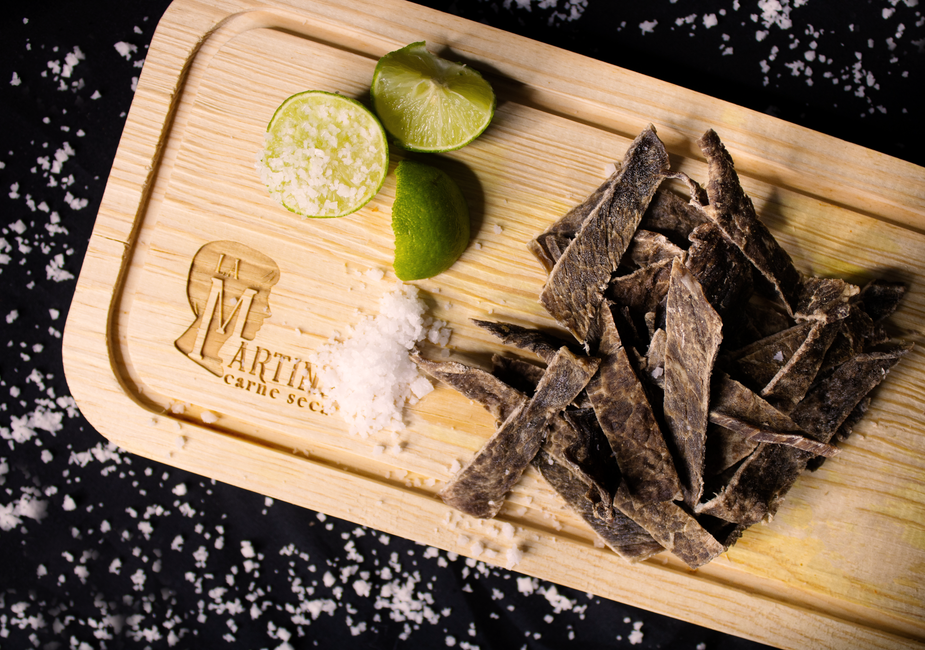
Calories in Turkey Jerky by Serving Size
Calories in turkey jerky for each common serving, with protein, carbs and fat:
| Serving | Calories | Protein | Carbs | Fat |
|---|---|---|---|---|
| 1 back (yield after cooking, bone removed) (525 g) | 1066 | 134 g | 0 g | 59 g |
| 100 g | 203 | 26 g | 0 g | 11 g |
| 1 oz | 58 | 7.3 g | 0 g | 3.2 g |
Turkey Jerky Nutrition Facts
Calories in turkey jerky and the full nutrition facts per 1 back (yield after cooking, bone removed) (525 g):
| Nutrient | Amount | % Daily Value* |
|---|---|---|
| Calories | 1066 kcal | |
| Protein | 134 g | 269% |
| Total Fat | 59 g | 76% |
| Saturated Fat | 17 g | 83% |
| Cholesterol | 452 mg | 151% |
| Sodium | 2924 mg | 127% |
| Total Carbohydrate | 0 g | 0% |
| Dietary Fiber | 0 g | 0% |
| Total Sugars | 0 g | |
| Vitamin D | 2.6 mcg | 13% |
| Calcium | 79 mg | 6% |
| Iron | 3.5 mg | 20% |
| Potassium | 1313 mg | 28% |
| Magnesium | 152 mg | 36% |
| Zinc | 7.9 mg | 72% |
| Phosphorus | 1313 mg | 105% |
| Selenium | 146 mcg | 265% |
| Vitamin A (RAE) | 116 mcg | 13% |
| Vitamin E | 0.5 mg | 3% |
| Thiamin (B1) | 0.2 mg | 15% |
| Riboflavin (B2) | 1.1 mg | 86% |
| Niacin (B3) | 56 mg | 348% |
| Vitamin B6 | 3.1 mg | 183% |
| Folate (DFE) | 32 mcg | 8% |
| Vitamin B12 | 8.8 mcg | 365% |
Where the calories come from: 50% protein · 50% fat · 0% carbs
*Percent Daily Values are based on a 2,000-calorie diet (FDA reference values). Source: USDA FoodData Central — Turkey, back (FDC ID 2706131, Survey (FNDDS), published 10/31/2024). Values for other servings are calculated from the per-100 g data.
How Many Calories Are in a Whole Turkey Jerky Back?
The USDA record includes a whole-back yield of 525 g after cooking, with the bone removed. That lead serving comes to 1,066 calories, 134 g of protein, 59 g of fat, and 0 g of carbohydrate. Because a back this size is a large amount of food, most people will only use the per-100 g or per-ounce numbers when logging a portion.
For a single ounce, the record shows 58 calories, 7.3 g of protein, and 3.2 g of fat. Those values are a useful reference point if you are weighing pieces by hand.

Why Turkey Jerky Is So Dense in Protein and Fat
Drying removes water, so the nutrients that remain are concentrated. The record lists 62 g of water per 100 g, which means most of the weight left after drying is protein and fat. That is why 100 g delivers 26 g of protein alongside 11 g of fat.
Among the micronutrients, the record shows notable amounts of niacin (11 mg per 100 g), vitamin B6 (0.6 mg), and vitamin B12 (1.7 mcg). It also shows 28 mcg of selenium and 1.5 mg of zinc per 100 g. The data does not show any vitamin C, fiber, or sugar.
Does Turkey Jerky Have a Lot of Sodium and Cholesterol?
Yes on both counts. Saturated fat is 3.2 g per 100 g.
Sodium is the number most people should watch. A single lead serving of the whole back shows 2,924 mg, which is 127% of the daily value on the record’s basis. Portioning jerky into ounce-sized servings keeps that number easier to manage.
Is Turkey Jerky Good for Low-Carb or High-Protein Eating?
Turkey jerky contains no carbohydrate or sugar in the USDA record, so it fits easily into low-carb eating from a carb-count standpoint. Its protein content is high relative to its calories, with 26 g of protein per 100 g. The calorie share is about half protein and half fat.
Because the fat is present at about 11 g per 100 g, jerky is not a low-calorie snack. Its 203 calories per 100 g are fairly dense, so the ounce-sized serving is a practical way to keep track of intake.
How Turkey Jerky Compares
Per 100 g, next to similar foods in our database:
| Food (100 g) | Calories | Protein | Carbs | Fat |
|---|---|---|---|---|
| Turkey Jerky | 203 | 26 g | 0 g | 11 g |
| Pork Chop Boneless | 202 | 25 g | 0.8 g | 11 g |
| Lamb Shank | 209 | 33 g | 0 g | 8.4 g |
| Beef Chuck | 194 | 32 g | 0 g | 7.1 g |
| Veal Liver | 192 | 28 g | 3.8 g | 6.3 g |
| Ground Beef 90% Lean | 214 | 27 g | 0 g | 11 g |
Turkey Jerky FAQ
How many calories are in 1 oz of turkey jerky?
The USDA record shows 58 calories in a 1 oz (28 g) serving, with 7.3 g of protein and 3.2 g of fat. Those numbers come from the "Turkey, back" record, so check your package label if it differs.
Does turkey jerky have sugar?
The USDA record lists 0 g of total sugars and 0 g of carbohydrate per 100 g. Many commercial jerkies add sugar or sweeteners in the marinade, so the label is the best source for flavored products.
How much iron and calcium are in turkey jerky?
Per 100 g, the record shows 0.7 mg of iron and 15 mg of calcium. Iron and calcium are modest in this food compared with its protein and sodium content.
The Bottom Line
Turkey jerky is about 58 calories per ounce, with high protein, no carbs, and a lot of sodium. Check the package label, since flavored brands can differ from the USDA record.


