
Whiskey is one of the world’s most consumed distilled spirits, enjoyed straight, on the rocks, or mixed into cocktails across bars, restaurants, and homes. Whether you’re a casual drinker monitoring overall calorie intake, an athlete managing macronutrients, or someone managing blood sugar, understanding whiskey’s nutritional profile matters. Unlike beer or wine with carbohydrates and residual sugars, whiskey’s calorie content comes almost entirely from alcohol—a surprisingly dense energy source.
How many calories are in a drink of whiskey? The answer depends on proof level, serving size, and how you’re mixing it. This guide breaks down exact calorie counts, explains how proof affects nutrition, and shows you how to fit whiskey into your dietary goals without guesswork.
Calories in Whiskey (Quick Answer)
A standard 1.5 oz (44 ml) shot of 80-proof whiskey contains approximately 97–100 calories. Calorie content scales directly with proof and serving size:
- 80-proof whiskey (1.5 oz shot): 97–100 calories
- 100-proof whiskey (1.5 oz shot): 122–125 calories
- Whiskey in a mixed drink (varies): 120–300+ calories depending on mixers
Values vary slightly by brand and proof; always check the label for spirit-specific calorie data. Mixers like soda, juice, or simple syrup can easily double or triple the total calorie count.
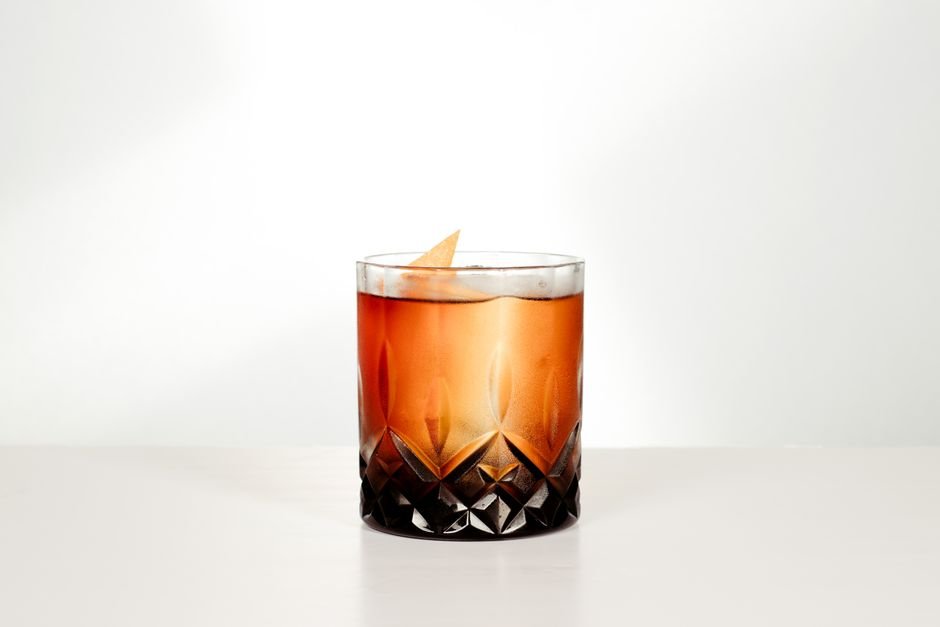
Full Nutrition Facts for 1.5 oz (44 ml) of 80-Proof Whiskey
A standard shot of 80-proof whiskey contains no carbohydrates, sugar, fiber, cholesterol, or sodium—only alcohol and trace water. Here’s the complete breakdown:
| Nutrient | Amount | % Daily Value |
|---|---|---|
| Calories | 97 | 5% |
| Total Fat | 0 g | 0% |
| Saturated Fat | 0 g | 0% |
| Cholesterol | 0 mg | 0% |
| Sodium | 0 mg | 0% |
| Total Carbohydrate | 0 g | 0% |
| Dietary Fiber | 0 g | 0% |
| Total Sugars | 0 g | 0% |
| Protein | 0 g | 0% |
| Alcohol (ABV) | 40% (approx. 17.6 g) | — |
*Percent Daily Values are based on a 2,000-calorie diet. Source: USDA FoodData Central.
Key insight: Whiskey is pure alcohol with zero macronutrients—no fat, carbs, fiber, or protein. All 97 calories come from ethanol, which delivers 7 calories per gram. Unlike beer (containing carbs and sometimes sugar) or wine (with residual sugars), straight whiskey is metabolically “clean” but offers no nutritional benefit. Your body treats alcohol as a priority fuel source, potentially delaying fat oxidation when consumed with food.
Etekcity Food Scale
0.1g accuracy — the perfect companion for exact portions.
80-Proof vs. 100-Proof Whiskey: Calorie & ABV Comparison
80-Proof Whiskey (40% ABV)
- 1.5 oz shot contains 97–100 calories
- Standard serving size at most bars and in cocktails
- Lower proof means slightly more water, fewer calories per volume
100-Proof Whiskey (50% ABV)
- 1.5 oz shot contains 122–125 calories
- More concentrated alcohol and higher flavor intensity
- 25% more calories per shot due to higher ethanol content
Practical takeaway: If you’re counting calories, 80-proof whiskey saves about 25 calories per shot compared to 100-proof. However, higher-proof spirits may lead to smaller servings (people typically drink less volume of 100-proof), which can offset the calorie difference. The real calorie impact comes from what you mix it with—ordering neat, on the rocks, or with just water or soda water keeps totals predictable and low.
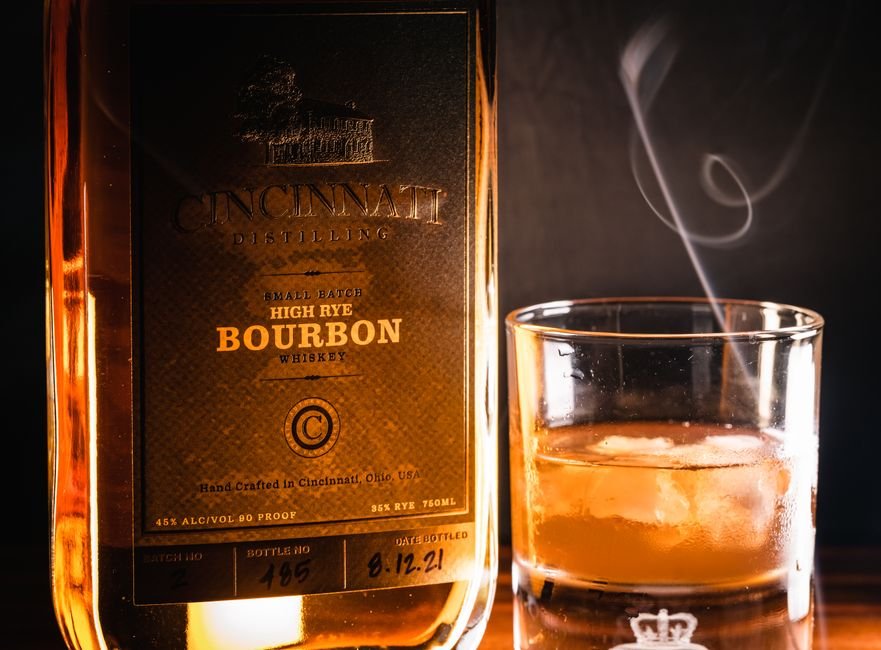
Is Whiskey Good for Weight Loss?
Straight whiskey can fit into a calorie-controlled diet since it’s carb-free and low in absolute calories (97–125 per shot). However, alcohol is metabolically problematic for weight loss: your body breaks it down first and temporarily halts fat oxidation, it stimulates appetite, and a few drinks quickly exceed reasonable calorie limits. Whiskey-based cocktails with sugary mixers are weight-loss saboteurs, delivering 200–400 calories per drink with no satiety.
Tips to Eat Whiskey Without Gaining Weight:
- Drink neat or with water/ice: Straight whiskey or on the rocks eliminates hidden sugar and mixer calories.
- Stick to one drink: A single 1.5 oz shot is ~100 calories; two shots + mixers quickly totals 300–500 calories.
- Choose lower-proof varieties: 80-proof saves 25 calories per shot versus 100-proof; accumulates over multiple drinks.
- Eat food with it: Never drink on an empty stomach—food slows alcohol absorption and prevents overeating later.
If weight loss is your goal, treat whiskey as an occasional indulgence rather than a regular habit. The calories add up fast, and alcohol suppresses satiety signals, making it easy to overeat at the same meal.
How Portion Size Affects Calories
Whiskey’s calorie density makes portion size critical. A standard shot (1.5 oz) is easy to measure and track, but casual home pours are often 2–3 oz, doubling or tripling calories without obvious visual difference. Cocktails compound the problem by hiding whiskey behind juices, syrups, and cream.
Example:
- Single shot (1.5 oz, 80-proof): 97 calories
- Double shot (3 oz, 80-proof): 194 calories
A single drink at home is often actually 2–3 times the stated serving size, pushing one “drink” toward 250–300 calories before mixers.
Best Way to Measure Whiskey Accurately
Eyeballing whiskey pours is unreliable—a standard shot glass holds 1.5 oz, but most home pours exceed this. Using a measuring tool removes guesswork and keeps you honest with calorie counts, especially important if you’re tracking for weight loss or diabetes management.
Options:
- Shot glass (1.5 oz): Standard bar measure; inexpensive and widely available. Mark it at the 1.5 oz line if not clearly labeled.
- Jigger (1.5 oz / 0.75 oz dual measure): Bar tool with two sizes; more precise than eyeballing and easy to refill.
- Kitchen scale (with liquid conversion): Weigh your serving; 1.5 oz whiskey ≈ 44 grams. Most accurate if you’re serious about consistency.
Calculate Your Exact Calorie Intake
If you drink whiskey regularly, tracking your total calorie intake—especially the cumulative effect of alcohol plus mixers—reveals how much it’s really costing you nutritionally. A few drinks per week plus casual mixed cocktails can easily add 500–1000 calories weekly, equivalent to 52,000–104,000 calories per year.
Use our free AI nutrients calculator to log your exact whiskey consumption, including proof level, serving size, and any mixers, and see how it impacts your daily and weekly calorie totals.
- Accounts for different proof levels and serving sizes automatically
- Tracks cumulative alcohol calories across multiple drinks
- Identifies hidden calories in mixers and common cocktail recipes
Common Mistakes When Eating Whiskey
People often underestimate whiskey’s caloric impact by overlooking serving sizes, mixer calories, and frequency. Here are four widespread mistakes:
❌ Pouring “one drink” that’s actually 2–3 oz instead of the standard 1.5 oz shot, doubling calories without realizing it.
❌ Mixing whiskey with sugary sodas, juices, or syrups that add 100–200 calories and spike blood sugar, negating any “cleanliness” of the spirit itself.
❌ Drinking whiskey socially and forgetting to count those calories, then wondering why weight loss stalled despite dieting elsewhere.
❌ Choosing higher-proof whiskey thinking “small pour = fewer calories,” then pouring the same volume as lower-proof, actually increasing alcohol and calorie intake.
Awareness and a simple jigger solve most of these problems.
FAQ
How many calories are in 100g of whiskey?
100g of 80-proof whiskey contains approximately 235 calories (since 100g ≈ 3.4 oz, and 1.5 oz = 97 calories). Most people drink whiskey by volume (ounces or milliliters), not weight, so the shot glass serving (1.5 oz / 44 ml ≈ 97 calories) is more practical.
Is whiskey fattening?
Straight whiskey alone is not fattening—it has no fat, carbs, or sugar. However, the calories in alcohol are calorically dense (7 per gram) and your body prioritizes burning alcohol over fat, which can promote fat storage if you’re in a surplus. Whiskey-based cocktails with sugary mixers are significantly more fattening due to added sugar and total calories.
Does whiskey have carbs or sugar?
Pure whiskey has zero carbohydrates and zero grams of sugar. The distillation process removes all carbs and residual sugars present in the original grain. If your whiskey tastes sweet, it’s been infused or blended with added sugars—check the label.
Why does whiskey have calories if it has no carbs, fat, or protein?
Alcohol itself provides 7 calories per gram, nearly as much as fat (9 cals/g) and far more than carbs or protein (4 cals/g each). Whiskey is essentially pure ethanol and water, so all its calories come from alcohol.
Conclusion
Whiskey is a calorie-dense spirit with 97–125 calories per standard 1.5 oz shot, depending on proof level. It contains zero carbohydrates, fat, fiber, sugar, or protein—making it “clean” in terms of macronutrients but providing zero nutritional value. Proof directly affects calories: higher-proof whiskey contains more ethanol per volume and therefore more calories. The real damage comes from mixers, oversized home pours, and regular consumption, which can quickly accumulate hundreds of hidden calories weekly.
If you drink whiskey, accuracy matters: use a shot glass or jigger to measure precisely, stick to one drink, and choose neat or on-the-rocks over sugary cocktails. For serious calorie tracking and weight management, log your whiskey intake using a reliable nutrients calculator to see exactly how it fits into your daily totals. A balanced approach—occasional drinks, proper portions, and awareness—lets you enjoy whiskey without derailing your health goals.
