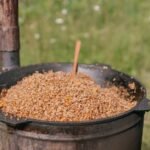
Calories in wild rice: 166 calories per 1 cup (164 g)
- 6.5 g protein
- 35 g carbs
- 0.6 g fat
- 3 g fiber
Source: USDA FoodData Central · 101 kcal per 100 g
One cup of cooked wild rice contains 166 calories, 6.5 g of protein, and 35 g of carbohydrate. What makes wild rice stand out is its exceptional mineral content—particularly zinc (20% of daily value per cup) and magnesium—and its low sodium, making it a clean-burning grain that works well in balanced meals.

Calories in Wild Rice by Serving Size
Calories in wild rice for each common serving, with protein, carbs and fat:
| Serving | Calories | Protein | Carbs | Fat |
|---|---|---|---|---|
| 1 cup (164 g) | 166 | 6.5 g | 35 g | 0.6 g |
| 100 g | 101 | 4 g | 21 g | 0.3 g |
| 1 oz | 29 | 1.1 g | 6 g | 0.1 g |
Wild Rice Nutrition Facts
Calories in wild rice and the full nutrition facts per 1 cup (164 g):
| Nutrient | Amount | % Daily Value* |
|---|---|---|
| Calories | 166 kcal | |
| Protein | 6.5 g | 13% |
| Total Fat | 0.6 g | 1% |
| Saturated Fat | 0.1 g | 0% |
| Cholesterol | 0 mg | 0% |
| Sodium | 4.9 mg | 0% |
| Total Carbohydrate | 35 g | 13% |
| Dietary Fiber | 3 g | 11% |
| Total Sugars | 1.2 g | |
| Calcium | 4.9 mg | 0% |
| Iron | 1 mg | 5% |
| Potassium | 166 mg | 4% |
| Magnesium | 52 mg | 12% |
| Zinc | 2.2 mg | 20% |
| Phosphorus | 134 mg | 11% |
| Selenium | 1.3 mcg | 2% |
| Vitamin E | 0.4 mg | 3% |
| Vitamin K | 0.8 mcg | 1% |
| Thiamin (B1) | 0.1 mg | 7% |
| Riboflavin (B2) | 0.1 mg | 11% |
| Niacin (B3) | 2.1 mg | 13% |
| Vitamin B6 | 0.2 mg | 13% |
| Folate (DFE) | 43 mcg | 11% |
Where the calories come from: 82% carbs · 15% protein · 3% fat
*Percent Daily Values are based on a 2,000-calorie diet (FDA reference values). Source: USDA FoodData Central — Wild rice, cooked (FDC ID 168897, SR Legacy, published 4/1/2019). Values for other servings are calculated from the per-100 g data.
Wild Rice Vs. White and Brown Rice: How Nutrition Differs
Wild rice is technically a grass seed, not a true rice, and this distinction shows in its nutrition profile. It delivers more protein per serving than most other grains and has a noticeably higher mineral density, especially in zinc and magnesium. The carbohydrate level (35 g per cup) is typical for a cooked grain serving, and nearly all carbohydrate is digestible starch.
Raw Vs. Cooked Wild Rice: Volume and Nutrition
Wild rice expands dramatically when cooked: one cup of raw grain yields approximately two to three cups cooked. The nutrition figures here are for cooked wild rice. The expansion is due to water absorption—cooked wild rice is 74% water by weight, which means the same amount of dry grain becomes much larger when prepared. If you are cooking from dry, account for this expansion when measuring portions.
Zinc and B Vitamins: Why Wild Rice Is Strong in Micronutrients
The B vitamin profile is solid: niacin (13% DV), riboflavin (11% DV), and folate (11% DV) all appear in meaningful amounts. Wild rice also provides magnesium (12% DV per cup), a mineral many diets fall short on.
The sodium is negligible at just 4.9 mg per cup, so wild rice fits easily into low-sodium diets without any preparation restrictions. If you season it during cooking, the sodium will come entirely from added salt or broth.
Fiber, Fullness, and Digestive Health
At 3 g of dietary fiber per cup (11% of daily value), wild rice provides moderate fiber that supports digestive regularity. The fiber content is distributed throughout the grain rather than concentrated in a bran layer, so it remains present after cooking.
How Wild Rice Fits Low-Calorie and Plant-Based Diets
At 166 calories per cup, wild rice is moderate in energy density for a grain—appropriate for anyone tracking intake. For plant-based eaters, the 6.5 g of protein per cup and the high zinc content make wild rice a useful addition to meals that might otherwise be protein- or mineral-light.
How Wild Rice Compares
Per 100 g, next to similar foods in our database:
| Food (100 g) | Calories | Protein | Carbs | Fat |
|---|---|---|---|---|
| Wild Rice | 101 | 4 g | 21 g | 0.3 g |
| Sweet Potato Baked | 100 | 1.7 g | 23 g | 0.1 g |
| Potato | 103 | 2 g | 16 g | 3.4 g |
| Rice Noodles | 108 | 1.8 g | 24 g | 0.2 g |
| Oat Groats | 118 | 3.2 g | 19 g | 4 g |
| Millet Flakes | 119 | 3.5 g | 24 g | 1 g |
Wild Rice FAQ
Does wild rice have gluten?
Wild rice itself is gluten-free; it is a grass seed, not wheat. However, always check packaged wild rice for processing or cross-contamination warnings if you have celiac disease or gluten sensitivity.
How much dry wild rice do I need to make one cup cooked?
Wild rice roughly triples in volume when cooked.
Is wild rice high in calories compared to other grains?
At 166 calories per cooked cup, wild rice is similar to brown rice and slightly higher than white rice per serving, but the difference is modest and the mineral profile of wild rice is notably richer.
Can I eat wild rice if I have diabetes?
Wild rice is a whole grain with fiber and moderate glycemic impact. Its 35 g carbohydrate per cup should fit into most carbohydrate targets, but portion size and blood glucose response are individual—monitor your own response.
The Bottom Line
Wild rice is a nutrient-dense grain that stands out for its zinc, magnesium, and B vitamin content while remaining low in sodium and calories. It works well for anyone seeking whole grains with strong micronutrient density.