Calories in amaranth: 251 calories per 1 cup (246 g)
- 9.3 g protein
- 46 g carbs
- 3.9 g fat
- 5.2 g fiber
Source: USDA FoodData Central · 102 kcal per 100 g
One cup of cooked amaranth grain has 251 calories, 9.3 g of protein, and 46 g of carbohydrate. What stands out is the mineral profile: a single serving delivers 29% of the daily value for iron, 38% for magnesium, and 25% for selenium—nutrients that most grains supply in smaller amounts.
Amaranth is also notably low in sodium and fat, with most of its calories coming from carbohydrates.
Calories in Amaranth by Serving Size
Calories in amaranth for each common serving, with protein, carbs and fat:
| Serving | Calories | Protein | Carbs | Fat |
|---|---|---|---|---|
| 1 cup (246 g) | 251 | 9.3 g | 46 g | 3.9 g |
| 100 g | 102 | 3.8 g | 19 g | 1.6 g |
| 1 oz | 29 | 1.1 g | 5.3 g | 0.4 g |
Amaranth Nutrition Facts
Calories in amaranth and the full nutrition facts per 1 cup (246 g):
| Nutrient | Amount | % Daily Value* |
|---|---|---|
| Calories | 251 kcal | |
| Protein | 9.3 g | 19% |
| Total Fat | 3.9 g | 5% |
| Sodium | 15 mg | 1% |
| Total Carbohydrate | 46 g | 17% |
| Dietary Fiber | 5.2 g | 18% |
| Calcium | 116 mg | 9% |
| Iron | 5.2 mg | 29% |
| Potassium | 332 mg | 7% |
| Magnesium | 160 mg | 38% |
| Zinc | 2.1 mg | 19% |
| Phosphorus | 364 mg | 29% |
| Selenium | 14 mcg | 25% |
| Vitamin E | 0.5 mg | 3% |
| Thiamin (B1) | 0 mg | 3% |
| Riboflavin (B2) | 0.1 mg | 4% |
| Niacin (B3) | 0.6 mg | 4% |
| Vitamin B6 | 0.3 mg | 16% |
Where the calories come from: 72% carbs · 15% protein · 14% fat
*Percent Daily Values are based on a 2,000-calorie diet (FDA reference values). Source: USDA FoodData Central — Amaranth grain, cooked (FDC ID 170683, SR Legacy, published 4/1/2019). Values for other servings are calculated from the per-100 g data.
How Cooking Affects Amaranth's Nutrition
These numbers reflect cooked amaranth grain, which contains about 75% water. Raw amaranth grain is much more concentrated: a 100 g serving of raw grain would deliver roughly 2.5 times the calories, protein, and carbohydrate per weight. Cooking hydrates the grain, making it larger in volume and lower in calorie density per bite.
The mineral content, especially iron and magnesium, remains in the cooked grain. Soaking or cooking amaranth does not eliminate these nutrients as it might with other preparations (like draining a grain after boiling), because the water is absorbed into the grain itself.
Amaranth Vs. Quinoa and Other Grains
Cooked amaranth and cooked quinoa are similar in calories (251 vs. roughly 222 per cup of cooked quinoa), but amaranth edges ahead in iron and magnesium content. Amaranth’s iron at 5.2 mg per cup is notably higher than what you’d find in cooked white rice or oats, making it especially valuable if you rely on plant-based iron sources.
The carbohydrate-to-fiber ratio is also favorable: 46 g carbs with 5.2 g fiber per cup.
Amaranth for Low-Sodium and Mineral-Rich Eating
Cooked amaranth contains only 15 mg of sodium per cup—less than most prepared grains and ideal for anyone monitoring salt intake. This makes it a clean base for savory dishes without relying on seasoned mixes or broths for flavor.
The magnesium content (160 mg per cup, or 38% of the daily value) is one of amaranth’s strongest assets.
Cooking and Storage Tips That Preserve Nutrition
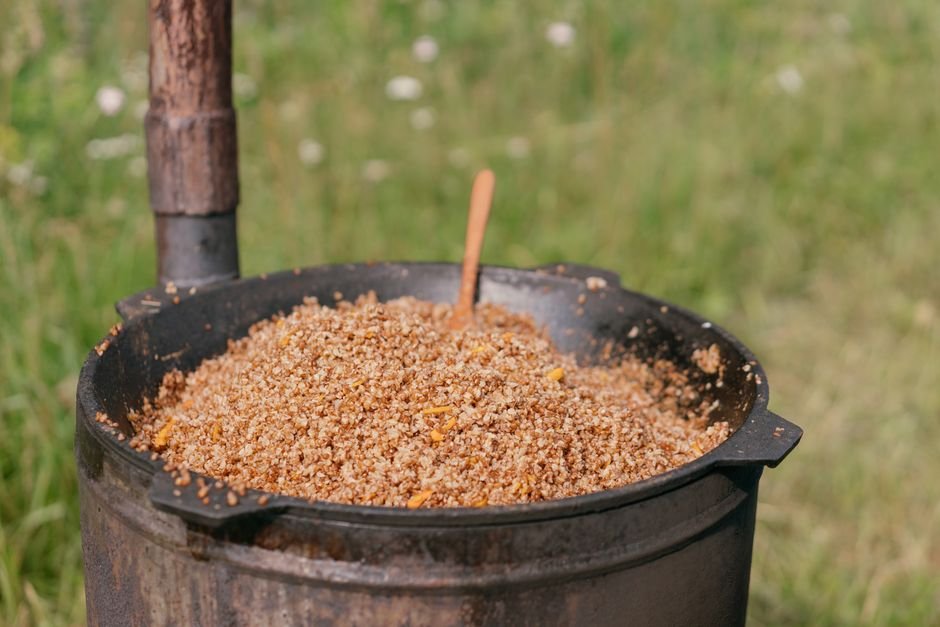
Amaranth grain cooks by simmering in water or broth, absorbing liquid rather than requiring draining. The standard ratio is roughly 1 part grain to 2–3 parts liquid, and the final cooked volume will be soft and slightly viscous. Because the grain absorbs its cooking liquid, you retain all minerals regardless of cooking method.
Store uncooked amaranth grain in an airtight container in a cool, dry place; it will keep for several months. Cooked amaranth keeps refrigerated for about 3–5 days and can be reheated gently with a splash of water to restore texture. Freezing is also possible if you prepare larger batches.
How Amaranth Compares
Per 100 g, next to similar foods in our database:
| Food (100 g) | Calories | Protein | Carbs | Fat |
|---|---|---|---|---|
| Amaranth | 102 | 3.8 g | 19 g | 1.6 g |
| Potato | 103 | 2 g | 16 g | 3.4 g |
| Sweet Potato Baked | 100 | 1.7 g | 23 g | 0.1 g |
| Rice Noodles | 108 | 1.8 g | 24 g | 0.2 g |
| Oat Groats | 118 | 3.2 g | 19 g | 4 g |
| Millet Flakes | 119 | 3.5 g | 24 g | 1 g |
Amaranth FAQ
Is amaranth gluten-free?
Yes. Amaranth grain is naturally gluten-free and is safe for people with celiac disease or gluten sensitivity. However, always verify that packaged products are labeled gluten-free, as cross-contamination during processing can occur.
Why is amaranth's iron so high compared to other grains?
Amaranth grain is naturally rich in iron; the 5.2 mg per cooked cup reflects the seed's composition. This makes it a valuable plant-based iron source, though pairing it with vitamin C (from citrus, tomatoes, or leafy greens) enhances iron absorption.
How much cooked amaranth should I eat in one serving?
One cup (246 g) of cooked amaranth is a standard serving and provides 251 calories. Portion size depends on your meal and goals; many people eat half to three-quarter cup as a side or base for a grain bowl.
Can I substitute amaranth for rice or oats?
Yes, by weight or volume. Keep in mind that cooked amaranth has a softer, slightly sticky texture unlike fluffy rice, and a milder, nuttier flavor than oats. It works well as a porridge, in soups, or mixed into salads.
The Bottom Line
Cooked amaranth grain delivers 251 calories per cup with impressive amounts of iron, magnesium, and selenium, making it a nutrient-dense choice for anyone seeking plant-based minerals and whole-grain nutrition. Its low sodium and high fiber further support steady energy and digestive health.